
The Petrovskaya pear was developed in the middle of the last century, but it was only in this century that it gained official recognition. Years of testing resulted in a high-yielding variety with numerous positive characteristics. The cultivar was named in honor of the Apostle Peter, as the fruits begin to ripen on June 29th (the feast day of St. Peter and Paul).
Main characteristics
The variety was zoned for the Central Region of Russia. Despite this, the tree is actively grown in almost all regions of the country.
Origin of the variety
This cultivated pear variety, developed by specialists at the All-Russian Scientific Research Institute of Horticulture and Fruit Growing (VSTISP), was created by crossing the hybrid heir 2-22-60 with the hybrid variety Sentyabrskaya, which dates back to 1959. The creation of this variety is attributed to the work of Yu. A. Petrov and N. V. Efimova. The variety was officially registered in the State Register in 2002.
Bloom
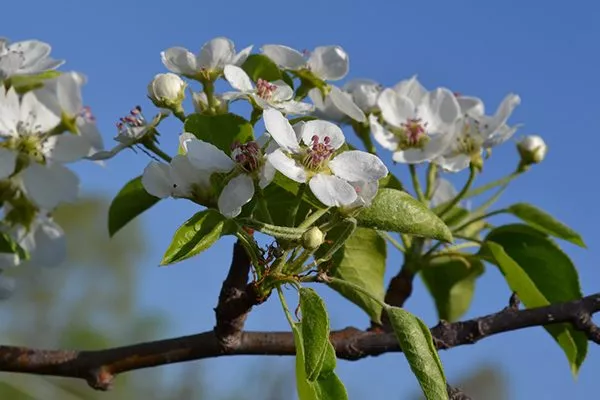
The blooms are characterized by medium-sized, smooth, and elongated flower buds. The flowers themselves are also small, with a small cup-shaped petal, and white, oval petals.
Growth characteristics
In terms of growth, this pear variety stands out for its fast-growing nature and ability to reach a height of 5 m, while requiring sufficient space for full development.
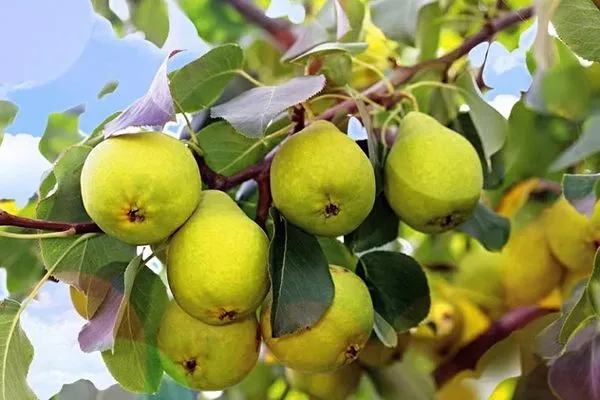
The main branches extend from the central trunk at an angle close to a right angle, while the branches themselves are placed at a distance from each other and curved, with limbs spread out in different directions and in the direction of the heavens.
The appearance of the tree
Petrovskaya is characterized by average crown density and tree height. The plant has a rather neat appearance. Other characteristic features:
- tree type – standard;
- trunk bark – brownish tint, smooth;
- type of fruit formation – mixed, which means that fruits are formed on both simple and complex rings;
- shoots – brownish in color, medium in length, geniculate in type;
- lentils – large and numerous;
- kidneys – pressed, large and smooth, have a slightly elongated shape;
- foliage – both large and medium-sized, dark green in color and wide, egg-shaped, curved downwards;
- Features of the leaf blade – the surface is glossy, the edges are serrated and curled, the nervation is delicate;
- leaf petiole – without pubescence like the leaf, elongated;
- flowers – white, cup-shaped, small, with oval-shaped central petals.
Fruits and their taste characteristics
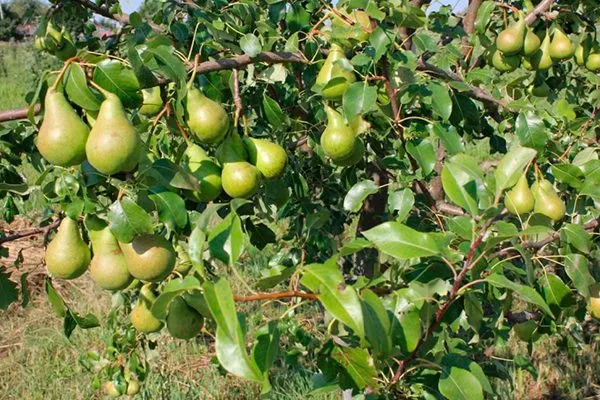
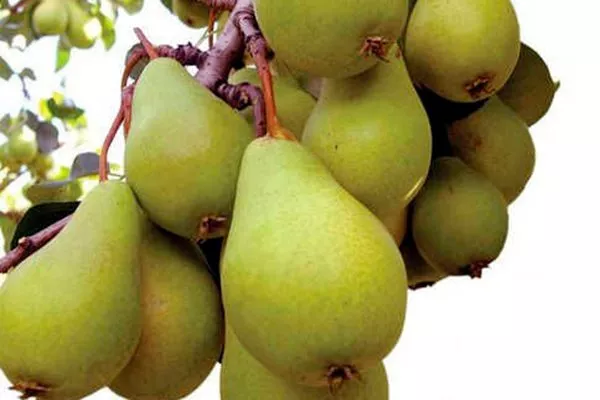
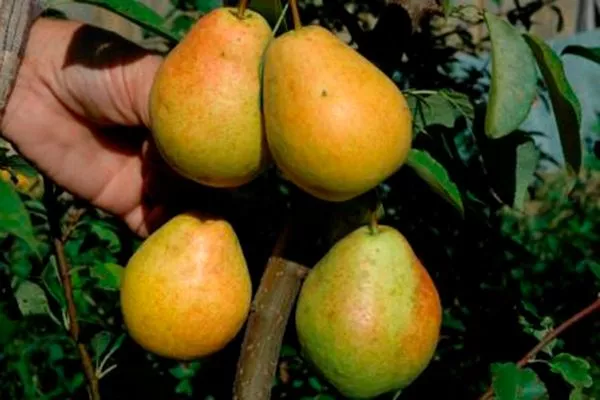
Pears are medium-sized, weighing up to 120-140 g. They are medium-sized and have an elongated, pear-shaped, regular shape. Other characteristics:
- peel – smooth and medium thickness;
- color - initially green, but upon reaching consumer maturity it becomes yellow-green, there is no covering shade;
- subcutaneous inclusions – almost invisible, in small quantities;
- funnel – no rust, small;
- peduncle – medium in thickness, but long and slightly curved;
- cup – closed type;
- heart – insignificant, in the form of a long egg;
- saucer – small;
- seminal chamber – medium, closed;
- bones – black in color, ovoid in shape and large in size;
- tube under the cup - short and not too wide;
- pulp – with increased juiciness, creamy color, half-oily;
- taste qualities – sweet and sour;
- tasting score – 4.4 points for taste and 4.1 points for marketability.
Ripening period and yield
It bears fruit in the summer, demonstrating good yields—on average, approximately 65 centners per hectare. The fruits reach consumer maturity by mid-August.
Disease resistance
This variety is virtually immune to disease due to its high resistance, making it quite popular in the gardening community. However, protective measures should not be ruled out, as improper care, unfavorable climate conditions, and the presence of infected plants nearby can increase the risk of disease.
There are diseases that need to be paid attention to:
- Threats – For prevention, soil cultivation and plant care using specialized products are used.
- Powdery mildew - If the disease appears, appropriate medications should be used and sufficient sunlight should be provided.
- Black spot on leaves – requires regular treatment and prevention of overwintering of plants with open lesions.
There is a risk of attack by pests such as pear moth and fireworm, which can be controlled with the use of special insecticides or biological control methods.
Pollination and reproduction
| Name | Disease resistance | Ripening period | Pollination type |
|---|---|---|---|
| Clapp's Favorite | High | Summer | Cross |
| Bere Bake | Average | Autumn | Cross |
| Autumn decan | High | Autumn | Cross |
The variety is not self-pollinating, so suitable pollinators for it are:
- Clapp's Favorite,
- Bere Bake,
- Autumn decan.
Pear propagation can be done through seed, cuttings, layering, or grafting. Breeders often use seed to create new varieties, while layering is a simple and common method among gardeners, as it reduces the time to fruiting compared to traditional seedlings.
| Method | Time to first fruiting | Complexity |
|---|---|---|
| Cuttings | 4-5 years | Average |
| Layers | 3-4 years | Low |
| Graft | 2-3 years | High |
Care and cultivation
Planted in the fall, when the leaves have already fallen, pear trees root most effectively. The ideal time for this procedure is September.
- ✓ Soil pH should be between 6.0-6.5 for optimal growth.
- ✓ The groundwater depth must be at least 2.5 meters to prevent root rot.
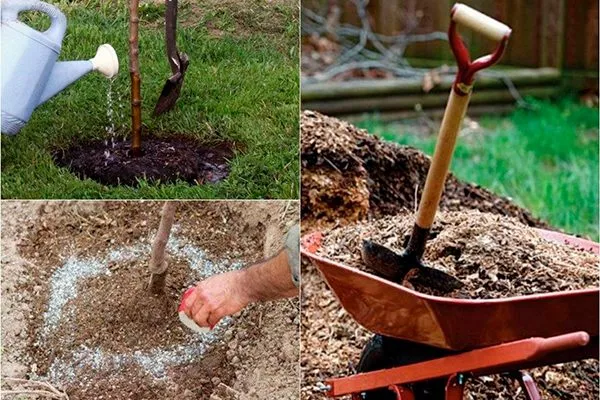
However, it can also be planted in the spring months, before the first buds begin to open. This is also a good time to prune the skeletal branches. When planting, the roots should be carefully spread out, but not shortened.
Other planting and care features:
- The variety prefers bright areas, protected from strong winds, with no groundwater nearby.
- The tree thrives at elevated elevations in fertile black soil, sandy clay, or loamy soil with a low acidity level. In clay soil, it is recommended to plant in specially prepared holes.
- The pear tree's root collar should be positioned 3.5-5.5 cm above the soil surface. Water the young tree every 7-9 days, using approximately 9-12 liters of warm water. During dry periods, watering should be increased.
- Regular watering is crucial during flowering and fruit formation. Watering is stopped in early August and maintained until spring.
- The soil around the tree should be kept loose to avoid the formation of a dry crust after watering.
- It is important to remove weeds around the trunk to ensure the pear tree receives sufficient nutrients and moisture.
- Soils that are not particularly fertile require annual fertilization, while rich soils can be fertilized every 3-4 years. Starting in the pear's second year of growth, apply 6-7 kg of compost, 20-25 g of potassium fertilizer, and 10-15 g of urea per square meter.
- Fertilizers are applied either in the spring or fall into dug trenches, which are then filled with soil mixed with minerals, and organic matter is added on top to enrich the pear.
- Pruning is done to create a uniform crown and remove non-fruit-bearing branches. After planting, remove all but four main branches at a 45° angle to the trunk. Reduce the branches by a quarter, leaving the central shoot slightly higher.
- Subsequently, parallel-growing and overly dense branches are pruned to form a beautiful crown. The cuts are treated with garden pitch, and weak and curved branches are removed. The total amount of pruning should not exceed a quarter of the total number of branches.
When to harvest and how to store the Petrovskaya pear variety?
The main principle when harvesting Petrovskaya pears is to prevent them from overripening on the tree, as they quickly become unsuitable for processing into juice or compote. Furthermore, harvesting is essential before the onset of frost, as this variety is susceptible to winter cold.
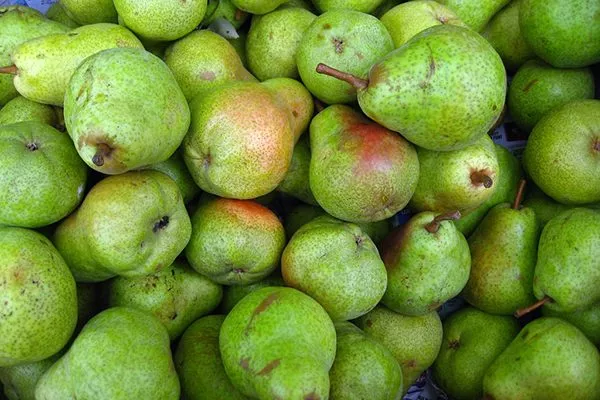
A cool place with a temperature around 0 degrees Celsius is recommended for storage. Under these conditions, the quality and freshness of the fruit can be preserved for up to two months. It's important to carefully select pears before storing them, eliminating damaged or diseased ones, and regularly inspect the fruit to prevent spoilage.
The Petrovskaya pear is not intended for long-term storage, so enjoy the fruit within the first few months after harvest. Fresh pears have a rich, aromatic flavor, which inevitably fades over time. Care for the tree regularly, preventing the topsoil from drying out or becoming overwatered, and the tree will reward you with a bountiful harvest.