
Pyrus communis 'Pamyat Yakovleva' is a relatively new pear variety. Despite its youth, many gardeners have appreciated it. Its main characteristics are scab resistance and frost hardiness. Therefore, it thrives in a variety of climates, producing tasty and juicy fruits everywhere.
Origin
The Yakovlev Pamyati pear is a domestic variety of fruit tree. It was developed in the 1970s by a team of four breeders from the Michurinsk State Agrarian University.
Pamyati Yakovleva was obtained by crossing Olivier de Serres and Tyoma. It was officially entered into the State Register in 1985 after passing several tests.
Description of the plant, pollination and fruiting characteristics
Frost resistance isn't the only characteristic of the Yakovlev Pamyat variety. The variety isn't valued for a single characteristic; rather, the entire plant is considered holistically.
Characteristics of fruits and trees
The Yakovlev's Memory tree is medium-sized and vigorous. Its crown is rounded, its density is estimated to be medium, and it reaches a height of up to 2 meters, usually 1.5 meters. The bark on the trunk and main shoots is gray and flaky. The main branches extend from the trunk at an angle of approximately 90 degrees, with a slight deviation.
As they mature, they develop numerous rings with several striated tubercles.
The buds are reflexed, conical, and smooth, with a large subbud cushion. The leaves are leathery and obovate, meaning their greatest width is between their midpoint and tip. They are green in color, with twisted tips and serrated margins. The stipules are medium-sized and pointed.
Description of fruits:
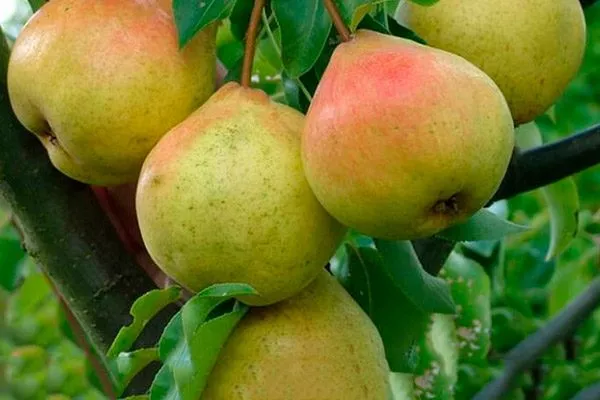
- shape – broadly pear-shaped, heterogeneous;
- size – medium, weight about 130 g (maximum weight 250 g);
- the skin is smooth, glossy, thin, but dense and elastic;
- color – light yellow with orange blush in the form of stripes;
- There are subcutaneous gray-white dots, but they are barely noticeable;
- the backing is long, of medium thickness, curved in shape;
- the funnel is small, with a half-open bowl and small, narrow, ribbed saucers;
- the pulp is creamy, juicy, dense, and has a crunch characteristic of the fruit;
- the taste is sweet, there is no astringency;
- The aroma is pleasant, pear-like.
This variety has been well-researched. 100 g of product contains:
- ascorbic acid or vitamin C – 9 mg;
- sugar – 10.8-13.5 g;
- phenolic glycoside – 8.8-10.9 g (dry weight);
- chlorogenic acid – 122-173 mg;
- catechins – from 30.2 to 78-90 mg.
It also contains a fair amount of tannins, which are responsible for the astringency. This astringency disappears during storage.
Features of flowering
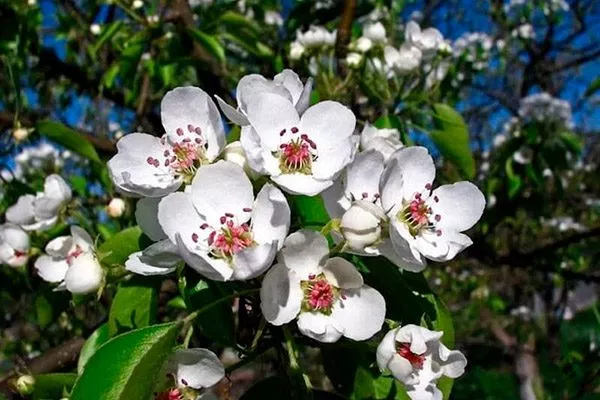
This pear variety blooms in late April to early May, depending on the growing climate. The flowers are white and saucer-shaped. The petals are large, distinct, and have smooth edges. The pollen is located at the level of the anthers. Double flowers are absent. The buds are collected in clusters of 4-6.
Ripening time
The fruits of the Pamyati Yakovleva variety reach technical maturity in late September or early October. There is no exact date, as the crop can grow in different latitudes. Fruiting is considered early. If planted correctly, trees begin to form fruit ovaries as early as the third or fourth year.
Tasting evaluation
A professional taste test rated the taste quality at 3.8 points out of 5. This is an excellent result for a general-purpose crop.
However, the taste, as well as the size of the fruit, is determined by several factors:
- soil composition;
- the presence or absence of cold winds at the growing site;
- illumination level;
- watering.
The best pollinators
| Name | Disease resistance | Ripening period | Fruit size |
|---|---|---|---|
| August | High | August | Average |
| Space | Average | September | Large |
| Forest beauty | Low | July | Small |
| Northerner | High | August | Average |
| Lada | Average | September | Large |
| Rogneda | High | July | Small |
| Chizhovskaya | Average | August | Average |
Pamyati Yakovleva is a self-fertile variety, so it doesn't require pollinators. However, if you want to increase yields, it's recommended to plant fruit varieties that bloom at the same time.
The following pears perform their role well:
- August;
- Space;
- Forest beauty;
- Northerner;
- Lada;
- Rogneda;
- Chizhovskaya.
Yakovlev's Memory blooms profusely, making it a pollinator itself. The species has a positive effect on its fellows:
- Moscow bere;
- Bere Dil;
- Beauty Chernenko;
- Yakovlev's favorite;
- Autumn dream.
Productivity
In the first year of fruiting, a single tree can yield approximately 2 kg of pears. Yields increase as the tree reaches its seventh year of maturity. The highest yield is observed at the peak of maturity – 220 centners of fruit per hectare of land.
Zoning
The initial use of the Pamyati Yakovlev variety was cultivation in the following regions: Central, Volga-Vyatka, Central Black Earth and Middle Volga.
The pear tree is now actively cultivated throughout almost all of Russia. Demand for seedlings is particularly high in Kalmykia and Tatarstan. Its frost resistance has led to its planting beyond the Urals and in certain regions of Siberia.
Frost resistance, drought resistance
Pamyati Yakovleva is suitable for growing in extreme conditions. Its frost resistance is above average. Temperatures range from +30 to -30 degrees Celsius. However, reviews indicate that the variety performs well in the spring after a harsh winter with temperatures reaching -39 degrees Celsius.
Finally, watch a video review of the Yakovlev Memory pear:
Advantages and disadvantages
The Yakovlev pear variety is often used as a basis for developing new varieties. This characteristic is its main advantage. However, gardeners value it for other reasons. This variety also has its drawbacks.
Features of cultivation and care
Yakovlev's Memory is suitable for planting in spring or fall. Experienced gardeners prefer the former. Regardless of the chosen season, the site and planting hole are prepared in advance—in the fall or two weeks before rooting.
Selecting a seedling and a site
The pear tree needs a level, dry location. Good natural light is also essential. Other considerations:
- proximity to tall trees that will create shade is undesirable;
- the culture reacts negatively to drafts;
- landing cannot be carried out near springs, rivers or other bodies of water;
- a distant groundwater table is required;
- the distance between plantings is not less than 3 m.
To improve soil aeration, experts recommend planting shallow-rooted vegetables between pear trees, such as cabbage, pumpkin, peas, or beans.
Survival, yield, and flavor depend not only on location but also on the seedling itself. It should not have:
- black spots;
- signs of decay;
- dry areas;
- weakened, withered roots.
It's recommended to purchase planting material from specialized nurseries; this is the only way to be sure the tree matches the cultivar. The best time is immediately before planting. The less time the root system spends out of soil, the better.
Soil requirements
The Yakovlev's pamyati prefers loamy soil with neutral or low acidity. Alkaline soils are not very suitable. Lime (300 g per square meter) helps reduce acidity, and manure (3 kg per square meter) helps increase it.
- ✓ Soil pH should be between 6.0-7.0 for optimal growth.
- ✓ The depth of groundwater is at least 2.5 m to prevent root rot.
If planting in clay soil, add peat (30 kg per square meter). This helps oxygenate the soil. Coarse sand (20 kg per square meter) helps enrich the soil with a light mixture.
Preparing for landing
Prepare for planting 'Memory of Yakovlev' approximately 1-2 weeks before rooting. What to do:
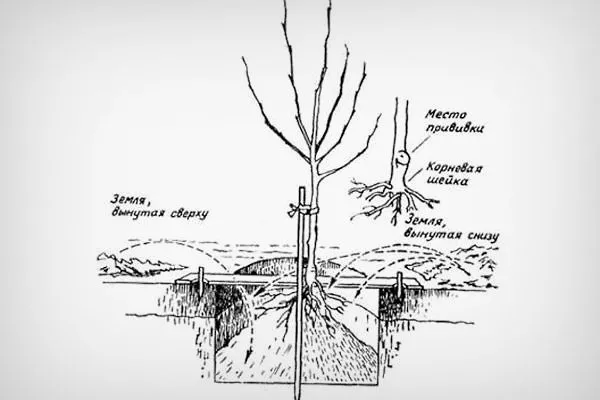
- Dig a hole 1.2 m deep and at least 0.8 m in diameter. It's important to maintain these parameters to ensure the seedling's root system isn't damaged.
- Mix the soil formed during the formation of the depression with 30 kg of humus, 20 kg of sand, 50 g of potassium sulfate and 100 g of superphosphate.
Planting a seedling
Even a novice can manage planting the "Memory of Yakovlev" plant. The procedure is as follows:
- Add 25 kg of nutrient-rich soil (the same one previously mixed with fertilizer) to the bottom of the hole. Form a small mound.
- In the center of the mound, install a stake that will act as a support for the young tree.
- Place the seedling in the center of the raised bed, carefully spreading out the roots. The correct placement for the planting material is on the north side of the stake, with the graft facing south.
- Fill the hole with soil so that the root collar is 6-7 cm above the soil.
- Compact the soil. Water generously.
- Add more enriched soil mixture after the water has been completely absorbed.
- Tie the plant to the support so that there is no contact between them.
Watering and fertilizing
The "Pamyati Yakovleva" pear variety requires frequent watering. The recommended watering rate per tree is 20-30 liters. The frequency depends on the air temperature and the amount of rainfall. On average, this is twice every 10 days for young trees.
As the crop matures, soil watering can be reduced. However, during the pear ripening period, moisture levels must be closely monitored. A dry crust should not form on the soil surface. However, remember that overwatering is harmful.
Fertilizers should be applied starting in the tree's second year. Fertilizing schedule:
- Nitrogen fertilizers in spring. For example, urea. Spray with a solution of 700 g per 10 liters of water. Consumption is 2.5 liters per 10 square meters.
- Potassium compounds in summer. Wood ash works well. Make a furrow 30 cm wide and 20-25 cm deep around the trunk. Add the powder at a rate of 300 g per square meter. Cover with soil and water with warm water.
- Autumn is time for Superphosphate. Apply 20 g of the substance to a depth of 7-10 cm around the tree trunk. This amount is for one tree.
Fertilize the plant with organic matter 2-3 times a year in spring or fall. Apply the fertilizer while digging around the outer edge of the tree trunk. This protects the roots from burning. Water regularly during this process. Otherwise, the plant will not be able to absorb the beneficial micronutrients.
In this case, it's recommended to use bird droppings. Dissolve 500 g in 10 liters of water, let sit for 24 hours, and then pour 5 liters under one pear tree.
Trimming
The first stage of crown formation for the "Pamyati Yakovleva" pear variety begins when the seedling is planted. The crown and skeletal branches are pruned. In subsequent years, as the tree grows, 2-3 shoots are left on the trunk in each tier, pointing in different directions, pinching them at the level of 6-7 buds.
What else to do:
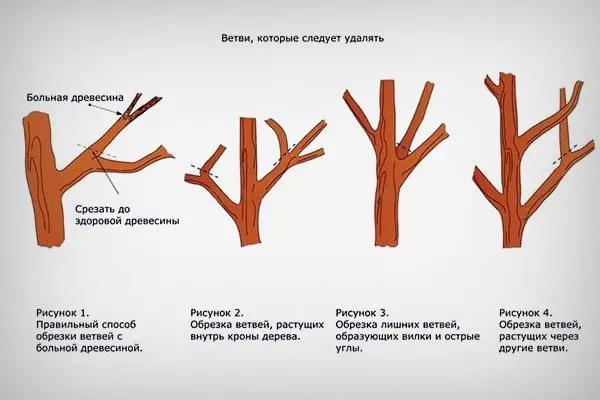
- Sanitary pruning. Remove dried, frozen or broken branches and shoots that grow upward at an acute angle.
- Tree rejuvenation. The essence is the consistent shortening of all branches at the same distance. You can remove from 0.2 to 1.5 meters in length. It is recommended to remove a little each year. Radical pruning negatively affects the growth of the plant and the condition of the fruit.
Harvesting
Harvesting of the "Pamyati Yakovleva" variety begins in the second half of September, when biological maturity is reached. However, harvesting can begin earlier or later. This variety holds its fruit well.
The harvest tolerates transportation well thanks to its dense skin. Under normal conditions, the shelf life is 1 month, usually 20 days. In refrigeration, the fruit retains its quality for 2.5 months.
The optimal location is a cellar, and the best containers are wooden or cardboard boxes. It's recommended to store the pears in a single layer, stems facing up. This will prevent them from becoming misshapen and will keep them edible until March.
Whitewash
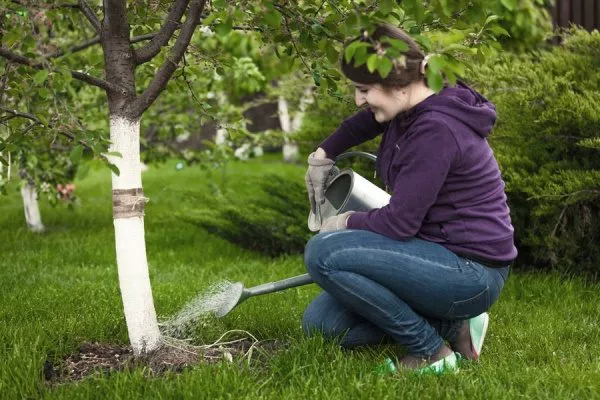
This is considered a mandatory tree care procedure. It's necessary to protect the bark from sunburn and prevent insects from breeding in the trunk cracks. This work can be performed in spring or fall. Some gardeners do it twice a year. There are no negative effects expected.
For processing, take 250 g of lime and 10 liters of water. You can add:
- PVA glue to help the composition adhere better to the surface;
- 500 g of copper sulfate to block wood rot;
- 100 g of hot red pepper to kill pests.
Wintering
The "Yakovleva" variety is frost-resistant. In areas where planting is recommended, winter preparation consists of thoroughly clearing the area around the tree of vegetation and debris, and watering the tree generously to prevent the root system from freezing.
If the area is characterized by harsh winters and severe frosts, snow can serve as additional protection. As soon as it falls, gardeners rake it tightly toward the planting site, forming a mound.
For the first 2-3 years after planting, the seedling needs to be protected more carefully during cold weather. The area around the tree trunk should be covered with a thick layer of mulch (peat). Alternatively, cover the base of the tree with agrofibre and spread foliage over it.
Diseases and pests
Pamyati Yakovleva is a variety with good immunity, but the tree is not completely immune to diseases. The following are the most common diseases affecting the plant:
- White spot. Gray or white spots appear on the leaves, which then turn yellow and fall off. Control involves treating with a 3% Bordeaux mixture solution. Apply twice before flowering, spaced two weeks apart. Apply 10 liters per mature tree.
- Fruit rot. Brown spots are appearing on the pears, which are falling off. Collect the fruit and bury them deep in the soil. Treat the foliar areas with Bordeaux mixture. The instructions are the same as for white spot.
- Black crayfish. The bark begins to crack, darken, and die, and the tree dries out. Regular whitewashing of the trunk is necessary. Treatment is with Horus. Two sprays are required, 10 days apart. The working solution is 3 g per 10 liters of water. The norm for one tree is 2 liters.
- In early spring, before the buds open, treat the tree with a 3% solution of Bordeaux mixture.
- During the budding period, spray with Horus to prevent fungal diseases.
- After flowering, treat the tree with a broad-spectrum insecticide to protect against pests.
The "Pamyati Yakovleva" variety is also vulnerable to pests. It is only resistant to scab. What other pests might a gardener encounter?
- Aphid. It sucks the sap from leaves and shoots. As a result, parts of the tree stop growing and dry up. A solution of Malathion (Karbofos) is needed: 60 g of the product per 7 liters of water. Spray at a rate of 2 liters per mature tree. Frequency: twice every 10 days.
- Pear suckerThe crop is lagging in development, the fruits are small, and the characteristic flavor is absent. Control involves foliar treatment with a mixture of 300 g of laundry soap and 10 liters of water per 10 square meters. This can be repeated several times until the pest is completely eliminated.
- Pear mite. Leaves are gradually losing their elasticity. The solution is to spray the foliage with a colloidal sulfur solution (10 liters of warm water + 50 g of powder per 10 square meters). The effect lasts for two weeks, after which the treatment can be repeated no more than three times.
- Pear moth. It ruins fruits, causing them to lose their appeal and flavor and fall off. A wormwood infusion helps get rid of the parasite. To prepare, take 1 liter of water and add 1 kg of the herb. Let it steep for 24 hours. Dilute by adding 5 liters of water. This is the recommended dose for one mature tree. A single spray is enough.
It's possible that the Yakovleva Pamyati could be infected with other diseases. Fungus actively grows in midsummer, but pesticides are prohibited during this period to preserve the planting; it's best to prevent the problem from occurring.
Specialized products sold in gardening stores have proven effective: Topaz, Skor, HOM, Fufanon, and Chisty Sad. They will help you grow a healthy tree and reap a bountiful harvest.
Gardeners' reviews
The "Yakovleva Pamyati" pear variety is a relatively young cultivar that's easy to plant. It's highly frost-hardy, with temperatures down to -30 degrees Celsius. Care is straightforward, but it does require commitment: neglecting watering will reduce yield, while winter shelter can lead to the tree's death.