
The Autumn Sweet pear is characterized by a high degree of resistance to cold, frost, and frost. It has a good immunity, high sugar content, and a moderate yield. Despite this, the variety is in high demand among gardeners and consumers due to its many other positive qualities.
Who developed the variety and when?
This fruit crop is the creation of domestic breeders, but there is no information about specific dates or creators. Consequently, the variety is not included in the Russian State Register. Therefore, it is generally accepted that "Osennyaya Sladkaya" originated through folk breeding.
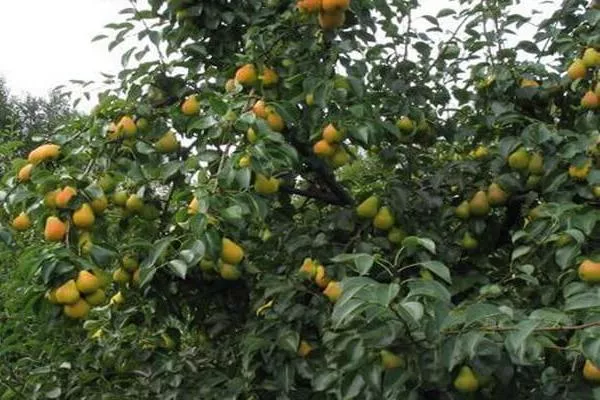
The appearance of the tree
The plant is medium-sized, making it easy to harvest. Other characteristic features:
- crown – rounded-pyramidal, wide;
- tree spreading - average;
- height - varies from 250 to 400 cm, which is influenced by growing conditions, soil fertility and rootstock;
- foliage – oval in shape, with finely serrated edges and a sharp tip;
- leaf blade color – Initially a classic green, it acquires beautiful yellow hues in autumn.
Fruits and their taste characteristics
The fruits deserve special attention, as they are the gardener's reward for their efforts during the growing season. They are described as follows:
- size - medium, but both large and small pears can form on one tree, so their weight varies from 80 to 260 g;
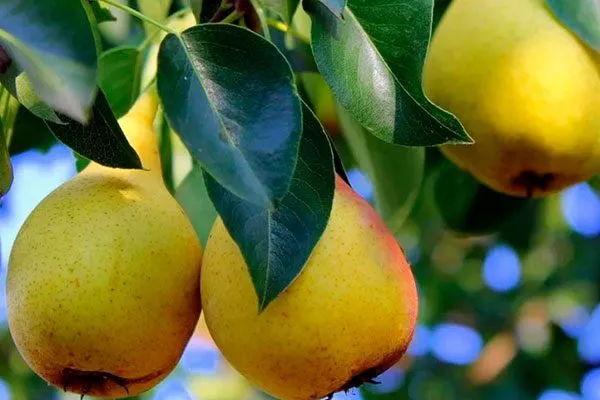
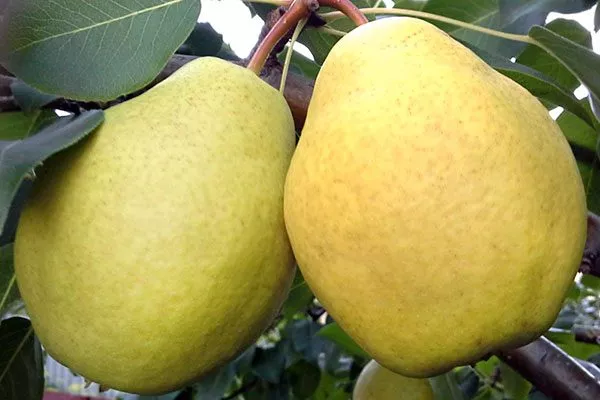
- skin color – in the first half of ripening it is yellow-green, at technical ripeness it is light yellow, after full ripeness a ruddy cover appears on the surface on one side;
- subcutaneous inclusions – in the form of brown multiple and noticeable dots;
- form - round-pear-shaped, but there may also be oblong specimens, but the top is always narrowed;
- pulp – white or creamy white, buttery, juicy and tender (according to reviews, it melts in the mouth when ready for consumption);
- surface of pears – moderately smooth, slightly shiny;
- peel – thin, but quite strong;
- pulp structure – fleshy and fine-grained.
- ✓ The presence of nutmeg-dessert notes in the taste of the fruit.
- ✓ The ability of flowers to withstand frosts down to -20 degrees Celsius.
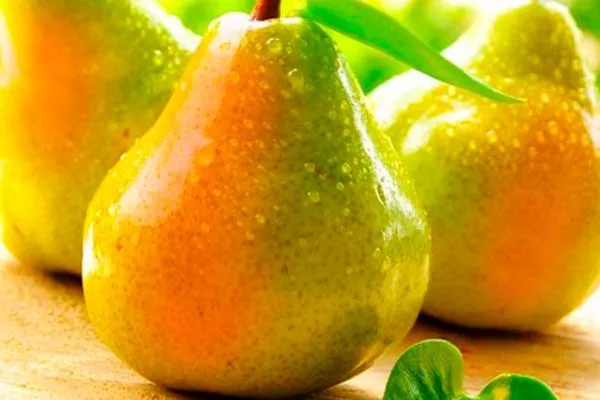
The flavor profile is excellent—it combines intense sweetness with a subtle acidity, making it a balanced taste. It also has nutmeg-like dessert notes.
Characteristics of the culture
The fruit has a shelf life of 2-2.5 months under appropriate conditions. It is versatile, as it can be consumed fresh or processed. The pulp retains its properties even after heat treatment.
Ripening period
The ripening period for this variety's fruit occurs in the fall. The pears reach full ripeness by mid-September or early October under cool conditions, although technical maturity is reached as early as early September. If harvested during this period, the fruit can be stored until mid-December.
Self-fertility and pollinators
For abundant and consistent fruiting, the Autumn Sweet variety requires nearby pollinators. It is recommended to plant one or more other varieties with similar flowering and ripening times.
The most favorable distance between trees for effective cross-pollination is about 6-7 m or more.
Suitable varieties for pollination:
- Yuryevskaya;
- Frenchwoman;
- Rogneda;
- Northerner;
- Chizhovskaya;
- Firefly.
Resistance to drought and frost
This pear variety is characterized by high frost resistance, able to withstand temperatures down to -30 degrees Celsius. Mature trees easily survive frosts down to -40 degrees Celsius. However, prolonged severe frosts can damage the pear. The plant's flowers can withstand temperatures as low as -20 degrees Celsius.
This variety has limited heat tolerance – it doesn't tolerate drought well, nor does it tolerate temperatures above 30 degrees Celsius. Therefore, gardeners must carefully consider the planting location and ensure regular watering during hot periods.
Productivity
Autumn Sweet begins to bear fruit 5-6 years after planting. Yields will depend on climate conditions, soil conditions, and tree health. Under favorable conditions and free of diseases or pests, a single tree can yield up to 40-45 kg of fruit per season.
It is important to note that this variety is cross-pollinated, so it is advisable to plant at least three trees for effective fruiting.
Regions for cultivation
The regions where Autumn Sweet is most actively cultivated include the Moscow region, the Tula and Ryazan regions, as well as the Urals and Western Siberia.
Features of planting and growing
Choosing a planting site is crucial: it should be protected from the wind. Ideally, place the plant on a sunny slope or against the south wall of a building. Avoid planting in low-lying areas or areas where cold air accumulates.
- ✓ The soil pH level should be strictly within 6.0-6.5 for optimal nutrient absorption.
- ✓ The depth of groundwater is at least 3 meters to prevent rotting of the root system.
Soil and planting subtleties
When choosing a planting site, you should pay attention to sufficient lighting, since the pear prefers sunny, unshaded areas.
Planting is carried out:
- from March to May;
- from August to October.
Many gardeners consider spring to be the optimal time for planting, as this is the most favorable time for root adaptation and growth, allowing the young tree to establish itself before the cold weather sets in. By taking these measures, you can prevent frost damage to young shoots in winter.
Helpful tips for preparing for planting:
- Planting holes are prepared in advance. If you weren't able to prepare the site in the fall, do so 14 days before planting.
- The size of the planting hole should be twice the diameter of the root system and three times its depth.
- When digging a hole, the top, most fertile layer of soil is set aside. If the groundwater level is high, a drainage layer of at least 10 cm thick should be created using gravel, crushed rock, or expanded clay. A layer of soil is added on top of the drainage layer and compacted thoroughly. To avoid voids, it is recommended to water the hole and compact it again.
Preparing the seedling for planting:
- In spring, the roots of the seedling are not cut.
- Skeletal branches are removed with pruning shears or a knife.
- The apical roots responsible for the formation of new roots are left untouched. Damage to them can lead to the death of the plant.
The seedling is removed from the container immediately before planting. If there are dry spots on the roots, they are treated with a mixture of black soil, ash, and water in equal parts, and then the lower part can be dipped into the rooting solution.
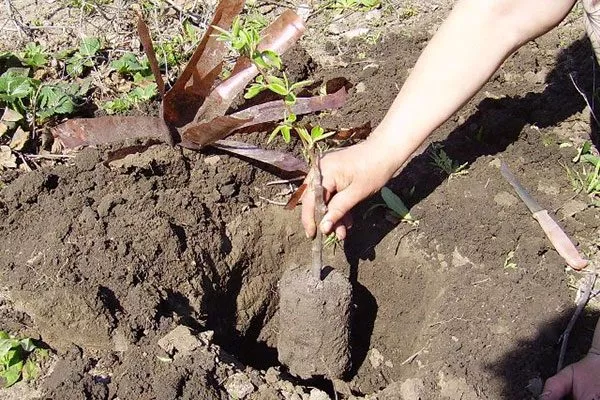
Crop rotation features for this variety:
- Pear gets along well with raspberries, black currants, stemless strawberries, grapes and apple trees.
- It is worth avoiding the proximity of cherries, and plums can be an undesirable neighbor, since these fruit crops have common diseases.
- The pear does not react to the proximity of black poplar, maple or oak.
- Some gardeners plant tomatoes under pear trees, as this helps combat codling moths. Planting calendula and dill near pear trees is also recommended.
- Among the flowers that can grow well under a pear tree are marigolds, daisies, primroses and phlox.
- This pear variety should not be planted near the following plants:
- juniper;
- lilac;
- rowan;
- viburnum;
- fir;
- acacia.
It's important to carefully select a planting site for this pear variety to ensure healthy growth and abundant fruiting. Pears prefer light, loose soils with a neutral pH, around 6.5. Planting in alkaline soil can lead to frost damage during the winter or the development of chlorosis.
You can estimate the acidity of the soil by the types of plants growing in it:
- rapeseed, quinoa, field bindweed - the soil is highly alkaline;
- woodlice, horse sorrel, horsetail, moss, plantain - acidic soil;
- nettle, clover - neutral soil;
- The presence of red veins on the leaves indicates a slightly acidic soil composition.
Preparing and improving the soil before planting a seedling is essential:
- In areas with very dense substrate, such as salt marshes, the substrate is dug to a depth of at least 75 cm. The diameter of the planting hole is usually up to 3 m.
- For sandy soils, it is recommended to mix with clay (12 buckets for a hole 1.5 m wide, 20-25 buckets for a hole 2.5 m in diameter).
- There is no need to add clay to loams and black soil.
Preparing the planting hole for spring planting should begin in the fall by digging a hole 60 cm deep and about 70 cm in diameter, adding 0.5 kg of superphosphate and 15 kg of compost. Leave the hole undisturbed until spring. Immediately before planting, treat the seedling's root system with a clay-water mixture.
Care
Caring for a pear tree includes the following activities:
- Pear trees require abundant watering in June and August, with the soil remaining moist to a depth of 50-75 cm. A total of 5 to 7 waterings are required per season, with the last one occurring in early August.

- Mulching will help retain moisture; you can use organic materials such as humus or peat.
- Optimal feeding of pears is as follows:
- adding organic fertilizer (compost or humus) to the tree trunk circle – from 3 to 5 kg per 1 sq. m every three years;
- application of nitrogen fertilizer every spring – from 20 to 35 g of ammonium nitrate per 1 sq. m;
- autumn addition of phosphorus-potassium fertilizers into ring grooves 40-45 cm deep.
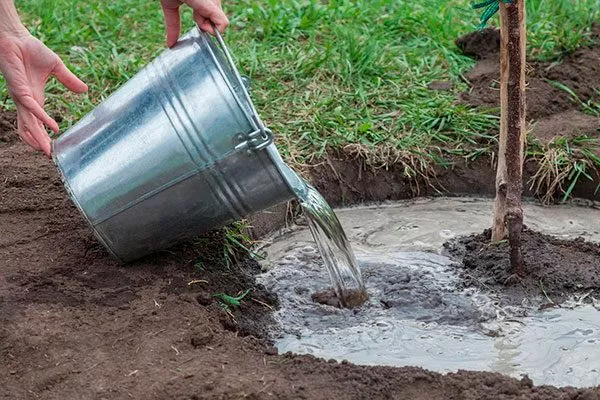
This will help the tree maintain its immune system, increase yield, and improve its resistance to winter frosts. Additionally, trees can be whitewashed: winter whitewashing will protect against frost, and spring whitewashing will prevent sunburn.
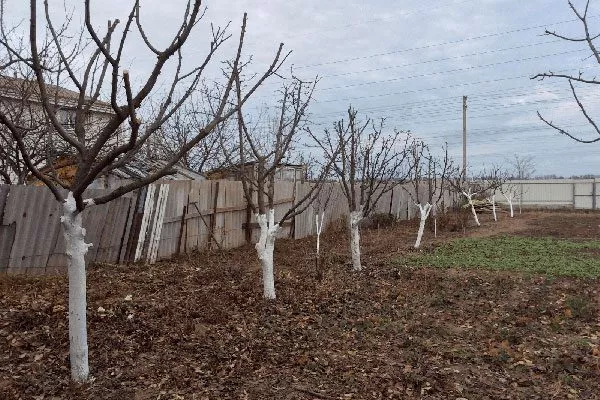
You can use either a ready-made whitewashing solution or a homemade one. To do this, mix 9-10 liters of water, 1.8-2 kg of lime, and 1.4-1.6 kg of clay. Apply the resulting mixture to the entire tree, and to mature trees, from the base to the beginning of the lower branches.
Pruning is an important step for the variety
The Autumn Sweet pear variety is characterized as tasty and productive. To ensure proper development and abundant fruit production, the tree requires crown shaping during the early stages of growth. Below are instructions for gardeners outlining the necessary procedure:
- During the first year after planting, pinch back the one-year-old shoots in the spring. This will encourage the growth of new lateral branches. By autumn, temporary fruiting branches should be formed using methods similar to those used for training grape vines.
- In the second year of growth, in the spring, shorten the replacement branches to stimulate new growth. In the fall, there's no need to prune; instead, allow new branches, approximately 50 mm in diameter, to develop freely.
- In the third year, in the spring, one-year shoots are shortened to form future fruit-bearing branches, and in the fall, the formation of fruits on these branches is already observed.
- In the fourth year, in the spring, all three-year-old branches that have already borne fruit are removed, shortening one of the replacement shoots by a ring to promote the formation of new fruiting branches.
Correct implementation of these agricultural measures contributes to the healthy development of the tree and an abundant harvest.
Diseases and pests
This pear variety is noted for its resistance to fungal diseases and scab. However, this doesn't eliminate the need for sanitation measures. In the fall, all fallen leaves should be carefully collected and destroyed by burning. After harvesting, the tree should be sprayed with a 2% Bordeaux mixture solution.
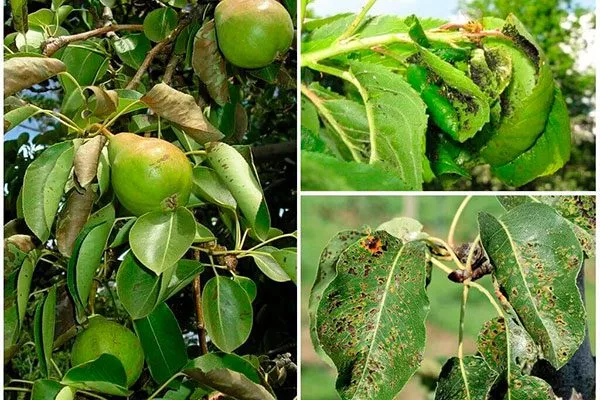
In spring, the use of the same preparation continues, but in a weaker concentration – a one percent solution.
- Spraying is carried out in three stages:
- After the spring buds have blossomed.
- After flowering is complete.
- Two weeks after the second spraying.
In addition, attention should be paid to preventive measures:
- Use only healthy seedlings for planting.
- Disinfect tools before and after pruning.
- Remove weeds manually or with herbicides, and trim the grass.
- Regularly prune dry and damaged branches.
- Use a special solution for whitewashing tree trunks.
- Repair cracks and damage caused by frost using garden varnish.
- In spring, treat trees with a solution of Bordeaux mixture, and in autumn - with a solution of ferrous sulfate.
When the first signs of disease or pests are detected, it is necessary to immediately begin to combat them.
Wintering
Young seedlings should be protected during the cold season by covering them with pine branches or other heat-retaining material. Once frost sets in, the trees require additional protection. Mature trees do not require such measures. The root system of young trees should be protected for the first five years by mulching the area around the trunk before winter.
It's important to avoid using synthetic materials when covering seedlings, as they can disrupt humidity and air circulation. This type of insulation can cause the plant to become overheated and die. Natural burlap is best for protecting plants.
Harvesting
Pears are harvested in dry weather to prevent excess moisture from reaching the fruit. When harvesting, it's important to pick the fruit carefully, keeping the stems intact, which helps ensure better preservation during transportation and storage.
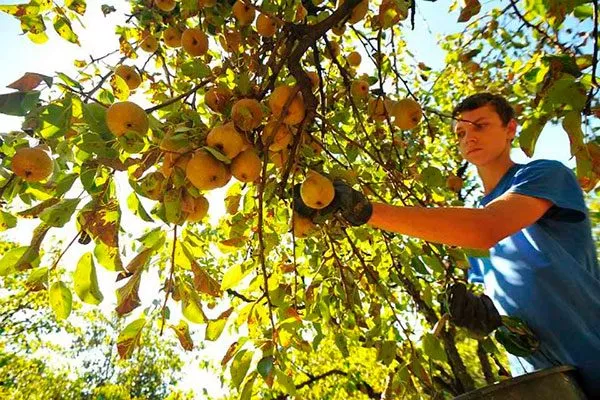
In hot weather, it's recommended to cool harvested pears in a shady place before storing. Careful selection of the harvest is also essential, discarding damaged or spoiled fruit to prevent the spread of spoilage to healthy pears.
Storage
To preserve pears for a long time, they are placed in plastic, wood, or cardboard containers, arranged in rows. The boxes are stored in a room with a temperature of 0 to 4 degrees Celsius and an air humidity of 90% to 95%.
Pears suitable for storage should be dry, undamaged, and with their stems intact. Regular inspection and removal of spoiled fruit will help preserve the harvest until mid-winter.
Methods of reproduction
The most popular methods include grafting, layering, and cuttings. Layering is the most accessible and reliable method for inexperienced gardeners.
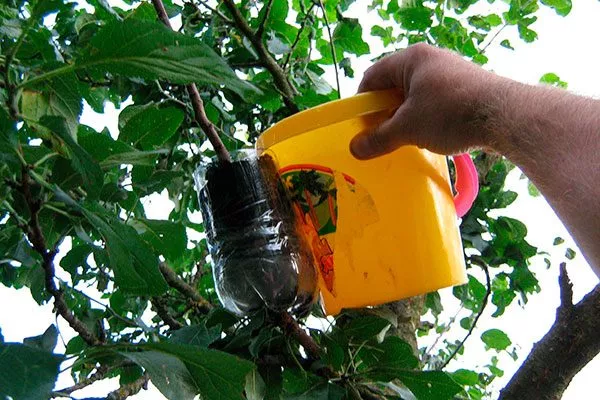
To implement this method, follow these steps:
- Prepare a box with fertile soil and line its walls with polyethylene to retain moisture.
- Carefully bend one of the lower branches of the young tree towards the box and make several shallow transverse cuts where it touches the ground.
- Fix the branch in the ground and water it.
- Care for the cutting for two years: water, protect from the sun and, if necessary, use rooting stimulants.
Advantages and disadvantages of the variety
Based on an analysis of the description of the Autumn Sweet pear variety and consumer reviews, the following advantages are highlighted:
However, gardeners should consider the need for regular watering and the need for compatible pollinators due to the variety's self-sterility.
Gardeners' reviews
The Autumn Sweet pear deserves attention as a promising breeding variety. It is ideal for cultivation in a variety of climates, boasting excellent dessert qualities, high commercial value, and versatility. This pear has proven its high yield and adaptability.