
The November pear is a popular variety chosen for planting in cold climates. It is characterized by high frost resistance and has few special growing requirements. Proper care and minimal maintenance will help grow a robust plant that produces consistent yields.
Description of November Winter Pear
The variety was developed in 1950 at the Far Eastern Research Institute of Horticulture and Agriculture (NIISKh). It was created by crossing two varieties—Ussuriyskaya and Dekanka Zimnyaya. The originator was breeder Alexey Vasilyevich Bolonyaev.
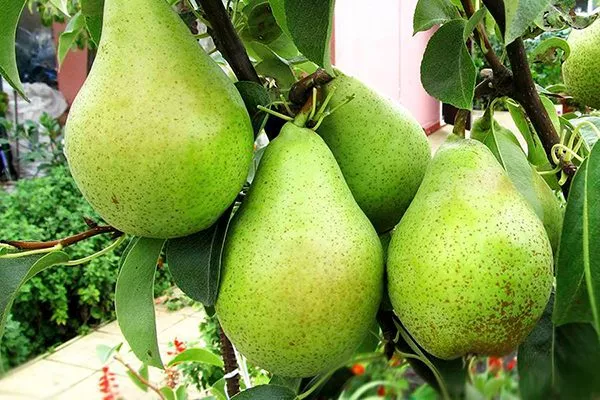
What does a tree look like?
It is characterized by strong growth, usually reaching a height of 3 to 3.5 m. It has distinctive features:
- The crown has a rounded-pyramidal configuration.
- The skeletal branches are well branched, growing upward and extending from the trunk at a right angle.
- The shoots are thick, slightly curved, and colored green-burgundy.
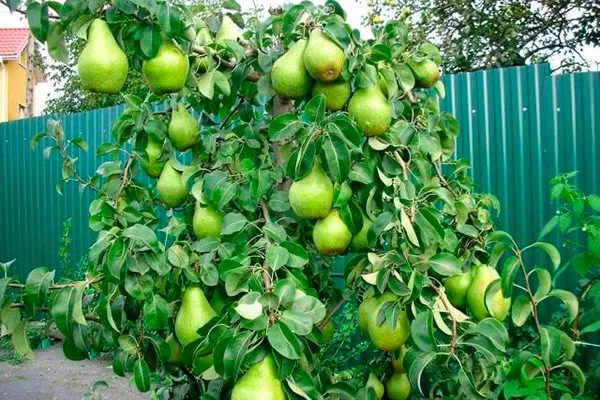
The branches are covered with small, dense leaves, a rich green hue. They have a rounded, elongated shape. The underside is lighter and slightly pubescent.
Fruit characteristics
It produces small, ovoid fruits. Other characteristics:
- The weight is about 65 g. In some cases, especially in the southern regions, their weight can reach 80-100 g.
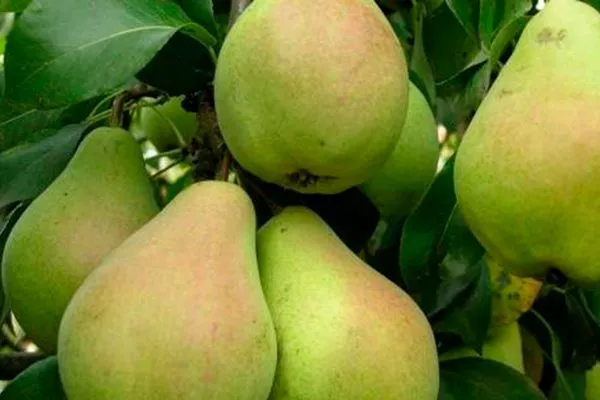
- They are greenish-yellow in color with a delicate burgundy blush and pronounced ribbing. Stripes and streaks are visible on the surface.
- The peduncle is characterized by a dark brown hue and a curved shape, but not too large in size.
- There are numerous light brown subcutaneous dots that are clearly visible.
- The pulp is white, has a sweet and sour taste and a very pleasant, distinct aroma.
Nutrient content of fruits:
- sugars – 10.8%;
- titratable acids – 0.9%;
- tannins – 0.5%;
- pectin substances – 0.4%.
Fresh fruit can be stored until December, and frozen fruit will retain its flavor throughout the winter. They can be eaten fresh, dried, or used to make compotes and jams.
Characteristics of pear variety
Noyabrskaya possesses excellent characteristics, making it one of the best varieties for planting. Gardeners value it for its consistent yields and low maintenance requirements.
Productivity, fruiting
This is an early autumn variety. The fruit ripens in late September. Consumer maturity occurs approximately 30 days after harvest. Fruiting occurs 3-4 years after planting, and if grafted onto quince, the first fruits can be expected as early as the second year.
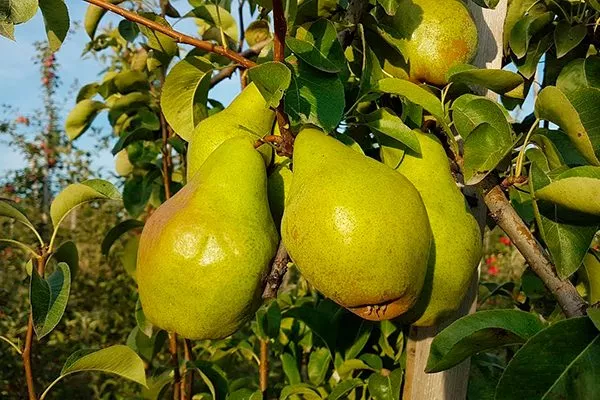
Massive yields typically occur after 5-6 seasons, and fruiting occurs annually, without dormant periods. A 1-hectare plot can yield between 54.8 and 212 centners of fruit.
Pollinators
Requires pollination with pollen from other pears to produce fruit. For the tree to bloom properly and produce fruit, it needs nearby pollinating neighbors. Any variety with similar bloom periods is suitable.
Strengths and weaknesses of the variety
The November pear is an old but reliable variety, widely used in high-risk farming areas and for breeding new cultivars. It has many positive qualities:
Among the disadvantages, some gardeners note the tall growth of the tree, the mediocre commercial appearance of the pears and their small size.
Growing rules
Growing the plant isn't particularly difficult, making Noyabrskaya suitable even for novice gardeners. It's important to plant the seedling correctly and provide it with proper care to ensure it takes root and thrives.
Planting a tree
Choose a well-lit location protected from strong winds. In southern regions, it's best to plant the tree in the spring so it has time to establish itself before the winter cold sets in. In other regions, planting in the fall is recommended.
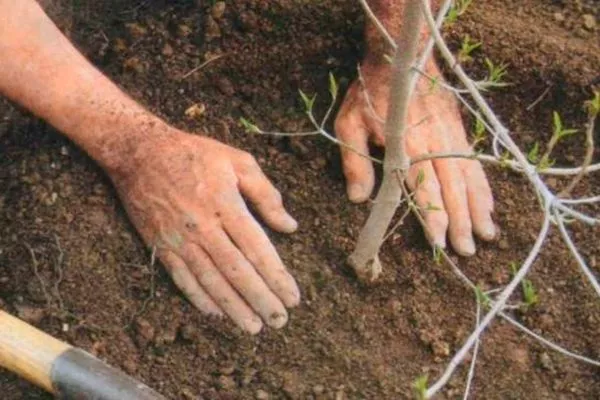
- ✓ The planting hole should be at least 60 cm deep to provide sufficient space for the root system to develop.
- ✓ The distance between seedlings should be at least 4-5 meters to ensure optimal lighting and ventilation.
Step-by-step algorithm:
- Six months before planting, clear the soil of weeds and stones. Dig a hole about 60 cm deep and in diameter.
- Check the seedling's roots for damage and trim away any dry or damaged areas. If the roots are too long, trim them back to 20-25 cm.
- Place the seedling in the center of the hole so that the root collar is level with the soil surface.
- Gradually fill the hole with soil, carefully distributing the roots around the seedling. Don't pack the soil too tightly to ensure good drainage.
- After planting, water the soil generously. Make sure the soil has absorbed the water well.
- Apply a layer of mulch (such as straw or bark) around the seedling, about 5-10 cm from the stem. Mulch will help retain moisture, prevent weed growth, and protect the roots from overheating and freezing.
During the first year after planting, water the tree 3-4 times. Before each watering, loosen the soil to improve aeration.
Caring for a pear tree
Provide suitable conditions for the normal development of your pear tree. For rapid fruiting and better growth, follow these agronomic practices:
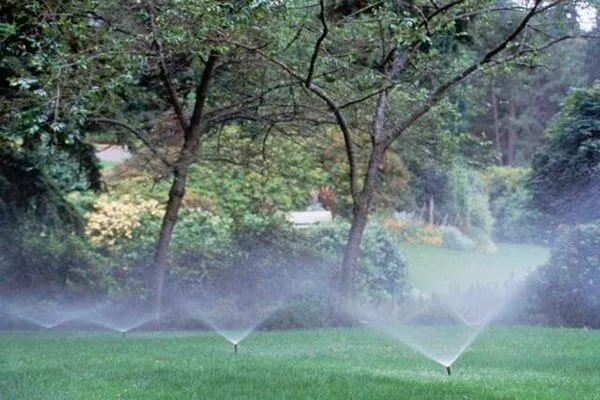
- Watering. During the period of active growth and fruit formation, water the plant moderately, ensuring soil moisture at the root zone. During periods of drought or heat, increase the frequency of watering, but avoid standing water in the soil to prevent rot.
- Top dressing. Apply organic fertilizers at the beginning of the growing season in spring to stimulate growth and development. During fruiting and flowering, apply complex mineral fertilizers to provide the plant with essential nutrients.
- Trimming. Perform sanitary pruning in late winter or early spring, removing dead, diseased, or damaged branches. Shape the crown by trimming excess or overlapping branches to ensure uniform light and ventilation.
Preparing for winter
It is highly frost-resistant and generally does not require winter protection. However, additional care may be beneficial, especially for young specimens. It is important to protect the root system from freezing. Mulching with a thick layer of peat (at least 30 cm) will help with this.
Diseases and pests
The crop is resistant to fungal diseases, but can be susceptible to other diseases and pest attacks. The main problems are listed below:
| Disease/Pest | Consequences | Methods of control |
| Black crayfish | Red spots appear, gradually turning black and spreading. This can lead to cracking and peeling of the bark. Branches and leaves can also be affected, ultimately leading to their death. | Affected branches and leaves are removed and burned. Damaged areas on the trunk and skeletal branches are cut off and then treated with a 1-2% copper sulfate solution. |
| Cytosporosis | Reddening, drying and cracking of the bark. | Treatment is carried out using the same methods as for black canker. Good preventative measures include whitewashing the trunk in the fall and promptly removing damaged and dead branches. |
| Pear moth | It lays eggs in fruit, and after hatching, the larvae begin to feed on the fruit's flesh, causing spoilage. In severe infestations, the pest can cause significant damage to the crop, rendering the fruit inedible. | Use of Agravertin, Kinmiks, and Iskra Zolotaya. Collection and burning of fallen leaves.
|
| Green aphid | They feed on plant sap, sucking it from leaves, shoots, and other parts. In severe infestations, aphids can cause yellowing and wilting of leaves. They secrete a sticky substance that can become a breeding ground for fungal infections. | The medications used are Kinmix, Agravertin, and Iskra Zolotaya. Treatment is with chamomile infusion. |
| Pear sucker | Adults lay eggs on buds and young shoots, and the larvae feed on the tissue of these plant parts. This can lead to deformation and shedding of buds and foliage, reduced yields, and overall susceptibility to other stresses. | The following preparations are used: Karbofos, Iskra and Agravertin. |
| Pest | An effective drug | Processing period |
|---|---|---|
| Pear moth | Agravertin | Before flowering |
| Green aphid | Kinmix | After flowering |
| Pear sucker | Karbofos | Early spring |
Harvesting
Harvest the fruit at the end of September. It will be good until the end of December. The fruit stores well dried or frozen.
Review of the variety
The November pear is a variety that attracts gardeners with its high yield, disease resistance, and excellent flavor. Its long shelf life and versatile use make it a valuable asset for home gardeners and commercial growers.