
The Nika pear is a dwarf tree with high frost resistance and yield. Despite its recent origins, the variety has become popular among consumers and amateur gardeners for its excellent taste. It grows easily in northern regions, has a long shelf life, and is easily transported over long distances.
Origin and zoning
The Nika pear variety was developed by Russian breeders at the I.V. Michurin State Scientific Institution, the All-Russian Research Institute of Fruit Plant Gene Pool and Breeding. The work was led by Professor S.P. Yakovlev, but the main contributions were made by I.A. Bandurko, M.Yu. Akimov, A.P. Gribanovsky, and N.I. Savelyev.
The variety is based on the properties of the Talgar Beauty, which ensure frost resistance, drought tolerance, and large fruit size, as well as the Daughter of Dawn, a variety known for its high yield and aromatic fruits.
Nika is suitable for cultivation in the central part of Russia and more northern regions, is zoned in the Central Black Earth Region and since 2002 it has been included in the State Register and patented.
Characteristics of the tree
Nika is a unique variety in every way, which is why it's in high demand. We invite you to explore them.
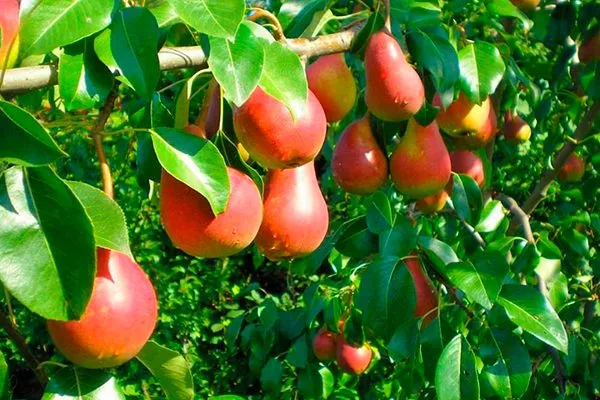
Pollinator varieties
Nika is a partially self-fertile variety and can produce only a third of its potential yield when grown alone.
Winter pear varieties such as Duchess, Svetlyanka, Rogneda, and Russian Bere are best suited for pollination.
Many people prefer Williams, Feeria, Kupava, Lada, and Thumbelina, which bloom and bear fruit at similar times.
Tree height and other plant characteristics
Being a dwarf pear, it is characterized by its compact size and tree height of up to 3-4 m. Other features:
- crown – spherical and neat;
- skeletal shoots – they extend from the trunk at an angle of 50-60 degrees, do not have pubescence, but there are a small number of lenticels on the surface;
- thickness of branches – average;
- bark – brown;
- leaves - pointed-oval, curved type and bright green shade;
- leaf blade – medium-sized, smooth and shiny, with finely serrated edges and faint veins;
- flowers – snow-white, large;
- fruiting type – mixed, since the ovaries are formed on different branches (rings, spears, fruiting rods).
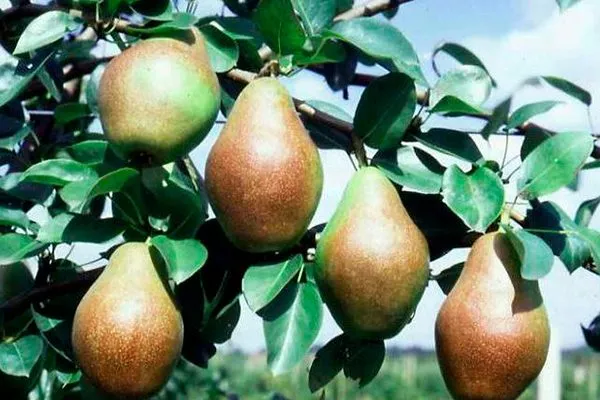
Life expectancy
The lifespan of the Nika variety has not been precisely determined, but with proper planting and care, pears can bear fruit for up to 50 years (as claimed by the breeders). Key factors for longevity are regular pruning and proper tree care.
Winter hardiness
Nika demonstrated high frost resistance during testing, successfully withstanding temperatures down to -38 degrees Celsius. In real-life gardens in northern regions, only minor frosts are observed, which do not affect yield.
Ripening period and yield
The fruit begins to ripen in mid-September, but it's recommended to harvest the pears by the end of the month for long-term storage. Ripe pears retain their quality for up to 95-105 days and exhibit excellent flavor, especially in warmer climates.
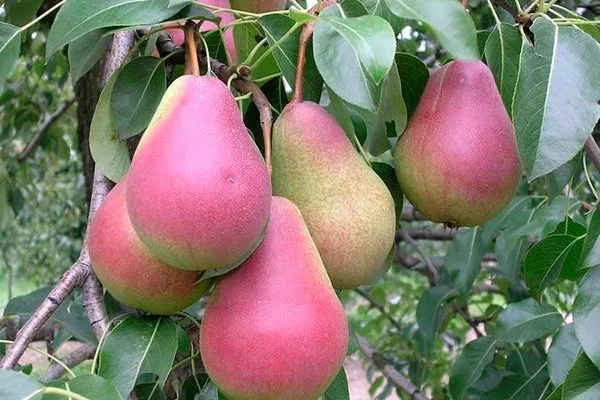
The yield of the variety is estimated at 150-154 centners per hectare or 80-150 kg per tree, with a small amount of pre-harvest shedding.
Fruiting cycle
Nika begins to bear fruit at 4-6 years of age and shows stable annual fruiting.
| Disease | The stability of the Nika pear | Recommended preventive measures |
|---|---|---|
| Scab | High | Treatment with Bordeaux mixture before flowering |
| Fire blight | Average | Removal of affected branches, treatment with antibiotics |
| Cytosporosis | Low | Whitewashing of tree trunks, treatment with fungicides |
Disease resistance
This variety has good immunity to common pear diseases, including scab and fire blight. However, infections such as cytosporosis and fruit rot are possible. Attacks by harmful insects are also possible. Preventative spraying before and after flowering is recommended. After leaf fall, clear the soil around the trees and till.
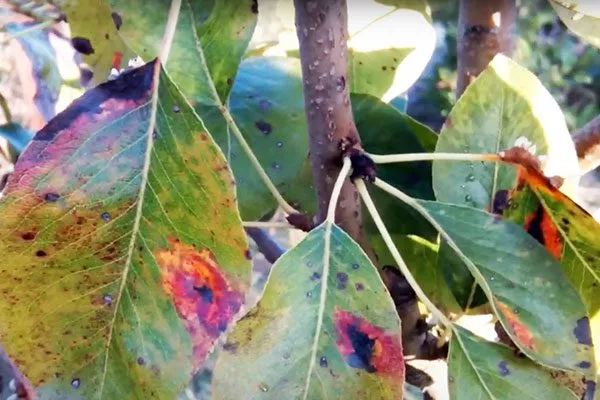
To protect plants from mice, hares, moles, and insects, whitewash the trunks and skeletal branches with lime solution in the spring. During bud formation, pear trees are treated with Bordeaux mixture or other protective agents to prevent pest infestations.
Description of the fruit
These pears have special characteristics that distinguish the variety from others:
- Caloric content. The fruits have high nutritional value and are rich in sugar. Per 100 g of fruit, they contain: 10.1-10.2% sugar, 15.5-15.7% dry soluble solids, 6.0-6.2 mg ascorbic acid, 122 ml of P-active substances, and 0.4% titratable acids.
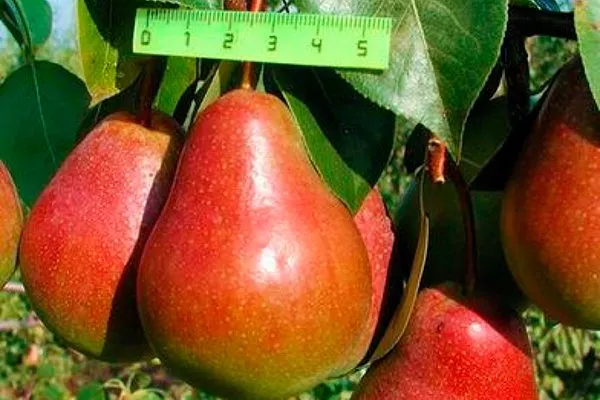
- Taste qualities. The flavor combines sweetness with subtle acidity, and the aroma reveals Muscat. There's no astringency or granulation. After tasting, the variety received a score of 4.4.
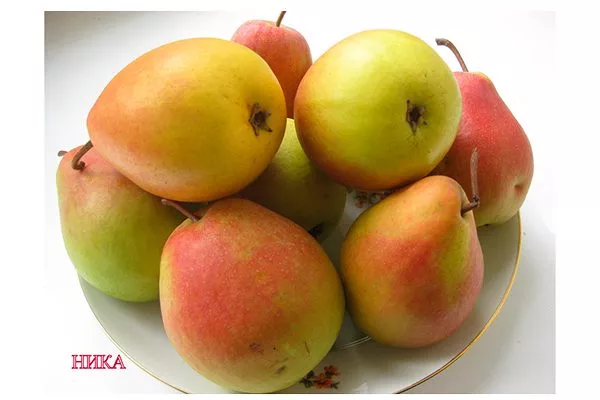
- Size, color and shape of the fruit. The fruits are distinguished by their regular pear-shaped form and medium size – their weight varies from 140 to 180-200 g. Other characteristics of the fruits:
- color in technical maturity – green;
- color at consumer maturity – yellow-reddish;
- skin – refined yet durable, with a waxy finish and a smooth surface;
- pulp – juicy and tender, creamy in color;
- subcutaneous inclusions – the dots are green, large in size and have clear, easily visible contours;
- peduncle – medium in size, curved and set obliquely;
- funnel – small and narrow;
- cup – open;
- saucer – small-wide;
- pulp texture type – fine-grained, semi-oily, with a medium density level.
- Usage. Pears are a versatile dessert variety. They are used to make jam, compote, juice, confectionery fillings, and meat sauces. Pears can be dried and frozen.
Growing specifics and agricultural recommendations
The choice of a location for planting pear seedlings should be based on the preference for sunny, open areas with good drainage, located at an elevation to avoid excess moisture and the proximity of groundwater (at a distance of at least 2-2.5 m from the surface).
- ✓ The soil pH level should be between 6.0-6.5 for optimal growth of Nika pear.
- ✓ The depth of groundwater should not exceed 2.5 meters.
Other important points about planting and subsequent care:
- Light loamy, sandy and chernozem soils are preferred.
- It is recommended to leave a gap of 6-8 m between rows of seedlings, and 4-4.5 m between trees in a row.
- Planting holes measuring 95 x 95 cm are prepared in advance, adding 30 kg of humus, 20 kg of coarse sand (preferably river sand), charcoal, phosphate mix, and potassium sulfate. The bottom of the hole is moistened with 30 liters of water, one liter of which contains 2 tablespoons of dolomite. Then, add soil and let it cool for 15-20 days.
- During the first two years after planting, seedlings do not require additional fertilization, as sufficient fertilizer was applied at planting. Mature plants are fertilized in the spring with organic matter dissolved in water:
- 250-270 g of bird droppings per 5 liters of water;
- 15-17 g of ammonium nitrate;
- 90-110 g of urea.
- In the fall, phosphorus- and potassium-containing fertilizers are applied, spreading over the top layer of soil and burying them in the soil: per 1 sq. m:
- Superphosphate (25-30 g);
- potassium chloride (14-16 g);
- wood ash (145-155 ml).
- In summer, use fertilizers containing magnesium, boron, copper, and zinc, avoiding excessive use of nitrogen-containing compounds so as not to stimulate excessive foliage growth to the detriment of the crop.
- Watering is carried out as needed, but not less than three times per season:
- before budding begins;
- two weeks after the first watering;
- after picking the fruit.
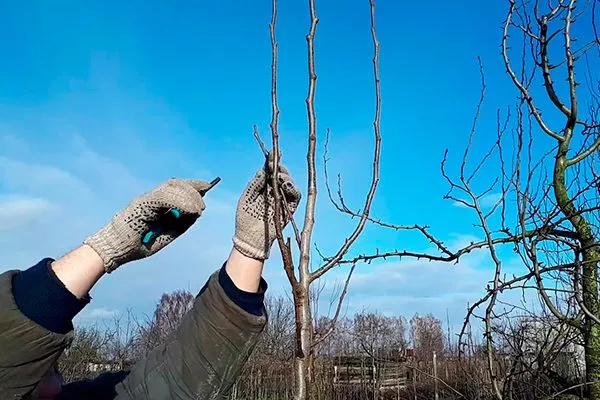
- Pruning is carried out every early spring, removing old and dried branches, and living ones are shortened by 12-16 cm to maintain a healthy condition and fruiting of the crown.
- In the fall, remove weak and thickening shoots and lower branches, and prune the upper branches as needed to stimulate growth, limiting the pruning to no more than 1/4 of the total volume. Treat the cut sections with a garden antiseptic varnish. Pruning of seedlings begins in the second year after planting.
Advantages and disadvantages of the variety
In its short existence, this pear variety has gained popularity among gardeners and farmers due to the following characteristics:
Nika pears are distinguished by their impeccable marketability, transportability, and long shelf life. However, they do have some drawbacks:
Nika Pear: Reviews
The Nika pear is a relatively new variety, but has already spread throughout all regions of our country. It has a unique characteristic: its fruit is always sweeter in warmer regions, so for harsh climates, it's especially recommended to plant trees in the sunniest, highest locations.