
The Nezhnost pear is intended for cultivation in central Russia—this was precisely the goal set by the breeders during their breeding efforts. The authors are two botanists, Yakovlev P.N. and Yakovlev S.P., who work at the I.V. Michurin Research Institute of Horticulture. The crossbreeding involved Lyubimitsa Klappa and Tyoma.
Description of the Nezhnost pear variety with photos
Primary ovaries form on the tree as early as the fourth year after planting, indicating the variety's early fruiting. Another distinctive feature is that the plant uses only lateral and main shoots for fruiting. Fruits are almost never produced on the ring shoots.
Tree
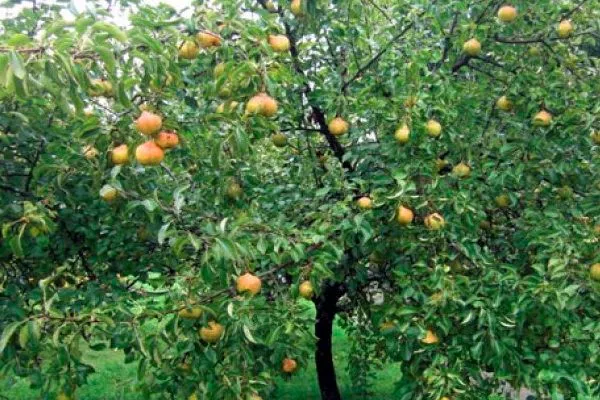
The variety is vigorous (annual growth is at least 50-70 cm), but of medium height, as the shoots grow to a maximum of 3.8-4 m. Other characteristic features of the tree:
- shoots – at a young age they are thin, but as they grow they become thick;
- bark color – light brown with grayish hues;
- surface of branches – smooth, with white lenticels;
- skeletal shoots – do not thicken the wood;
- crown density – moderate;
- form - spreading-rounded;
- foliage – large in size, leathery, glossy, dark green with light veins;
- leaf blade shape – elongated ovoid, slightly pointed tip, finely serrated edges;
- petioles – have a pale green hue and an elongated shape;
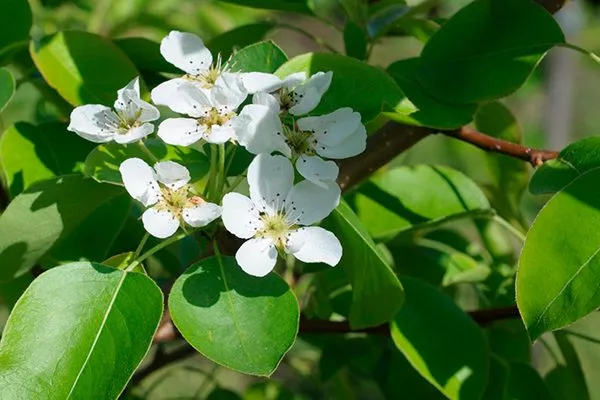
- flowers – Snow-white and very fragrant, simple type with five petals.
Fruit
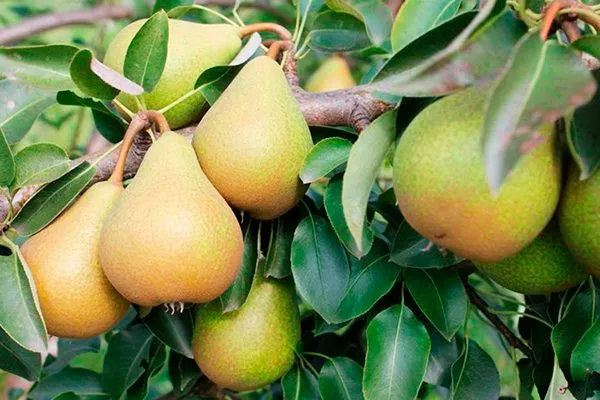
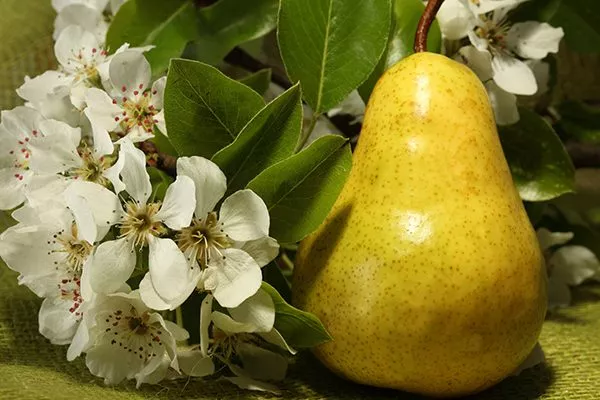
Pears are considered large – their weight ranges from 100 g at the beginning of fruiting to 200 g later. Growing conditions also influence the fruit's size. Description of the fruit's appearance and characteristics:
- form - broadly oval or rounded-ovoid, always symmetrical;
- peel color – initially green, then yellow shades appear, and when grown in the sunniest areas, a slight blush is formed;
- pulp tone – creamy, light;
- subcutaneous inclusions – in large quantities, grayish tint;
- cups – open type;
- saucer – small and shallow;
- peduncles – medium in thickness and length;
- length of pears – from 12 to 16 cm;
- peel – with a waxy coating;
- pulp – grainy, juicy-tender and medium-dense.
Characteristics of the variety
The fruit has a long shelf life – if basic storage requirements are followed, pears will retain their marketable appearance for 50-60 days. Long-distance transportation is impossible because the fruit's skin is thin and susceptible to cracking when struck or otherwise exposed to mechanical stress.
Taste and uses
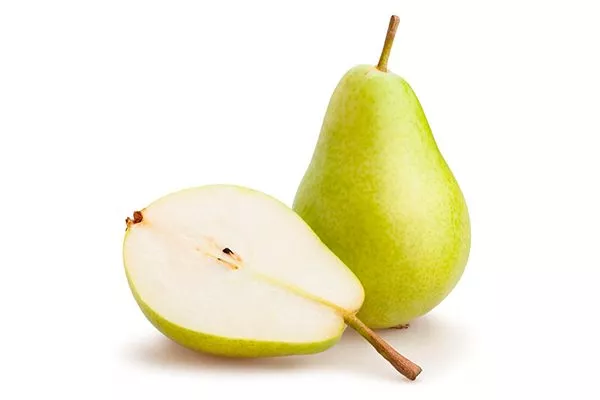
Pears of the Nezhnost (Tenderness) variety have a balanced and soft flavor, harmoniously combining sweetness and tartness. In professional tastings, these fruits often score three to four out of five possible points. Their pulp contains a high proportion of sucrose—up to 21% of the total weight. Acidity is modest, not exceeding 0.35%.
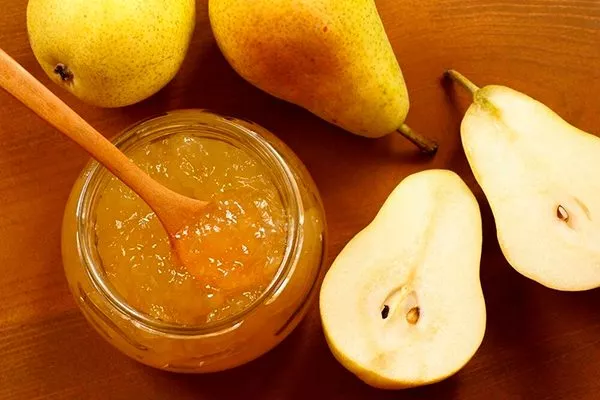
Harvested specimens are known for their versatility: they are eaten raw, incorporated into many sweet culinary creations, made into jams and jellies, and used in freshly squeezed juices and aromatic compotes. These fruits are considered sweet dessert varieties.
Beneficial properties
Juicy fruits are a storehouse of sweet carbohydrates, various organic compounds with an acidic nature, fiber, the natural gelling agent pectin, substances with fixing properties, as well as a set of vitamins, including A, C, nicotinamide (PP), thiamine (B1) and polyphenol antioxidants, supplemented by a range of microelements.
Properties:
- Pectin in the Nezhnost pear acts as a barrier to ulcerative processes and can favorably regulate intestinal activity, thereby stimulating good digestion of food.
- Nicotinamide (PP) plays a key role in the body's nutrient cycle, promoting the normal functioning of cellular structures. A deficiency of this vitamin can lead to delays in the healing of cuts and ulcers.
- Thiamine maintains the balance of proteins and carbohydrates in the body's system.
- Pears are known for their folate content, even surpassing blackcurrants. A deficiency can reduce white blood cell count. Folic acid supports the vascular system and enhances the body's immune system.
- Arbutin, a natural antibacterial substance with fever-lowering properties, has been discovered, making decoctions and juices from this fruit useful in the fight against germs and fever.
- Pear helps with coughs and has disinfectant, diuretic and astringent properties.
Ripening time
The pear variety known as Nezhnost (Tenderness) begins harvesting in late August and continues until the first ten days of September, sometimes even longer. The fruits hold well on the branches when ripe and are not prone to spontaneous shedding. However, leaving them on the tree for too long is not recommended due to possible loss of flavor and discoloration of the flesh.
Productivity
It is known for its abundant and consistent yields. Young trees, when beginning to bear fruit, produce 6-10 kg of ripe fruit, while a mature tree can yield 30 to 45-50 kg of pears. If the fruit is abundant, staking is recommended to prevent breakage.
Frost resistance
The Nezhnost pear is noted for its high frost resistance, successfully withstanding temperatures down to -40 degrees Celsius. Winter thaws can damage the fruit buds.
Pollinators of the pear Tenderness
According to research, Nezhnost is not completely self-fertile, which means it needs nearby pollinators with similar flowering periods, such as Osennyaya Yakovleva, Lada, or Avgustovskaya.
Growing regions
Due to its high frost resistance, the variety can be grown in various regions of Central Russia, such as:
- Middle zone;
- Volga region;
- Black Earth Region;
- Southern regions.
However, due to the risk of severe frosts, cultivation in the Urals and northern regions may be limited by the death of some buds.
Disease resistance
Tenderness is adapted to resist most diseases. With optimal conditions, attacks by parasites and infections can be minimized. Regular inspections of trees for pests and subsequent insecticide treatments are used for prevention.
Advantages and disadvantages
The variety has many positive qualities, which is why gardeners and consumers love it.
Landing rules
Experts recommend planting this variety during the spring months, approximately between mid- and late April, to allow the tree to take root and adapt to the approaching cold weather. In warmer climates, seedlings can also be planted in the fall, before November.
The choice of landing site is made taking into account the following parameters:
- maximum sunlight and no shadow;
- distance from large plants that can create shade;
- protection from stagnant water processes in the soil;
- groundwater must be at a depth of at least 2 m;
- unimpeded air circulation, without the influence of neighboring structures such as buildings or garages.
- ✓ The seedling must have a healthy root system without signs of rot or damage.
- ✓ The height of the seedling should be at least 1.2 m, which indicates its good development.
Loose, rich soil is ideal. The best choice is loamy soil with a slightly acidic or neutral pH between 6 and 7. Soil preparation begins well in advance, with digging and the addition of compost or rotted manure at a rate of 8-10 kg per square meter. If the soil is dense, it is recommended to add sawdust or sand at a rate of approximately 5 kg per square meter.
Care Features
Caring for a pear tree involves performing tasks that do not require any special skills:
- Young plants require weekly watering, while mature plants require watering once or twice a month, increasing the frequency during dry periods. It is recommended to use settled water. Mulch is used to help retain soil moisture.
- It is necessary to regularly loosen and weed the grass.
- Fertilizing begins in the tree's second year. Urea or ammonium nitrate is used in the spring, and complex fertilizers or a mixture of superphosphate and potassium salt are used during flowering. Organic fertilizers (such as diluted mullein or bird droppings) should be alternated with mineral fertilizers.
- Formative and sanitary pruning is performed every spring, removing damaged and weak branches. Fungicide spraying is also performed.
- In spring, before the growing season begins, apply urea at a rate of 30 g per 1 m².
- During flowering, use a complex fertilizer containing phosphorus and potassium.
- In the fall, after harvesting, add rotted manure or compost to improve the soil structure.
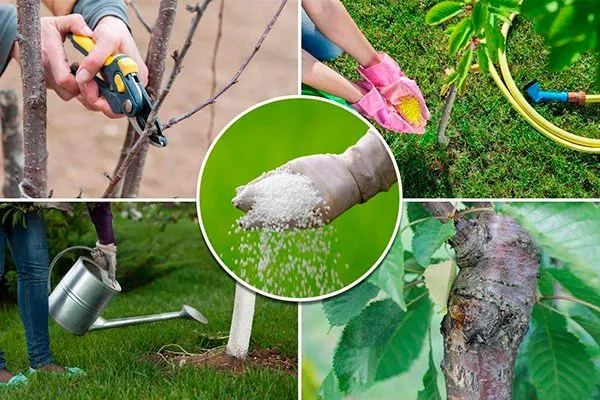
During the summer, it's important to closely monitor the health of trees and respond promptly to pest infestations by using insecticides. Alternatively, you can use folk remedies, such as a potassium permanganate solution.
Collection and storage
The fruit harvest begins in the last days of the summer season and continues until mid-September. The harvest is stored in portions, with paper placed between each portion. Ripe pears are distinguished by a golden-yellow color and a characteristic blush on the sunny side. A sign of a well-ripened pear is that it easily separates from the branches by hand.
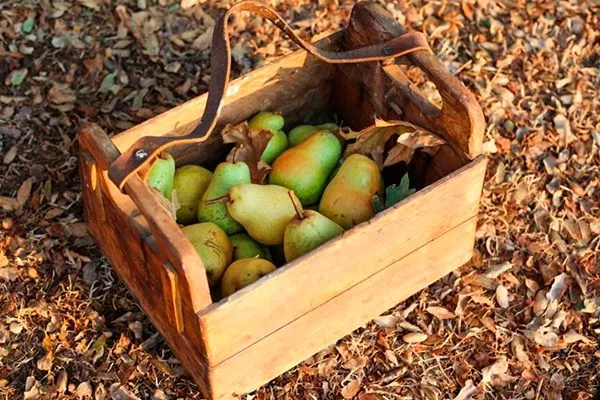
To preserve pears, you need to maintain a strict temperature range: from -1 to +1 degrees Celsius. The best place for this is a dark space with high humidity (around 90-95%) and effective ventilation. These conditions are difficult to achieve in a refrigerator, so basements or cellars are often preferred.
Gardeners' reviews of the Nezhnost pear variety
The Nezhnost pear is an excellent choice for both commercial cultivation and home gardening. The only challenge faced by amateur gardeners is the tree's height, requiring them to find ways to harvest the fruit. Only immature specimens, firmly attached to their stems, are suitable for long-term storage.