
The Efimova "Naryadnaya" variety dates back to the Soviet era and remains popular among Russian gardening enthusiasts. Their unwavering love for this variety stems not only from the attractive appearance of its fruit, as its name suggests. Efimova "Naryadnaya" stands out for its regular fruiting, satisfactory yield, and resistance to pathogens.
Subtleties of origin
This variety, developed by the renowned Soviet breeder V. A. Efimov in the mid-1930s, is the result of his work at the breeding stations of the All-Russian Scientific Research Institute of Horticulture and Nursery. Currently, the right to the variety belongs to the Federal Scientific Center of Horticulture, which is considered the legal successor to this scientific organization.
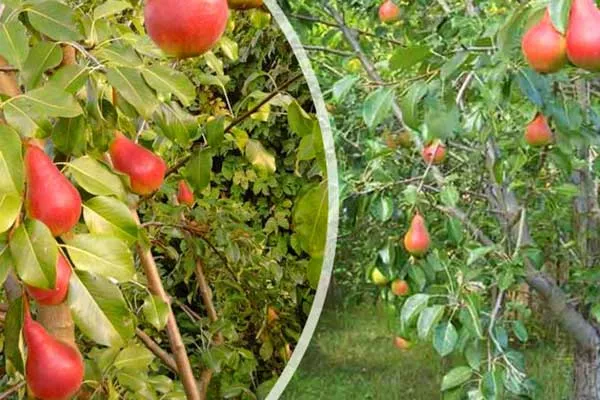
It was obtained by crossing two already well-known “breeds” – Tonkovetka, born on Russian soil, and Lyubimitsa or Favoritka, which was brought from the United States of America.
It took quite a long time before it was officially recognized: the initial registration application was filed in 1963, and trials continued for 11 years. It wasn't until 1974 that the Efimova Naryadnaya pear was included in the State Register of Breeding Achievements.
Features of the Efimova Elegant Pear with photos
When gardeners choose a variety, they can't help but pay attention to the fruit's appearance. However, the Naryadnaya Efimova pears don't have any unusual visual features, displaying a rather ordinary shape.
Tree
This tree can reach a height of 400-450 cm and is characterized by a moderately fast growth rate. With age, the crown takes on a pyramidal shape, although it is not particularly dense.
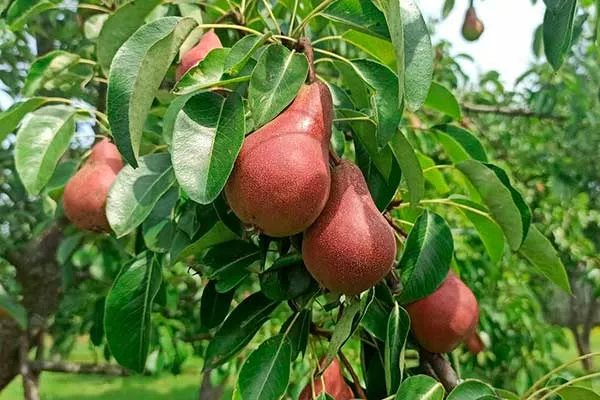
Other varietal characteristics of the plant:
- The shoots grow at an angle of 30 degrees, have grayish bark and a brown tint, they are straight.
- The leaves of this pear are large, oblong, with serrated edges and glossy, bright green surfaces on which yellow veins are clearly visible.
- The flowers are small, white, and pleasantly scented; they bloom from the bottom up, allowing the tree to withstand recurrent frosts and ensuring the preservation of the harvest due to the length of the flowering period.
- Since the skeletal branches extend from the trunk at an acute angle, this increases the risk of them breaking due to the weight of the fruit or snow load.
Fruit
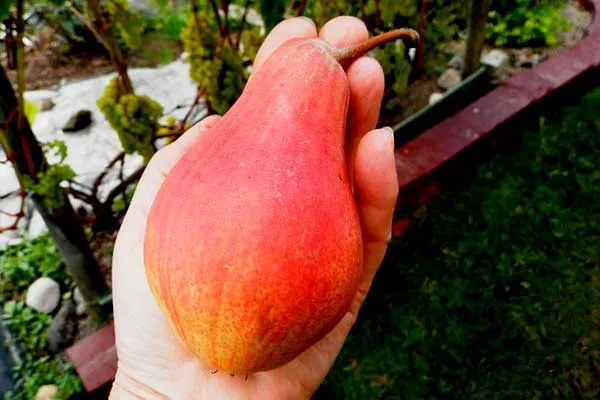
The fruits have a perfectly symmetrical shape, reminiscent of a classic pear shape, slightly elongated, and lacking a funnel at the base. It's important to familiarize yourself with other characteristics as well:
- The average weight is 110-135 g, but sometimes there are giant specimens weighing up to 160-190 g.
- The appearance of these fruits was rated well, they were given a score of 4.5-4.7 points out of a possible five.
- The fruit skin feels smooth and slightly oily, with the initial yellowish-greenish coating almost completely covered by an intense crimson or red-burgundy blush.
- The subcutaneous dots are small and numerous, making them easily visible.
- The skin of Efimova's Elegant pears is delicate, so it doesn't feel rough when eaten. At the same time, it's quite firm, making them easy to transport.
- The pulp of the fruit is rich, semi-fleshy, with a creamy hue, and the seeds are dark brown.
Characteristics of the variety
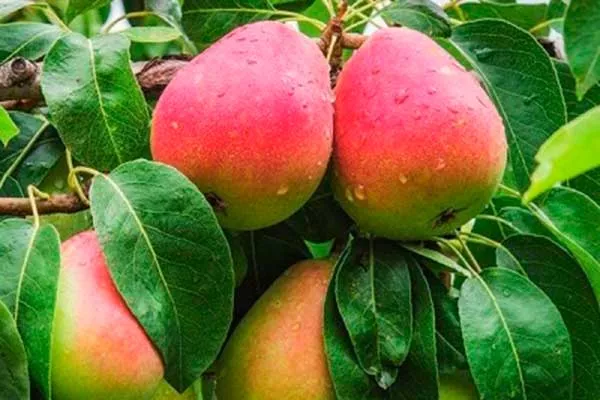
Based on numerous gardener reviews and photographs, it can be stated that the Efimova Elegant pear variety is not unique, but is reliable and useful for growing.
Taste qualities
The fruits of the Naryadnaya Efimova variety have flesh that is not very firm, but tender and juicy, with a slightly oily flavor. The aroma is mild, but the taste is sweet and not overly cloying, with a slight hint of acidity and a slightly tart aftertaste.
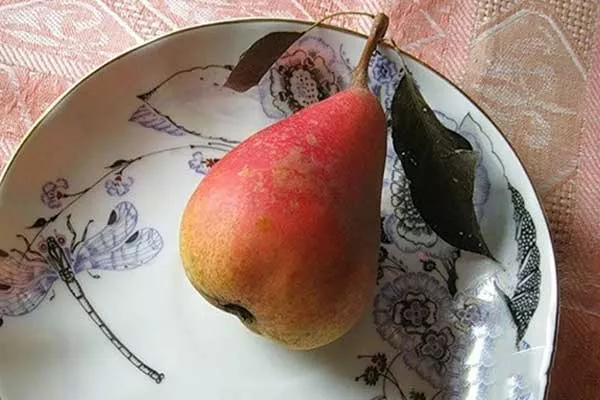
This variety has one peculiarity: pears picked straight from the branches initially seem tasteless, reminiscent of sweet, crispy potatoes. But their true richness of flavor is revealed only after they've been sitting for a while.
Proper harvesting is also important: as soon as the skin of large fruits growing on the sunny side of the tree begins to acquire a yellowish tint near the stalk, the harvest must be collected immediately.
Scope of use
The aroma and flavor of Naryadnaya Efimova pears have a subtle, barely noticeable bitter aftertaste. The flesh of this variety is tender and juicy, and its sweet-sour balance adds a unique aroma to food. This makes the harvest suitable for a variety of uses:
- direct consumption in fresh form;
- as an ingredient for creams;
- for creating cakes and confectionery;
- adding to meat dish recipes;
- preparations for jam and compotes;
- production of marmalade;
- making baked goods and sweets.
Ripening time
The Efimova ornamental variety is a seasonal autumn or pre-autumn variety, but its fruits, which reach maturity around mid-September, should be picked before they are fully ripe.
Productivity
The yield of this variety is estimated to be average. Industrial production yields approximately 30 tons per hectare, while private gardeners can expect 40-50 kg per tree.
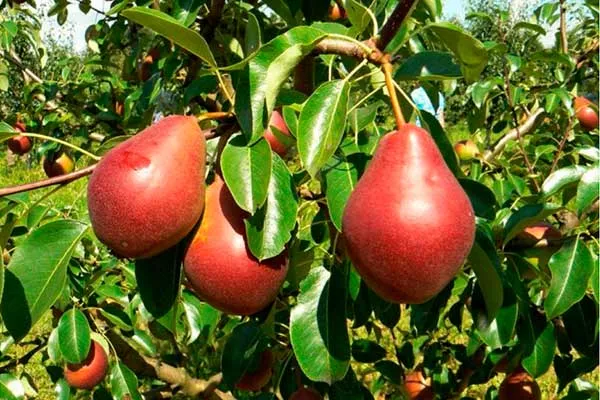
It should be taken into account that the first fruits will have to wait at least 5 years after planting the seedling in open ground, which indicates the average early maturity of this variety.
Resistance to frost and drought
The Efimova Elegant pear has average winter hardiness, according to the State Register. Cultivation experience shows that the tree can withstand temperatures down to -25°C, especially with snow cover, while maintaining its leaves and buds.
While the variety tolerates periods of drought well, its yield may decrease in conditions of low moisture. Furthermore, excessively dry soil and air can affect the taste and appearance of the fruit, as well as cause a white coating to appear on the leaves and buds.
Life expectancy
The Efimova variety has an average fruiting lifespan of 23-25 years. Its lifespan can be extended by regular pruning to refresh the crown and rejuvenate the tree overall.
Pollination
| Name | Disease resistance | Ripening period | Fruit size |
|---|---|---|---|
| Lada | High | Early | Average |
| Yakovlev's favorite | Average | Average | Large |
| Elena | High | Early | Small |
| Muscovite | Average | Average | Average |
| Victoria | High | Late | Large |
| Seedless | Average | Average | Small |
| Red-sided | High | Early | Average |
| Marble | Average | Late | Large |
| Autumn bergamot | High | Average | Large |
Pears are considered self-pollinating, but achieving high yields without the help of donor trees is impossible. The following pear varieties are often chosen as pollinators:
- Lada;
- Yakovlev's favorite;
- Elena;
- Muscovite;
- Victoria;
- Seedless;
- Red-sided;
- Marble;
- Autumn bergamot.
Regionality for cultivation
Naryadnaya Efimova is a suitable choice for cultivation in central Russia. This variety may not be frost-resistant enough for regions with harsher weather conditions. In Russia, Naryadnaya Efimova is most popular in central Russia.
In the countries of the former Soviet Union, this variety is cultivated in such countries as Ukraine, Moldova, Kazakhstan, Belarus and Estonia.
Landing rules
When preparing to plant pears, it is important to consider the specifics of the chosen variety, local climatic conditions, and soil characteristics.
- ✓ The optimal soil acidity for the Efimova Naryadnaya pear should be within the pH range of 5.6–6.0. Testing the soil acidity before planting is essential.
- ✓ The distance between trees to ensure effective pollination should be no more than 17-20 meters, taking into account the need to plant pollinator varieties.
Which place should I choose?
The optimal location for pear trees is the sunniest areas of the garden, where the sun shines for most of the day. Lighting plays a key role in plant development: in low-light conditions, shoots become longer and more fragile, and fruit production decreases.
Other important aspects:
- Nearly ideal conditions for pear trees are southern and southwestern slopes with no nearby groundwater. If there's a risk of flooding, drainage is necessary to remove excess moisture.
- The best soils for pears are sandy loam and loamy soils with a slight acidity (pH 5.6–6). In clay soils, pears are more susceptible to diseases and grow poorly. You can improve the soil composition by adding sand and compost.
- The pear prefers areas protected from the wind, covered by hedges or other plants, which creates a more favorable microclimate, facilitating the plant's transition to winter cold.
Time for disembarkation
The period for planting plants varies depending on the climate of the region:
- In areas with a temperate climate, Where winter frosts reach significant levels, the optimal time is early spring, when the buds are just beginning to open and the temperature remains above zero degrees.
- In the southern regions, Where warm weather prevails until October, it's preferable to plant in the fall, but no later than two weeks before temperatures drop. Otherwise, young plants may not have time to adapt to the new conditions and may die.
Selection of seedlings
When purchasing seedlings, you should contact specialized nurseries with a good reputation. Each one should be certified and accompanied by documentation indicating the variety and age.
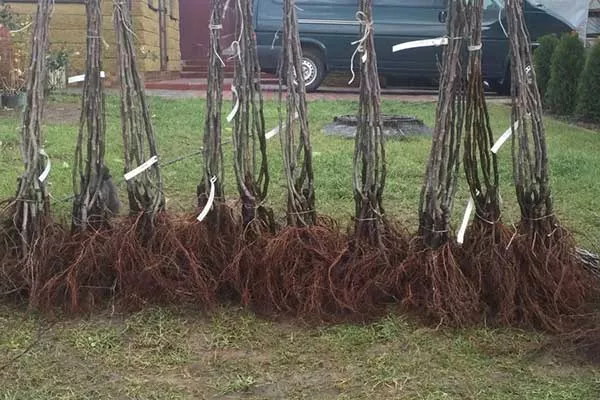
Recommendations for selecting planting material:
- Seedlings with a well-developed root system, aged one to two years, have a better survival rate.
- On a cultivar tree, the grafting point should be visible at a distance of approximately 10-12 cm from the root collar.
- It is not recommended to purchase large seedlings, as their rooting may be painful and take a long time.
- It's best to choose container-planted specimens, as they adapt better to new conditions. Seedlings planted in open ground with a root ball are less susceptible to root damage, which promotes faster adaptation, early flowering, and fruiting.
- If seedlings are purchased in late autumn, it is recommended to plant them in the garden until spring. After that, carefully insulate them.
Algorithm of actions
Two weeks before planting, dig holes 95-105 cm in diameter and no more than 80 cm deep. Add 15-25 kg of compost (the exact dosage depends on the fertility of the soil in the garden), 100 g of superphosphate, and the same amount of potassium sulfide to each hole.
If the soil is acidic, add 450-550 grams of limestone per square meter to each hole. To improve sandy soil, add 10-12 kg of compost and dry clay. Lupine, peas, or a vetch-oat mixture can be sown in sandy areas, and in the fall, these plants are dug back into the soil to be converted into fertilizer.
The sequence of actions is as follows:
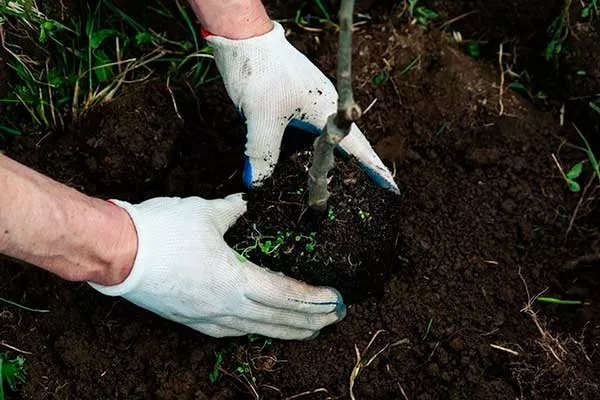
- Place a mound of fertilized soil in the center of the hole, and carefully lower the seedling with its roots spread out onto it. If the seedling was grown in a container, place it in the hole along with the soil.
- Distribute the roots evenly.
- Place a support peg 80-100 cm high on the side of the tree.
- After this, compact the soil mixture so that it fits tightly around the roots.
- Tie the plant loosely to the supporting structure.
- Make a circular hole around the tree and fill it with 20-25 liters of water.
- After watering, cover the trunk area with a layer of straw or sawdust.
In spring, newly planted trees are pruned to 50 cm in height to encourage branching. However, if planted in the fall, pruning is not necessary; it is postponed until the following season.
Peculiarities of further cultivation
The variety does not require any special care costs, although it has its own peculiarities in agricultural maintenance.
Watering and loosening
Particular attention must be paid to watering a young tree. In the first year, five waterings are recommended during the season, using 40 to 60 liters of water each time.
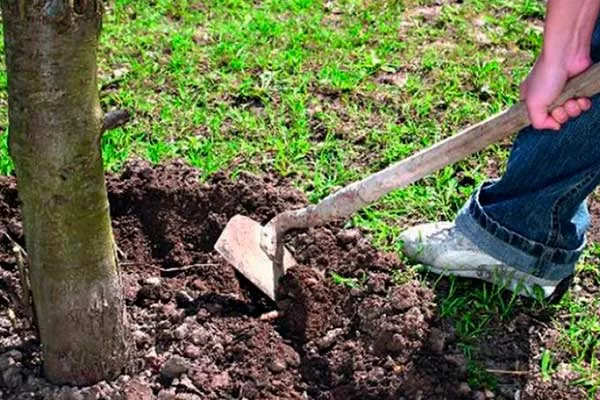
From the beginning of the second year, it is necessary to continuously monitor water procedures:
- In spring, when the budding period begins.
- During the period of fruit formation and ripening.
- In summer, when dry weather is observed.
- In the fall, after the tree has lost its leaves.
After each watering, it's crucial to loosen the soil and, ideally, mulch it. Peat, compost, or wood waste can be used as mulch. This helps control weeds and creates favorable conditions for pests.
Fertilizers
During the first year, pear trees require no additional fertilizing. The following year, it is recommended to use organic fertilizer with the following element ratio:
- nitrogen – 0.5-0.6%;
- phosphorus and potassium – 0.3-0.4% each.
The mixture should be applied to each seedling at a rate of approximately 1.5-1.7 kg. When caring for pear trees, nitrogen is added only in the spring, as it promotes intensive leaf growth.
Trimming
This variety has a tendency to develop a drooping crown, so it requires regular maintenance. All damaged and diseased branches are pruned, leaving only residual stems. Each pruned section is protected with garden resin.
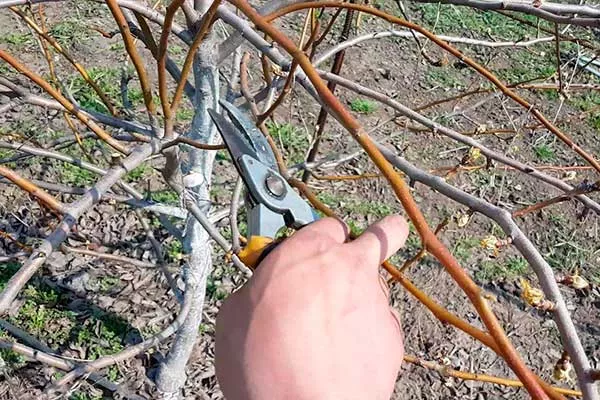
The crown formation process begins immediately after the plants restore their natural sap flow after winter in the spring, so as not to harm the tree:
- In the second year, they focus on shaping the lower tier of the crown, selecting only the two most developed shoots and removing all the others. The second and third tiers are then "constructed."
- In the first year of a seedling's life, it is extremely important to prevent flowering by removing all buds so that the tree has enough energy to adapt and take root.
- Rejuvenation is a key step that helps extend the tree's lifespan and maintain a stable harvest. This procedure is performed every four years, removing older branches and leaving younger ones that will eventually produce fruit.
Preparing for winter
Efimova's ornamental variety has only average winter hardiness, so it needs to be protected from the cold, especially in areas with harsh winter climates:
- Carefully cover the soil around the trunk with humus, remove dry bark from the trunk and branches, and treat them with white garden paint. This cover will prevent frost cracks, which often occur due to sudden temperature fluctuations in winter.
- When the temperature drops to -2°C, tree trunks are wrapped in agrofibre or cardboard paper.
- In winter, snow should be piled around the roots.
- A month before the onset of frost, clear the trunk and branches of dry bark.
- Treat the trunk and skeletal branches with white garden paint to prevent frost cracks.
- Insulate the soil around the trunk with humus in a layer of at least 10 cm.
- At temperatures of -2°C, wrap the trunk with agrofibre or cardboard.
Collection and storage
The pear harvest begins in late August. The fruits are picked when they are not yet fully ripe, when their skin is light yellow with a slight pinkish tint.
Peculiarities:
- To ripen, the pears are placed in a cool, shaded room for two weeks.
- If you store them in the refrigerator at 2°C, they will stay fresh and will not spoil for a month.
- These pears tolerate long-distance transportation well, so the harvested crop should be dried in a cool, bright place.
Methods of reproduction
The Efimova Elegant variety is propagated in the same way as other pear varieties, using several methods: cuttings and air layering.
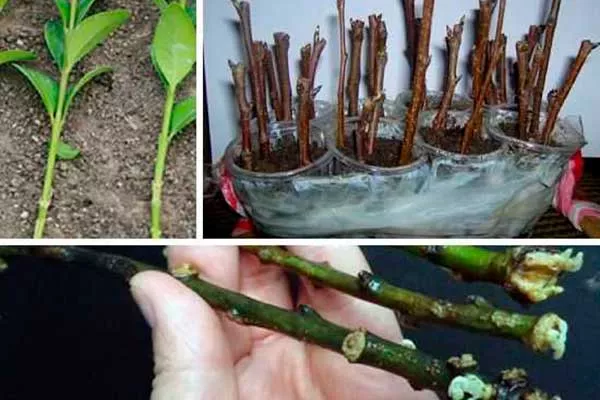
There's a third option: seed propagation. However, this method makes it extremely difficult to preserve the unique varietal qualities of the mother plant. This approach to propagation is often used by researchers to create hybrids.
Diseases and pests
The Efimov Naryadnaya pear variety has a natural resistance to common diseases such as moniliosis and clasterosporium, although it requires annual preventative treatment against certain infections. Among the most serious problems, it's worth noting:
- Scab, which leaves light green spots on the leaves. This disease can be prevented by using a 3% solution of Bordeaux mixture. During the budding period, trees are treated with Horus.
- Rust - Another disease that affects tree tops. It is characterized by the appearance of red spots, which leads to the death of foliage. It is treatable with products such as Skor.
- Fruit rot. This disease is caused by fungi and affects fruit crops. Prevention involves treating the buds with a DNOC solution.
- Among the most dangerous pests are aphids and leafhoppers, which damage fruits and leaves by feeding on their sap. To reduce the risk of infestation, it is recommended to clear trunks of old bark and moss, remove diseased parts, and till the soil around the trees.
One of the effective ways to protect against insects is to paint the trunk with lime.
How to Increase Your Yield: Tips and Advice
A successful harvest depends on careful care. To boost productivity, experts suggest planting seedlings of other varieties near the Naryadnaya Efimova to act as pollinators.
There are other factors:
- Fruit production is affected by the quality of irrigation: insufficient water will lead to reduced fruit set and an overall decrease in yield. However, overwatering should also be avoided.
- Pear blossoms attract insects, particularly bees and bumblebees, which carry pollen. However, the scent of this pear blossom is less pleasant than that of other plants, prompting insects to seek out more fragrant flowers.
To attract them, you can spray the trees with honey water at the beginning of budding, creating a more attractive environment for bees. During rainy periods, spraying the flowers with a solution of the preparation "Ovary" increases the effectiveness of flower set.
Positive and negative qualities
Gardeners' reviews of the Efimova Elegant pear
The Efimova Naryadnaya variety is distinguished by its lack of significant flaws. This can be judged based on many years of cultivation experience spanning over 50 years. This tree has the ability to survive adverse environmental conditions, which, in addition to its annual fruiting, fairly large yields, and attractive appearance, makes it particularly attractive to gardeners.