
The Lyubimitsa Yakovleva pear is an old, time-tested domestic variety. It was previously grown commercially, and today, seedlings of this legendary pear are available in fruit nurseries. Familiarizing yourself with its characteristics and features will help you truly appreciate this variety.
Origin of the variety
The Lyubimitsa Yakovleva variety was developed by plant breeder P.N. Yakovlev. The work was conducted at the All-Russian Research Institute of Genetics and Breeding of Fruit Plants. The Bergamot Esperena and Doch Blankovoy pears served as the starting material for the new variety.
The new variety was added to the State Register in 1965. At that time, Lyubimitsa Yakovleva was a favorite among many gardeners, widely grown in both private and commercial gardens. Over time, the variety's popularity waned.
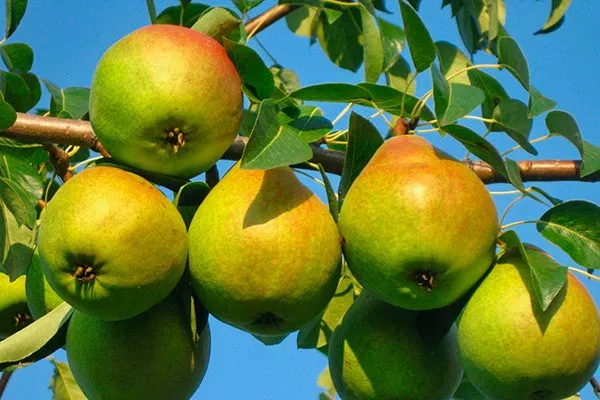
Description of the Yakovleva Lyubimitsa pear
The variety is listed in the State Register as a table variety, but many sources call it a universal variety. Before planting the Lyubimitsa Yakovleva pear in your garden, it's recommended to familiarize yourself with its characteristics and growing guidelines.
Tree and fruits
The Lyubimitsa Yakovleva variety is characterized by significant annual growth. Its trees are vigorous and grow quite quickly.
Description of the variety:
- Tree. It reaches 3-4 meters in height. The crown is broadly pyramidal, with medium foliage. A distinctive feature is the horizontal arrangement of the skeletal branches, which significantly simplifies maintenance and harvesting. The bark on the trunk is gray.
- Escapes. Slightly curved, dark brown in color. Genuity is weak. The predominant fruiting structures are the rings and spears.
- Leaves. Medium-sized, oblong, dark green.
- Kidneys. Medium-sized, with pointed tips. Usually pressed against the branches.
- Inflorescences. Composed of 7-10 white flowers. Petals are distinctly double.
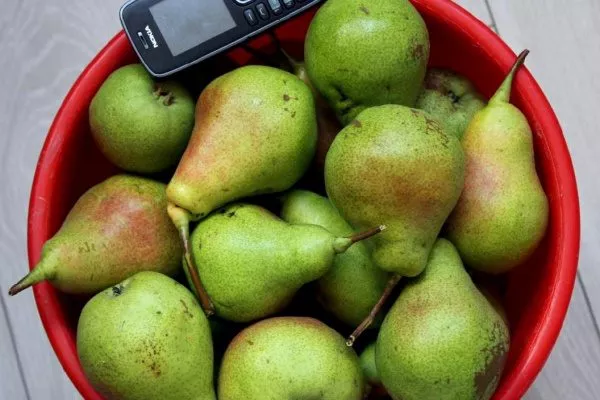
- Fruit. Round-rhombic or round-biconical, widened toward the bottom. The saucers are wide and shallow, with slight ribbing. Weight: 130-190 g. The skin is smooth, medium-dense, with numerous subcutaneous dots.
Ripe fruits are yellowish-green, sometimes with a slight blush. When ripe, they turn golden.
The flesh is medium-dense, creamy, and granulated. The stalks are long and slightly curved.
- ✓ The horizontal arrangement of skeletal branches is a rare feature that simplifies care.
- ✓ The presence of granulation in the pulp is a distinctive feature of the taste and texture of the fruit.
The flavor of the Lyubimitsa Yakovleva fruit is average. The flesh is slightly sweet, with a slight quince aroma. The sugar content is 8.2%. The fruit is eaten fresh; the variety is intended for table use.
Flowering characteristics and ripening time
Buds open early in spring, and the pear tree blooms profusely. The flowering period is mid-late. The abundance of white flowers and their double petals make the tree extremely decorative during bloom.
Pears ripen early in the fall. The first fruits are picked in early September. Once ripe, pears can hang on the branches for a long time, maintaining their marketability and flavor until frost.
Productivity and zoning
Fruiting begins 3-4 years after planting. The first harvest is only a few kilograms. By the 7-8th year, the yield reaches 20-30 kg per tree. As the tree matures, the yield increases. The maximum yield is 200-220 kg.
The variety is recommended for cultivation in the Central, Central Black Earth and Middle Volga regions.
Pollinators
The variety is considered partially self-fertile. In the absence of pollinating trees, 4-15% of the flowers produce fruit. To increase the yield, pear trees that bloom at the same time are planted near Lyubimitsa Yakovleva. The best variety for pollination is Duchess Summer.
Varieties with a flowering period that overlaps 6-7 days with the pear tree being pollinated are suitable for cross-pollination. The maximum distance for cross-pollination is 50-60 meters. Therefore, pear trees growing nearby can act as pollinators.
Advantages and disadvantages
The Lyubimitsa Yakovleva variety isn't exactly a leader in popularity today, but it remains in demand due to its many advantages. Along with these, this pear also has some drawbacks, which gardeners should be aware of before planting the Lyubimitsa Yakovleva.
Landing features
For a pear tree to thrive and develop, it requires specific growing conditions. The tree's entire life, viability, yield, and other characteristics depend on proper planting.
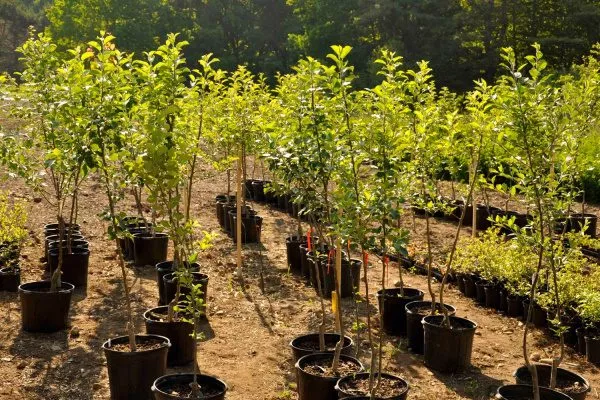
Selecting a seedling
To ensure your seedlings meet your expectations, buy them only from reputable sellers. Specialized nurseries are ideal. Planting stock can be purchased in the fall, when there's a wide selection of varieties on the market, and stored until spring. This can be done in a basement or outdoors, by burying the seedlings in the ground.
Vendors offer both closed-root and open-root cuttings. Open-root cuttings can be planted at any time—spring, fall, or summer. They transplant better and require no preparation.
Recommendations for choosing a good seedling:
- age - 1-2 years;
- roots - healthy, not dry, without damage, about 30 cm in size;
- branches - there should be several of them, length - up to 30 cm;
- trunk height - 1.3-1.5 m;
- the bark is uniform, without damage or signs of disease;
- leaves are dense and shiny;
- shoots are flexible, not dry.
- ✓ Check for the presence of a grafting thorn – its absence may indicate a wild plant.
- ✓ Evaluate the root system – it should be fibrous, with many small roots.
Site requirements
The Lyubimitsa Yakovleva variety, like most pears, is quite demanding when it comes to growing conditions. Under unfavorable conditions, the tree will wither and fail to produce the expected yield, or even die altogether.
Site requirements:
- good lighting;
- no drafts;
- groundwater level - not closer than 2 m;
- recommended acidity level: pH 5.5-7 (alkaline and acidic soils are contraindicated);
- high level of soil fertility.
Preparing the planting site and digging the hole
To enrich the soil with nutrients, preparation of the planting site begins six months in advance. If planting is planned for spring, the soil is dug deep and fertilized in the fall.
Site preparation procedure:
- Dig the area deeply - about the depth of a shovel blade.
- Water the soil with copper sulfate.
- Spread peat, river sand, and fresh manure over the area—10 kg per square meter. Also add granulated superphosphate—500 g each.
- Re-dig the soil.
Planting holes are dug in advance—in the fall, or at least a few weeks beforehand—to allow the soil to settle a little and the nutrients to dissolve.
Preparing the pit:
- Dig a hole measuring 80x80 cm. Set the top layer (30 cm) aside for the soil mixture.
- If the soil is clayey, add a 10-15 cm layer of drainage material to the bottom; if it is sandy, add a little clay to the bottom to prevent water from draining too quickly.
- Add peat and humus to the garden soil (1:1:1). Add a handful of superphosphate (50 g) and wood ash (1 l). Mix everything thoroughly and pour into the hole.
- Cover the hole with a suitable material - slate or roofing felt - to prevent rain from washing away the nutrients.
If you need to plant several seedlings, dig holes according to a pattern of 4-4.5 x 5-6 m (distance between trees x distance between rows).
Preparing a seedling for planting
Seedlings with closed roots don't require any preparation. Watering them before planting is sufficient to make it easier to remove the roots and soil from the container.
How to prepare seedlings with open shoots for planting:
- Inspect them for dry or damaged roots. Trim the shoots with sharpened and disinfected pruning shears—just a few centimeters. This will help them absorb nutrients better.
- Before planting, soak the roots in a rooting stimulant solution for 3-4 hours. Suitable products include Epin, Kornevin, Zircon, or similar.
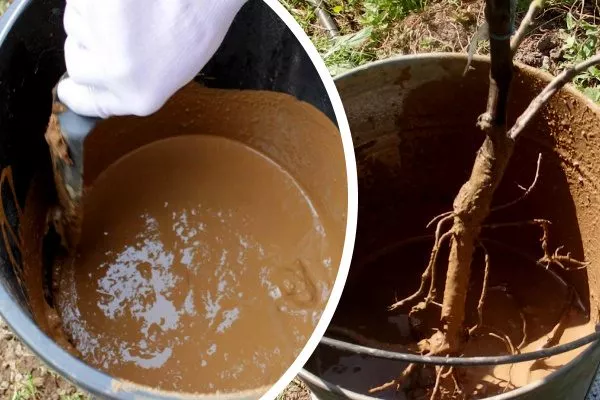
- Before placing the seedling's roots in the planting hole, dip them in a mixture of clay, water, and manure. Mix all ingredients until the mixture has the consistency of sour cream.
Timing and technology of planting
Seedlings are planted primarily in the spring—approximately from April 15 to May 15—when the risk of recurrent frosts has passed. Fall planting is not recommended in regions with harsh winters. It is more suitable for regions with mild winters. Planting should be done no later than September.
Step-by-step planting of a pear tree:
- Remove the covering from the hole and scoop out some of the soil mixture. This should be enough to allow the seedling's roots to fit comfortably in the empty space, with its crown 3-5 cm above ground level.
- From the remaining soil mixture in the hole, form an earthen mound - the roots will lie on its slopes.
- Step back 10-15 cm from the center and drive a 1-1.5 m long support into the ground. Its height above the ground should be such that it is 1.5 times higher than the seedling.
- Place the seedling in the hole, carefully spreading out the roots. Fill them with the soil mixture removed from the hole. Add it little by little, compacting each layer. Shake the tree periodically to ensure there are no air pockets between the roots.
- Tie the tree to the support with a strong, but not rigid, material. Don't use wire, as it will damage the delicate bark.
- Form a tree trunk circle around the seedling or dig a furrow 15 cm deep around the perimeter.
- Water the tree. The recommended amount is 30 liters. Use only warm, settled water.
- After the water has soaked in, sprinkle the soil with mulch. A good option is a mixture of sawdust, peat, and sand, mixed in equal parts.
- Cut the seedling to 0.9 m. Treat the cut with a copper sulfate solution and coat with garden pitch.
Care
The Lyubimitsa Yakovleva variety isn't particularly demanding or fussy about growing conditions, but it does require some care. This will determine the quantity and quality of the harvest.
Watering
This variety thrives on abundant watering. The best method for irrigating a young tree is sprinkling. Mature trees are watered by digging a 10-cm-deep trench around the perimeter and pouring water into it. This method prevents the trunk from coming into contact with the water.
Recommendations for watering:
- Until the tree is 7 years old, the recommended watering rate is 20-30 liters per pear tree. As the tree ages, the watering volume increases. Trees 8 years and older require 40-60 liters of water.
- The frequency of watering is determined by weather conditions. If the summer is rainy, water only after the soil has dried out to a depth of 40 cm. In arid areas, water the tree every two weeks.
- To ensure even distribution of water, it is recommended to divide watering into two stages: morning and evening.
- After rain and watering, the soil is loosened and sprinkled with some organic matter. Mulching slows water evaporation and weed growth.
Removing the growth
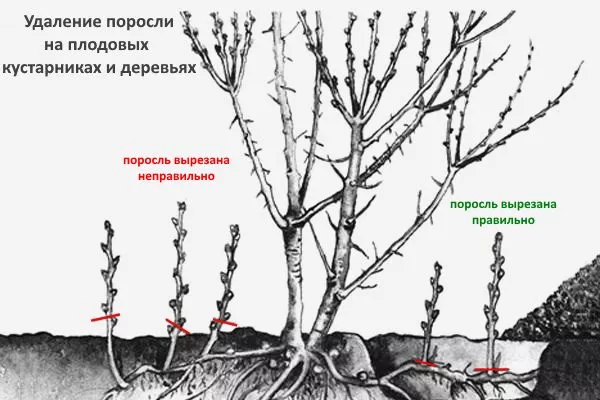
Young shoots often appear at the base of the trunk. If they emerge below the graft, they are called wild shoots. They should be removed, as they attract insect pests, drain water and nutrients from the tree, and serve as a source of pathogens.
Fertilization
During the first 2-3 years after planting, the tree doesn't need fertilizing—the nutrients placed in the planting hole are sufficient. Later, the pear tree is fertilized at least four times a year.
Recommended fertilizing schedule:
- Before the buds swell, apply nitrogen. For example, urea (2 tablespoons per 10 liters of water) or nitrophoska (100 g per 10 liters of water). Chicken manure (300 g per 1 square meter) is also suitable. It is recommended to alternate these fertilizers.
- When the tree has finished flowering, add wood ash or dolomite flour - 800 g/300 g under each tree.
- In mid-summer, spray the crown with magnesium sulfate, diluting 200 g of the substance in 10 liters.
- After harvesting the fruits, add superphosphate - 30 g, potassium chloride - 15 g, wood ash - 150 g.
Trimming
For beginners, this is the most challenging agricultural technique when growing pears. Without regular and timely pruning, the tree's crown will become difficult to maintain and harvest, and its dense growth will negatively impact the quality of the fruit.
Recommendations for pruning the Lyubimitsa Yakovleva variety:
- The optimal crown shape is sparsely tiered.
- The first pruning is carried out on the day of planting – the central conductor is shortened.
- In the second year, all shoots growing closer than 0.5 m from the ground are pruned. Three or four branches are left on the trunk, which are pruned by 25%.
- In the third year, 0.4 m from each skeletal branch, leave 2 or 3 second-order branches. These are shortened to 15 cm. A year later, leave 1-2 branches on each second-order branch.
- Remove all competing shoots. This is done early, before they grow more than 10 cm in length.
- Once the crown formation is complete, all that remains is to maintain its condition by removing excess shoots.
- Every spring and fall, sanitary pruning is performed, removing all dead, diseased, and damaged branches. Formative pruning is performed only in the spring to avoid overloading the tree during the pre-winter period—harsh pruning will rob the pear of the strength it needs to survive the winter successfully.
- All cuts with a diameter of 1 cm or more are treated with garden pitch or charcoal.
Also watch a video on how to properly prune a pear tree:
Preparing for winter
Even though the variety is frost-hardy, the tree needs to be properly prepared for winter. This doesn't stop with insulation; there are several other important steps to take before winter.
How to prepare a pear for winter:
- Before the cold weather sets in, carry out moisture-recharging watering.
- Apply fertilizer and loosen the soil deeply – 20 cm deep.
- Cover the soil around the trunk with a thick layer of mulch (10 cm) - compost or peat.
- Spray the crown with copper sulfate and whitewash the trunks with lime.
- For trees under 5 years old, wrap the trunk with burlap.
Harvesting
The fruits are harvested starting in early September. They are picked with the stalks attached. They are stored in boxes, lined with paper or sprinkled with sawdust.
Recommended storage conditions:
- dark room;
- temperature - 0….+6°С;
- humidity - not less than 70%.
Under favorable conditions, the fruits of the Lyubimitsa Yakovleva variety remain fresh and tasty for 3 months.
Diseases and pests
The most effective method of protecting pears from diseases and pests is prevention. Only this will ensure high-quality fruit, free from damage and rot.
The biggest problem for the Lyubimitsa Yakovleva variety is scab. This pear is virtually immune to other diseases. To prevent scab, the tree is sprayed with a 3% copper sulfate solution early in the spring, before the buds swell.
If a tree is affected by scab, spray it with Fundazol three times, 10 days apart. It's also advisable to treat the tree with this product before flowering.
The most dangerous pests for Yakovlev's Favorite:
- codling moth;
- geometer moth;
- aphid;
- weevil.
As soon as pests appear on a tree, it should be treated as soon as possible with an effective insecticide, such as Aktara or Inta-Vir.
What is the difference between Yakovlev's Favorite and Yakovlev's Memory?
Among P. N. Yakovlev's works is another variety with a similar name—the "Memory of Yakovleva" pear. Like the "Favorite of Yakovleva," it is quite winter-hardy, but there are differences between the varieties that are worth knowing to avoid confusing the two different pears.
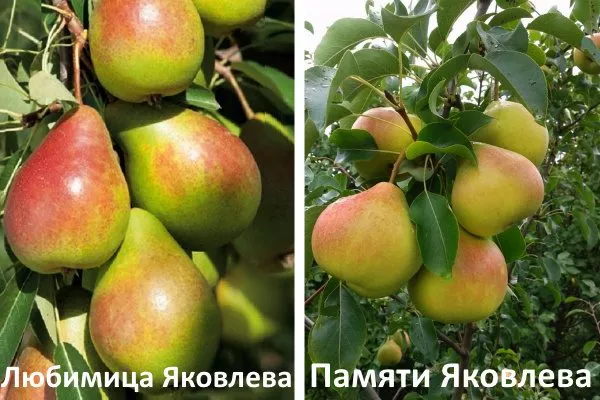
Table. Comparison of varieties:
| Parameters | Yakovlev's favorite | In memory of Yakovlev |
| Parent varieties | Daughter of Blankova and Bergamot Esperen | Tyoma and Olivier de Serres |
| Tree | vigorous | short |
| Crown | dense, broadly pyramidal in shape | dense and compact |
| Ripening time | autumn | early autumn |
| Risk of scab | high | short |
| Productivity | average | high |
| Self-fertility | partial | full |
| Purpose | dining room | universal |
| Weight | 130-190 g | 110-125 g |
| Form | rounded-rhombic or rounded-biconical | broadly pear-shaped, slightly ribbed |
| Color | greenish-yellow | light yellow |
| Funnel | wide and shallow | No |
| Pulp | coarse-grained, medium-juicy | semi-oily, juicy |
Gardeners' reviews
The Lyubimitsa Yakovleva variety deserves attention, but only as a result of outstanding breeding work. Similar pears once allowed gardeners in central Russia to grow substantial fruit yields. Today, thanks to modern breeding, varieties have been created that surpass the Lyubimitsa Yakovleva in every respect. This pear is gradually losing its popularity and is becoming a thing of the past.