
The Lyubimitsa Klappa pear variety was developed over 150 years ago and has become popular among both amateur and professional gardeners. It is characterized by excellent flavor, decent yields, and ease of cultivation. This American variety is a medium-sized tree with a lifespan of 50-55 years.
History of selection and zoning
In 1860, in the United States (Massachusetts), the breeder Clapp introduced a new pear variety to the world. It was grown from seed from the Forest Beauty (the parent variety) and Williams (the pollinator, also known as Summer Duchess). Clapp himself named it Clapp's Favorite, but it was later renamed Favorite.
The variety arrived in Russia in the middle of the last century, leading to its official registration in the State Register of the Russian Federation in 1947. "Klapp's Favorite" was zoned in three regions:
- Lower Volga;
- North Caucasian;
- North-West.
The variety has also spread to neighboring countries – Ukraine, Belarus, Moldova, the Baltics, and Central Asia.
Description of the Klappa Favorite pear
Although the tree is classified as a medium-sized variety, tall specimens are also found, especially in the southern regions of the country, where conditions are particularly favorable for pears. Clapp's favorite has distinctive characteristics that make it easy to recognize.
Features of wood
| Name | Disease resistance | Ripening time | Productivity |
|---|---|---|---|
| Clapp's Favorite | Average | Late July – mid-August | 150-180 c/ha |
| Smartly dressed Efimova | High | Beginning of August | 200 c/ha |
| Tatiana | High | Mid-August | 180 c/ha |
| Oryol summer | Average | End of August | 160 c/ha |
| Nalchik Kostyka | High | Beginning of September | 190 c/ha |
| Northerner | Average | End of August | 170 c/ha |
The average height of this variety ranges from 3 to 5 meters. When young, the trees grow vigorously, but their pyramidal crown is considered sparse. As they mature, it takes on a broad, rounded shape, with branches that thicken significantly and grow at a 45-degree angle.
Other characteristic differences:
- Bark. The standard wood has a slightly flaky surface, while the branch wood is perfectly smooth. The wood is dark gray in color.
- Flowers. Ovaries form on the spur and twigs, resulting in snow-white flowers. They are quite large with double petals. Each inflorescence contains approximately six buds.
- Tree structure. It has elongated, thick, and straight shoots. The internodes are short, dark brown with a purple tint. Numerous gray lenticels are present. The branches have a fragile structure, making them easily broken under the weight of the harvest or by strong gusts of wind.
- Petioles. Long, light green and thin.
- Leaves. They are distinguished by their ovoid-oval shape, pointed tips, and narrow base. They are dark green in color, with a leathery surface and a slight sheen. The leaf blade margins are finely serrated and pubescent.
Commercial and consumer qualities of fruits
For large horticultural organizations, the marketability of pears is crucial, as it determines the farmer's income. Consumer quality, which directly impacts these same factors, should also be considered.
Clapp's Favorite has the following parameters:
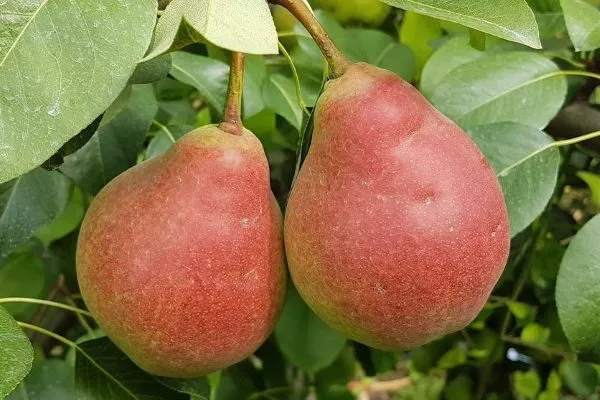
- fruits – medium-large, weighing from 140 to 220 g;
- shape - elongated like an egg, but there are shortened specimens;
- surface - slightly bumpy;
- the skin is smooth and tender;
- color - unripe fruits are yellow-green, then become rich yellow with a bright red blush;
- subcutaneous spots - in the form of dots, gray;
- peduncle – medium-sized with a slight bend and thickening at the base;
- funnel - it may not be there or it may be very shallow;
- cup - open;
- saucer - small and narrow, may have slight folds;
- heart - average, not clearly defined;
- seed chamber - has an egg-shaped form, the axis is hollow;
- seeds - dark brown, small;
- ovaries - dark red;
- the pulp is snow-white, extremely juicy and tender, melts in the mouth;
- taste – sweet, sour, with wine notes;
- the aroma is pleasant.
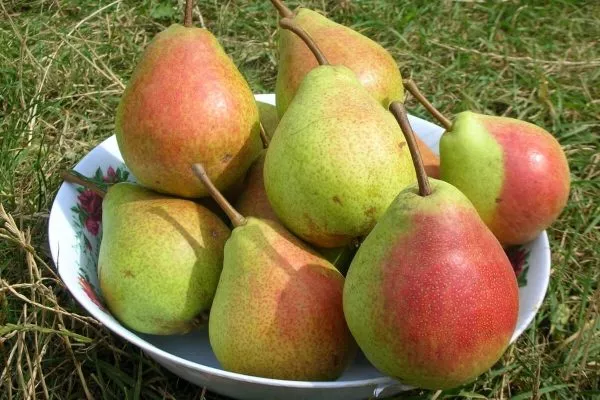
Clapp's favorite pear received a tasting score of up to 4.8 points. This is a fairly high score on a five-point scale. The pear is considered highly nutritious, as it contains numerous beneficial elements, a healthy dose of vitamin C, P-active catechins, acids, and more. Its dry matter content is only 13.7%.
The variety is used for different purposes:
- compotes and juices;
- jams and preserves;
- drying;
- sauces.
Characteristics of the pear variety Lyubimitsa Klappa
The following characteristics are characteristic of this variety:
- Frost and drought resistant. At a high level, the tree can withstand temperatures down to -30 degrees Celsius, so in southern regions, pre-winter protection is not required. Clapp's favorite is not affected by spring frosts. This is also facilitated by the late and prolonged flowering of the variety.
The plant also does not suffer in dry summers, since the root system extends into the deep layers of the soil, that is, it reaches out to the sources of groundwater. - Disease resistance. The variety has good immunity, but it is completely unstable to scab and pear psyllid during drought.
- Fruiting. The first harvest occurs approximately 7 or 8 years after planting. Fruiting is considered abundant and regular.
- Bloom. The time for flower formation depends on climate and weather conditions. On average, this period occurs during May.
- Harvest ripening time. In the South, fruits are harvested from the end of July to mid-August, in the Middle Belt and Central part 1-2 weeks later, in the North, the date moves forward another week, but no later than September 10.
- Productivity. The older the tree, the higher the yield. Peak fruiting occurs at 15 years of age or older. A 20-year-old tree can yield approximately 150-180 centners per hectare, while a 25-year-old tree can yield twice as much.
- Self-fertility and pollinator varieties. This variety is self-sterile, requiring nearby pollinators. The maximum distance between pollinators for 'Favorite Clappa' is 8-10 meters. Optimal pear varieties include 'Forest Beauty,' 'Ilyinka,' and 'Williams.'
Advantages and disadvantages of the variety
Clapp's Favorite is called the queen of early-ripening pears. This name was given to it by scientist Simirenko. At his insistence, the variety began to be grown in large commercial orchards. Both breeders and amateur gardeners note the variety's advantages and disadvantages:
Methods of reproduction
Clapp's Favorite can be propagated using two methods: suckers from its own roots and cuttings. This process is carried out in the spring or fall. Each method has its own peculiarities, which should be familiarized with in advance.
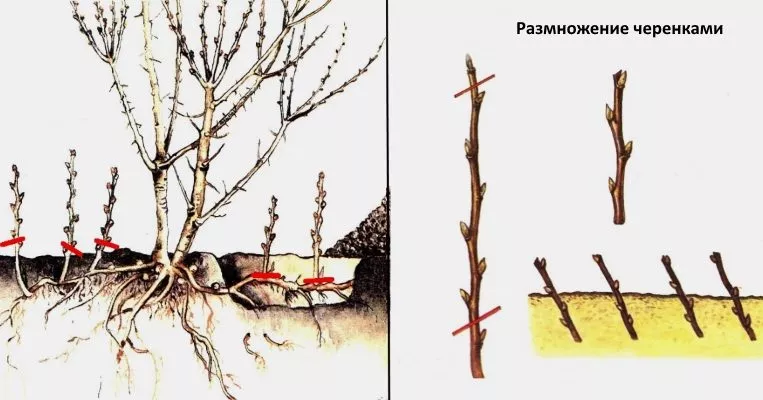
Root shoots
The root sucker transplanting technique is considered simplified and quick, as the seedlings already have a root system. This method is especially useful in the spring, as the shoots must first be potted in the fall and then transplanted into the ground in the spring.
Step-by-step instructions:
- Carefully examine each shoot in the tree's root circle.
- Select several healthy specimens from the total quantity.
- Using a shovel, make holes in the undergrowth on all sides so that the roots are exposed.
- Cut them down and remove the bushes from the ground.
- Immediately place in water for 6 hours to allow the root system to absorb liquid.
- Pull out and inspect the shoots. Trim off any that are too long, broken, or affected by disease or pests.
- Place in a growth stimulating solution.
- Additionally, you can make a weak solution of potassium permanganate and disinfect the roots for 20-30 minutes.
- Plant the cuttings in open ground or a pot. The classic method.
Cuttings
Rooting in this case takes time, as the shoots must first develop roots. Both green and woody branches can be used.
The cutting process:
- On a mature tree, select a shoot that is free from damage, dryness, and breaks.
- Cut it with a knife or pruning shears so that the length is no more than 50-70 cm. Cut at an angle of 45 degrees.
- Treat the wood with garden pitch.
- Place the shoot at the cut site in a root growth activator for the time specified in the instructions.
- Plant in a pot with fertile soil, but gardeners recommend leaving it in clean water for a week, which will encourage the trunk to produce new root shoots.
- Cover the seedling with plastic film. Keep it there for 3-4 months, then remove the cover. Remember to remove the plastic film for 2-3 hours daily to allow air to pass through.
- Leave the cutting in the pot for another month. Then transplant it into the garden.
Planting the Klappa Favorite pear tree
Planting is carried out in accordance with the agronomic requirements for the specific cultivar. The planting time, pattern, and location of the seedlings must be taken into account. Don't ignore preparatory work, as the tree's future health and survival depend on it.
Deadlines
Specific dates are not specified today, as weather conditions in a given region vary annually. Therefore, it's easier to rely not on dates, but on the air temperature and the condition of the seedling. Considerations for choosing a planting time:
- In the spring. The best time is 10°C, but you need to do it before the sap starts to flow. The optimal temperature is 5°C to 10°C, and no lower, meaning the approximate planting period is late March to mid-April.
- In autumn. To prevent young plants from freezing, plant Clapp's Favorite one to six weeks before the expected frost. Autumn planting is prohibited in regions with cool climates, as the cuttings will not have time to adapt and will die.
How to choose and prepare a seedling?
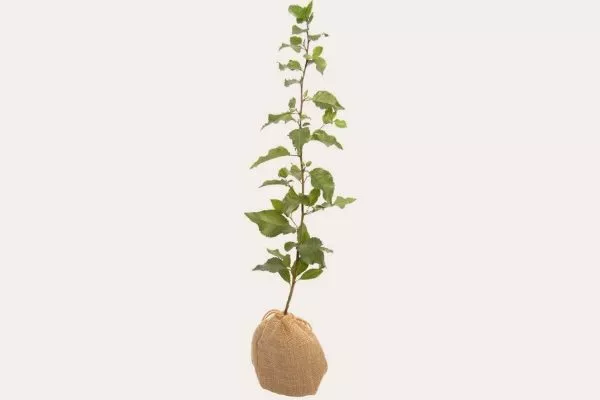
When purchasing a Klappa Lyubimitsa pear seedling, it's important to consider the bush's age—it should be between 1 and 2 years old, maximum 5 years. Keep in mind that the younger the cutting, the easier it will adapt to new conditions. This is due to pear crops' intolerance to transplanting.
Other features:
- Pay special attention to the root system—it must be well developed. Avoid planting shoots with damage, signs of rot, or mold. Dry roots should also be avoided. The acceptable level of these negative factors is 10-15%.
- The trunk diameter should be at least 1-2 cm (the older the seedling, the larger).
- The branches should bend easily and be strong at the same time.
- Healthy bark is smooth and undamaged.
Prepare seedlings before planting:
- Remove unsuitable elements, tear off the bottom row of leaves.
- Soak the root system in a growth stimulator.
Landing site
Clapp's favorite doesn't require highly fertile soil, but the lighter the soil, the greater the yield. The only requirement is avoiding clay soil, as it will wither.
- ✓ The soil acidity level must be strictly within the range of 5.0-6.5 pH, otherwise the tree will not be able to bear fruit normally.
- ✓ Avoid clay soils, as they hinder normal root development.
Other requirements:
- the variety is sensitive to acidity - it should be no more than 6.5 pH, no less than 5.0 pH;
- waterlogging is excluded - excessively high humidity causes root rot;
- the optimal side is the south;
- You can plant it in partial shade, but the yield increases in its absence, so it is better to choose a sunny place.
How to prepare the soil?
When planting Clapp's Favorite, it's important to prepare the planting hole and site in advance. Here's how:
- Dig up the garden in the fall if you plan to plant in the spring; if you do the work in the fall, then about 3-4 weeks before.
- Level the surface with a rake.
- Make markings according to the planting diagram.
- Dig holes. Their depth and diameter are about 80-100 cm.
- Place a 10 cm drainage layer at the very bottom. Use expanded clay or perlite. If you don't have either, use finely crushed brick or pebbles.
- Mix the excavated soil with 20-25 kg of rotted manure or compost. Add about 70 g of ammonium nitrate, 1 kg of wood ash, and 900 g of superphosphate. Charcoal can be replaced with 250 g of potassium sulfate.
If the soil is heavy, add about 15 kg of river sand to this mixture; if it is too sandy, then place a layer of clay up to 10 cm thick on the bottom of the hole. - Pour the resulting soil mixture into the hole and cover with plastic wrap. Cover the remaining soil as well, as you'll need it for planting.
Distance between trees
The planting pattern for the Lyubimitsa Klappa pear tree calls for a distance of 4 meters between trees and 5-7 meters between rows. Planting closer is not recommended, as the tree's root system is well developed, causing shoots to touch adjacent roots and become intertwined. This significantly reduces yield.
Step-by-step instructions for planting a seedling
When it's time to plant the seedling in the garden, uncover the hole the day before. Remove the covering and any remaining potting mix. Then follow these instructions:
- Pour about 30 liters of water into the hole. It will be absorbed by the next day.
- Form a small mound inside the planting hole.
- Place the root of the seedling on it.
- Spread the root shoots so that all ends reach the bottom of the hole.
- Place a wooden stake nearby.
- Sprinkle the remaining soil on all sides. It's easier to work in pairs: one person holds the cutting, the other digs in the soil and compacts it at the same time.
- After filling, tie the seedling to the stake with a rope.
- Create a kind of earthen ridge around the trunk area, thanks to which water will not flow beyond these boundaries during watering.
- Moisten with about 8-10 liters of water.
- Cover with mulch.
Make sure the root collar is level with the ground. To make this easier, place a horizontal rod across the hole.
Watch the following video to see how experienced gardeners plant a one-year-old pear tree sapling:
Care
Clapp's Favorite isn't particularly demanding in cultivation—it's easy to care for. Simply follow the basic rules: water when needed, fertilize regularly, shape the crown, and weed.
Watering
This variety is demanding of moisture levels, so the tree needs watering even in rainy summers. The lower root system is deep, drawing water from 2.5 meters of soil. The upper part of the roots receives moisture from a maximum depth of 1 meter, leaving the middle part of the roots deprived of moisture.
Rules and regulations for watering:
- During the growing season, carry out about 6 waterings;
- For 1 sq. m you need:
- if the soil is rich in sand – from 40 to 45 liters;
- if clay - from 70 to 80 liters.
- Before wintering, moisture-recharging irrigation is carried out - 80-90 liters of water are added under one tree;
- as soon as the fruits begin to enter the ripening phase, moistening stops completely;
- The preferred type of irrigation is sprinkling;
- It is forbidden to pour liquid from a hose; it is better to apply it using a watering can with a spray nozzle;
- Apply mulch after each procedure - this will maintain the required moisture level and prevent the formation of a dry crust;
- The water should be settled and warm.
Fertilizer
The nutrient application schedule depends on the soil fertility and the tree's condition. However, there are general recommendations for fertilizing the Klappa Favorite pear:
- the first feeding after planting is carried out in the 4th year, respectively, provided that the planting hole was filled;
- in the fall, while digging up the root zone, add superphosphate at a rate of 35-40 g per tree;
- In April, after removing the cover (again during digging), the following is required:
- 40 g Nitrophoska;
- from 5 to 7 kg of peat, compost or humus.
- In May, during flowering, spray the crown and trunks with boric acid (0.2 g of the substance per 1 liter of water;
- in June, when the ovaries are forming, potassium sulfate or potassium monophosphate is required (from 10 to 20 g per 10 liters of water);
- At the end of June - beginning of July, organic matter is introduced into the tree trunk circle:
- add 2-3 liters of mullein to 10 liters of water;
- let it sit for 24 hours;
- Dilute 1 liter of solution in 10 liters of water.
To prevent rot diseases that occur due to high humidity during prolonged rainfall, fertilize the plant with magnesium. To do this, dilute 110 g of magnesium sulfate in 6 liters of water and spray the crown. Interval between treatments is 20 days.
Caring for the tree trunk circle
Many novice gardeners mistakenly believe that the tree trunk area is unimportant. They purportedly clean it up for aesthetic purposes. In reality, fallen fruit, leaves, branches, weeds, and other debris can promote infectious diseases, provide access to pests, and allow them to multiply.
To prevent this from happening, clean the area regularly. Additionally, loosen the soil to improve oxygen supply to the roots and apply mulch.
Crown formation and pruning
Clapp's favorite does not tolerate pruning of branches well, therefore the formation of the crown and pruning are carried out only as necessary and, preferably, when the plant is dormant (late autumn, early spring).
Please note the rules:
- You cannot cut off more than 1/4 of the total number of shoots at one time;
- annually new growth is shortened by 5 buds;
- Twice a year, all damaged, broken, over-dried and rotten elements are cut off;
- branches growing in the wrong direction, for example, into the trunk, are removed.
The sparse-tiered method of formation is applicable to this variety:
- In the tree's second year, form a single tier. To do this, remove all excess branches.
- Do the same with the remaining plant levels. This will take another 3 years.
The distance between tiers should be about 50-60 cm, in each row it is necessary to leave 3 developed main shoots.
Rejuvenation
When a tree reaches 10-12 years of age, rejuvenation pruning is performed to promote renewal. This, in turn, promotes increased yield, larger fruit formation, and rapid growth of new shoots.
What needs to be cut:
- old branches are cut off completely;
- shoots aged 3 to 5 years are shortened by half;
- The main trunk is cut off by 1/3.
Don't forget to treat the cut areas with garden pitch or another antiseptic garden product.
How to prepare a tree for winter?
This variety is characterized by good winter hardiness, so in southern regions it does not require winter wrapping. In other parts of the country, this is advisable, but in the north, it is essential.
How to insulate a trunk:
- use non-woven material for wrapping;
- If frosts below -30 degrees are expected, use old cotton blankets, which will reliably protect the trunk from the cold and wind.
- Whitewash the trunk and lower branches to protect against sunburn.
- Install a mesh fence around the perimeter to protect against rodents.
- Place a 20-30 cm thick layer of mulch around the trunk.
A mandatory requirement in all cases is to lay a layer of mulch around the entire perimeter of the tree trunk area. The thickness should be at least 20-30 cm (the colder the winter, the thicker the layer).
Harvesting and storage
Clapp's favorite is famous for the fact that its fruits, even those in the initial stages of technical maturity, do not fall to the ground. However, if they remain in this state for three or more days, the harvest can be lost due to mass mortality.
Harvest Features:
- If you plan to store the fruits, pick them 10 days before they are technically ripe;
- for juices, compotes, jam – wait until fully ripened;
- The stalk should remain on the pear, so cut it off with pruning shears or twist it off, but do not pull it off the branch, as it will break off at the point where it is attached to the fruit.
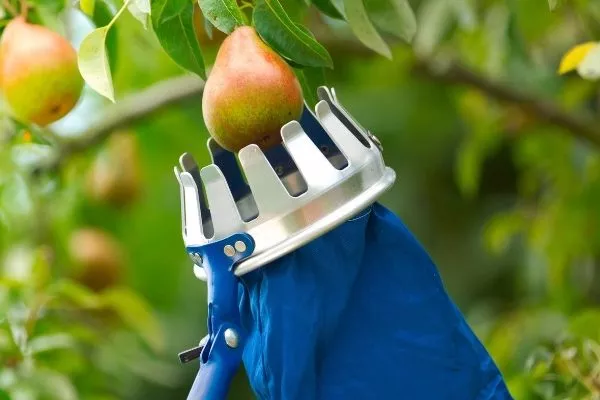
Clapp's Favorite pears will only keep for a couple of weeks, but if picked before they're fully ripe, the shelf life can be extended to a month. Ideal storage conditions include the refrigerator (vegetable/fruit drawer) or a cool, dry place. Always store the pears in a single layer on a natural cloth (not synthetic), covered with paper towels.
Diseases and pests
The cathedral pear is susceptible to only the pear leafhopper and scab. Other pests and diseases The variety is not at risk. This is true if all agricultural requirements are met.
How to overcome the problem:
- Scab. The main cause of the disease is increased soil and air humidity, which occurs during rainy summers. Bacterial spores are highly viable, and over the winter they reside in cracks, soil, and leaves.
Signs include the formation of brown-green spots on the underside of leaves, which spread to the fruit, trunk, and branches. This manifests as scabs, rot, softening of the spots, hardening of the fruit inside, and cracks.
Fungicidal preparations are used for treatment, such as Horus and Strobi. - Pear psyllid. This leafhopper insect, up to 3 mm in size, flies and jumps, so it can quickly spread throughout trees and gardens. Its purpose is to suck the plant's sap from fruits, green matter, ovaries, and buds.
Symptoms of the pest's presence include the loss of all affected parts, drying out and curling of shoots, and yellowing of leaves. Fruits also stop growing or become small. They harden. If left untreated, sooty mold develops.
Powerful insecticides such as Komandor, Fofanon, and Karbofos are used for control.
Reviews of the Klappa Favorite pear
The Lyubimitsa Klappa pear is a frost-hardy variety that can be grown even in Siberia and the Urals. It doesn't require much effort from the gardener, but it's important to ensure it has adequate acidity. Because the tree won't bear fruit properly at high or low temperatures.