
Today, there are a great many varieties of pears. Gardeners choose based on winter hardiness, ripening time, and other characteristics. This article discusses summer, winter, fall, and late-ripening varieties, as well as their growing and care requirements.
Summer
Summer pear varieties are renowned for their excellent fruit flavor and resistance to various diseases. The following popular varieties are considered summer pears…
| Name | Ripening period | Yield (c/ha) | Disease resistance |
|---|---|---|---|
| August dew | Average | 200 | High |
| Bere Giffard | Early | 60-80 | Average |
| Victoria | Average | 200 | High |
| Duchess | Average | 250 | High |
| Northerner | Early | 85-100 | Average |
| Cathedral | Average | 85-100 | High |
August dew
This variety was bred by S. P. Yakovlev at the I. V. Michurin All-Russian Research Institute of Genetics and Breeding of Fruit Plants. The tree reaches a height of up to 3 meters and bears fruit annually, beginning in the fourth year of planting. It is characterized by high yields – up to 200 centners per hectare at its peak. In the first season, a single tree can yield approximately 15 kg of pears. The variety is winter-hardy and disease-resistant.
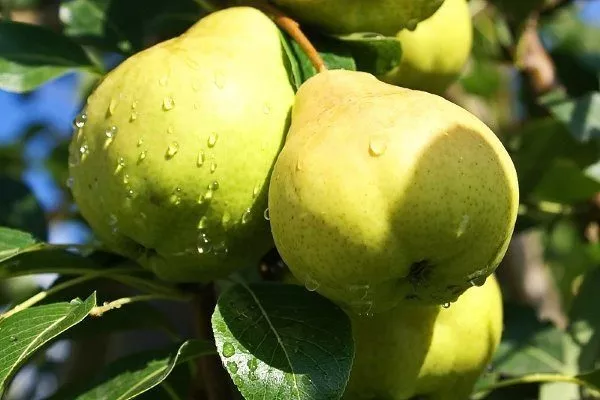
The fruits are small, weighing 100-200 g. The surface is unribbed. The skin is smooth, dotted, and green or greenish-yellow when ripe. The flesh is white, fine-grained, with a delicate texture and a sweet and sour flavor. The peduncle is curved, long, and wide.
Seedlings are planted in the fall (early October) or spring (late April). The fruits begin to ripen in mid-August to September. The plants require special care, including soil cultivation, watering, pruning, fertilizing, and preparation for winter.
Bere Giffard
An early-ripening French pear variety. The fruits ripen fully between July 20th and 25th. This variety is best for fresh consumption.
The fruits are small, weighing 75-100 g, and have a perfect pear shape. The pears have a thin, delicate skin with a greenish tint, which later turns greenish-yellow. Light brown spots appear on the surface. The peduncle is sometimes short, often long, with a flared tip. The white, tender, juicy flesh melts in the mouth and has a sweet and sour taste.
The Bere Giffard variety is demanding of soil, preferring deep, fertile soil. Fruiting begins 6-7 years after planting. While the yield is small when young, it increases significantly over time. At 12-17 years of age, approximately 60-80 centners of pears are harvested per hectare.
Victoria
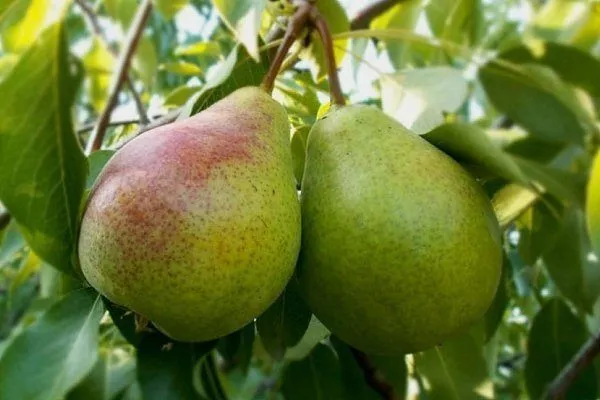
The fruits grow to be medium to large in size, weighing up to 150-250 g. Occasionally, pears weighing 300 g or more can be harvested. They have a symmetrical, wide, and regular shape. The fruits are even and attractive, with a thin skin and a smooth surface. A slight rustiness is rarely visible.
When picked from the tree, the fruit's primary color is yellowish-green. The flesh is white, juicy, and buttery, with a pleasant aroma and a sweet-and-sour flavor.
This is a table variety intended for fresh consumption. The fruit is harvested in mid- to late August. The Victoria variety begins bearing fruit six to seven years after planting. Fruiting occurs annually. Its advantage is its high yield, which steadily increases with age. A single mature tree yields up to 200 kg of fruit.
Duchess
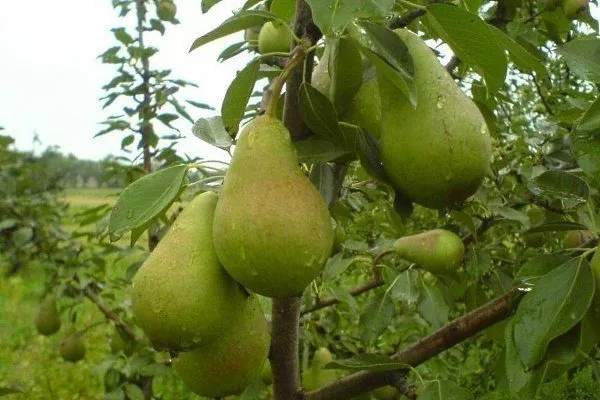
The first fruits appear 5-6 years after planting. The summer pear fruit is medium-sized, weighing approximately 170 g. Each mature tree produces up to 250 kg of fruit, indicating the variety's high yield. The fruit is elongated, with a bumpy surface and thin, yellowish skin, which is covered with small black specks. The pears have a pleasant aroma, and their flesh is tender, tasty, and sweet, delighting with a subtle nutmeg flavor.
The variety has a very long history. The Duchesse pear was first noticed in the mid-18th century. It was developed by a breeder from the English county of Berkshire.
The harvest begins in the second half of August. The fruits store well for 1-1.5 months at temperatures between 1-5°C (33-5°F). The pears do not spoil during long-distance transport and are suitable for fresh consumption and for making nutritious dried fruit and flavorful jam.
Northerner
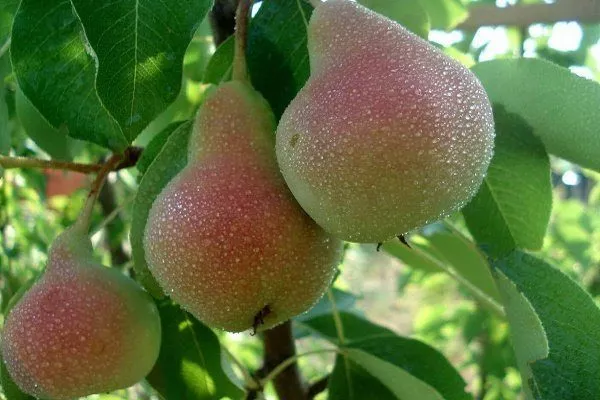
Severyanka pears vary in size; most weigh no more than 85g, but larger ones, up to 120g, are also found. The pears are conical in shape, with a truncated tip. Technical ripeness is determined by the yellow-green tint of the skin. The yellow coloring is present on a smaller portion of the fruit's surface. The stalks are long, usually curved. The flesh is creamy, crisp, and juicy, tasting like young, sweet wine. The aroma is subtle.
Trees are best planted in loamy or sandy loam soil. A generous amount of humus is added to the soil before planting. Planting time ranges from April to late September to early October, depending on the regional climate.
Caring for a pear tree involves periodically loosening the soil around the trunk. This promotes oxygen access to the roots. It's a good idea to promptly remove weeds, as they draw moisture and nutrients from the soil.
Cathedral
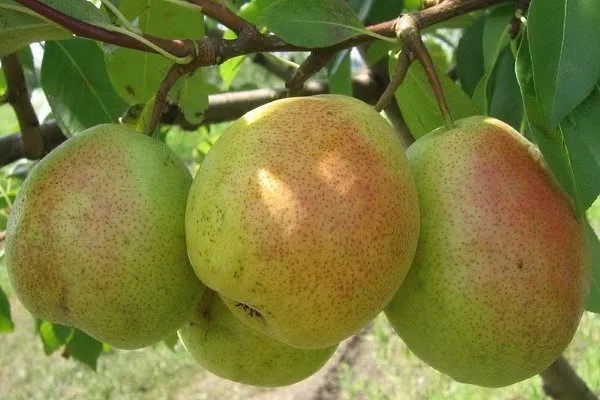
This pear variety was developed by Russian breeders over 20 years ago. "Kafedra" is a cross between a 32-67 seedling and a 72-43 hybrid. It's a summer variety, but the ripening period varies greatly and depends on weather conditions and the number of sunny, warm days throughout the season. Therefore, the harvest is usually in the first half of August or towards the end of the month. By autumn, all the fruits are fully ripe.
Fruiting begins 3-4 years after planting. The yield is good: on average, 35-40 kg of pears are harvested from one tree, and approximately 85-100 centners per hectare.
The fruits are regular in shape and slightly bumpy. They are large, weighing 120-140 g. The skin is thin, smooth, and shiny, green (may turn light yellow when ripe). The flesh is dense, white, tender, and fine-grained, with a slight oiliness. The aroma is subtle. The flavor is sweet and sour, juicy.
Autumn
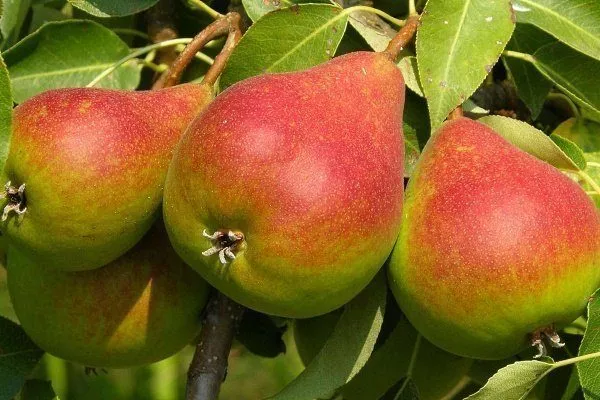
To ensure a bountiful harvest in the fall, it's important to choose the right pear variety. The varieties described below are considered the best.
| Name | Ripening period | Yield (c/ha) | Disease resistance |
|---|---|---|---|
| Veles | Average | 60-80 | High |
| Moscow Bere | Average | 120-180 | High |
| Red-sided | Late | 135-155 | High |
| In memory of Yakovlev | Late | 20 | High |
| Muscovite | Average | 15-20 | High |
| Marble | Late | 130-170 | High |
Veles
This variety was bred by crossing the Lesnaya Krasavitsa and Venus pears. Another name for this variety is "Doch Otlichnoy." The fruits are sweet, juicy, and fleshy, with a pleasant aroma. The skin changes color from greenish-green in midsummer to yellow closer to August. On the sun-exposed side, a reddish-orange hue develops.
The fruits are large, weighing up to 200 g. Ripeness is determined not only by color, but also by the density of the fruit - if they are firm, they are left for further ripening.
Planting is done in winter or fall. In the fall, it is recommended to plant seedlings in mid- to late September, choosing sunny areas protected from strong winds. Ripe fruits are harvested in early September.
Moscow Bere
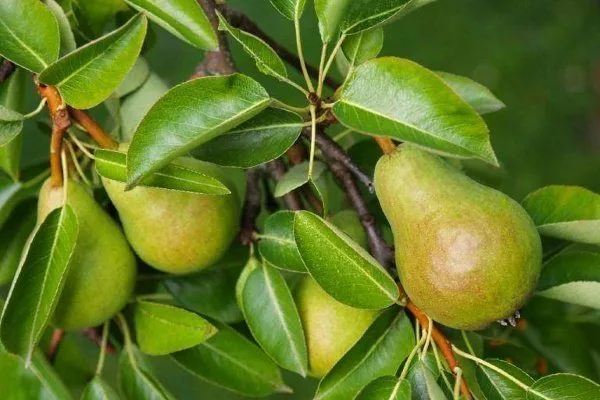
A variety bred at the Timiryazev Agricultural Academy. The Olga variety was used in the crossbreeding, along with several pollinators, including Lyubimaya Klappa, Kashkarnok, and Lesnaya Krasavitsa. The tree is characterized by a rounded shape, with dark shoots. Mature fruits weigh approximately 100 g. The fruit is pear-shaped, asymmetrical, and slightly bumpy. The skin is thin, with a yellow tint. The flesh is buttery, juicy, and snow-white. The flavor is sweet and sour, not cloying. The fruits ripen in early autumn.
Loose soil is recommended for planting the Bere Moskovskaya variety. The tree prefers sunny, warm sites. Its advantages include high winter hardiness and resistance to scab and fruit rot. It begins bearing fruit in the third to fourth year. Yields remain high for a long time.
Red-sided
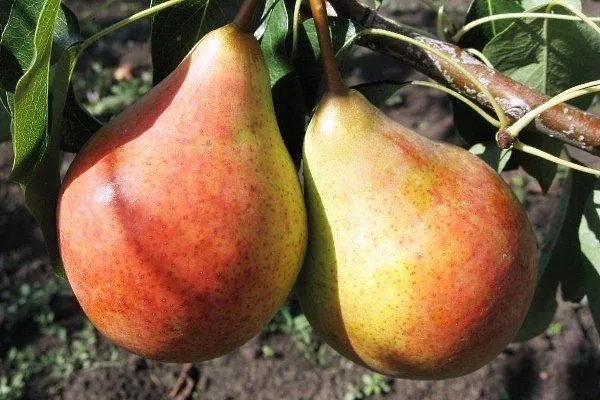
A high-yielding autumn variety suitable for table use. Trees are robust, reaching over 4 m in height. After 5-7 years of fruiting, the growth rate gradually slows. Seedlings are of average maturity, with fruiting beginning 5-7 years after planting.
The fruits are medium-sized, reaching a weight of 135-155 g, rarely 180 g. The pears are characterized by a regular, classic shape and a smooth surface. At harvest, the skin has an emerald hue. When fully ripe, it turns emerald-amber. The snow-white flesh is oily, has a fine-grained consistency, a pleasant aroma, and a sweet-tart flavor with a slight tartness. Harvest occurs in the second half of September.
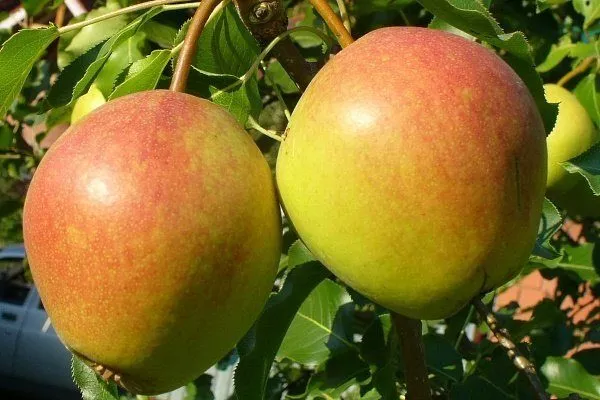
This variety requires careful harvesting of pears, as they tend to fall off heavily when overripe, and falling to the ground can reduce their shelf life.
In memory of Yakovlev
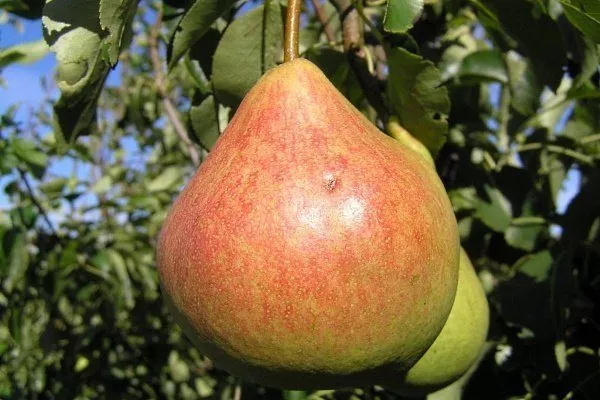
This pear variety was developed by breeders at the Michurin All-Russian Research Institute. Success was achieved by crossing the Tema pear with the French Olivier de Serre variety.
This variety produces medium to large fruits with smooth, golden-yellow skin. A single pear weighs up to 200 g. The stalk is long, curved, and not thick. The flesh is juicy, sweet, and lacks astringency. Fruiting begins 4-5 years after planting. A full harvest is obtained when the tree is 7 years old. At this age, a single tree can yield over 20 kg of juicy fruit. The yield increases over time.
Planting a seedling is recommended in the spring, although it's less common in the fall. First, choose a sunny location where the tree will be protected from winds. Ideally, choose a site on a slightly elevated hill. The fruits ripen in the second half of September. The harvest can be stored for up to six weeks.
Muscovite
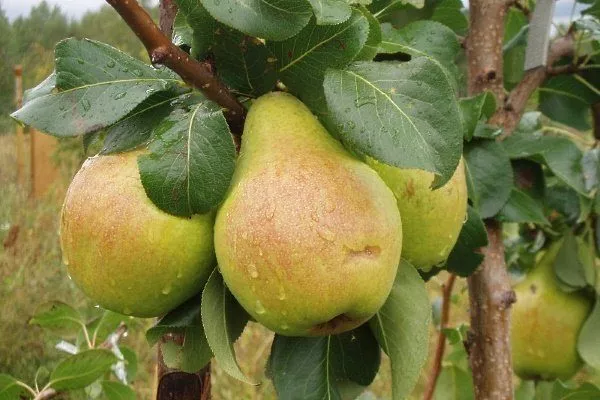
The variety was developed in the 1980s. Its name stems from the breeders' primary goal of creating a variety suitable for growing in gardens in the Moscow region.
The fruits are medium-weight, reaching approximately 120 g. The pears are wide, with a yellow skin with a greenish tint, and small black spots on the surface. The flesh is snow-white, dense, and juicy, with a sweet and sour taste and a distinct aroma.
Planting seedlings is acceptable in spring (April-May) and fall (October). Spring planting allows the seedlings to establish quickly over the summer and survive the winter well. Fall planting provides increased winter hardiness.
The tree begins bearing fruit 3-4 years after planting. A one- or two-year-old tree is selected for planting. A tree yields up to 60 kg of fruit. 15-20 tons of pears can be obtained from 1 hectare. Harvest occurs from early September to late October.
Marble
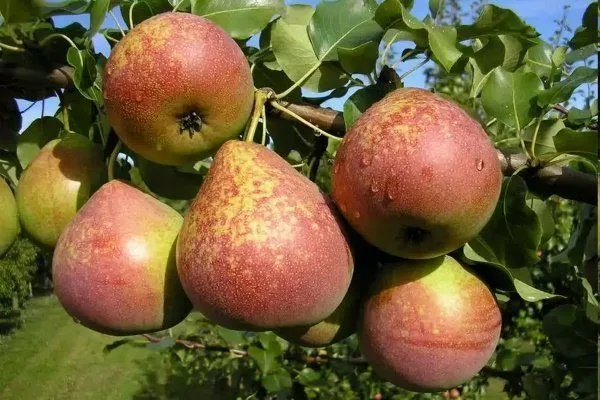
This variety was developed in the Voronezh region in 1965 by crossing the Lesnaya Krasavitsa and Bere Zimnyaya pears. The flesh is tender, delicious, and creamy, with a sweet flavor, a coarse-grained texture, and a pleasant aroma. A single pear weighs 130-170 g, with larger specimens sometimes harvested, up to 220 g. The skin is golden-green, covered with a red, marbled blush.
For planting, select sites with loamy, loose, and nutritious soil. If the soil is clayey or sandy, add additional humus, peat, or manure. Planting should be done in spring or fall. For spring planting, it is recommended to plant in May. In the fall, pear trees are planted in October, and the harvest begins in September.
Winter
Among the wide variety of pears, winter varieties are preferred for their long shelf life and increased frost resistance. Below are the winter varieties considered the best.
| Name | Ripening period | Yield (c/ha) | Disease resistance |
|---|---|---|---|
| Saratovka | Late | 24 | High |
| Kondratyevka | Late | 230 | High |
| Pass-Krasan | Late | 10-15 | Average |
| Pervomayskaya | Late | 40 | High |
| Lyre | Late | 200-250 | High |
| Patriotic | Late | 170-200 | High |
Saratovka
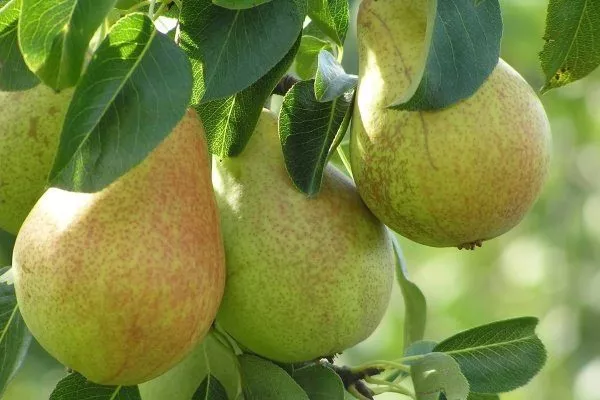
A cross between the German Bergamot and Winter Bere pears. The fruit is medium-sized, weighing 120-140 g. The shape is elongated and pear-shaped, with a smooth surface. The skin is oily, dull, and dense, greenish-yellow in color, turning yellow when ripe. The peduncle is short and curved. The snow-white, oily flesh has a sweet and sour flavor.
The advantages of the variety include increased resistance to diseases and temperature fluctuations, marketable appearance and good taste of pears.
Fruiting begins in the fifth year after planting. The variety is characterized by high yields – up to 24 tons of ripe fruit can be harvested per hectare.
Kondratyevka
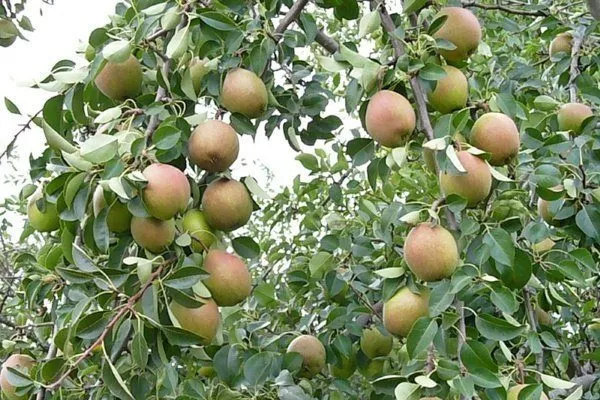
A winter variety. The tree is tall, reaching 10-12 m, with a pyramidal trunk and slightly drooping branches. It grows slowly, but over time this becomes an advantage, as it produces more and more fruit.
The fruits are large, weighing up to 230 g. The skin is green, slightly yellowish. The fruits are juicy, tender, and pleasant in taste and aroma. The stalk is thick and curved. The shape is regular, pear-shaped.
The fruit ripens in early to mid-September. The tree begins bearing fruit four to five years after planting. Gardeners value the Kondratyevka pear for its resistance to cold, disease, and pests.
Pass-Krasan
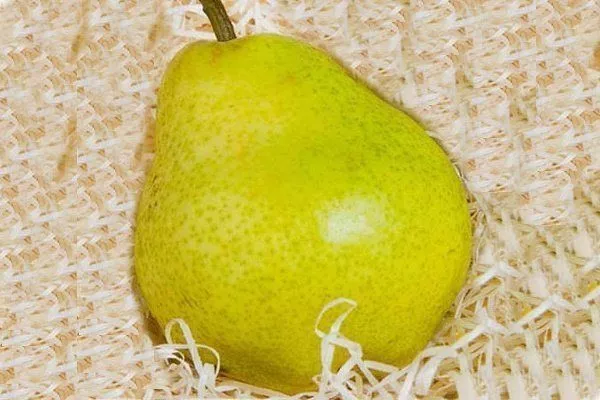
A French winter pear variety. The fruit is suitable for both fresh consumption and industrial processing. The medium-sized fruits weigh up to 180 g and are bergamot- or spherical in shape. The surface is speckled with rusty or gray spots. The skin is thin but firm, slightly rough, and orange-yellow in color. The peduncle is short and thick, slightly curved, and straight. The creamy flesh is juicy and sweet, with a mild acidity and a distinct aroma.
Fruiting begins 6-7 years after planting. The variety is characterized by average yields—up to 10-15 kg of ripe pears can be harvested from a single tree.
Saplings are planted in rich soil, the trees are pruned, their crowns are shaped, and fertilizer is applied. These procedures will accelerate tree growth and increase yield.
Pervomayskaya
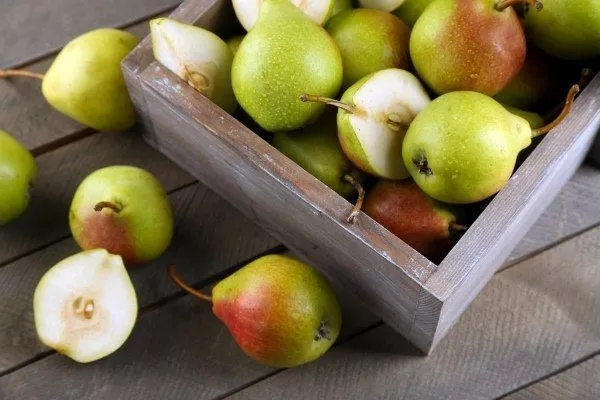
The fruits of the Pervomayskaya variety are pear-shaped, reaching approximately 10 cm in length and weighing an average of 150 g. The surface is smooth, yellowish, and free of spots or blush. The skin has a dense waxy coating.
The flesh is juicy, soft, not watery, and creamy in color. The pears are sweet and pleasant to the taste, without bitterness or acidity, somewhat reminiscent of peach or pineapple. They have a pleasant aroma.
The seedling is planted in the spring, in early March. Choose a well-lit area free of obstacles or structures. Each tree produces approximately 40 kg of ripe fruit.
Lyre
The Lira pear was developed by crossing the Bere Winter and Lesnaya Krasavitsa varieties. The fruits ripen in mid-September. At harvest, the yellow fruits are picked with a greenish tint. Each pear weighs 200-250 g and has a perfect pear shape with a slight slope. The creamy flesh is very juicy, sweet, and slightly tart. The aroma is subtle.
Pear trees begin bearing fruit in the third or fifth year after planting. Choose one- or two-year-old seedlings. Planting is done in the fall or spring. It's best to plant seedlings in areas with consistent sun and no drafts.
As they store, the fruits turn yellow, and their blush deepens. Pears can be stored until December or January, and sometimes don't spoil until late March.
Patriotic
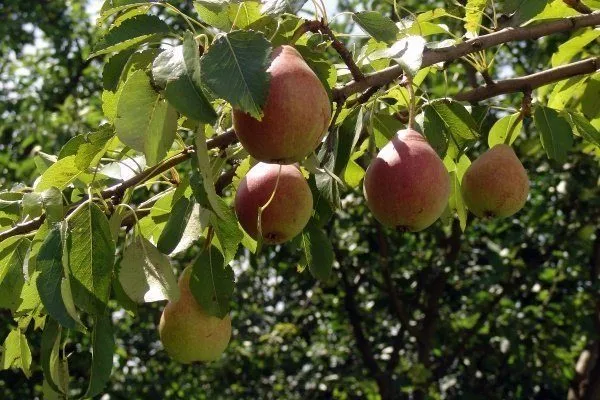
The variety was developed in 1934 by crossing the Dekanka Winter and Vera Boyek pears. The tree is short and has good winter hardiness. It produces a medium-sized annual harvest.
The fruits are a perfect pear-shaped fruit with a greenish-yellow skin. They are medium to large in weight, reaching 170-200 g. The flesh is creamy, juicy, and tender, with a sweet and sour flavor.
The first fruiting occurs 4-5 years after planting. The fruits fully ripen in mid-October and can be stored well until the end of December. When stored in the refrigerator, they retain their appearance until March.
Late
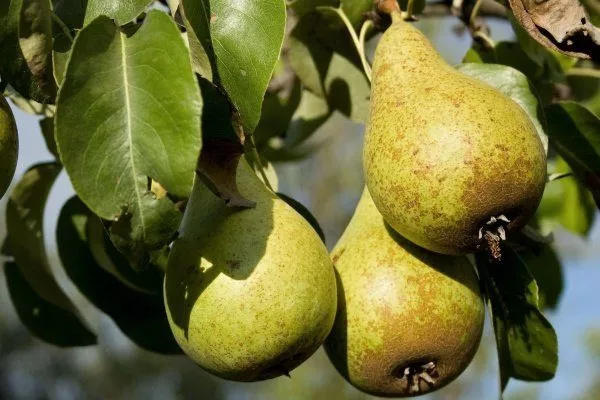
Many gardeners prefer late-ripening pear varieties for their frost resistance, resistance to diseases and adverse environmental factors.
| Name | Ripening period | Yield (c/ha) | Disease resistance |
|---|---|---|---|
| Rossoshanskaya Late Dessert | Late | 70 | High |
| Belarusian | Late | 110-120 | High |
| Olivier de Serres | Late | 150 | High |
| Bere Ardanpon | Late | 120-180 | High |
| Hera | Late | 40 | High |
| Wonderworker | Late | 140-210 | High |
Rossoshanskaya Late Dessert
The variety was bred in 1952 at the Rossoshanskaya Experimental Gardening Station, hence its name. The "Lesnaya Krasavitsa" and "Bere Zimnyaya" varieties were used in the selection process. A distinctive feature of this variety is its medium-to-large-sized fruits. The pears weigh 140-170 g, but do not exceed 210 g.
The pear is round, more like an apple in appearance. Despite its sweet flavor, the pear has a soft and smooth flesh texture. It has a rich aroma. The skin is yellow-green, with a beautiful pink blush.
This variety is easy to care for and maintain, so it has no special soil requirements. It is an early-bearing pear tree. Fruiting occurs 5-6 years after planting. The fruit ripens by mid-September. It can yield approximately 70 kg of fruit per season.
Belarusian
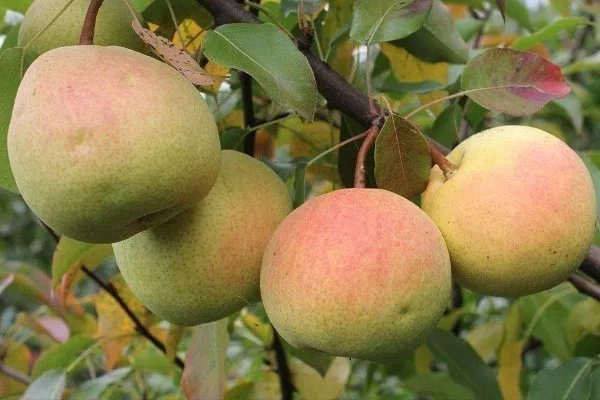
A winter variety developed by breeders from the Belarusian Research Institute of Fruit Growing. The variety was created by sowing seeds from uncontrolled pollination of the "Good Louise" pear. Gardeners are already harvesting the fruit in its fourth year. Fruit appears by the end of September.
The fruits are small, weighing approximately 110-120 g. When ripe, they acquire a wide pear-shaped form with a rough, light-colored skin dotted with light brown spots. The skin is green at harvest, but turns orange-yellow by the time of consumption. The flesh is juicy, medium-firm, buttery, and tender. The best time for planting is considered to be late May.
Olivier de Serres
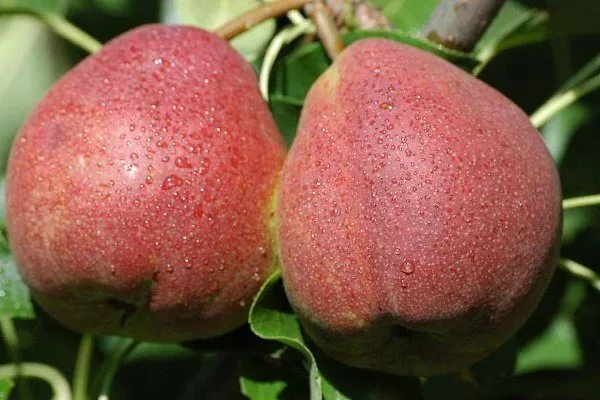
A French winter pear variety that keeps fresh until March after harvest. The fruit is suitable for fresh consumption and compotes. Harvesting maturity occurs in early October, and consumption is in December.
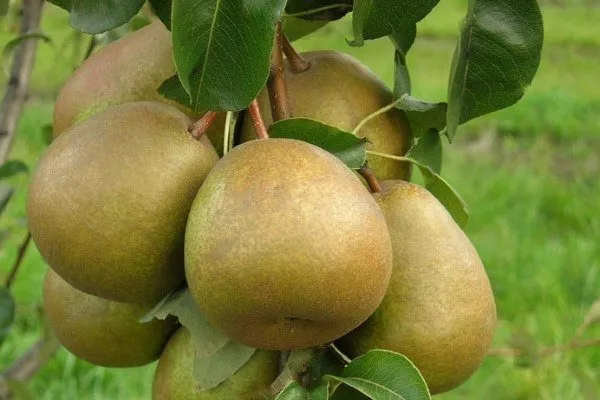
The fruits are medium-sized, weighing up to 150 g. They are flat-round, bergamot-like, and have a bumpy surface. The skin is slightly rough, dense, and gray-green. Brown spots and blotches appear on the surface. When ripe, the skin turns dark yellow. The peduncle is curved, short, and thick. The creamy flesh is juicy, dense, and has a sweet, slightly almond-like flavor. It has a pleasant aroma.
The Olivier de Serres variety is demanding of soil and climate conditions. Trees require favorable soil and climate conditions. Plant in a sheltered, warm, well-lit area with light, nutritious soil. Fruiting occurs in 4-7 years.
Bere Ardanpon
A Belgian winter variety, developed in 1759. The fruits are medium to large, reaching 170-220 g. The shape is bell-shaped, pear-shaped, and the surface is bumpy. The skin is thin, smooth, and not shiny.
At harvest maturity, the skin is green; at consumer maturity, it is light yellow, clear, with small brown spots. The stalk is short and slightly thickened. The flesh is white, tender, juicy, sweet and sour, and has a pleasant aroma.
The harvest is in early September or early November, depending on the region. The fruits are stored until mid-January. This variety is very demanding of soil conditions. It is planted in fertile and warm loamy soils. It may not produce a good harvest if planted in wet, cold, or heavy soils. Fruiting begins in the 8th or 9th year. The average yield is 120 to 180 centners per hectare.
Hera
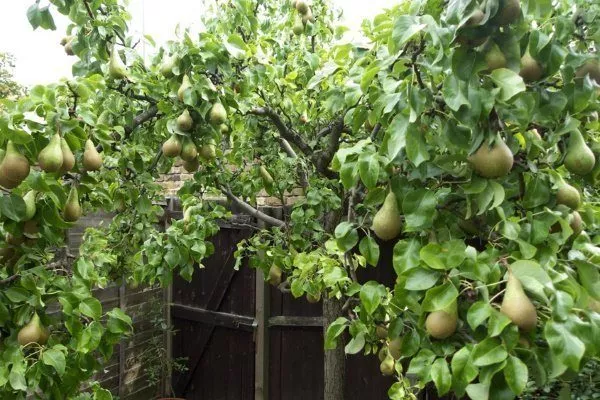
This variety was developed by Russian breeders by crossing the Daughter of Zari and Reale Turinskaya varieties. The pears are wide, weighing up to 250 g. The green skin is rosy, and the fruit acquires a yellowish tint as it ripens. It has a pleasant aroma, and the skin is covered with a fine brown mesh. The beige flesh is soft, pleasant, and contains small grains, with a sweet and tart flavor.
For planting, select sites with fertile, lumpy, slightly acidic soil. Black soil is best. Fruiting begins at 4-5 years of age.
This variety is characterized by high yields, reaching up to 40 kg per tree. Experienced gardeners recommend picking the pears with fabric gloves, removing the stems. Line the basket with fabric to prevent mechanical damage.
Wonderworker
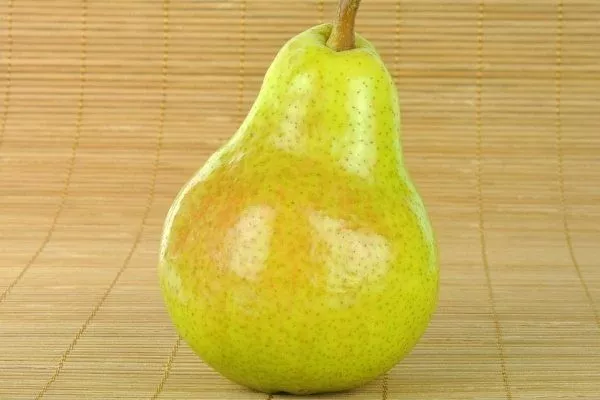
Two pear varieties were used for breeding: "Doch Zari" and "Talgarskaya Krasavitsa." The result was the "Chudesnitsa" variety, which lives up to its name. The fruits are large, weighing between 140 and 210 g. The shape is truncated, cylindrical-conical, and the surface is smooth and even.
The skin is oily, as is the flesh. The flesh is medium-firm, slightly granulated, and has a tender, juicy consistency. The juice is sweet, without being sticky or astringent. It has a sweet-tart flavor with a floral, pear-like aroma.
Harvesting occurs 5 or 6 years after planting. The pears ripen moderately, reaching full maturity in mid- to late September.
Varieties for planting in gardens in the Moscow region
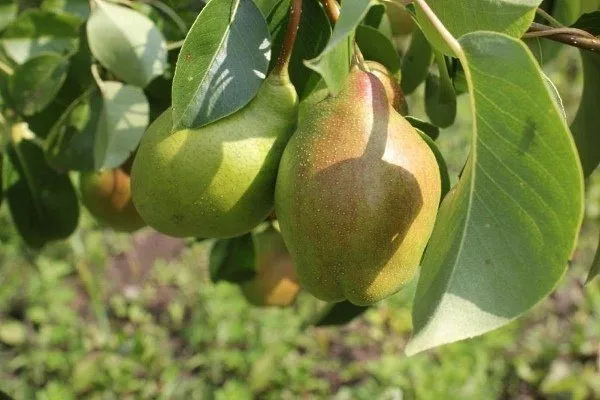
Selective breeding work has resulted in the creation of the best varieties, intended for planting in the Moscow region.
| Name | Ripening period | Yield (c/ha) | Disease resistance |
|---|---|---|---|
| Prominent or Lumpy | Late | 50 | High |
| Tenderness | Average | 150-200 | High |
| Fairytale | Early | 200 | High |
| Vera Yellow | Average | 110 | High |
| Smartly dressed Efimova | Early | 120-180 | High |
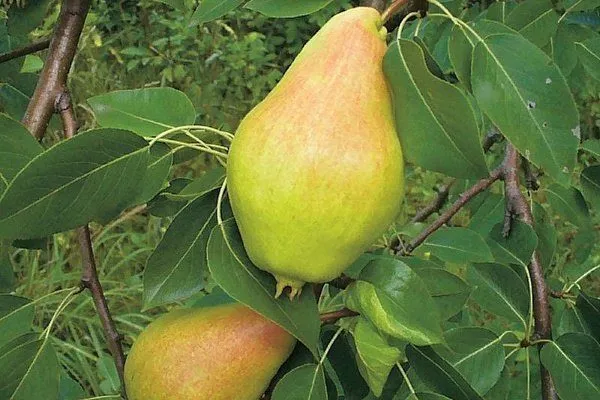
Prominent or Lumpy
This variety was developed by Russian breeders by crossing the transitional hybrid VI-53-67 and a classic southern pear. It is self-fertile, producing a late but abundant harvest. The plant begins bearing fruit four years after planting, from August to mid-September. A single fruit tree yields up to 50 kg of pears.
The fruits are medium to large, weighing up to 170 g, with some reaching up to 200 g. The shape is elongated and symmetrical, with a ribbed surface. The skin of unripe fruits is predominantly green, turning yellow as they ripen. The flesh is dense, juicy, and snow-white. The flavor is rich, nutmeg-like, and slightly tart.
Plant in late September or early October. Choose sunny, spacious garden spots. If planted in the shade, the fruit will be tasteless and the yield will be low. Care is straightforward: watering, pruning, watering, and fertilizing.
Tenderness
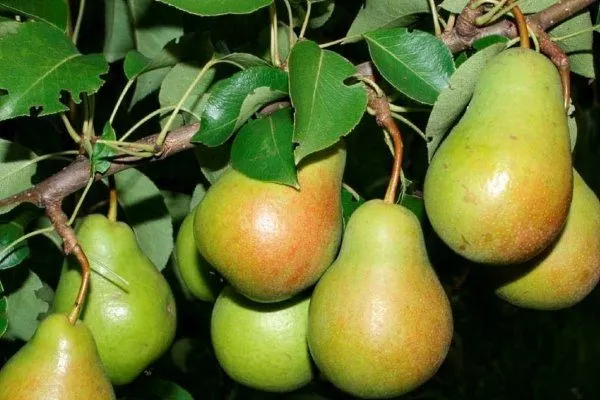
This variety was created by crossing pollen from the "Lyubimitsa Klappa" cultivar and the "Tema" Lukashevskaya pear. The fruits are large, weighing up to 150-200 g. The shape is oval, pear-shaped, and wide. The fruits are identical. The skin is bright green when ripe, turning greenish-yellow with a pinkish blush as it matures. The flavor is sweet and sour, slightly tart. The flesh is fine-grained, juicy, and tender.
Ripe fruits are harvested in late August-early September. The harvest is stored for no more than one month. Fruiting occurs 4-5 years after planting. Proper planting will ensure rapid establishment of the young tree.
It's recommended to prepare the planting site for this variety in the fall, first digging the soil and removing weeds. Over the winter, low temperatures will reduce the number of fungal bacteria and microorganisms in the soil.
Fairytale
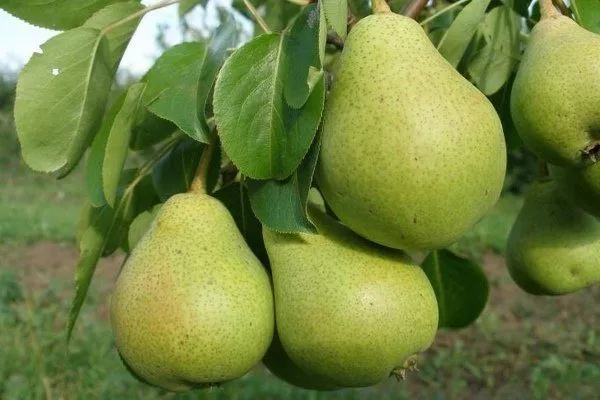
This summer variety is a cross between the Povislaya and Nezhnost pears. Breeders developed the Skazochnaya variety in the early 1990s. The fruits are pear-shaped, weighing up to 250 g, with an average weight of up to 200 g.
The skin of unripe fruits is yellowish-green, turning yellow with age. The flesh is juicy, tender, and not astringent. The aroma is subtle, with a hint of spice.
Flowering occurs in late spring to early summer. Seedlings are planted in mid-autumn. The harvest is collected in late August during warm weather and dry weather. Ripe fruits can be stored for no more than two weeks after being picked from the tree.
Vera Yellow
The tree reaches over 6 meters in height, with a pyramidal trunk and upright, tawny branches. The light green young leaves acquire a greenish tint as autumn approaches.
This variety is characterized by increased frost resistance and requires little care. The fruits ripen in the second ten days of September.
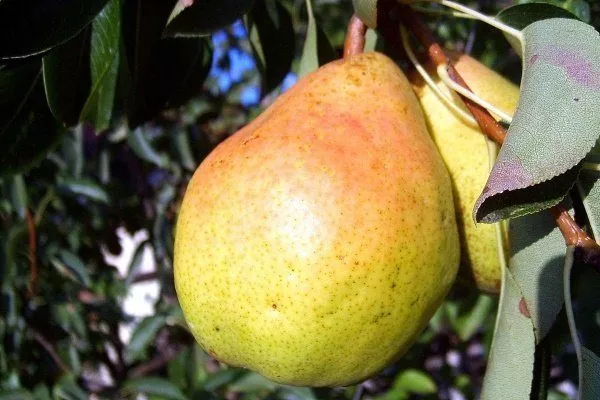
The fruits are small, weighing no more than 110 g. Unripe pears have a greenish skin, but with age they turn yellow-orange. The stalks are medium in length and thickness. The flavor is aromatic, and the flesh is meaty. This variety is resistant to damage and stores well in a cool place.
Smartly dressed Efimova
An early autumn variety, bred in 1936 by crossing the Tonkovetka and Lyubimitsa Klappa pears. The fruits are medium-sized, not exceeding 120 g, though larger ones, weighing 150-180 g, are sometimes harvested. They have an elongated pear shape. The skin is smooth, greenish-yellow at harvest maturity, with a slight purple blush.
When fully ripe, the fruits acquire a light yellow hue. The stalk is medium-thick, long, and curved. The flesh is whitish-cream, dense, tender, juicy, and buttery. The aroma is light, and the taste is sweet and sour, slightly tart.
In Moscow, the period of harvest maturity for pears occurs at the end of summer and the beginning of autumn, depending on weather conditions.
The variety is moderately early fruiting—trees begin bearing fruit in the 7th to 8th year. Up to 30 tons of ripe fruit can be harvested per hectare. The variety is characterized by good winter hardiness and increased resistance to scab.
Pear for the Volga region and central Russia
Breeders have developed special varieties suitable for planting in the Volga region and central Russia. These include the following pear varieties.
| Name | Ripening period | Yield (c/ha) | Disease resistance |
|---|---|---|---|
| Chizhovskaya | Average | 50 | High |
| Lada | Early | 90-110 | High |
| Allegro | Average | 150 | High |
| Seedless | Early | 70-80 | High |
| Early ripening from Michurinsk | Early | 100 | High |
Chizhovskaya
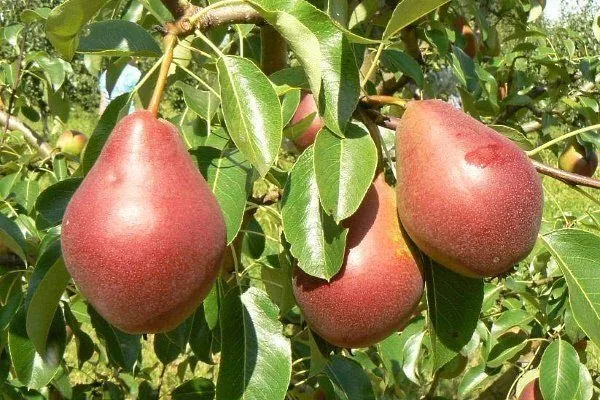
A mid-season pear variety with late-summer ripening fruit. Developed by Russian breeders by crossing two varieties – Olga and Lesnaya Krasavitsa. The fruits are medium-sized, reaching 110-140 g. The surface is smooth, with a typical pear- or obovate shape.
The skin is thin, dry, and matte. It's yellow-green in color. There are small spots on the surface. The stems are short and medium-thick. The flesh is light yellow or white, slightly oily, and barely juicy. The aroma is subtle.
The variety is very early-bearing, with fruiting occurring 3-4 years after grafting. The fruit ripens regularly. A single tree yields approximately 50 kg of ripe fruit per season.
Lada
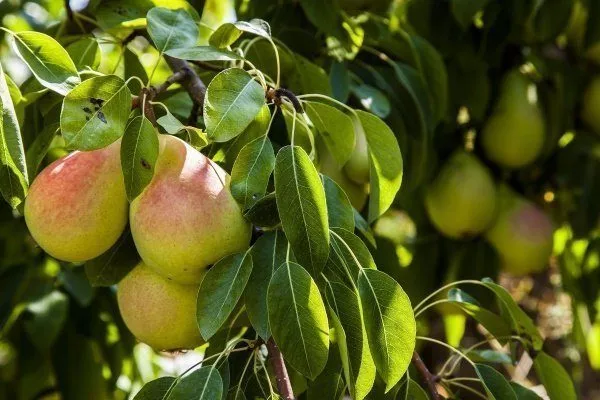
Lada is an early-ripening summer variety developed by Russian breeders by crossing the Lesnaya Krasavitsa and Olga varieties. It is popular among Moscow gardeners. The tree reaches a height of no more than 3 m. The fruits are obovate, weighing 90-110 g.
The skin is thin, smooth, and light yellow with a slight blush. The stalk is short and thin. The flesh is creamy or yellowish in color, with a sweet and sour flavor and virtually no aroma. The flesh is fine-grained and dense.
Pear trees are planted outdoors in early fall or early spring after the last frost. Proper site selection and preliminary preparation facilitate the successful rooting of the young tree.
Allegro
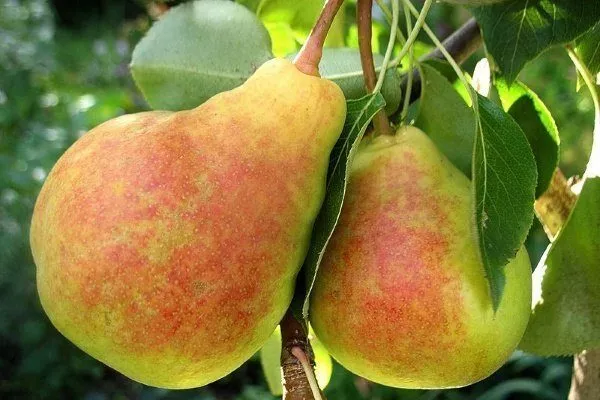
In 2002, Russian breeders achieved some remarkable results: they developed the Allegro pear by pollinating the "Osennaya Yakovleva" variety. The fruits are medium-sized, weighing no more than 150 g. They are elongated and pear-shaped. The skin is green with a slight blush. The peduncle grows at an angle and is long. The flesh is medium-firm, the flavor is sweet, not tart, and the aroma is pleasant.
This variety is best grown in chernozem soil and light loam. It's important to choose sites with loose, well-drained soil and good aeration. This variety is characterized by mixed fruiting, which guarantees a bountiful harvest.
Fruiting begins 4-5 years after planting in a permanent location. The fruits ripen in mid-August. The yield is low: at least 10 kg are harvested from a single tree, and subsequently, a consistent yield of 8 to 12 kg of ripe pears is obtained.
Seedless
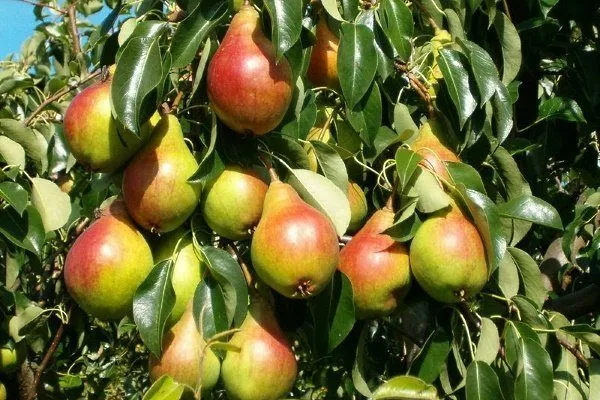
Bessemyanka is an old Russian variety. It gets its name from the underdeveloped seeds it contains. It's often called "Sugar." The pears are small, weighing between 70-80 g. The fruit is short, with a slightly bumpy surface and slightly rough skin.
Unripe pears have a grassy green hue; when ripe, they turn yellowish-green. The peduncle is thin, short, straight, and sometimes curved. The flesh is yellow-white, like a melon, firm, tender, and juicy. The pears are sweet, with a subtle aroma.
The fruits fully ripen in late August. The storage period is short, just over a week. Ripe fruits may fall off due to their weight. The variety begins bearing fruit 8-9 years after planting. Harvests are regular.
Early ripening from Michurinsk
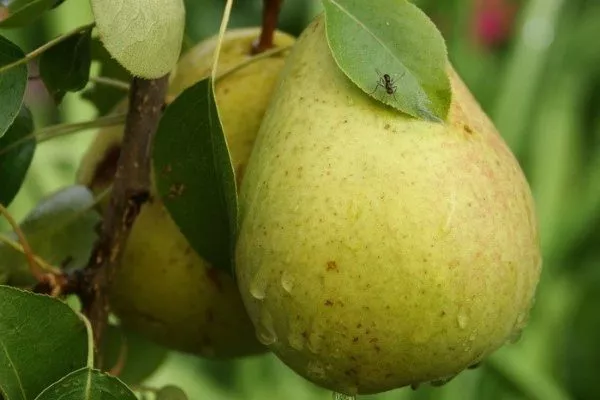
A summer variety with ultra-early ripening fruit. Russian breeders developed this variety by crossing the ancient Western European variety "Citron de Carme" with a hybrid obtained from a wild Ussuri pear and the "Bere Ligelya" variety.
The fruits weigh no more than 100 g. They are perfectly pear-shaped, with a greenish-yellow skin that turns yellow when ripe. The flesh is juicy, tender, and slightly loose without granulation. The fruit has a sweet and sour taste and a pleasant aroma.
Gardeners value this variety for its abundant fruit yield—trees bear fruit annually. Fruiting begins in the fifth year of life, and yields increase with age. At 10 years of age, up to 100 centners of fruit can be obtained per hectare. The Skorospelka iz Michurinsk variety is best grown in sunny, dry areas. Planting is carried out in the fall, a month before cold weather sets in, and in the spring, immediately after the soil thaws.
Other varieties of pears
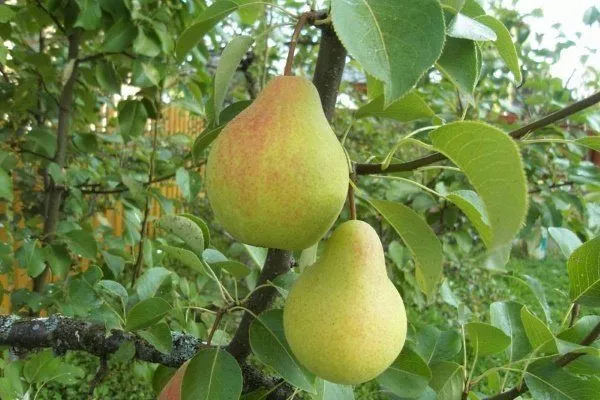
There are other pear varieties that are considered equally popular and sought after among gardeners. These include the following:
- January. The fruits are medium-sized, large in diameter, with a rough skin and small seed chambers. The skin is light green. The flesh is dense, juicy, and sweet.
- Honey. The pears are large, weighing 400, sometimes 500 g. They have a thin, matte, slightly rough skin. The skin is yellow-green, sometimes with a brown or pink blush. The fruit is very sweet, hence its name.
- Botanical. The pear-shaped fruits are medium in size, weighing 120-140 g. The skin is yellow-green. The flesh is dense, juicy, and coarse-grained.
- Firefly. Small fruits, weighing between 90 and 120 g. Round in shape, smooth skin, green-yellow when not fully ripe, golden-yellow when ready to eat. The flesh is creamy, semi-oily, and tender.
- Yeseninskaya. Pear-shaped fruits weigh up to 130 g. The skin is thick, light green, and pitted. The flesh is creamy and juicy, with a nutmeg aroma and a sweet and sour flavor.
- Original. Pears weigh 100-120g, sometimes 200g. They are elongated pear-shaped, with smooth, yellow skin. The flesh is creamy, tender, and buttery, with a sweet, tart flavor.
- Talitsa. The fruits are small to medium in size, weighing between 80 and 110 grams. They are round, apple-shaped, and have a smooth surface. The skin is medium-thick and light yellow. The flesh is creamy and has a harmonious sweet and sour taste, reminiscent of honey. It has a strong aroma.
- Betaulskaya. The fruit weighs between 115 and 130-155 g. It is pear-shaped, wide, and smooth. The skin is greenish-yellow with a brownish-red blush. The white, tender, oily flesh has a sweet and sour taste.
- Children's. The shape is beautiful, the fruits are uniform, and weigh 85-90 g. The surface is uneven and slightly bumpy. The skin is yellow, turning orange-pink as the fruit ripens. The flavor is sweet, and the aroma is distinct.
- Siberian. Small pears weighing 35 to 70 grams. Rounded, with smooth ribs, the skin is greenish-yellow and matte, smooth. The flesh is creamy, juicy, and tart.
- ✓ Consider the climatic conditions of your region when choosing a winter-hardy variety.
- ✓ Pay attention to the type of soil preferred by the chosen variety.
- ✓ Consider the ripening time of fruits when planning the harvest.
With such a wide variety of varieties, it's always possible to find one that's suitable for planting in a specific location and has a suitable fruiting time. Gardeners choose specific varieties based on their preferred characteristics.