
The Lesnaya Krasavitsa pear is known throughout the former Soviet Union; it became popular several decades ago and remains so today. This is due to the sweetness and juiciness of its fruit, its ease of cultivation, its transportability, and its good shelf life. Breeders are developing many new varieties from the Lesnaya Krasavitsa.
History of selection and zoning
At the very beginning of the 19th century, a tree with incredibly sweet fruit was first discovered in the forests of Belgium. The plant had no name at the time, so Châtillon (the man who discovered the pears) began telling everyone about his discovery. The variety's spread began when residents of Alosta and the surrounding area began planting pear seeds in their orchards.
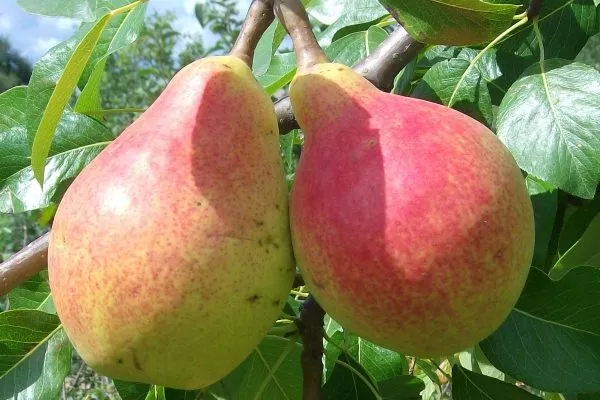
By the end of the 19th century, the Forest Beauty had become the most popular cultivar in Europe, and it arrived in Russia in the early 20th century. It was zoned for the Lower Volga and North Caucasus regions. Today, the plant is actively grown throughout the country, but is most commonly found in the Krasnodar Krai, Astrakhan, Kalmykia, Volgograd, and southern Siberia.
Description of the Forest Beauty pear
Initially, the Forest Beauty tree has a columnar shape, but over time it becomes more spreading. This is due to the weight of the large number of fruits, which weigh down the massive branches.
Tree structure
- Spreading. The crown is quite spreading, has a pyramidal shape and medium density.
- Dimensions of an adult tree. Without pruning, the Forest Beauty tree can reach a height of 7-10 m. With proper and timely pruning, it can reach a height of about 5-6 m. The tree grows tall for up to 8 years, after which its growth slows.
- Trunk. Straight, rough to the touch, grey in colour.
- Escapes. Thickened, sometimes arched, branches hang down, forcing gardeners to use supports when harvesting heavily. The bark has a reddish tint.
- Green mass. The foliage is dense and oblong. The leaf tip is pointed, and the edges are finely serrated. The leaf buds are small, silvery, and pointed.
- Flowers. They are small, white with a pink tint. The sepals are semi-open. Inflorescences can be solitary, but clusters are also common. In the latter case, a single cluster contains up to 7-10 flowers.
The peduncle is shortened but strong, with thickenings on both sides.
Physical characteristics of fruits
The Forest Beauty is a medium-fruited variety, so the average weight of one pear is 140-200 g, but in the southern regions, it is possible to grow fruits up to 300 g. This is also influenced by the level of soil fertility – the better it is, the larger the fruits.
Other features:
- the fruit is distinguished by its truncated ovoid shape;
- funnel - narrow;
- the skin is smooth with slight roughness;
- the skin is thin, but strong (does not crack);
- color - green at first, with a yellowish tint when technically ripe, sometimes with reddish tones;
- subcutaneous dots - gray, sometimes brown ones are also found;
- the seed chamber is located in the center, is characterized by small size and a brown tint;
- seeds are drop-shaped.
Commercial and consumer qualities of fruits
Forest Beauty pears have a beautiful appearance—they're smooth, with a red blush on the side. Consumers and sellers also appreciate this variety for:
- The flesh is so juicy that when you bite into the pear, the juice flows freely. Its color is light yellow, sometimes with creamy notes.
- The texture of the flesh is tender yet slightly buttery. Due to the lack of graininess, it melts in your mouth.
- The fruit emits a strong and pleasant aroma, typically pear-like.

- The flavor is richly sweet, but not cloying, as there's a very slight tartness. This pear is considered a dessert variety.
- The nutritional value is high. The pulp and peel contain phosphorus, potassium, iron, magnesium, selenium, iodine, and fluorine. It also contains many B vitamins.
- The calorie content is very low—only 47 kcal per 100 g, assuming full technical ripeness. Unripe pears have even fewer calories.
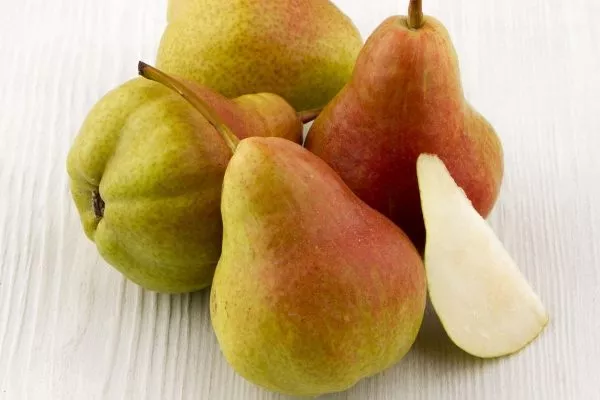
Collection and use of fruits
If the fruits are intended for consumption within 2-3 days, they should be picked when technically ripe. Only unripe fruits, when the flesh is still firm and green, are used for transportation. The approximate harvest time is 10-15 days before full ripeness.
The forest beauty is universal – its fruits are used everywhere:
- compotes;
- canned pears;
- candied fruit;
- marmalade;
- juice;
- paste;
- dried fruits;
- additive to yogurt, etc.
To preserve your harvest for as long as possible, experts recommend following these rules:
- pick the fruit carefully so as not to tear off the stem - this is important, otherwise the fruit will begin to rot where it was torn off;
- do not pick fruits from the ground if you plan to store them for a long time;
- do not wash before storing;
- Be sure to dry the fruits thoroughly;
- store them in wooden boxes;
- Place the fruits between the following materials:
- paper;
- sawdust.
- keep the fruits at a temperature of +4 to +8 degrees;
- The optimal humidity level is 85%.
The shelf life in unchanged form is 70-90 days.
Characteristics of the Forest Beauty pear variety
The pear tree is considered more demanding of growing conditions than, for example, the apple tree. Its root system is very extensive, so its shoots extend deep into the soil, reaching groundwater. This ability allows the pear to better tolerate dry weather.
Main parameters
Forest Beauty, unlike other pear varieties, has the following characteristics:
- Frost resistance. The tree is considered winter-hardy, withstanding temperatures down to -45-50 degrees Celsius, which is why it is grown in Siberia and the Urals. If morning and night frosts occur in April or May, the pear tree will easily survive them.
- Disease resistance. The Forest Beauty has moderate immunity to various infections, so it's important to carry out preventative treatments promptly. The tree is particularly susceptible to rot and scab. It is resistant to powdery mildew and rust.
In some cases, chlorosis occurs when there is a lack of iron in the soil. - Fruit ripening periods. In warm climates, the fruits ripen in late August; in cool climates, during September.
- Productivity. Gardening organizations harvest 140-60 centners per hectare. On a personal plot, a tree older than 35-40 years yields around 180-200 kg, while a young tree yields only 30-80 kg.
Under very favorable conditions, especially in Crimea, it is possible to harvest up to 350-400 kg of fruit. - Self-fertility. The variety is partially self-fertile – only 20% self-pollinates, which is why the tree requires favorable neighbors.
- Pollinator varieties. Optimal pear varieties for Forest Beauty:
- Bere Dil;
- Marianne;
- Alexandrovskaya;
- Bergamot Mleevsky;
- Lemon;
- Good Louise;
- Seedless;
- Summer Williams;
- Bere Ligelya;
- Clapp's Favorite;
- Bere Bosk.
- Bloom. The first flowers appear in April in the south and at the end of May in the northern regions. It takes about 35-45 days for the ovaries to form.
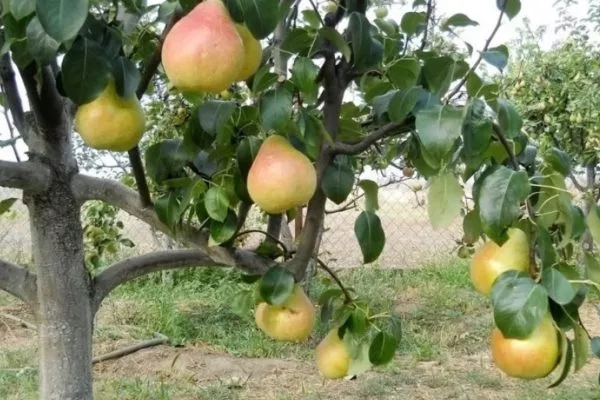
All about fruiting
This variety is far from precocious, as the first harvest can only be collected 5-9 years after planting, depending on climate conditions. Immediately after fruiting begins, the tree's growth slows down, devoting all its energy to the fruit rather than to shoots and foliage.
Other features that are important to know:
- If the tree is healthy, fruiting occurs annually; if there are diseases or the gardener does not adhere to agricultural practices, fruits may be observed every other season;
- Fully ripe fruits fall off and break as they become soft.
Positive and negative qualities
Since the Forest Beauty was discovered in the 19th century, it is considered the most studied variety. Based on this research, the following positive and negative aspects of this variety have been identified:
Methods of reproduction
The Forest Beauty can be propagated in three ways: by seeds, shoots, and cuttings. The first method is rarely used. This is due to several reasons, including the time it takes to propagate and the inability to obtain varietal characteristics due to pollination by other pear species.
Root shoots
Root suckers are placed in the tree's trunk area. This is the simplest method, as the shoots already have a root system. The main requirement is that pear tree shoots of grafted origin must not be used for propagation.
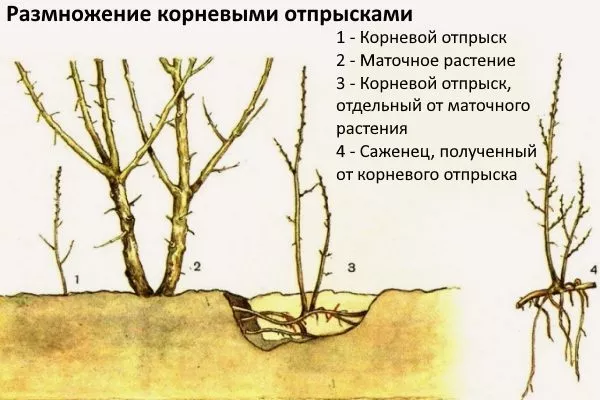
Other nuances:
- since the root system of the shoots is still weak, in the spring it is necessary to first place them in greenhouse conditions for the entire summer, and plant them in the fall;
- for the same reason, it is important to treat the roots with root-forming stimulants;
- separation from the mother roots is carried out before the activation of vegetation;
- You don't have to cut off the shoot right away, you can just trim it and leave it like that until autumn.
How is the procedure performed:
- Select several of the healthiest shoots from all the growth.
- Dig them up from all sides.
- Chop with a hatchet or a sharp shovel.
- Remove from the ground.
- Plant it in a pot and place it in a greenhouse.
- In autumn, replant in the standard way.
seedlings
This technique is most commonly used, although it does have its drawbacks: the cuttings first undergo rooting. Both green and woody shoots can be used. The former are cut before sap flow begins, while the latter are cut after new growth has formed.
Cuttings step by step:
- Select a strong shoot.
- Cut it from the tree at a 45-degree angle. It's best to use a sharp, disinfected knife for this.
- Treat the cut area on the pear tree with garden pitch.
- Soak the lower part of the shoot in a growth stimulant. Or leave the seedling in water for several days, that is, until roots begin to form.
- Plant in open ground or a pot with soil mixture.
- Cover with plastic film for 4 months. Remove the cover daily during daylight hours.
- Remove the film, and after another 3 months, transplant into open ground.
Planting the Forest Beauty pear tree
Forest Beauty is planted using the traditional method, so there are no special requirements. The tree is known for its good survival rate; the main thing is to provide fertile soil and maintain the proper spacing between seedlings.
Deadlines
The timing of seedling planting directly depends on the country's climate zone and weather conditions, which change annually. Therefore, it's more important to focus on the weather:
- In spring, it is advisable to carry out planting work after the air temperature has stabilized at 10-15 degrees; in the case of the Forest Beauty, minor recurrent frosts are permissible;
- In autumn, you need to plant one and a half to two months before frost so that the root system has time to take root.
How to choose and prepare a seedling?
Planting material must be of high quality—this requirement applies to absolutely all crops. Forest Beauty seedlings should be between 2 and 3 years old. Other indicators of a good bush:
- absence of affected and dried areas;
- developed root system with “living” shoots;
- presence of the first tier of branches;
- the buds should not peel off;
- seedling height – minimum 1 m, maximum 2 m.
Immediately before planting, it is important to prepare the seedling, which will ensure rapid rooting and adaptation to new conditions.
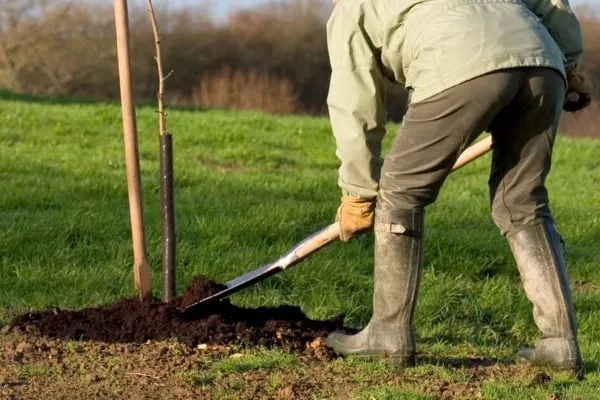
How to do it:
- Trim any overly long root shoots. Their length should range from 20 to 30 cm, depending on the plant's age.
- Shape the above-ground branches. To do this, trim the branches slightly and immediately coat the cut areas with garden pitch.
- Soak the roots in room-temperature water for 24 hours. This will revive them.
- To speed up the process of root system growth, soak in any growth stimulator.
- Remove the tree from the liquid and inspect it again. If planting in the fall, remove the lower part of the foliage, leaving only the top.
If the root system is closed, do not break up the root ball; plant the cutting directly into the soil, forming only the above-ground part.
Landing site
The forest beauty prefers light, fertile loam or sandy loam. If the soil is dense, you'll need to loosen it with river sand, peat, perlite, or rotted wood shavings.
- ✓ The groundwater level should be no higher than 3-4 meters from the surface to avoid rotting of the root system.
- ✓ The soil should be light, fertile, with a pH of 6.0-6.5 for optimal growth and fruiting.
The site must meet the following requirements:
- Lighting is an important indicator; if you plant in the shade, the fruits will not gain sweetness and juiciness;
- groundwater level – not less than 3-4 m from the earth’s surface;
- trees must be ventilated;
- It is not recommended to plant it next to taller garden plants.
To protect the crop from cold winds and drafts in the northern regions, plant the Forest Beauty on the south side relative to buildings and fences.
How to prepare the soil and planting hole?
The soil for this variety must be fertile, so add fertilizer when preparing the hole. The planting hole should be 1-1.2 m deep and 0.6 to 0.8 m in diameter. Fertilizer options for one hole:
- soil dug from a hole, 15-20 kg of compost, the same amount of sand (for heavy soil), 3 tbsp. potassium sulfate;
- Mix the excavated soil, rotted manure and sand in equal proportions, add 100 g of potassium sulfate and 200 g of superphosphate.
- Check the soil pH and adjust it to 6.0-6.5 if necessary using lime or sulfur.
- Add organic fertilizer (compost or rotted manure) 2-3 weeks before planting to improve soil fertility.
- Ensure good drainage by adding sand or perlite to heavy clay soils.
Mix all the ingredients thoroughly, pour them back into the hole, cover with plastic wrap, and leave for a week. Place the remaining soil next to the planting hole and cover it with plastic wrap.
Distance between trees
The distance between plantings should be at least 3 meters, ideally around 5 meters. The same distance should be maintained between trees in the same row and between rows. If other crops, such as vegetables or bush berries, are grown nearby, they should be spaced 2-3 meters apart.
Step-by-step instructions for planting a seedling
Once the soil has settled in the planting hole, proceed with planting. Here's how to do it correctly:
- Remove the plastic cover. Use a shovel or pitchfork to loosen the soil mixture. Remove 1/3 of the total mass.
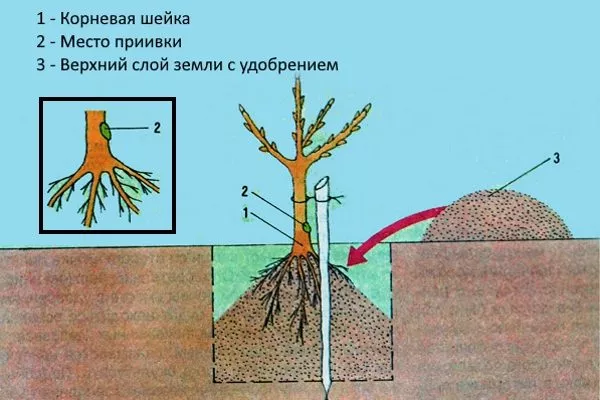
- Form a mound if the seedlings have an open root system (i.e., without a root ball). Place the tree in the center of the mound so that the roots are spread out along the slope. To help position the bush, use a rocking motion while holding the trunk with one hand.
- The root collar should be above ground level (the grafting site should be 5 cm above the soil after the hole is completely filled with soil). Failure to do so will cause the tree's upper tier to dry out, delaying fruiting.
- Cover the root system with soil. As you add soil, compact the mixture to ensure there are no empty spaces.
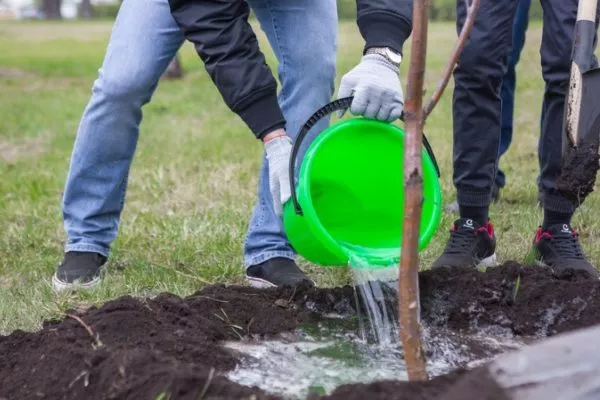
- Water the plants with settled water. One hole requires 30 liters of liquid. Insert a support stake near the trunk and tie the tree.
- Mulch the tree trunk area. Use sawdust, wood shavings, spruce branches, leaves, straw, or grass.
Caring for the Forest Beauty pear
Care procedures help keep the tree healthy, strengthen its immune system, prevent disease, and yield a bountiful harvest of large, tasty fruit. So, don't neglect these agricultural practices.
Watering
Although the Forest Beauty is considered drought-resistant, it's still important to water the tree. The optimal method is sprinkler irrigation, using sprinkler heads installed near the tree's trunk. If these aren't available, watering with a watering can is possible.
Watering rules:
- During the growing season in the first year of life, add 10-20 liters of water 4 times a month;
- after 2 years, it is enough to pour in 20-30 liters of liquid 1-2 times a month, depending on the weather;
- at the beginning of August, irrigation of the soil stops;
- a month before the first frost, add 70 to 90 liters of water under one adult tree - this method is called moisture-charging irrigation;
- After each watering, cover the trunk area with mulch;
- The water should only be settled, not tap water or ice-cold water.
Fertilizer
No additional fertilizer is needed during the first year after planting, but it is essential the following year. Fertilize the Forest Beauty tree five times per season:
- Immediately after waking (March-April), add organic matter to the tree's trunk circle. 2 to 2.5 kg of rotted manure or humus is required per square meter. You can apply it either dry or liquid. If you use liquid, add an equal amount of water to the mixture.
- During flowering, saltpeter is required. Use 30 g of saltpeter per square meter and mix it with water at a ratio of 1:50.
- After flowering, 30 liters of azophoska solution is required (the ratio of concentrate to water is 1:200).
- During fruit formation (around mid-June), foliar feeding is performed. For this, use one of the following:
- ammophos;
- nitroammophos;
- nitrophos;
- ash solution (200 g of ash per 10 l of boiling water).
- Before wintering (last days of September or first days of October), feed with one of the following options:
- superphosphate – 20 g, potassium chloride – 10 g, water – 10 l;
- wood ash – 600 g, superphosphate – 50 g, urea – 15 g, ammonium nitrate – 20 g, water – 10 l;
- charcoal – dig in to a depth of about 10 cm (150-200 g of charcoal per 1 sq. m).
To prevent the green part of the tree and roots from getting burned, water the plant after each feeding – at least 10 liters of water.
Caring for the tree trunk circle
This is a mandatory procedure that saturates the root system with oxygen, which it then transfers to the aboveground portion at the cellular level. The result is good growth and development of green foliage, roots, and fruits. What to do 1-2 times a month:
- loosen the soil in the near-trunk area;
- weed out the weeds;
- mulch the soil;
- Remove root suckers promptly, but if you plan to propagate the variety with them, leave several shoots.
Crown formation and pruning
This is a necessary procedure that regulates the growth and development of the tree, protects the plant from diseases and pests, increases the number of fruits and improves the quality of the fruit.
Trimming It is carried out twice a year – in spring and summer. What is pruned:
- dried branches;
- affected areas;
- branches growing in the wrong direction.
Once a year, shape the crown. Here's how:
- in the year of planting - closer to autumn, cut the trunk by 50 cm;
- in the second year of life, form the skeleton - there should be 4-5 strong branches left that extend to the side at an angle of 45-50 degrees from the main trunk (remove everything else);
- Next, shortening is carried out: the skeletal branches by 1/4, the central branch by 25-35 cm higher.
Rejuvenation
This forest beauty requires rejuvenation treatments, especially after 7-10 years of age. The rejuvenation period is easily determined: growth slows sharply, and yield declines. There are two types of pruning:
- easy – the main branches directed to the side are removed, right down to the branches on the side;
- strong – all weakened parts of branches that do not produce growth are cut off.
How to prepare a tree for winter?
The Forest Beauty isn't affected by frost, so there's no point in wrapping it up. However, before wintering, the tree needs to be protected from rodents. This can be done in two ways:
- wrap the trunk with nylon fabric, cover it with spruce branches or wrap it with glass wool;
- Treat the trunk and lower tier of branches with a solution of 8 liters of water, 200 g of copper sulfate, 1 kg of chicken manure and 1 kg of lime.
How to achieve higher yields?
To maximize your annual harvest, strictly adhere to all agricultural practices. It's been noted that the most productive branches are those that are four years old. Here's what you can do to increase your yield:
- plant pollinator varieties nearby;
- do not thicken the crown - prune branches in a timely manner and shape the tree;
- carry out preventive treatment against diseases and insects;
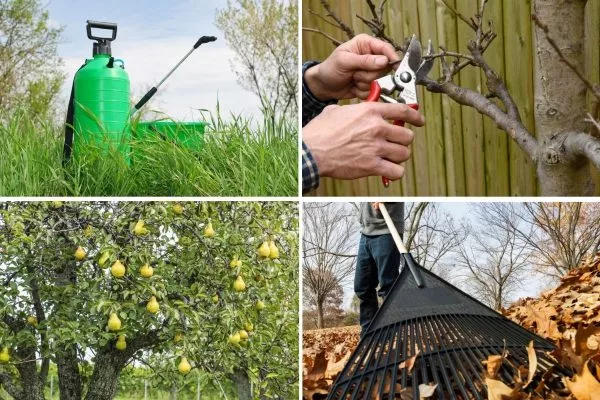
- Never leave fallen pears and leaves on the ground - this provokes diseases.
Protection from diseases and pests
With proper care, diseases rarely affect the Forest Beauty, but they do occur. What diseases are possible and how to treat them:
- Scab. Signs include the formation of a velvety black coating on the foliage and gray spots on the fruit. It is recommended to treat the plant twice (at bud break and after flowering) with a 0.5% copper oxychloride solution.
- Powdery mildew. Symptoms include a whitish coating, wilting of green foliage, yellowing of leaves, and leaf drop. Use Thiovit Jet or Rovral according to the instructions.
- Rust. Orange-brown spots appear on the foliage, the leaves fall off, and the fruits become smaller. Treatment involves using a 1% Bordeaux mixture. Spray first before flowering, then after, and again after 15 days.
- Fruit rot. Fruits are covered with brown, rotten spots. Treat with Oxychom immediately after flowering or if the disease is present (20 g of product per 10 liters of water).
- Any pests. Most often, these are various butterflies, aphids, and codling moths. Bordeaux mixture (3%) and urea solution (3%) are suitable for spraying. Treatment frequency is twice a month.
Reviews of the Forest Beauty pear
The Forest Beauty is a leader among many pear varieties, producing moderately large, very sweet, and juicy fruits, and the tree requires little care. To achieve a yield that matches the varietal characteristics, properly plant, care for the tree, and harvest the fruit in a timely manner.