
Breeders have worked hard to develop the popular Krasulya pear variety. This plant combines the excellent flavors typical of southern pears. This fruit tree is considered an easy-to-grow variety, but requires proper planting and adherence to certain care recommendations.
History of selection and zoning
The Krasulya pear was developed by a team of scientists led by renowned breeder E. A. Falkenberg at the South Ural Research Institute of Fruit, Vegetable, and Potato Growing. The variety was created by crossing the winter-hardy Pozdnyaya and Malenkaya Radost varieties.
In 1987, seedlings were zoned in the Ural region, and in 2002, the Krasulya pear was officially added to the State Register of the Russian Federation. Today, the variety is successfully grown in the Urals, Siberia, and central Russia.
Appearance of the plant and fruits
The Krasulya pear is considered a medium-sized variety, reaching a height of up to 4-5 m. External characteristics of the variety:
- The trunk is predominantly conical, tapering toward the top, slightly twisted, and covered with peeling, greenish bark. The cultivar's distinctive features include small thorn-like growths on the trunk.
- The tree has a wide, rounded crown with minimal density, allowing for good sunlight and ventilation. The branches curve upward at the tips.
- The plant is covered with broad, oval leaves with a pointed tip and faintly serrated edges. The foliage is light green, but darkens as the season progresses, revealing yellowish veins. The leaves are smooth and glossy.
- The Krasulya pear tree blooms in mid-May. The flowers are large, cup-shaped, and white. The petals are oval in shape. They have a pleasant, tart aroma.
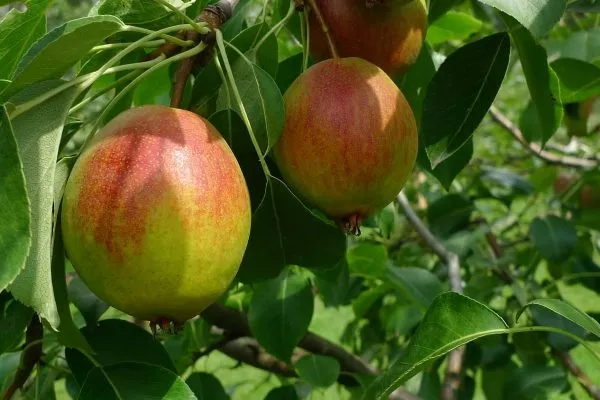
- The fruits are small, rarely weighing more than 90 g. Pears are characterized by a shape reminiscent of an elongated apple. The fruit is covered with a glossy, shiny, very thin, and delicate skin. The fruit has loose, juicy, cream-colored flesh. The seed chambers are small.
The fruits have a rich, sweet flavor with light spicy notes, somewhat reminiscent of bergamot. The pulp contains:
- sugar – 11.3%;
- dry matter – 13%;
- ascorbic acid – 8.5%;
- other acids – 0.5%.
Features of the Krasulya pear variety
The Krasulya pear tree grows into a compact and neat tree, adorned with rosy-red fruits. The fruit is easy to grow and requires little care, but it's important to understand the plant's key characteristics to ensure the best growing conditions.
Advantages and disadvantages
Fruit trees offer numerous advantages, but they also have some drawbacks. Before planting a tree in your yard, weigh the pros and cons:
It's worth noting that Krasulya pears are rich in vitamins and have excellent taste. They are suitable for fresh consumption and as a starting material for all types of homemade preserves. Due to their high glucose content, they can be processed with less sugar.
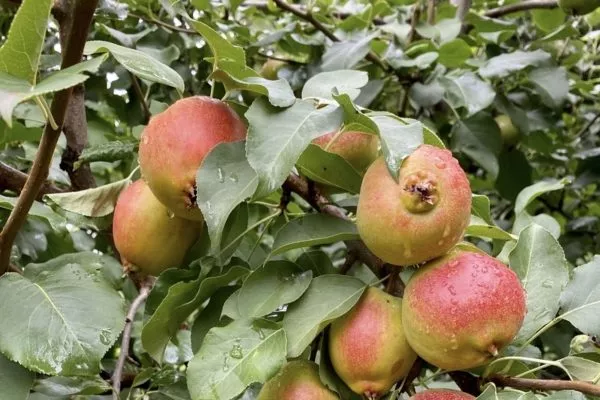
Another drawback that gardeners consider is a deterioration in taste and the appearance of astringency in the case of a cold, rainy summer with a minimum number of sunny days.
Ripening period
The Krasulya pear tree blooms from mid- to late May. The first fruits appear in early August, and you'll be treated to a full-blown ripening by mid-August.
Drought resistance, frost resistance
The Krasulya pear is a moisture-loving variety, but if overwatered, it can suffer from root diseases, which can lead to reduced yields. When grown in the northern region, watering the plant once every 14 days is sufficient.
More frequent watering is necessary during the season of mass fruit ripening, dry years and the period of formation of a young plant.
Productivity
Due to its characteristics, a mature tree can produce up to 40 kg of ripe fruit. During harvest season, the tree's branches are densely laden with pears, requiring special support.
The crop begins bearing fruit in the 4th to 5th year of development. The greatest fertility is observed in pear trees at 10 years of age. By the age of 20, yields decline, but can be restored to their previous levels with the help of rejuvenating treatments. scraps.
Features of planting and growing
It's crucial to decide on a location before planting, as well as consider other factors. For example, prepare the plant and soil in the area where you plan to plant.
- ✓ The seedling planting depth should be such that the root collar is 3-5 cm above the soil level.
- ✓ The distance between Krasulya pear seedlings should be at least 4 meters to ensure sufficient space for growth.
Selecting a seedling
To ensure your fruit tree delights you with delicious fruit every year, choose your planting material carefully.
Follow these basic guidelines:
- Buy a seedling in mid-autumn or early spring.
- Inspect the plant: the roots should look healthy, without damage or rot.
- Unfold the film and assess the roots to ensure their size corresponds to the height of the seedling.
- If you plan to buy material with a closed root system, pay attention to the size of the container - it should not be small.
Selecting a site and preparing the soil
Before planting, ensure you select a well-lit area. Choose a spot where other trees or buildings won't cast shade. Otherwise, the plant will waste energy reaching for the sun instead of developing properly.
The area must be protected from strong winds, since in winter, during frosts, air currents can negatively affect the bark of the trunk - it begins to crack.
Preparing the seedling
Purchase planting material only from specialized stores to ensure it's the correct variety. If you buy a seedling from someone, you risk getting a dishonest seller and purchasing a plant of the wrong variety. You also risk buying a tree with diseases.
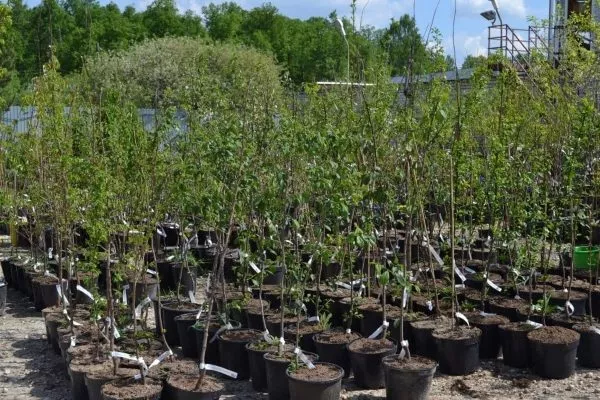
Be sure to follow the guidelines for preparing a tree for transplantation. This depends on the type of material purchased. If you purchase a standard tree with a closed root system, plant it with the root ball.
If you plan to plant a bare-root tree, first soak it in a clay slurry, the consistency of which should resemble thick sour cream. This will help the plant adapt to its new location and take root more quickly.
Bookmarking the planting hole
Soil preparation involves a few key steps. If the soil in your area isn't fertile enough, enrich it with nutrients by adding appropriate fertilizers.
Follow these steps:
- Prepare the planting hole in advance, preferably in the fall or a month before transplanting to the permanent location. The hole should be 80 x 90 cm.
- Place a drainage layer at the bottom of the hole. Use small stones or broken bricks to prevent water from stagnating.
- Add prepared soil to the drainage area: fertile soil mixed with humus, compost, and peat (1:1:1). Additionally, add 500 g of wood ash.
- Fill the planting hole almost halfway to allow the soil to settle over the winter.
This preparation will prevent the plant from growing below the desired depth. The key is to keep the root collar and grafting point above the soil surface.
Planting a seedling
The procedure for planting the Krasulya pear is quite simple, but be sure to follow certain rules so that the young plant can take root, grow, and develop normally.
Proceed step by step:
- In the spring, add some soil to the planting hole, then carefully spread the seedling roots over it.
- Install a wooden stake to tie the young tree to after planting. This will prevent the trunk from bending.
- Cover the roots with soil and gently shake the plant to distribute the soil evenly among all the roots. Firm the soil down. When planting, keep the root collar above the soil surface to avoid watering or rain. This will reduce the risk of moisture-induced rot.
Care activities
After this procedure, provide the plant with careful care, including various agricultural practices: watering, fertilizing, and disease prevention. If you approach the process responsibly, the Krasulya pear will become one of the most productive varieties in your garden.
Watering
The plant requires ample watering, but don't water it too often—2-4 times a month, depending on weather conditions. 1 square meter of the trunk circle requires 30 to 45 liters of water. You can determine the need for watering based on the soil condition.
It's crucial for pear trees to receive adequate moisture before and after flowering, during fruit formation, and after harvest. Water the tree around the perimeter of the crown.
Loosening and mulching
Keeping the tree's trunk area clean and regularly loosening the soil are essential for a healthy pear tree. Regularly remove weeds and clear the soil of debris.
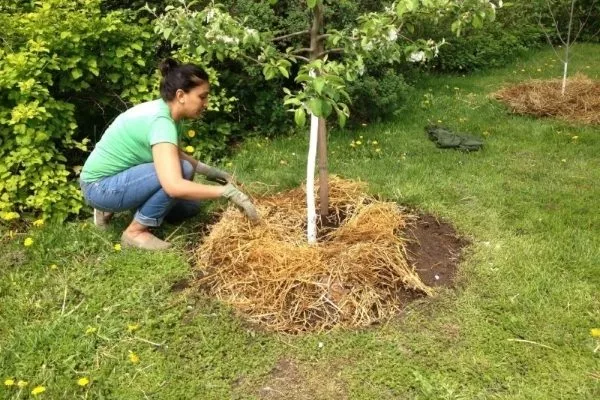
After watering or rain, loosen the soil to a depth of 5-6 cm and mulch with grass, straw, or peat. This will keep the soil under the tree consistently moist.
Fertilization
Fertilizing will provide your fruit crop with the vitamins it needs, but apply it carefully, taking into account its specific needs. For example, a mature plant with a well-developed root system can provide itself with essential micronutrients.
As a rule, young plants that begin bearing fruit early require nutrition. Fertilize in early spring. Use the following fertilizers:
- nitrogen-containing substances;
- superphosphates;
- organic compounds;
- ammonium nitrate;
- ash.
An indicator of soil depletion and the plant's need for additional nutrition is the absence of any vegetation near it. If weeds are actively growing near the tree, the soil has sufficient nutrients.
Pruning and shaping
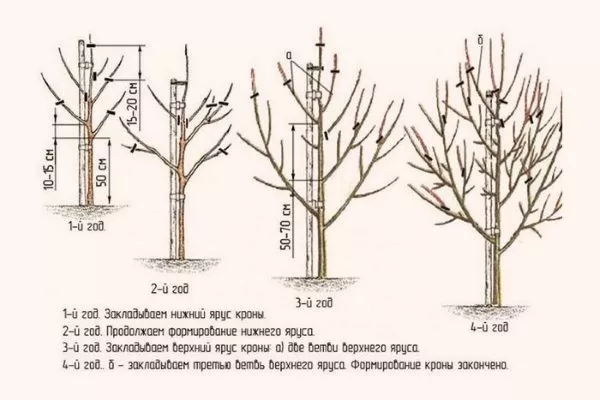
Because the Krasulya pear tree is characterized by moderate density, frequent pruning is not necessary. However, this does not apply to cases where damaged branches or those growing inward need to be removed.
Immediately upon planting, shorten the main shoot by approximately 1/3. A year later, repeat the procedure on the newly formed branches.
From now on, perform only sanitary pruning. If you've removed large branches, be sure to seal the cut areas with garden pitch to prevent fungal spores and pathogenic bacteria from penetrating into the exposed areas of the tree.
Whitewash
Whitewash the pear tree's trunk twice a year—in early spring and in autumn (after the leaves have fallen). Spring whitewashing will protect the tree's bark from sunburn and overheating. Use store-bought products or make your own mixture of equal parts sludge, school glue, and water.
Whitewash your pear tree in the fall to protect it from pests that seek to overwinter in the tree's bark crevices. For this procedure, prepare a mixture of copper sulfate, PVA glue, and water.
Preparing for winter
To prepare young trees for cold weather, tie spruce branches (needle-side down) around their trunks and wrap them in burlap. Apply mulch around the trunk to a depth of about 30 cm. If spruce branches are unavailable, you can use straw or other insulating materials.
Mature Krasulya pear trees don't require insulation. However, be sure to protect the trunk from rodents by wrapping it in a damp cloth or paper, after applying a special repellent.
Harvesting
Because ripe pears have very delicate skin that's easily bruised, begin harvesting when they're not yet fully ripe. Determine the right time by the fruit's color: the skin should be green with a blush.
Diseases and pests
The Krasulya pear is resistant to scab and bacterial cancer, but may be susceptible to other fruit tree diseases.
Before planting, please familiarize yourself with common diseases and methods of combating them:
- Powdery mildew. It damages young leaves and inflorescences, which become covered with a white coating and prevent fruiting. As a preventative measure, spray with a colloidal sulfur solution in the spring (2-3 applications at 14-day intervals).
If the plant is severely affected, use chemicals such as Topaz, Skor, Previkur, or Vitaros. In the fall, treat with a 1% Bordeaux mixture. - Fruit rot. This disease often attacks pear trees during the rainy season. The fruit flesh turns brown and becomes unfit for consumption. Remove and destroy all affected fruit from the plot.
As a preventative measure, treat the tree with a 1% Bordeaux mixture in early spring and after flowering. In the fall, spray with a 3% urea solution. - Rust. A fungal disease that affects the leaves and bark of the tree, the risk of which is especially high if there are juniper bushes next to the pear tree.
Spray the plant before, after flowering and during fruit setting with Hom, Azofos, Strobi, and Medex.
The Krasulya pear is not afraid of the pear gall mite, but it can be attacked by other pests, which you can control with insecticides:
- Leaf roller. It damages the leaves, causing them to curl and dry out. Treat the tree with Karbofos during bud swelling and after flowering.
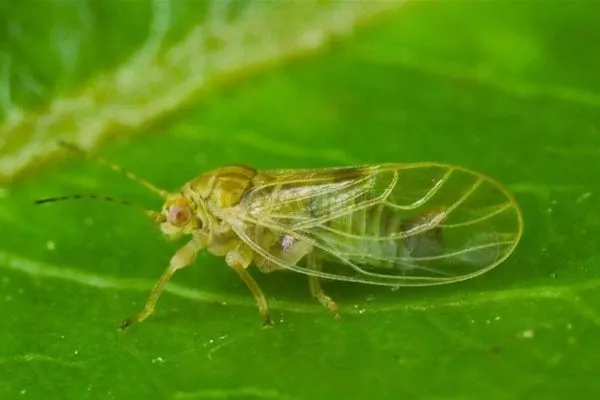
An infusion of shag and tobacco will help get rid of insect larvae (dilute 400 g in 10 liters of water and leave to infuse for 48 hours, then strain and dilute by half with water). - Pear psyllid. The parasite settles on the upper part of the shoots, feeds on their sap, and also sucks the sap from buds, foliage, peduncles, and even fruits.
 Spray before flowering with Iskra-M, and 14 days later, treat the tree with Iskra DE. Fumigation with tobacco smoke will help get rid of adult leafhoppers.
 - Pear codling moth. The pest lays eggs in the pear blossoms, and the hatched larvae settle in the fruit and consume them from the inside. Treat the tree before and immediately after flowering with the following products: Decis, Kinmix, and Iskra Bio. Approximately 30 days after flowering, additionally spray with Iskra DE.
In the spring, set up trapping belts and use bait to catch codling moths.
You can prevent pests and diseases only with proper and timely care. Prune the plant regularly and thin out the crown for better ventilation. In the fall, loosen the soil around the tree trunks and between rows.
Methods of reproduction
The most popular propagation method used in nurseries is grafting onto Ussuri pear seedlings, which serve as rootstock. In this case, the scions are taken from new shoots of young, but already fruiting trees.
For northern regions, take cuttings in mid-July; for southern regions, take them in late June or early July. Choose cuttings with green upper parts and woody lower parts. The diameter should match the size of the rootstock.
Take a cutting with 2-3 internodes and several leaves. Select only healthy shoots with no signs of disease.
Recommendations:
- Take cuttings early in the morning, as this is when the seedlings have the most moisture. Use a sharp, disinfected garden knife for this procedure.
- Soak the cuttings in cold water the day before the procedure.
Step by step procedure:
- Make a small longitudinal cut of 5 cm in size on the rootstock and push back the bark with a knife.
- Cut the cutting so that a little bark remains at the end of one side.
- Insert the prepared branch into the cut of the rootstock and connect it so that the bark of the cutting and the tree match each other.
- Wrap the grafting site with electrical tape, coat it with garden pitch and cover it with a plastic bag.
Another propagation method you can try is cuttings. For the future seedling, select a branch 20 cm long. Make a cut from the bottom at a 45-degree angle upward toward the bud, and a straight cut from the top. For rapid growth, root the cutting in a nutrient-rich mixture (options include moss and sand, peat and sand, organic matter, and black soil).
Before planting, trim the lower leaves from the cuttings and remove half of the remaining ones. Soak the shoots in a rooting solution, leaving a small gap between them. In the fall, you can plant the seedlings outdoors.
Also watch a video about pear cuttings:
Reviews of the Krasulya pear
I don't bother shaping the crown because it's dense and rounded. I reliably harvest in mid-August. The only downside for me is the short shelf life of the fruit, so I don't recommend planting multiple plants of the same variety in the same plot. Well, maybe only for sale.
Otherwise, the fruits often fall off and break. For the winter, I cover the rhizome and the lower part of the trunk. I use spruce branches for this purpose.
The Krasulya pear is an easy-to-grow plant that, with proper care, will reward you with abundant harvests. If you follow all planting guidelines and ensure proper watering, fertilizing, and pruning, your tree will remain disease-free and will bear juicy fruit year after year.