
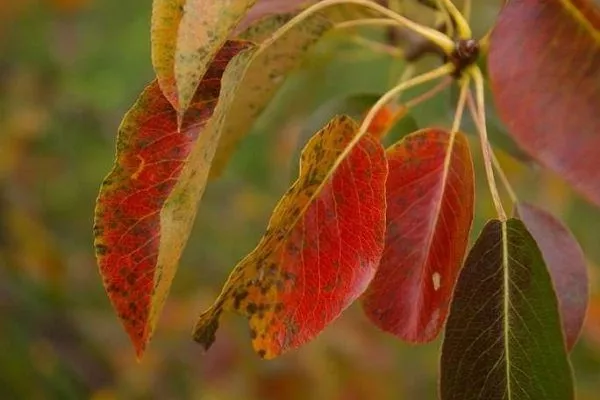
If a pear's leaves have turned red and autumn is still far away, it means the tree is under the influence of negative factors. Red leaves signal serious problems—if left untreated, the pear may die.
Causes of leaf reddening
In autumn, pear tree leaves turn yellow, red, and then purple. If the redness appears in the summer, the cause must be urgently investigated. The same condition can be caused by completely different negative factors.
The rootstock and scion were not compatible with each other.
This is the most hopeless case—nothing can be done. This can happen because you bought seedlings from untrustworthy sellers. To avoid this problem, it's recommended to purchase planting material from specialized nurseries—they guarantee compatibility between the rootstock and scion.
There are two types of vaccination:
- On clonal rootstock. They are obtained from cuttings of various pear varieties and other crops. These rootstocks are used to accelerate fruiting and improve resistance to groundwater.
- On seed rootstock. It's grown from the seed of a wild pear. Varieties grafted onto such rootstocks grow and develop without problems.
- ✓ Compatibility of rootstock and scion in terms of growth rate.
- ✓ Rootstock resistance to local soil conditions.
Clonal rootstocks can prove incompatible with varietal branches (scions). However, compatibility may not become apparent immediately, and then the tree dies, requiring a new one to be planted.
Phosphorus deficiency
Redness spreads across the pear leaves in case of a lack of phosphorus.
Signs of phosphorus deficiency:
- leaves curl;
- the color changes from green to crimson;
- leaves fall prematurely;
- the fruits do not ripen.
The immediate application of phosphorus-containing fertilizer helps to correct the situation.
How to apply phosphorus to a pear tree:
- Every two weeks the tree is fertilized with ammophos — 100 g for an old pear tree, 50 g for a young one (less than 5 years old);
- Fertilizer is scattered over the root zone - by the diameter of the pear;
- The first time fertilizer is applied is in April - to achieve maximum effect;
- The application of ammophos will be stopped until the end of June — it contains nitrogen, which promotes the growth of green mass and negatively affects the formation of fruits.
Potassium deficiency
Potassium deficiency reduces the effectiveness of nitrogen and phosphorus, reduces yield, weakens the tree, reduces winter hardiness, slows growth and reduces the number of fruit buds.
Signs of potassium deficiency:
- reddening, curling and necrosis of leaves;
- watery tissues are visible on the reverse side of the leaves;
- the leaves do not fall off - they hang on the branches until the end of the growing season;
- young seedlings stop growing and dry out.
Causes of potassium deficiency:
- excess of chemical fertilizers - this contributes to the leaching of potassium from the soil;
- planting seedlings in sandy or peaty soil - they contain very little potassium;
- prolonged drought or extremely high temperatures in summer;
- excess of magnesium and calcium.
How to eliminate potassium deficiency:
- planting on silty soil;
- scattering ordinary wood ash - 300 g per 1 sq. m;
- boron fertilization - 15 g of boron per 10 liters of water, first after flowering, then during fruit growth;
- application of complex fertilizers with a high potassium content;
- foliar feeding - 50 g of potassium salt per 10 liters of water.
- ✓ The optimal soil pH level for potassium absorption is 6.0-7.0.
- ✓ Sufficient moisture in the soil.
If there is a potassium deficiency, it is strictly not recommended to apply chlorine-containing compounds to the pear tree.
There is too much lime in the planting hole
Gardeners add lime along with fertilizer to the holes intended for planting pear seedlings to deoxidize the soil. If too much lime is added, the tree suffers from iron deficiency, which prevents the plant from producing chlorophyll properly.
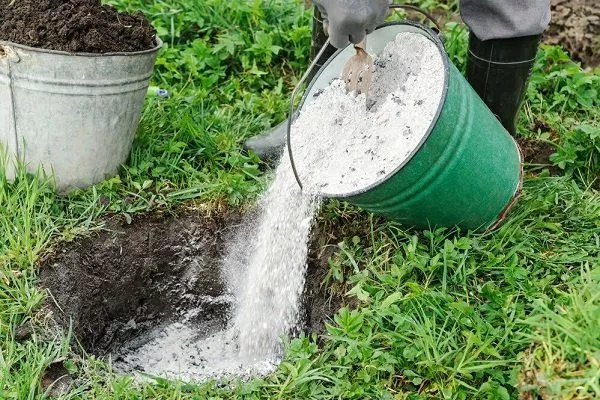
How to fight:
- Dig a trench 20 cm deep along the diameter of the crown.
- Add organic fertilizer – humus and compost – to the dug trench, water it and cover with soil.
Applying fresh manure to pear trees is not recommended, as it can burn the roots. The best time to apply fertilizer is at the beginning of the growing season, when the pear tree is just emerging from dormancy.
Deep planting
Reddening of the leaves may be due to seedlings being planted too deeply. It's important to follow this rule: the root collar should be at ground level. Planting the seedlings too deeply not only leads to reddening of the leaves but also to root rot.
Deep planting disrupts sap flow, depriving the tree of nutrients, water, and vitamins. If a young pear tree was planted 1-2 years ago, it can be raised to the desired height. This will save the tree from death.
How to lift a pear:
- Dig around the perimeter of the tree trunk.
- Lift the trunk of the pear tree along with the soil.
- Carry out the operation carefully so as not to damage the roots, otherwise you will only harm the tree.
Over-hydration
Pear trees react extremely poorly to waterlogging, whether from high groundwater levels or excessive and frequent watering. Soil that's too wet prevents the tree's roots from receiving the oxygen they need, and they gradually die.
How to prevent overwatering:
- when planting, make a thick layer of drainage in the planting hole - 20-25 cm;
- use crushed stone, broken brick, etc. as drainage material;
- If the area is located in a lowland where moisture stagnates, install a drainage system with drainage ditches;
- If drainage cannot be arranged, the young tree must be transplanted to a more suitable location.
Pear diseases
Reddening of pear leaves can be observed with various diseases, for example, with black cancer or various fungal infections.
How to deal with leaf reddening caused by diseases:
- remove areas of damaged bark;
- cut off diseased branches with red leaves;
- all affected parts of the tree are burned;
- The tree is treated with appropriate fungicides.
A solution of ash and soap will help get rid of the problem:
- Mix a liter jar of wood ash with 3 liters of water.
- Boil the ash for 20 minutes.
- Add water to 10 liters and mix thoroughly.
- Let the solution steep for 3-4 hours.
- Immediately before use, add 50 g of grated laundry soap - then the mixture will adhere better to the branches.
- If spraying is carried out in July-August, nitrophoska can be added to the mixture - 40 g.
The resulting solution is effective against most pear diseases, as well as many insects. It is recommended to spray the pear with this solution weekly from May to October.
Pests
Reddening of pear tree leaves may be due to an infestation of small sucking insects, such as gall aphids or mites. Leaves infested by aphid colonies bend in half, while those infested by mites curl and become covered in dark red pimples.
How to control pests:
- for preventive purposes, the trunk is cleared of old bark;
- lay out the trapping belts;
- fragrant plants are planted near trees, for example, dill, which attracts beneficial insects;
- at the beginning of the season, trees are treated with Azofos, Skor or their analogues;
- after the fruit sets, the pears are sprayed with Delan or Tersel;
- Masai and Omite preparations are effective against ticks;
- in case of severe damage, spray the trees with Fufanon, Aktara, Inta-vir, Confidor, Fitoverm;
- Spraying with chemicals is carried out 2-3 times per season, the last time - three weeks before harvesting the fruits, no later.
Features of the variety
There are quite a few red-fruited pears, but red-leafed varieties are much fewer. The most famous of these is Williams Red. This late-ripening pear, bred in France, is frost- and scab-resistant, early-ripening, and highly productive.
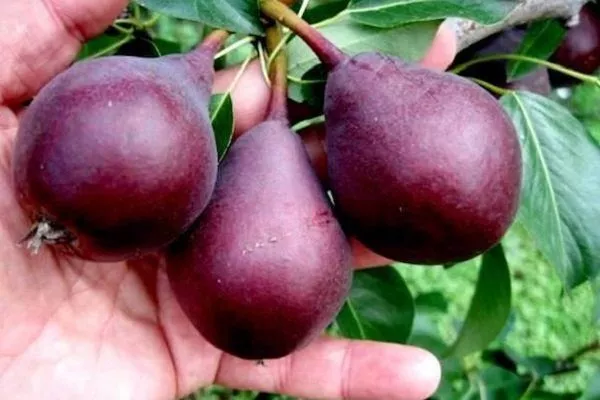
Another variety with reddish leaves is Carmen. This summer pear was bred domestically. It's not widely available yet, but is undergoing testing. Its leaves are glossy, rounded, and tinged with red.
Tree treatment
Both chemical treatments and various folk remedies are used to treat pears. The latter are used for prevention and for minor lesions. If no results are achieved, chemical treatments are used.
Chemicals
If the redness of the leaves is associated with diseases or pests, and the damage is serious enough, chemicals are used to treat the tree.
Popular and effective chemical agents:
- Aktara. A very potent product. It continues to work even after rainfall. It is dangerous to humans. It should only be used before flowering and after fruit harvest. Dilute 1-2 ml in 3-5 liters of water. This amount is enough to treat 100 square meters.

- Actellic. It attacks the pests' digestive system, so the effect takes 3-4 days to become visible. Full results are only noticeable after 3 weeks. The product should not be used during the flowering period. The product is diluted at a ratio of 10 ml per 10 liters of water.
- Fufanon. A contact product. It does not harm either leaves or fruits. The powder is diluted at a ratio of 75 g per 10 liters.
- Speed. The product should only be used before flowering, otherwise it can harm the tree. The recommended dosage is 5 ml per 10 liters of water. One large tree requires approximately 1 liter of solution.
- Azophos. It is used in the spring as a preventative measure against many diseases and pests. The preparation is diluted immediately before use: 100 ml per 10 liters of water.
- Delan. Designed to increase resistance to insect pests. Apply after flowering. Apply 80-100 ml per square meter. One mature pear tree requires 2-3 liters of solution. Two to three sprays are sufficient for 100% pest control.
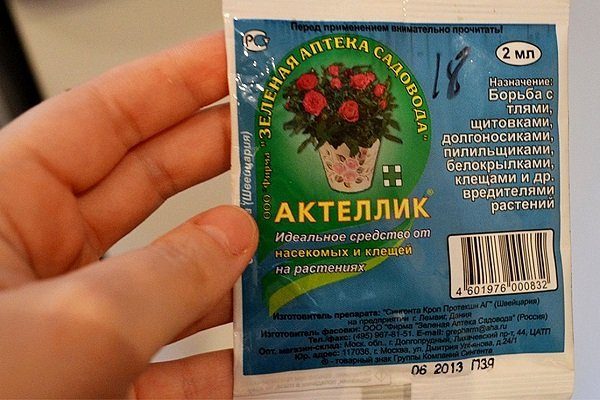
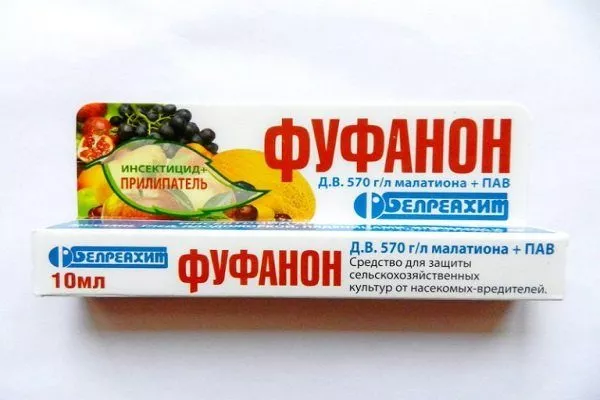
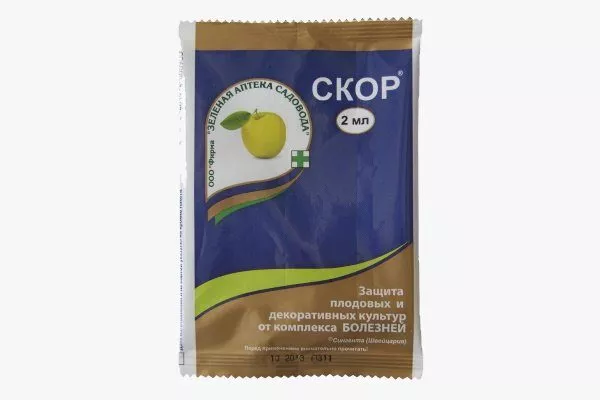


When purchasing and using chemicals, it's important to read the instructions beforehand. In addition to observing the dosage, consider the toxicity of the products to bees. Chemicals should only be used as a last resort; if the threat to the tree is not serious, folk remedies can be used—they are safe and environmentally friendly.
Folk remedies
Before using fungicides and insecticides—preparations for diseases and insect pests, respectively—experienced gardeners use a variety of folk remedies, which are good because they are safe for both humans and beneficial insects.
Folk remedies for treating pear trees:
- Soap solution. Grate a bar of dark laundry soap on a coarse grater. Mix the shavings with water—300 g per 10 liters.
- Ash solution. Dissolve 300 g of regular wood ash in 10 liters of water. Bring the solution to a boil and add 40 g of grated soap. Strain and spray the mixture on the trees.
- Infusion of tops. Finely chop potato or tomato tops. Add 10 liters of water and let steep for 4 hours. Then use for spraying.
- Onion infusion. Grate or grind 200 g of onion. Pour 10 liters of water over a cup of the onion pulp and let it steep for one day.
- Tobacco infusion. Take 400 g of tobacco or shag and pour 10 liters of water over it. Let it steep for two days. Strain and add 100 g of grated laundry soap for better adhesion to the leaves.
- Herbal infusion. Mix 1 kg of yarrow, 0.5 kg each of tansy, milkweed (with roots), and dandelion, and 3 kg of celandine. Place the herbs in a large barrel and add 20 liters of water. Let it steep for a week. Dilute 200 g of the infusion in 10 liters of water and spray the trees.
Spraying with celandine infusion is effective against many diseases and insect pests:
- Pick 5 celandine stems, chop them and pour 10 liters of hot water over them.
- Infuse celandine for 6 days.
- Dilute 200 ml of infusion in 10 liters of water and leave for another 5 days.
- Treat the pears with the resulting solution.
Preventive measures
Preventative measures can help prevent pear leaves from turning red, as well as many other problems.
Preventive measures:
- Pears are planted in elevated areas. Without deepening the root system too much, and regularly spraying with one of the preparations - Azofos, Delan or Skor.
- Work begins in early spring. The first preventative sprays are carried out in warm, dry weather. All parts of the tree and the area around the trunk are treated. Cracks and other damaged areas often harbor insects and fungi. Before spraying, the trunk is cleared of diseased and peeling bark.
- In spring, compounds containing copper sulfate are used. This is quite sufficient for prevention. The use of biological preparations, fungicides, and urea is indicated only in extreme cases.
- In the pre-winter period, treatment with urea is recommended. Prepare a weak solution: dilute 30-50 g of fertilizer in 10 liters of water.
- In autumn, tree trunks are whitewashed with lime mortar. Fallen leaves are raked and removed, and tree trunks are mulched with humus.
- During the season, the gardener must carry out at least three treatments. The first spraying is done in early spring, in March, to kill overwintering larvae. The second spraying is done in April, during bud break, and the third after flowering.
- Regular garden cleaning is necessary. All trash, both plant and industrial, should be removed from the area. Even bags and cans can harbor pests.
- Mow or weed the area on time. A lot of weeds often grow between the rows of trees.
- Plant more plants in your garden that attract beneficial insects. Dill and celery, for example, attract ladybugs and lacewings, which eat aphids.
- Trim tree crowns annually. To prevent them from becoming too dense. If branches grow too densely, the tree will become diseased, and the fruit will not ripen properly. Excessive density promotes various diseases; unpruned trees are especially susceptible to fungal diseases.
- Dispose of all fallen leaves and cut branches. It's best to burn them—fire destroys all pathogenic bacteria and fungi. Infected tree parts should not be composted.
Resistant varieties
| Name | Disease resistance | Shelf life of fruits | Winter hardiness |
|---|---|---|---|
| In memory of Yakovlev | High | 4 months | High |
| August dew | High | 2 weeks | High |
| Fragrant | Average | 1.5 months | Average |
| Sorceress | High | 1 month | High |
| Northerner | High | 2 weeks | High |
One of the most effective methods of combating diseases, pests, and other problems of pears is planting particularly resistant varieties.
The most hardy and durable pear varieties:
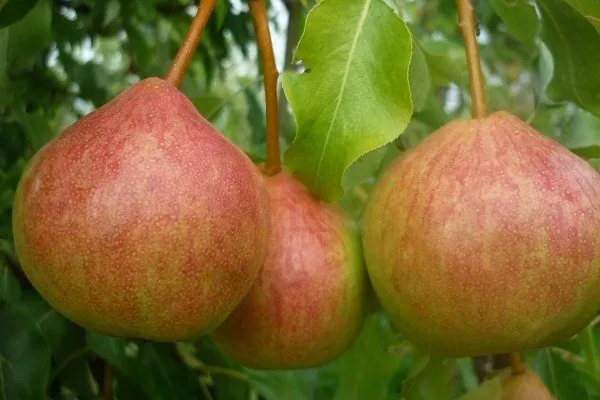
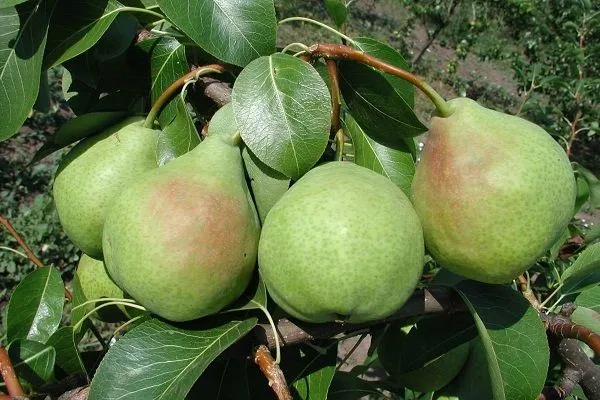
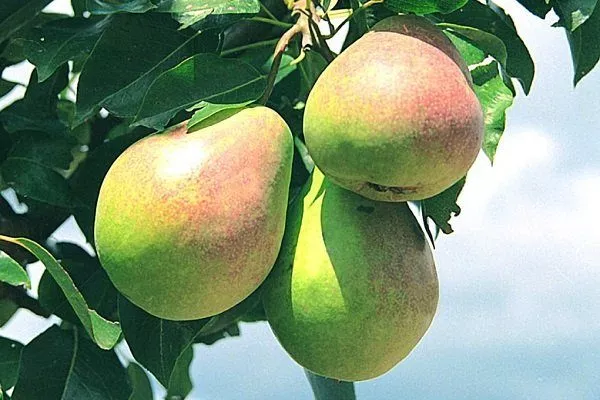
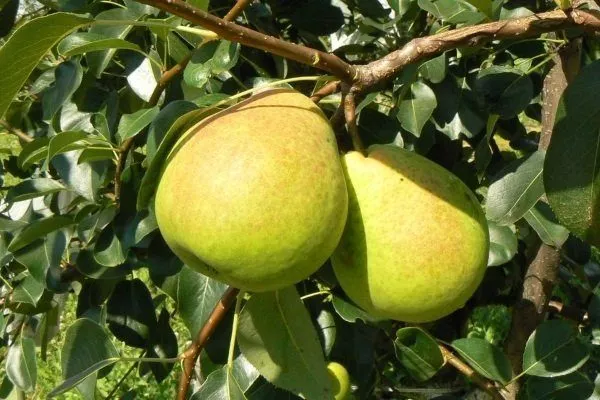
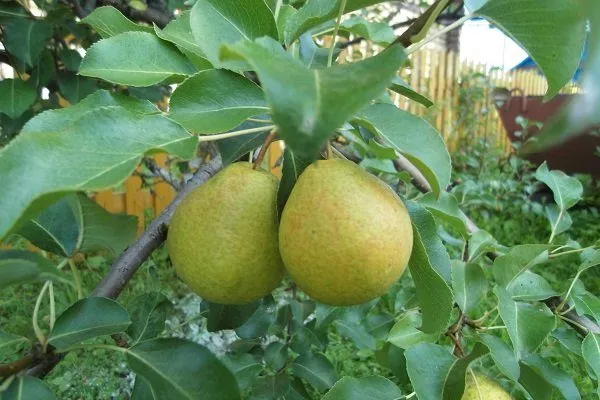
- In memory of Yakovlev. The variety is resistant to scab and other fungal infections. The fruits are yellow, weighing 120 g. They can be stored for up to 4 months. This variety is winter-hardy, high-yielding, and early-bearing.
- August dew. A low-growing, winter-hardy variety with green fruit. Weight: 110-130 g. Resistant to all fungal diseases. Stores for 2 weeks.
- Fragrant. A medium-sized variety with green, sweet-and-tart fruits. Stores for 1.5 months. Average winter hardiness.
- Sorceress. A vigorous, winter-hardy variety resistant to fungal diseases. Fruits are light green, weighing up to 160 g. They have a shelf life of 1 month.
- Northerner. This variety is resistant to all fungal diseases. It produces medium-sized trees with yellow fruits weighing 80-120 g. The pears have a shelf life of no more than two weeks.
- ✓ Resistance to local diseases and pests.
- ✓ Adaptation to the climatic conditions of the region.
Helpful tips
Helpful tips from experienced gardeners will help you avoid leaf reddening and other pear tree problems.
Useful information for beginners:
- Regularly mow the grass that grows around trees - aphids can breed in the grass;
- Plant more fragrant herbs in the area - dill, fennel, celery, they repel many harmful insects well;
- Red leaves may appear on the upper branches of young pears, and they are not a sign of disease - after a while the leaves acquire a healthy green color;
- Do not buy seedlings from random sellers, contact reliable suppliers.
Leaf reddening is a fairly common reaction of pear trees to various adverse influences. The sooner a gardener identifies and eliminates the cause, the greater the chance of preserving the harvest. Preventative measures can also be taken to prevent leaf reddening.