
The Conference pear is an old English variety widely cultivated commercially. It is considered one of the most delicious, easy-to-grow, and productive varieties, and is very popular in Europe, the United States, and China. Its cultivation in Russia is limited only by its low winter hardiness—Conference pears are grown primarily in the North Caucasus.
Origin and zoning
There is no precise information about the breeding work involved in developing the Conference pear variety. It is believed that this pear is a seedling from open pollination of the Leon Leclerc de Laval variety by wild species. It was allegedly discovered by accident by the English breeder T. Rivers in 1885 in a nursery in Hertfordshire.
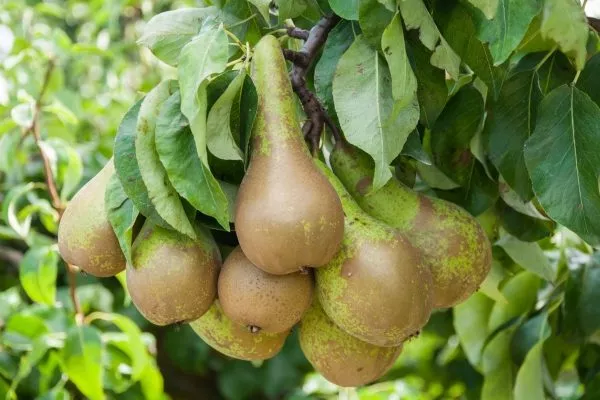
The variety was named "Conference" in honor of the Pear Growing Conference held in Britain, where the new variety was first presented. In Russia, the variety was officially registered in the State Register in 2014. It is recommended for cultivation in the North Caucasus region, Crimea, and the Krasnodar Territory.
Description of the variety
The tree's height depends on the rootstock. If the Conference tree is grafted onto a wild pear, it grows to a medium or tall height of 5-8 m. The shoots grow 60 cm per season. A tree grafted onto a quince tree grows to 2-4.5 m. The tree's crown is dense, spreading, and pyramidal, reaching 3.5-5.5 m in diameter.
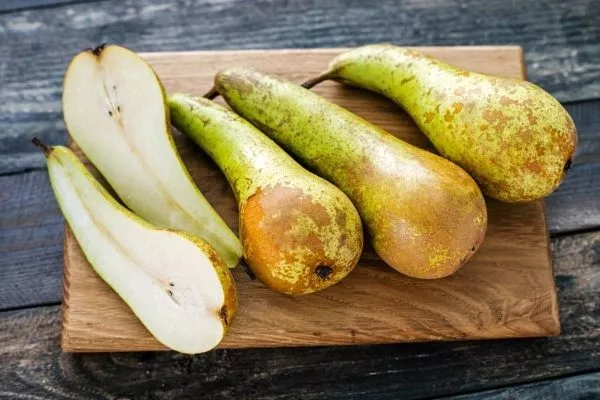
The fruits are large, with a tough, rough skin. The surface is matte, with small brownish spots. The fruit has juicy, melt-in-the-mouth flesh. The flavor has a slight astringency due to the tannins contained in the skin. The fruits of the Conference variety are uniform in size and shape.
Fruit characteristics:
- length - 10-11 cm;
- weight - 150-190 g;
- colour - brownish-yellow, when ripe - rusty-spotted, with golden-brown sides (on the sun side);
- shape - elongated pear-shaped, narrowed at the top and rounded at the bottom;
- The stalks are short and located not in the center of the fruit, but slightly diagonally.
The fruits contain very few seeds. Some fruits are completely seedless.
How does the Conference pear grow?
The trees grow quickly, adding 0.5 meters each year. A tree lives and bears fruit for about 40 years, with a maximum lifespan of 45-46 years. Conference pears hold firmly to the branches. When ripe, the pears do not fall off. They do not need to be picked from the ground or shaken off the branches.
Unripe pears are firm, with pinkish-cream flesh and a tart aftertaste. After aging, they become softer, juicier, and more aromatic. As they ripen, the flesh becomes soft, buttery, sweet, and aromatic.
Characteristics of the Conference pear
Conference is an autumn pear. Like many other ancient varieties, it is distinguished by its high yield.
Main characteristics:
- Frost resistance — not high, trees on quince rootstocks can withstand frosts down to -15…-20°C, no more.
- The dependence of fruit taste on weather — high. In cold, rainy, and windy summers, the fruits cannot ripen properly, and their flavor deteriorates.
- Ripening time — from the second half of September until mid-September.
- Precocity — the tree produces its first harvest 3-6 years after planting (depending on the rootstock).
- Productivity — 60-70 kg from one tree.
- Drought resistance — not very tall. The tree needs frequent watering.
- Immunity to diseases and pests — average. The tree is almost scab-free, but there is a high risk of thermal burns in hot weather.
- Tasting score — 4.8-4.9 points.
- Purpose - tableware.
- Transportability - good.
- Keeping quality - good, fruits can be stored for up to 6 months under favorable conditions.
Many gardeners claim that Conference becomes more winter-hardy as it matures.
Pollinators
The Conference pear variety is self-pollinating. It can bear fruit without the help of other pears. However, the presence of nearby pollinators increases yield and makes the fruit's flavor more interesting and varied.
Advantages and disadvantages of the variety
Before planting the Conference pear on your property, you should familiarize yourself not only with its agronomic characteristics, but also thoroughly evaluate all the advantages and disadvantages of this ancient variety:
Beneficial properties
Conference fruits contain vitamins A, E, C, P, B vitamins, beneficial amino acids, and minerals such as zinc, phosphorus, copper, potassium, iron, sulfur, and others. Eating them not only provides a delicious taste but also health benefits.
Doctors often recommend pears to people with stomach problems. They are also widely used in dietary nutrition.
What are the benefits of the Conference variety of fruits?
- strengthen the immune system;
- improve mood;
- activate digestion;
- normalize general metabolism;
- lower cholesterol;
- cause a feeling of satiety;
- effective against diarrhea (due to tannins);
- prevents the deposition of salts in the kidneys and liver (thanks to potassium).
Conference pears are sweet yet low in calories. 100 grams contain 42-45 kcal. They are popular in dietary nutrition. The most delicious and healthy pears are fresh. They also make delicious jams and preserves.
Landing
To ensure a pear tree fully demonstrates its varietal characteristics, it's important to plant it in a favorable location. If the tree is placed in an unfavorable location, it will become stunted, unhealthy, and may even die.
Planting dates
The Conference pear is grown only in the southern regions of Russia, so the best time to plant it is from the second half of September to October. This time before winter gives the seedlings time to develop new roots and establish themselves well in their new location. It is recommended to plant fresh seedlings no later than one week after purchase.
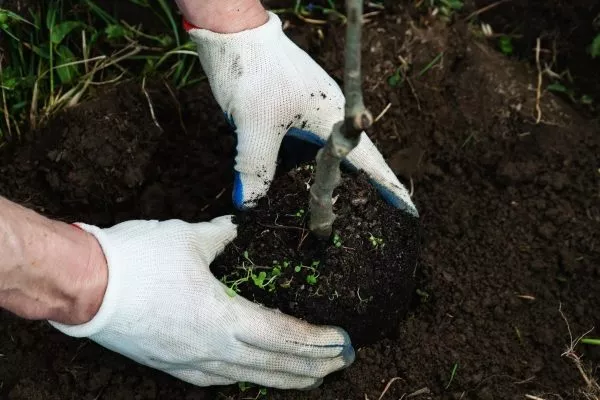
Autumn in the south is considered the best time to plant fruit trees. Once established, young seedlings easily survive the warm southern winters and begin to grow vigorously in the spring. In spring, pear trees are planted between late April and mid-May. The key is to plant the tree before the sap begins to flow.
Choosing a location
The Conference pear will grow and bear fruit better if you choose the right location. There are some areas where pears are not recommended for planting—they will wither, become diseased, produce low yields, and may even die.
Recommendations for choosing a location:
- protection from wind and drafts;
- good lighting;
- the maximum distance between groundwater and the surface is 2.2 m;
- loose, well-drained soils, preferably chernozem, loam or sierozem; sandy, sandy loam, peat, silt and clay soils are contraindicated.
The tree should have sufficient space around it. Avoid planting pear trees near permanent structures that could interfere with its growth and development.
If the groundwater level is less than 2.5 from the ground surface, the pear is planted on a pre-created hill with a diameter of 1 m and a height of 0.6 m.
Selecting a seedling
The best time to buy planting material is in the fall, when nurseries begin selling seedlings en masse. There's a much wider selection at this time than in the spring, when they typically sell off leftovers—what they couldn't sell in the fall.
Signs of a good seedling:
- age - 1-2 years;
- powerful roots with 4-5 large shoots, length - about 30 cm;
- the bark is smooth, even, without wounds, cracks, other damage or signs of disease;
- number of lateral shoots - not less than 3.
Choose strong, healthy seedlings. Their roots should be free of dry or rotten areas. Branches should be strong and flexible—they shouldn't break when bent.
To prevent the seedling from drying out before planting, its roots are dipped in a mixture of clay, manure, and water (1:2:6). Autumn seedlings can be preserved until spring if they are buried in the garden, leaving their tops above ground.
Preparing the pit
The area where the pear tree will grow is thoroughly dug in the fall, adding 6-8 kg of rotted manure or humus. The hole for spring planting is also prepared in the fall, and for fall planting, three months before planting.
Procedure for preparing the pit:
- Dig a hole (WxD) 80-100x60-80 cm.
- Set aside the topsoil, about 20 cm thick, separately from the rest of the soil. You'll need it to prepare the potting mix for filling the hole.
- Mix equal parts of the fertile soil obtained from digging the hole with peat and humus. Add 50 g of superphosphate and 1 liter of wood ash.
- Cover the hole with roofing felt or a sheet of slate to prevent nutrients from being washed out.
For light, sandy soils, add 7 liters of powdered clay mixed with soil (1:1). For heavy clay soils, add 10-15 liters of river sand.
Step-by-step landing
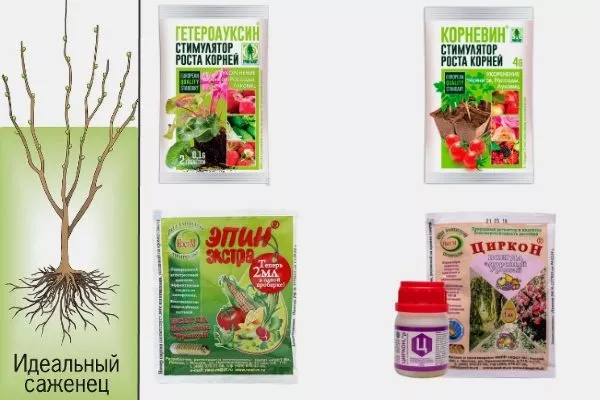
Bare-root seedlings are inspected before planting. If dry or damaged root parts are found, they are trimmed back to the white edge. The roots are soaked in water or a growth stimulant solution for 3-12 hours.
To soak the roots, use Kornevin, Epin, Zircon, Heteroauxin - they stimulate root formation and improve survival.
Immediately before planting, dip the roots in a clay slurry. Make it from clay, manure, and water, mixing the ingredients until it reaches the consistency of sour cream.
Planting order:
- Open the hole and remove some of the soil mixture to make room for the root system. You will use this soil to cover the roots.
- Form a mound of soil, step back 15 cm from the center, and drive in a wooden or metal stake to support the plant. It should be about one and a half times the height of the seedling.
- Place the seedling on the mound of earth and gently spread out its roots. The root collar should be 7-8 cm above ground level.
- Cover the roots with soil. Add it gradually, compacting each layer to prevent air pockets.
- Tie the seedling to the support and form a ring furrow around it for watering.
- Water the seedling with warm, settled water. The recommended watering rate is 35-40 liters.
- Once the water has been absorbed, mulch the soil with compost, sawdust, peat chips or other loose organic matter.
- ✓ The optimal planting depth for a seedling should be such that the root collar is 5-7 cm above the soil level.
- ✓ The distance between trees should be at least 4-5 meters to ensure sufficient space for the growth of the root system and crown.
Features of cultivation and subtleties of care
The Conference pear requires standard care and doesn't require any special agricultural practices. The key is to do everything correctly and at the right time.
Watering
For the Conference pear to thrive and produce fruit fully, it requires regular watering. This is especially important during the first couple of years after planting.
Recommendations for watering:
- Water the young seedling daily. The recommended watering rate is 20 liters. On cloudy days, reduce watering to once every 2-3 days. Or reduce the amount of water. The main thing is to prevent stagnant water.
- Water 3-6 year old pear trees approximately once a week. The recommended amount is 30-45 liters of water. Older trees only need to be watered once every two weeks. They require more water—60-70 liters.
- When determining the frequency and amount of watering, consider weather conditions. Water the pear tree so that the soil beneath the tree is moistened to a depth of 50 cm after watering. Allow the soil to dry to a depth of 10 cm before the next watering.
- It is recommended to water pear trees using a sprinkler around the tree's trunk. Another option is to water into furrows 7-10 cm deep, spaced 50-140 cm apart, depending on the tree's crown size.
A day after watering or heavy rain, loosen the soil around the tree trunk and remove weeds at the same time. Sprinkle the soil with loose natural material such as peat, humus, or sawdust. Mulch will slow moisture evaporation and weed growth, reducing the need for watering and weeding.
Top dressing
If the planting hole is properly prepared, the tree will not require additional feeding for the first two years of its life. Mature pear trees are fertilized with organic matter every three years—10 kg per square meter—and with mineral fertilizers several times per season.
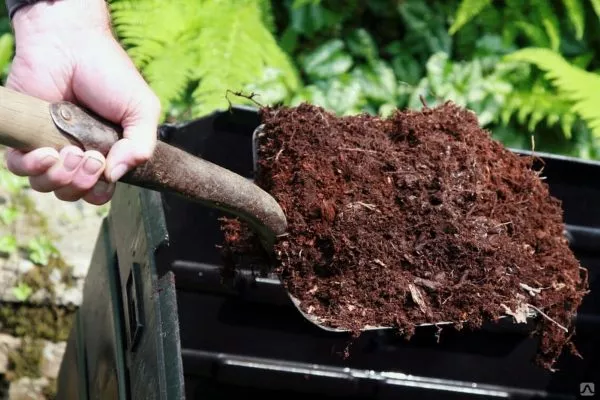
Recommendations for feeding pears Conference:
- Add organic matter - humus or compost - in the fall, during digging.
- Every year, before and after flowering, apply 30-35 g of complex fertilizers, 30 g of potassium sulfate and 25 g of urea.
- Every spring, before flowering, spray the tree with a 1% solution of ferrous sulfate, 2% urea, and 3% superphosphate. Apply 3.5-4.5 liters of solution per tree.
- After flowering, it is recommended to feed the tree with carboammophoska or nitrophoska (50 g per 1 sq. m).
When choosing fertilizers, it is important to focus on the appearance of the tree.
Tree reaction to micronutrient deficiency:
- nitrogen - leaves become smaller and lighter;
- potassium - early drying and falling of leaves;
- calcium - the appearance of uneven light spots on the leaves;
- phosphorus - delayed flowering.
In addition to standard fertilizers, you can use green manure plants, which are sown directly into the tree trunks. The best grasses for pear trees are clover, oats, and phacelia. They enrich the soil and can then be mown and used as mulch.
Wintering
The Conference pear is unable to withstand low temperatures, so even in southern regions it is recommended to insulate them, as any critical drop in temperature can lead to freezing and even death of the tree.
How to prepare a pear for winter:
- Rake up leaves and fallen fruit under the tree and collect branches.
- In late October or November, dig up the soil around the tree trunk. Digging helps destroy pests that have settled in the upper soil layers for the winter.
- Add a 15-20 cm layer of mulch - humus, sawdust, peat, etc.
- Whitewash the trunk and skeletal branches with lime mortar. Prepare it by mixing 2 kg of lime, 500 g of powdered clay, and 300 g of copper sulfate in 10 liters of water. For young trees, make the solution thinner—instead of 10 liters of water, add 15-17 liters.
- Insulate the trunk with a breathable material such as burlap, spunbond, or lutrasil. Place spruce branches between the layers.
- After the snow falls, rake it towards the tree, creating a snowdrift about half a meter high.
Types of pruning
Way scraps The crown formation technique depends on the rootstocks onto which the Conference pear is grafted. Different crown formation techniques are recommended for low-growing and tall trees.
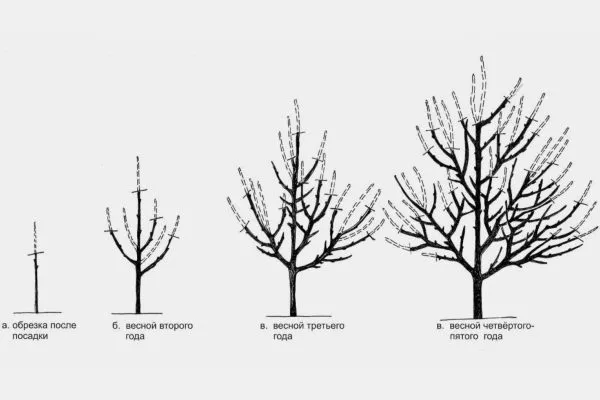
Formation of a tall pear tree
If a pear tree is grafted onto a wild pear rootstock, a sparse, tiered crown is more suitable. Formation is carried out according to the standard scheme—over the course of 4-5 years. The tree is gradually formed into several tiers, spaced 50-60 cm apart from each preceding tier.
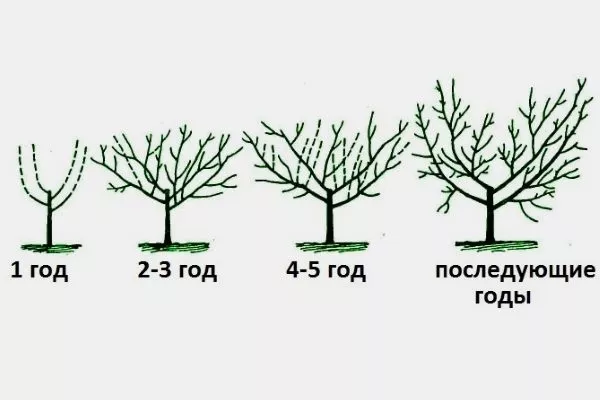
Formation of a low-growing pear tree
A cup-shaped crown is recommended for pear trees grafted onto quince rootstocks. This shape ensures good ventilation and light within the crown. It also facilitates harvesting and tree handling. It takes 4-5 years to achieve a cup-shaped crown.
When shaping the Conference pear into a bowl-shaped crown, it should be remembered that such a solution contributes to the thickening of the crown, to which this variety already has a tendency.
Formation on a trellis
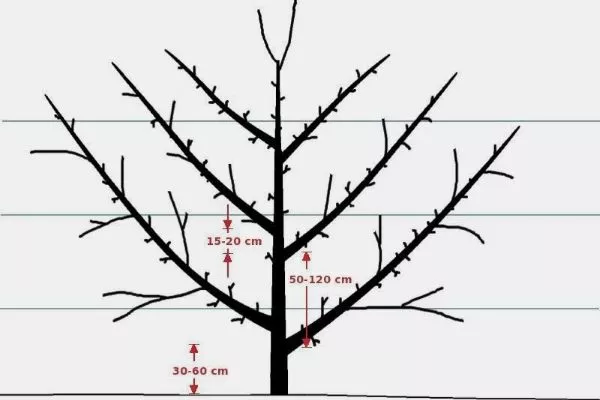
This method of formation involves the selection of branches located in the same plane.
Formation rules:
- leave 8-12 skeletal branches;
- the lower branches are located at an angle of 45-55°, the upper ones - 60-80°;
- the central conductor is cut every year so that it is 0.6-0.7 m higher than the level of the topmost branch;
- competing and unnecessary branches are cut off “to the ring”;
- Leave overgrown branches at intervals of 15-25 cm.
All types of formative pruning are performed only in the spring, allowing the tree time to recover over the summer. Heavy pruning is contraindicated in the fall, before winter, as it stresses the pear tree, reducing its chances of surviving the winter.
Regulatory pruning
This type of pruning is especially important for low-growing trees, but may be necessary for tall pear trees as well. It is performed annually, early in the spring. The goal is to remove shoots that grow inward and crowd the crown.
Maintenance pruning
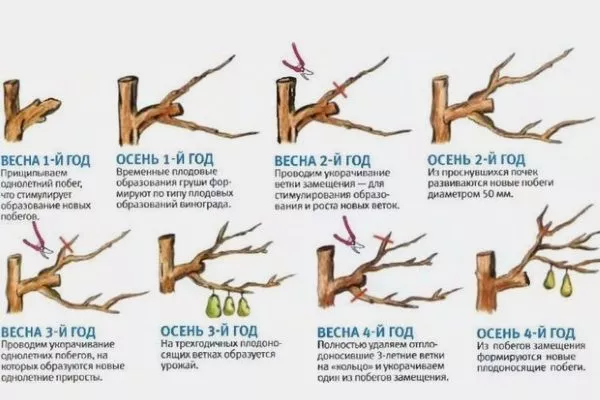
This is done in the summer, when shoots are actively growing. Maintenance pruning is done using the pinching method—shortening the shoots by 5-10 cm. This type of pruning stimulates the growth of new branches, which will become the seedlings for the harvest.
High yields can be maintained by pruning to replacement shoots, similar to shaping grapes. This procedure is time-consuming.
Sanitary pruning
This type of pruning is carried out to tidy up the crown and to prevent diseasesIt involves removing all damaged, frozen, broken, dry, and diseased branches—all of which become a haven for insect pests, fungi, and other pathogens.
All branches pruned during sanitary pruning are burned. This procedure is performed twice per season—in spring and fall.
Diseases and pests
The Conference variety is resistant to fire blight and scab, but it has no particular immunity to other diseases. At the slightest sign of damage—whether by disease or pests—appropriate measures must be taken.
Table. Pear diseases and pests, conference, and control measures
| Name | Symptoms | How to fight |
| Septoria | The appearance of rusty and gray spots on the leaves. | Removing affected parts and spraying with Skor, Kuprozan, Oleokuprit - before the leaves appear. |
| Moniliosis | Darkening of the pulp, the appearance of brown spots with white or yellow growths on the fruit. | Before flowering, spray with 2% Bordeaux mixture; during the summer, treat with Baikal-EM or Actofit once every 2 weeks. |
| Black crayfish | The trunk and branches are covered with black cracks. | The affected areas are cleaned down to healthy tissue and treated with 2% copper sulfate. |
| Leaf rust | The leaves become covered with orange-yellow spots. | Before the leaves appear, the tree is sprayed with a 2% solution of Nitrofen; in the summer, it is treated with Bayleton. |
| Powdery mildew | The leaves become covered with a whitish coating. | Damaged shoots are cut off, buds are sprayed with fungicides, the tree is treated with Topaz or 3% colloidal sulfur. |
| Pear codling moth | Caterpillars gnaw through the fruits and eat out the pulp. | The buds and flowers are sprayed with BI-58 at intervals of 2 weeks, in the fall - with Accord or Alatar. |
| Aphid | Colonies of small insects, black or green, settle on the back of the leaves. | Treatment with Agravertin on the first leaf buds, ovaries are sprayed with Iskra-Bio, if pests appear - Decis, Fufanon. |
| Leaf roller | Leaves are curled into tubes or completely gnawed off by caterpillars. | Caterpillars are collected by hand, sprayed with Zolon as a preventative measure, and treated with Lepidocide three times during the summer. |
Collection and storage
Conference pears have excellent shelf life. They can retain their marketability and flavor for up to four months in the refrigerator and up to six months in the cellar.
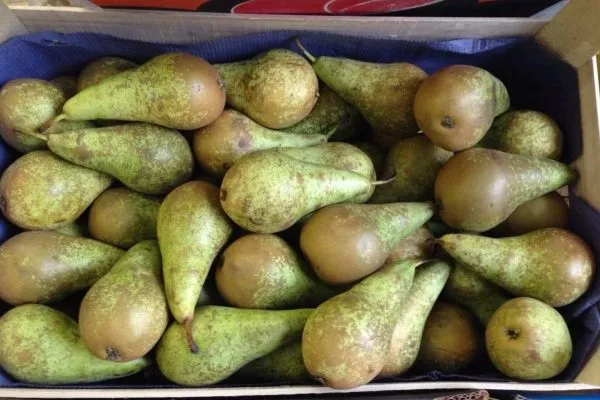
Peculiarities of harvesting and storing pears Conference:
- the fruits are picked immediately after ripening or a few days before;
- Before storing pears, it is recommended to dry them outside (under a canopy) for 2 days - this will remove excess liquid from the fruit and improve their taste, making it more pleasant;
- The fruits are collected in sunny and warm weather so that they are not damp;
- recommended storage temperature: +1….+2°C, humidity: 85-95%;
- It is not recommended to place fruits for storage in boxes, paper or plastic bags - condensation will form at the bottom, stimulating the development of fungal diseases;
- The best way to store pears is in plastic or wooden boxes.
Gardeners' reviews
Despite its "overseas" origins, the Conference pear is ideal for cultivation in Russia's southern regions. Here, the English pear demonstrates the variety's best qualities—high yields and excellent fruit flavor.