
The Katyusha pear has gained popularity due to its high frost resistance and resistance to diseases and pests. This medium-sized plant produces large fruits that withstand long-distance transport. With proper care, this pear will produce consistent harvests.
Origin of the variety
Katyusha is a well-known hybrid created by specialists at the Saratov Experimental Station with the participation of the Saratov State Agrarian University. This variety thrives in various climatic zones of Russia.
The appearance of the tree
It is medium-sized and has a spreading, pyramidal crown. The medium-length shoots are red, while the trunk is brown. The crown is covered with small, light green leaves. During flowering, the tree produces delicate white flowers.
Fruits and their taste characteristics
The Katyusha pear is prized for its aromatic fruit. It has the following distinctive qualities:
- They have a pleasant, sweet taste and are wide, pear-shaped.
- They are characterized by medium sizes – their weight varies from 110 to 150 g. Larger specimens are also found – up to 200 g.
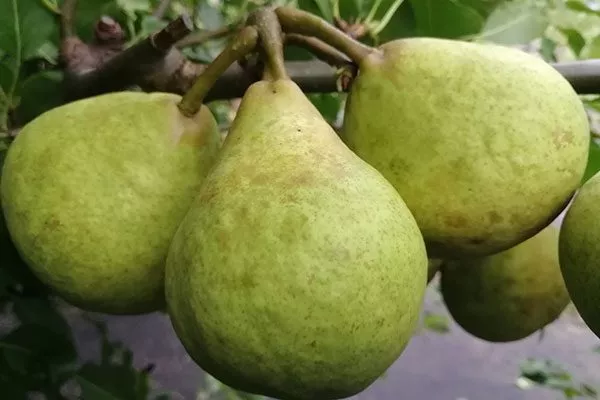
- When picked they are green (sometimes with a slight blush on the sunny side), but as they ripen their skin gradually turns yellow.
- The pulp is oily and juicy.
- The subcutaneous dots are clearly visible and quite large.
- ✓ The leaves have a characteristic shine, which distinguishes them from other varieties.
- ✓ The fruits have a unique aroma, which intensifies after ripening.
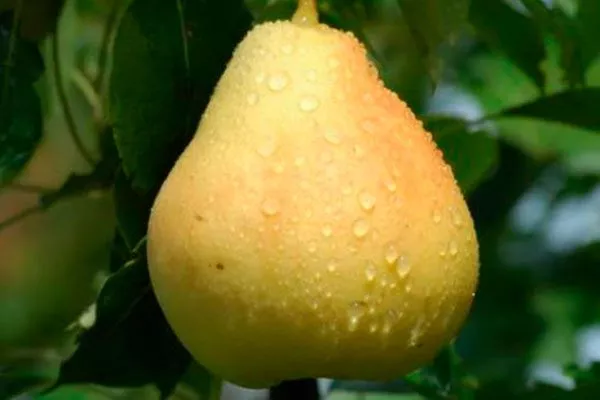
The fruits are primarily eaten fresh. Sometimes they are used to make jams, compotes, and fruit salads. They add interesting flavors to desserts.
Ripening period and yield
It belongs to the late-winter varieties. Harvesting begins in late September and continues until early October, with the fruits reaching consumer maturity from February to May.
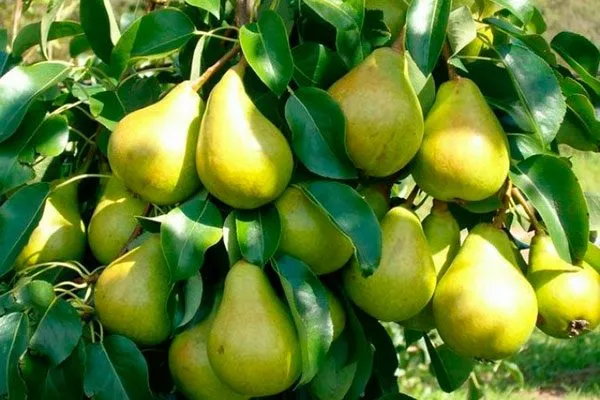
The plants begin bearing fruit in the fourth year after planting, and fruiting occurs annually. With proper care, high yields can be achieved. Gardeners can harvest approximately 50 kg of pears from a single plant.
Sustainability
The hybrid is frost-resistant enough for the central part of the world, withstanding temperatures down to -35°C. In the Saratov region, the plant exhibits winter hardiness. It tolerates short-term droughts well.
Care and cultivation
To ensure abundant fruiting of the Katyusha pear, it is recommended to plant it near pollinators. The best neighbors for this variety are Lada and Severyanka. Follow these care guidelines:
- Provide regular watering at least four times per season. Water the first time in early April, then again three weeks after flowering ends and two weeks before harvest.
- The last watering should be done in October, when the leaves have completely fallen, which will help strengthen the tree before winter.
- The volume of water depends on the age of the plant: for young seedlings (up to 7 years old), 50 to 80 liters of warm, settled water is sufficient; for adult plants, 120 to 150 liters.
- Timely fertilization plays a crucial role in care; without it, it's impossible to get a fragrant and tasty harvest. Apply fertilizer up to four times per season.
- In spring, apply urea (600 g), distribute it evenly around the tree trunk and then level it with a rake.
- When forming buds, use a nutrient composition that includes potassium sulfate (800 g), superphosphate (1 kg) and mullein (20 kg).
- At the beginning of fruit ripening, use a liquid mixture of 20 g of humate and 1 kg of nitrophoska.
- ✓ The water temperature for irrigation should not be lower than 18°C to avoid stress on the root system.
- ✓ Watering should be done early in the morning or late in the evening to minimize water evaporation.
Subtleties of planting
Before planting seedlings, carry out preparatory work, choosing healthy specimens. If using seedlings with closed root systems, water the containers generously to facilitate soil removal.
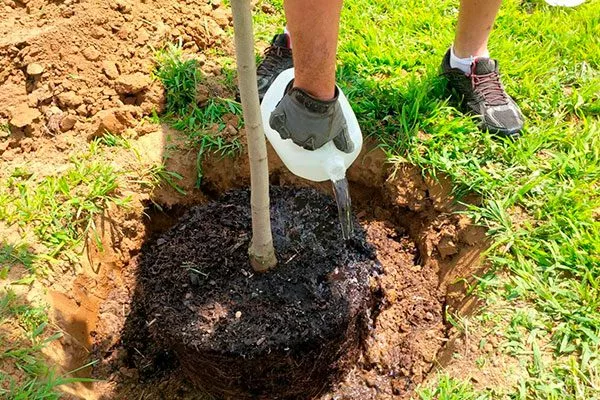
Step-by-step algorithm:
- Prepare a planting hole in advance, inside which the soil should be thoroughly loosened.
- Pour 10 liters of warm water into each hole and carefully place the seedlings in the center, being careful not to damage the root ball.
- Fill the remaining space with soil, then compact it. The root collar should be 3 cm above the soil surface.
- After planting, tie the seedlings on both sides to wooden stakes.
- Water the plant again with 10 liters of warm water and mulch the area around the trunk.
Additionally, it is recommended to trim all shoots of the seedling by 1/4.
Location and soil requirements
The hybrid prefers sunny sites with loose, fertile soil, preferably black soil. This tree does not thrive in areas with depleted soil, and a lack of nutrients can negatively impact its growth and yield.
Advantages and disadvantages
Before planting a plant in your garden, consider its pros and cons. Gardeners note the following qualities among the hybrid's main advantages:
Reviews
The Katyusha pear is a popular choice among both novice and experienced gardeners due to its high yield, excellent flavor, and disease resistance. Proper care ensures the plant's strong immunity.