
The Carmen pear is a relatively new variety. It has already gained popularity among both novice and experienced gardeners. It is characterized by high frost resistance and moderate disease resistance. With proper care, it can strengthen its immunity and increase yields.
Description of the Carmen pear variety
It was created by a group of Russian scientists and breeders from the All-Russian Research Institute of Genetics and Breeding of Fruit Plants named after I.V. Michurin in 1992. To create it, two different types of pears were crossed: Williams Red and Daughter of Blankova.
Tree
The crown is characterized by a compact shape, resembling a narrow pyramid. It reaches 2.5-3 m in height. Distinguishing qualities:
- Skeletal branches extend from the trunk at an acute angle.
- The shoots are colored brown.
- The leaves grow on the branches at an acute angle, have a finely serrated edge and are slightly concave.
- The leaf blades are symmetrical and have a glossy surface.
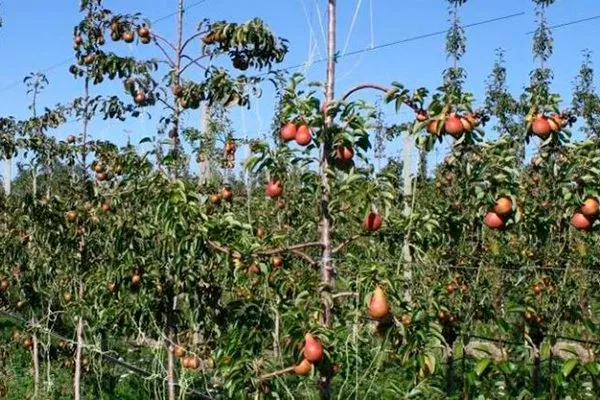
- ✓ Reddish tint of leaves, which is rare among other pear varieties.
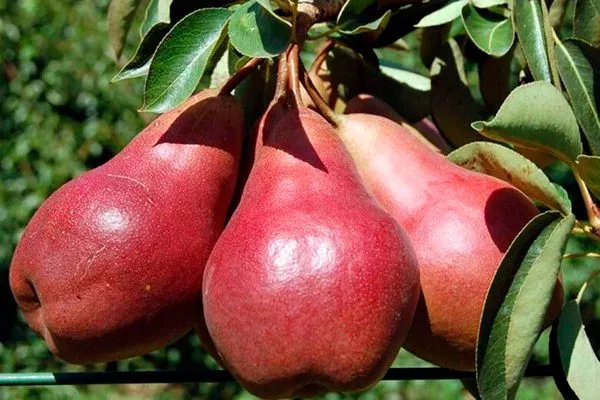
- ✓ The fruits have a unique dark red blush that covers the entire surface.
Fruit
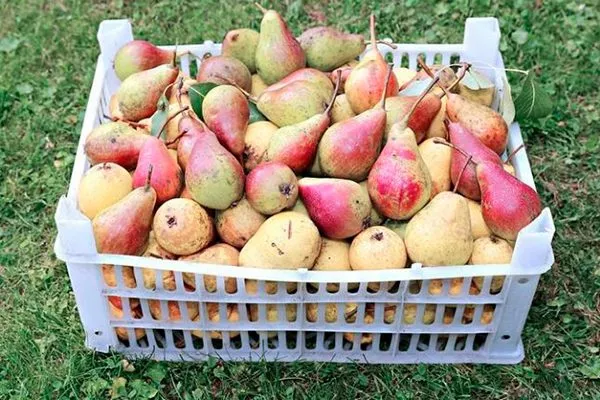
Ripe fruits are distinguished by a dark red blush that covers the entire surface. Other characteristics:
- They have a regular round shape.
- On dry skin, you can notice frequently located subcutaneous dots.
- They are held on a short and thick stalk.
- The average weight is about 170 g, but there are specimens weighing 250 g.
- The pulp is medium-dense and has a sweet and sour flavor without any trace of astringency. It contains light granulation, especially noticeable near the core of the fruit.
Characteristics of the variety
The Carmen pear is a summer-ripening variety with a columnar shape. It is considered a vigorous, semi-dwarf variety.
Taste and uses
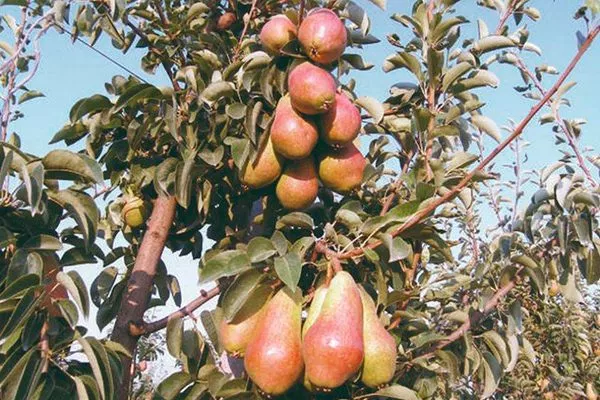
The fruits are juicy and light in flavor, harmoniously combining notes of acidity and sweetness, imparting a refreshing taste. They lack tartness. The flesh is moderately firm, with a slight oily texture.
According to the analysis, the content of chemical components in 100 g of fruit is as follows:
- sugar – 8 g;
- acid – 0.12 g;
- P-active components – 135 mg;
- ascorbic acid – 7 mg.
The fruits are suitable for fresh consumption. They can be used for canning, making various desserts and baked goods, marmalade, and pastila.
Beneficial properties
They contain vitamins C, K, E, and B vitamins. They are a source of minerals such as potassium, magnesium, copper, and manganese. They have a number of other health benefits:
- The high content of vitamin C helps support the immune system, protecting the body from infections and colds.
- Potassium helps lower blood pressure and reduce the risk of cardiovascular disease.
- They are a source of dietary fiber, which helps normalize digestion, prevent constipation and improve overall intestinal health.
- Vitamin E and other antioxidants help protect cells from free radicals, preventing premature aging and the development of various diseases.
Thanks to their vitamin C content, pears promote collagen production, which promotes healthy skin, making it firmer and more youthful.
Ripening time
This is a summer fruit variety. The tree begins to bear fruit in the fifth year after planting. The first juicy fruits ripen in mid-August. Peak fruiting occurs in the second half of August and early September.
Productivity
Initially, the first harvests can range from 10 to 18 kg of fruit. As the trees reach maturity (over 15 years old), they can yield up to 30 kg of fruit.
Frost resistance
The crop is highly frost-resistant, able to withstand temperatures down to -30°C.
Pollinators of the pear Tenderness
Self-pollination is partial. The tree produces both male and female flowers, so fruit production occurs in either case. For best results, it's recommended to plant pollinators nearby.
Early-ripening varieties, such as Vilnius Sredniy (Medium), are suitable neighbors. If planting space is limited, a pollinator branch can be grafted.
Growing regions
It is recommended for cultivation in various climatic zones, but is most popular in the Central Black Earth Region.
Disease resistance
It exhibits resistance to scab and septoria. It's important to implement preventative measures that are important for preventing other diseases and protecting against pests:
- Regular thinning and sanitary pruning of trees.
- Remove weeds around young plants and remove weeds around mature trees.
- Whitewashing tree trunks in spring and autumn to protect against sunburn and frost.
- Removal of fallen leaves.
- Collection of all fruits, including rotten and damaged ones, and their destruction.
Advantages and disadvantages
Before planting a new variety in your garden, it's important to study its positive and negative qualities. This crop has the following advantages:
- resistance to scab and septoria;
- compact crown;
- low soil requirements;
- ease of maintenance;
- good transportability.
Landing rules
The seedling can be planted in either spring or fall. Fall is recommended so the plant has time to establish roots before frost sets in.
- ✓ The optimal planting depth for a seedling should be such that the root collar is 5-7 cm above the soil level.
- ✓ The distance between seedlings should be at least 3 meters to ensure sufficient space for the growth of the root system and crown.
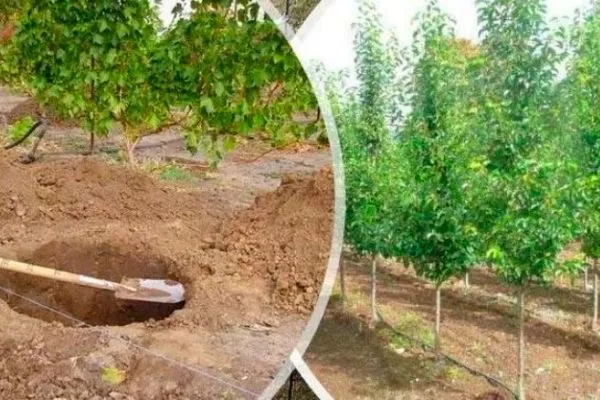
Follow the recommendations:
- In spring, begin planting when temperatures reach a stable temperature of around 15°C. This timeframe may vary by region, but is typically from mid-March to mid-May.
- In autumn, planting should begin in September, but no later than two weeks before the first frost. Remove all leaves to avoid wasting the plant's energy and to ensure better rooting.
- Prepare the site in advance. For acidic soils, deacidify them a year before planting. To do this, use chalk, dolomite flour, and limestone chips at a rate of 200 g per square meter of soil. Six months before planting, dig the site, clear it of weeds and roots, fertilize it with organic matter, and level it.
- For planting, choose young seedlings between 1 and 3 years old. Mature plants may have well-developed root systems, but damage during transplantation can negatively impact rooting and development.
The root system should be firm, free of damage, signs of disease, or growths. Pay attention to the trunk and shoots—they should be smooth, without visible damage or signs of rot.
Step-by-step algorithm:
- Before planting, remove dried roots. Place the seedling in water for 10-12 hours, then in a rooting solution for several hours.
- Two weeks before the procedure, dig a hole measuring 60x60 cm.
- Place a support peg in the center of the hole.
- Form a mound of soil at the bottom of the hole. Place the seedling, carefully spreading the roots over it. The root collar should be a few centimeters above the soil surface.
- Holding the trunk, gradually cover the roots with soil and compact it.
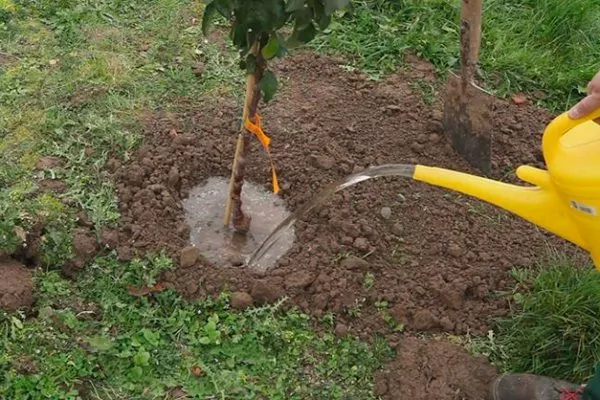
After planting, water the seedling with 30 liters of water and tie it to a stake. Wrap the trunk of the young plant in agrofibre or burlap and cover it with spruce branches to protect it from frost.
Care Features
Agrotechnical measures include a number of important steps. Follow these steps:
- Watering. Provide regular watering, especially during the first year after planting, to prevent the soil from drying out. Water every 1-1.5 weeks, especially during dry periods.
For mature trees, natural precipitation is usually sufficient, but in dry autumns, additional moisture-replenishing irrigation may be required. - Top dressing. Apply fertilizer in spring and fall, and during the fruiting period. Spring feeding includes nitrogen fertilizers, while fall feeding includes potassium-phosphorus complexes without nitrogen. Apply foliar or root feeding depending on the soil and tree conditions.
- Pruning and crown shaping. The tree requires shaping and sanitary pruning. Remove dead, broken, and weak branches, and shape the crown into a skeletal structure. When rejuvenating, remove old branches and shoots to stimulate new growth.
Young plants need protection from rodents and shelter before the onset of cold weather. This will help prevent damage and ensure comfortable conditions during the winter.
Collection and storage
Ripening occurs in late July to early August and reaches harvestable maturity. They quickly lose their flavor and are not suitable for long-term storage. In the refrigerator, they will keep for 1.5-2 weeks.
Gardeners' reviews of the variety
The Carmen pear is highly frost-hardy, making it suitable for growing in a variety of climates. It exhibits good disease resistance and is easy to care for. With proper care, it will resist disease and insect attacks and will yield good harvests.