
The Emerald pear is a low-growing variety often confused with the Emerald variety. However, these are completely different plants, as the former grows to a maximum of 200 cm, while the latter reaches 600 cm. It belongs to the group of winter varieties, prefers a mild climate, and is somewhat finicky. However, it rewards gardeners with very high yields and delicious, aromatic fruits.
Who developed the variety and when?
The variety appeared relatively recently – it was added to the state register only in 2014. A group of botanist breeders worked on its development – Yakimov V. A., Mileshko A. F., and Babina R. D.
The appearance of the tree
The Izumrud pear tree grows to a minimum height of 150 cm and a maximum of 200 cm. Its crown is very compact and doesn't take up much garden space. Other characteristic features include:
- crown shape – narrow pyramidal;
- foliage – average;
- tree type – columnar;
- bark – smooth;
- leaves - classic green, without jagged edges.
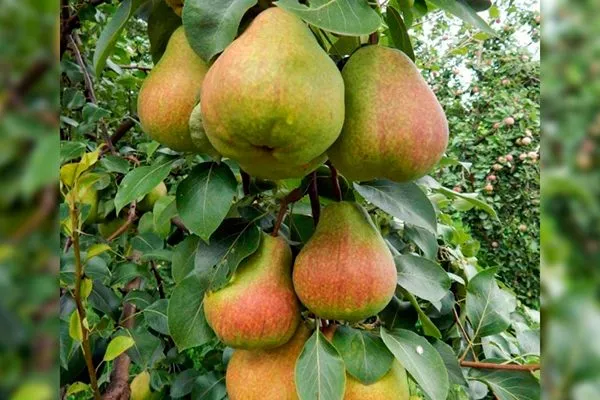
Fruits and their taste characteristics
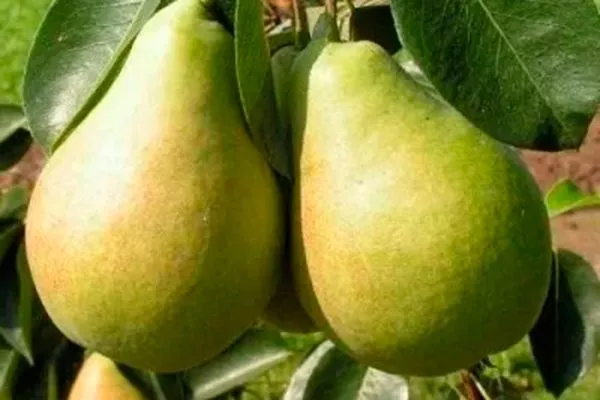
Pears are truly emerald, possessing a similar hue. However, the flesh is always creamy. Other characteristics:
- size - large, as one fruit weighs from 250 to 400 g;
- juiciness – increased;
- aroma – pronounced;
- form - standard pear-shaped;
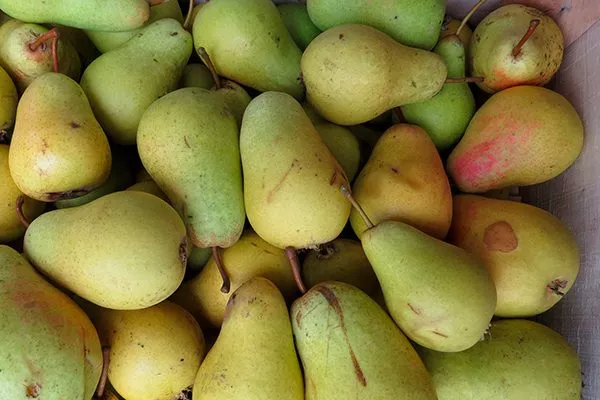
- skin – matte type, quite dense, so the fruits are stored for a long time;
- tasting score – 4.5 points;
- taste - sweet, but with a slight sourness.
- ✓ The fruits have a dense skin, which allows them to be stored for a long time without loss of quality.
- ✓ The taste of the fruits combines sweetness with a slight sourness, which makes them versatile for various types of processing.
Self-fertility and pollinators
Emerald is self-pollinating and therefore doesn't require a donor plant. However, to increase yield, it's recommended to plant other varieties with similar flowering periods nearby. These include Bere Bosk, Bere Ardanpon Yakimovskaya, Zimnyaya Dekanka, and Vassa.
Ripening period and yield
The Emerald pear is an early-bearing tree, producing its first fruits in the second or third year after planting. Fruiting is abundant and annual, with high yields – a mature tree produces about 8 kg on average, but early in its development, the yield may only be 3-5 kg.
Care and cultivation
Gardeners prefer to plant either in mid-autumn or late spring, when the soil is sufficiently warm. For successful cultivation, pay attention to the following minor planting and care details:
- Before planting, the hole is watered generously and the soil is enriched with a combination of sulfur fertilizers and compost.
- Further tree care includes standard agricultural practices such as watering, fertilizing, and preventative pruning.

- The pear tree needs to be provided with long and even lighting, as shade negatively affects the fruiting and the general condition of the plant.
- Young trees require more regular watering than mature ones – their growth and development slows down when there is a lack of moisture.
- A high groundwater table close to the soil surface suppresses the root system, which can lead to plant death. Ideally, the groundwater level should be at least 200 cm deep.
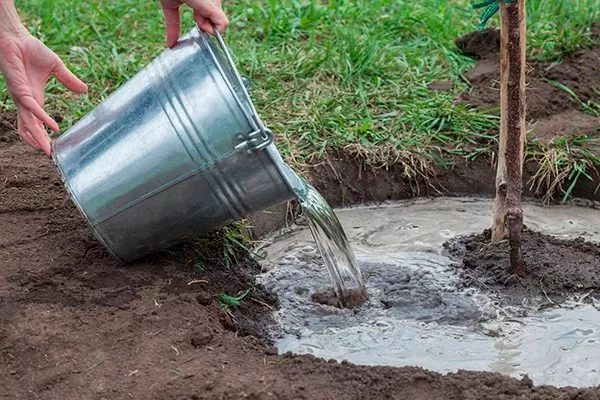
In addition, it is necessary to remember to protect the pear from drafts and choose a wind-protected location in the garden for planting so that the tree can grow and bear fruit without hindrance.
Advantages and disadvantages
The pear's main advantage is its low stature, which is unusual for this crop. This creates favorable conditions for harvesting. But there are other positive aspects as well:
The Emerald pear is popular with both gardeners and consumers, but it's not yet widely grown. Many consider it finicky due to its demanding soil moisture levels, but to prevent root rot, it's enough to regulate watering and create a drainage system during planting.