
The "Zaveya" pear variety is a huge hit with gardeners, despite being quite new. A detailed examination of its strengths, weaknesses, and cultivation characteristics reveals its popularity in Russian markets.
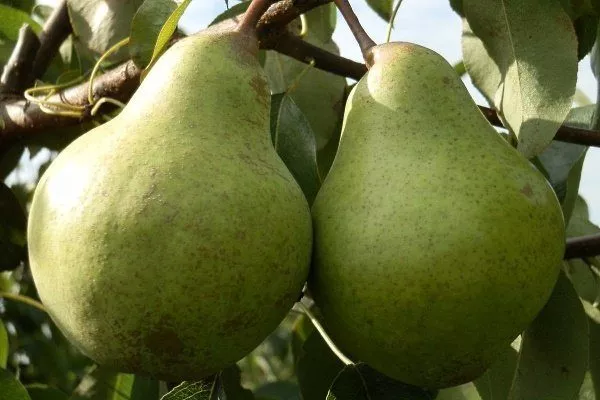
Pear "Zaveya"
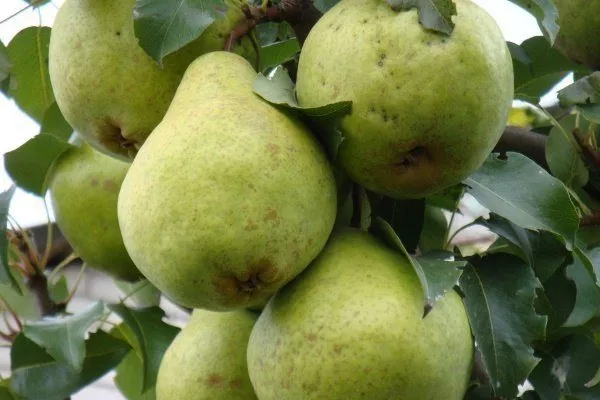
Zaveya: winter-hardy, high-yielding (up to 20 t/ha) variety
History of the variety's development
The Zaveya pear variety was developed in 2016 at the Belarusian Institute of Fruit Growing. Work on the variety took just over a quarter of a century, and the resulting plant fully justifies the time and money invested.
The closest to the pear "Zaveya" is variety "Simply Maria", but it has one major difference: it cannot withstand such low temperatures. This difference makes "Zaveya" a winter variety, while "Prosto Maria" is an autumn variety.
Description of the tree and fruits
The pear tree reaches a maximum height of 4 meters, making it a medium-sized variety. The crown is dense and pyramidal, and during flowering, it is covered with a layer of white flowers. The pear leaves are dark green and glossy.
The pears are medium-sized—about 180 g—green and truncated, conical in shape. Gardeners note the pear's excellent flavor and aroma. The skin is dry, smooth, and thin. Small greenish spots appear on the underside of the skin, distinguishing this variety from many similar varieties. The flesh is buttery, juicy, and white-green.
Pollination, fruiting, ripening period
This variety is self-sterile. For pollination, a pollinator whose flowering period coincides with that of 'Zaveya' must be nearby. Such varieties include 'Bessemyanka', 'Lyubimitsa Yakovleva', and some others.
Pear trees begin bearing fruit 3-4 years after planting. Marketable fruit yield is 93%, a relatively high figure for fruit and berry plants.
The Zaveya pear tree can regulate the optimal number of fruits on the tree by shedding excess ones, ensuring that the remaining fruits receive sufficient nutrients and grow large and with few defects.
The average harvest time is mid-autumn, by which time the fruits acquire a yellow-green hue.
Productivity
This variety is high-yielding, but tree care and climate are important factors. To ensure high yields, mulch, loosen, and weed the soil around the trunk.
This pear does not tolerate excess water well, so watering requires careful monitoring. A single tree can yield up to 50 kg of pears.
The video below clearly shows the Zaveya pear variety:
Planting the Zaveya pear tree
Pears, like most trees, have their own planting requirements. By following the planting guidelines and preparing the soil and tree step by step, you can reap a bountiful harvest in the shortest possible time.
- ✓ The optimal soil pH should be in the range of 6.0-6.5 to ensure better absorption of nutrients.
- ✓ The depth of groundwater should not exceed 2 meters to avoid rotting of the root system.
Conditions
To plant the Zaveya pear, use soil that is well-drained and aerated. The soil should also contain some clay—this will allow moisture to be retained near the roots, which is important for the tree's root system. The planting site should be exposed to full sun; constant water vapor in the air is undesirable.
The optimal time for planting a pear tree is autumn. Sometimes the tree is planted in the spring, after preparing the planting holes in the autumn.
Planting stages
There are several stages to planting a pear tree. Planting proceeds as follows:
- The top fertile soil layer removed from the hole is prepared. This layer is mixed with organic and mineral fertilizers. After mixing, it is returned to the hole.
- A mound of soil is placed in the center of the hole, and a stake is inserted into it. The tree is placed in the hole, spreading its roots along the mound. The root collar should be 3 cm above ground level. The roots are covered with soil and compacted.
- A circle of soil is placed around the trunk to form a ridge and watered; two buckets of water will suffice. After the water has been absorbed, the soil around the tree is mulched, and the tree itself is tied to a stake.
You cannot use fresh manure to place it in the planting hole, as it may subsequently damage the root system.
Care and cultivation
The most vulnerable part of a pear tree is its roots—they can be damaged in winter, so it's important to keep them well insulated. Plastic film, straw, paper, or sunflower leaves are often used to insulate the roots of young trees; for mature trees, a generous covering of snow is sufficient in winter.
The area around the pear tree trunk should always be cleared of weeds.
The main stages of caring for a pear tree include:
- hilling;
- mulching;
- watering;
- pruning;
- fertilizer.
The first two stages are standard, the last three stages have their own characteristics.
Watering
Sprinkler irrigation is the optimal irrigation system for pear trees. A sprinkler with many small holes works well for this; whether it's fixed or rotating is irrelevant. If you don't have a sprinkler, dig a trench 10-20 cm wide around the tree's trunk and add water. Watering the pear tree this way is sufficient several times during the spring and summer; during particularly dry weather, water more frequently.
Three buckets of water are required per square meter of tree trunk area. To provide the roots with oxygen, the soil is loosened after watering.
Trimming
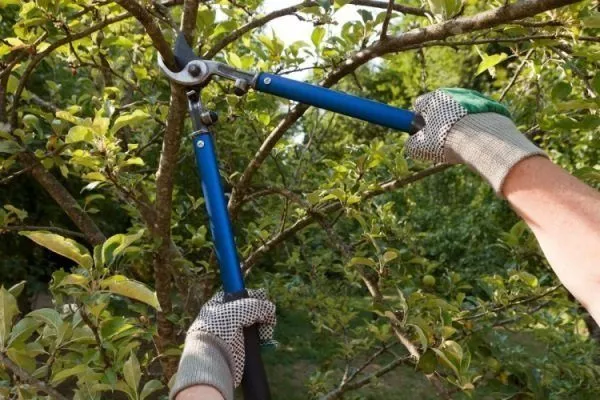
Pruning branches is a necessary measure that allows, over time, to achieve an optimally formed tree crown, without unnecessary shoots and unproductive branches.
Two-year-old pear saplings are typically used for planting. By this time, the tree already has about eight lateral branches—half of which are skeletal, evenly spaced and extending from the trunk at a 45° angle. When planting one-year-old saplings, they are pruned to a height of half a meter.
To ensure good branching of the tree, its branches are shortened at the same height by a quarter, while the conductor is left higher, somewhere around 25 cm.
When the crown has already formed, only the inward-growing and broken branches are pruned.
Fertilizing pears
Fertilizer application and quantity are always based on the tree's condition and characteristics. A shoot growth of 40 cm on a young tree and half that on a mature tree is a clear indicator of a pear's fertilizer needs.
Fertilizers are added after the first year of the pear tree’s life; the optimal time for this is spring and autumn; in summer, the tree only needs a small amount of feeding.
Mineral supplements are used for annual fertilization, while organic fertilizers are applied every three years. A trench is dug around the tree, the length of which depends on the amount of supplements. For 1 square meter of trunk circle, use:
- humus – 10 kg;
- potassium chloride – 25 g;
- urea – 15 g.
Fertilizers are added to such a trench along with the soil. This option is better than applying fertilizers through digging, as it slows down the evaporation of minerals and organic substances important for the tree compared to open ground.
To maintain high yields, the tree is also treated with lime milk every year, where 100 g of lime is taken per 1 liter of water.
Winter hardiness
The Zaveya pear variety is highly resistant to low temperatures, reaching a temperature threshold of -30°C below zero. When developing this variety, much attention was paid to achieving this frost resistance, given that its closest relative cannot withstand such temperatures. At the same time, the fruit's flavor and yield were preserved.
Tree diseases and their control
The Zaveya variety has good resistance to various diseases. The table below lists the most common pear diseases.
| Disease | Sustainability level | Recommended preventive measures |
|---|---|---|
| Scab | Average | Regular spraying with fungicides in spring |
| Powdery mildew | High | Minimal, only at the first signs of the disease |
Table 1 – Common diseases of the pear variety ‘Zaveya’
| Pear diseases | Features of the disease | Methods of control and prevention |
| Scab | The disease peaks in early spring. It is characterized by the appearance of a brownish-green coating on the leaves, followed by leaf drop. | Ensuring adequate air circulation around the tree, which includes ventilation and misting, also includes crown pruning and removal of old branches as a preventative measure. |
| Powdery mildew | It attacks not only leaves, but also buds, shoots, and inflorescences. Initially, a dirty white coating forms on them, which then turns brown and black spots appear. | Destroy affected areas of the tree and perform deep autumn plowing. Apply phosphorus-potassium fertilizers as a preventative measure. |
| Sooty mold | The leaves and fruits of the pear tree become covered with a black coating. | Reducing insect pests. Providing the tree with adequate humidity and air circulation. |
| Fruit rot | It's spread by airborne droplets, posing a threat to all trees near the infected tree. It attacks the tree's fruit, leaving brownish-gray rings of rot on them. | Spray the entire tree with Bordeaux mixture. First, remove all affected fruits and branches. |
| Rust | It affects the leaves, causing a rust-like coating to appear on the outside. | Planting shrubs with dense canopies around the area. Use of mineral fertilizers. |
This variety is particularly susceptible to fruit rot and scab, so these two diseases are the priority in prevention.
Collection, storage and transportability
Timing is key when harvesting this pear – due to its ability to ripen well during storage, the fruits are harvested unripe.
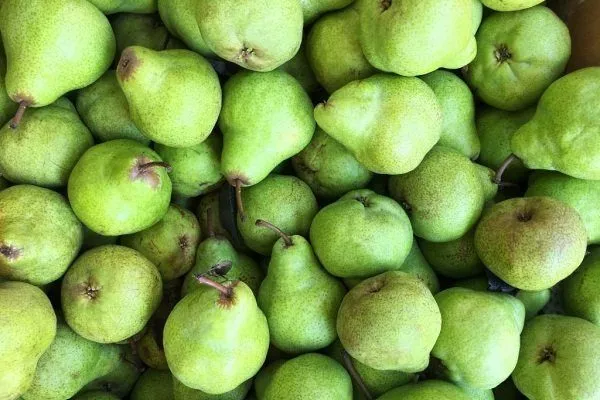
Store the harvested fruit in a cool place away from direct sunlight. Over time, the fruit's color will change to a green-gold color, and the flesh will develop a full-bodied flavor.
The fruits of the Zaveya pear can retain their taste for up to six months if stored properly.
During storage and transportation, the fruits retain their shape well, which gives them additional advantages in marketing.
Pros and cons of the Zaveya variety
After a detailed examination of the "Zaveya" variety, it is easy to identify several of its main advantages and disadvantages.
Benefits include:
- high yield;
- resistance to low temperatures;
- prostate acclimatization;
- high quality of fruits;
- ease of storage and transportation.
There are very few disadvantages, among them are:
- demanding irrigation control;
- susceptibility to certain diseases.
We recommend reading the article, which will tell you about others the most popular varieties of pears.
Thus, the still-young "Zaveya" pear variety can already be considered an excellent, high-quality, and reliable product. In terms of taste and quality, it is on par with most established varieties, and even surpasses some in many ways. It's understandable why it is rapidly gaining popularity among gardeners.