
The Marble pear is one of the most popular varieties, renowned among gardeners for its flavor and increased resistance to various diseases. This variety is easy to care for, and the trees produce large, juicy fruits.
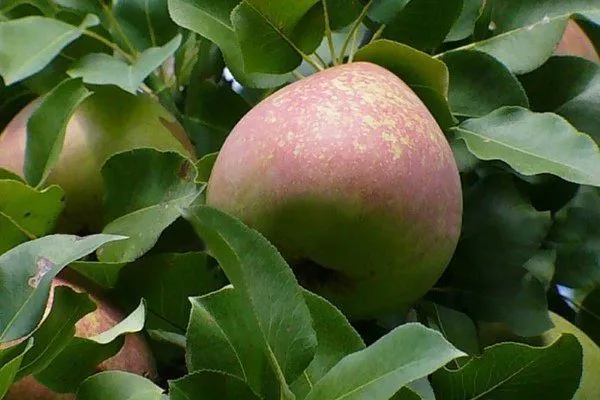
Pear variety "Marble"
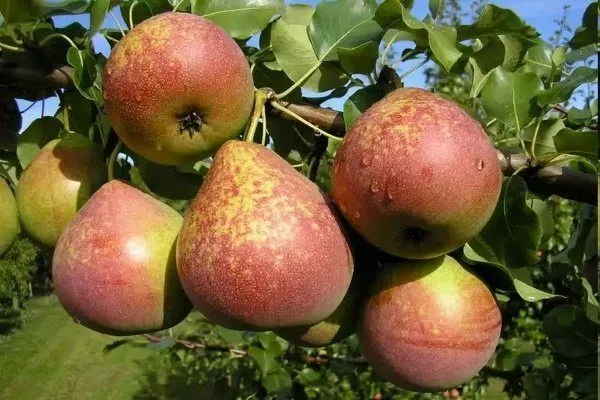
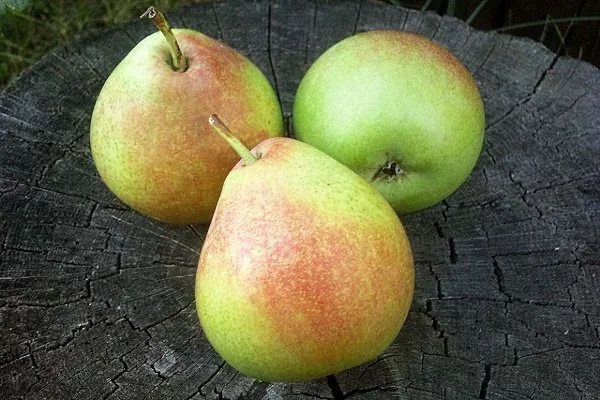
A ripe pear is greenish-yellow with a marbled blush and small dots.
About selection
The renowned breeder I. V. Michurin succeeded in developing a winter pear variety. This variety was named "Michurin Winter Bere." A little later, breeders A. M. Ulyanishcheva and G. D. Neporozhny crossed Michurin's variety with the "Lesnaya Krasavitsa" variety, producing the "Mramornaya Grusha" (Marble Pear). In 1965, the variety was added to the State Register of Russia.
This pear variety is suitable for growing in the Russian climate. Cultivation began in the Central, Central Black Earth, Lower Volga, and Volga-Vyatka regions of the country.
We recommend you read another oneour article, which will tell you about popular varieties in the Moscow region.
Characteristics of marble pear
| Name | Productivity | Winter hardiness | Disease resistance |
|---|---|---|---|
| Marble Pear | High | Up to -25°C | Resistant to scab |
| Winter Birch of Michurin | Average | Up to -20°C | Moderately resistant |
The marble pear is especially prized by gardeners for its high yield and ability to withstand harsh winter climates. The tree grows up to four meters tall and has a pyramidal crown. It bears large, glossy, slightly serrated leaves. The flowers are saucer-shaped, white, and medium-sized.
The fruits are regular in shape, medium-large, weighing approximately 170 g. The skin is golden-green and firm. The flesh is coarse-grained, aromatic, sweet, tender, and creamy in color.
Fruiting begins 6-7 years after planting. The fruit appears in late summer or early fall. Advantages include the fact that pear trees may not require pollinators, as they are self-pollinating. The fruit retains its appearance during transportation and can withstand temperatures as low as -25 degrees Celsius.
Pros and cons of the variety
Negative aspects of the variety:
- the need for constant thinning of the crown;
- reduction in crop yield during severe drought;
- short-term storage of fruits (no more than 2 months);
- tendency to scab during rainy summer periods.
Selecting a seedling
Gardeners recommend purchasing seedlings from specialized stores, but it's best to go to a fruit nursery, where you're more likely to acquire healthy and viable seedlings. Purchasing a seedling requires following certain guidelines:
- Buy seedlings no older than two years—they won't develop slowly. The older the plant, the larger its root system, but when dug up, a mature plant loses more of it than a young tree. A small number of roots can negatively impact the seedling's nutritional status.
- Inspect the root system—it shouldn't be damaged. There should be at least three main roots, each about 25 cm long. Choose a seedling with a root ball—this protects the young roots. You can also replant the seedling throughout the growing season.
- Pay attention to the tree's bark—it shouldn't have any cracks or damage. Buy a sapling with smooth bark.
- ✓ Check for a quality certificate or document confirming the variety of the seedling.
- ✓ Make sure the seedling was grown in climate conditions similar to yours.
Preparation and planting
The Marble pear is considered an easy-to-grow variety, producing fruit in virtually any conditions and soil. However, to increase yield and fruit quality, it is recommended to grow it in a well-lit area with fertile, loose soil.
Selecting a place and time
Marble pears are planted in the spring after the last frost. The plant is frost-sensitive. Planting takes place in early to mid-May. Young trees will require frequent and generous watering.
Planting can also be done in the fall, but choose a time a month before temperatures drop and strong winds begin to blow. Gardeners plant the tree in the first half of October, before the soil cools – this allows the roots to take root and strengthen faster.
Choose a well-lit area where the plant will receive maximum sunlight. Because the tree does not tolerate strong winds well during the cold season, it is best to plant the pear tree closer to a fence, 3-4 meters away.
The tree enjoys moisture but dislikes standing water. Make sure to prevent standing water after heavy watering.
When choosing a site, be sure to pay attention to the groundwater level—it should be at least 2.5 meters below the surface. Dig a special ditch near the seedlings to act as a drainage channel when watering the pear tree. If water stagnates in the area, it's best to provide drainage in advance or plant the tree on an artificial mound.
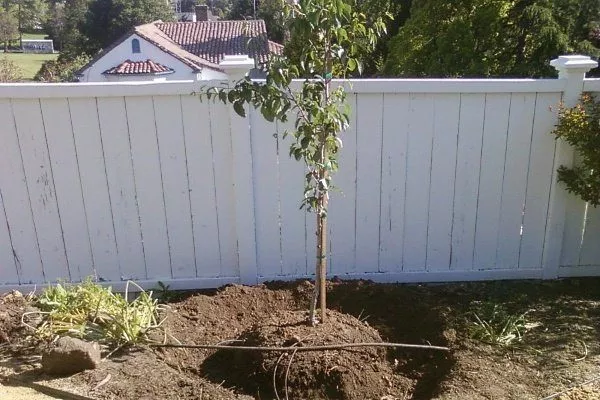
The plant prefers loamy, nutritious soil. With proper care, you'll reap a bountiful harvest. If your site has marshy, clayey, or sandy soil, you'll need to ensure drainage in advance, then add humus, compost, or peat moss in the summer.
Staged planting
Planting a pear tree is an important process that determines the plant's future growth and development. Plant the seedling according to the following pattern:
- Prepare a planting hole at least 70 cm deep and equal or larger in diameter. In fertile soils, digging smaller holes is acceptable, but ensures the roots can easily fit. In poor, sandy soils, the hole should be at least 1-1.5 m in diameter.
- Layer crushed rock, expanded clay, or broken brick on the bottom to create drainage for clayey, heavy soils. On sandy soils, place a layer of clay on the bottom of the hole to prevent moisture from washing away the roots.
- Fill the hole with a nutrient mixture consisting of peat, humus, black soil or compost and sand in equal quantities (for heavy soils).
- Add 300 g of superphosphate and 3 l of wood ash, mix well.
- Inspect the seedling before planting. If all is well, soak the roots in water for 2-4 hours. It's a good idea to add a growth and rooting stimulant.
- Remove some soil from the planting hole so that the roots of the seedling can freely fit in it.
- Create a small mound and drive a wooden stake no higher than 1 m into the ground 10 cm from the center. Place the tree in the hole with the root collar facing the top. Cover the roots with soil and compact it well.
- Form a circle around the trunk. Tie the tree to the stake.
- Water the seedling generously. The soil should be well moistened and press firmly against the roots.
- Cut the seedling to a height of 60-80 cm, shorten the branches by 30-40%.
Features of cultivation
To ensure a bountiful harvest with excellent flavor, maintain proper plant care. This includes regular watering, pruning and shaping, and fertilizing.
Proper watering
The Marble pear has low drought tolerance and therefore requires regular watering. Remember that as soon as the plant begins to suffer from a lack of water or nutrients, it will immediately begin to drop fruit. During the growing season, water the plant once every 2-3 weeks.
In spring, during the first watering, after two days, loosen the soil around the tree trunk and mulch it well with grass, sunflower husks, and compost. This procedure will extend the interval between waterings and eliminate the need for constant loosening of the soil. Periodically check the condition of the mulch—it can harbor larvae, slugs, and other pests. If this happens, remove the mulch, kill the pests, and allow the soil to dry. You can resume mulching later.
In late autumn, moisture-recharging irrigation is carried out, which helps increase the tree’s winter hardiness.
What kind of fertilizer should be applied?
Nutrients added to the planting hole are essential for plant growth during the first few years. Fertilizing typically begins at the beginning of fruiting, when the tree requires more nutrition.
The table shows the types of fertilizers, their quantities, and the time of application:
| Types of fertilizers | Consumption and method of application | Timing and frequency |
| Compost or humus | For digging 5-6 kg per 1 sq. m. | In spring every 3-4 years. |
| Monopotassium phosphate, potassium sulfate | Dissolve 10-20 g in water per 1 sq. m. | In May every year. |
| Complex mineral fertilizers | Use as directed. | |
| Liquid nutritional infusions | Infuse 2 liters of mullein in 10 liters of water for 7 days. Use a bucket of water with 1 liter of the prepared infusion per 1 square meter. | During the period of fruit growth and ripening. Frequency: 3-4 times per season, every 2-3 weeks. |
| Superphosphate | For digging 20-30 g per 1 sq. m. | Every year in autumn. |
| Ammonium nitrate, nitroammophoska, urea | For digging 30-40 g per 1 sq. m. | Every spring. |
When and how to prune?
Pruning pear trees is an important process that improves yield and fruit flavor. Pruning is performed annually to improve light exposure to the crown—in humid weather, this will improve ventilation and provide reliable protection against diseases such as powdery mildew, scab, and moniliosis.
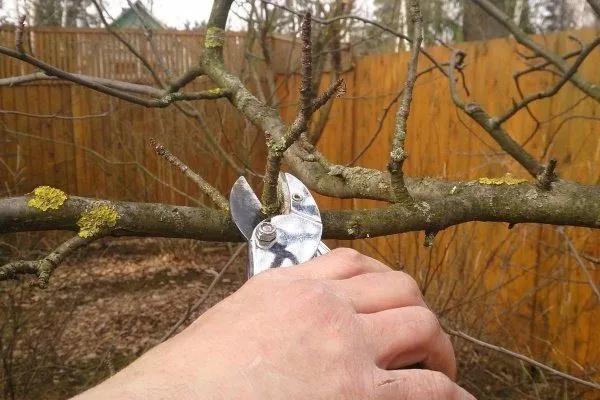
Sanitary pruning is carried out in the summer, a month after flowering. Diseased and dead branches are removed. When cutting diseased branches, be sure to include at least 10-15 cm of healthy branches, as these may contain fungal mycelium.
Because diseased branches often harbor infection, remove them from the garden immediately, without delaying until spring. During winter or early spring pruning, remove dead bark from trunks and main branches, as overwintering pests such as scale insects, mites, and aphid eggs are often found under this bark.
Perform annual pruning to reduce aphids and leafhoppers. If there are cutworm egg-laying sites or hawthorn caterpillar nests in the tree's crown, remove them safely during pruning. Pruning also removes root suckers.
In early summer, perform a "green operation" to shape the crown: pinch off excess young shoots and suckers. This thinning procedure will facilitate subsequent winter pruning, lighten the crown, improve ventilation, and reduce the risk of disease.
How to prepare a tree for winter?
In winter, the main danger to trees is damage to the bark and shoots by rodents. Therefore, once frost sets in and until a deep, permanent snow cover sets in, place poisoned bait in holes near the tree every two weeks. If common voles are the only animals in your area, use Gelcin Agro gel.
Young trees up to 8-10 years old are recommended to be tied with reeds or spruce branches in the fall. If there was a lot of snow in the winter, compact it around the tree trunk to protect the plant from pests. During the spring snowmelt, when thawed patches appear at the base of the tree, inspect the soil for rodent burrows. If such burrows are found, scatter bait again near the tree.
Diseases and pests
The Marble pear is a variety characterized by strong immunity to fungal diseases, especially scab. However, this doesn't mean the plant is immune to this disease. To keep the pear healthy, it's important to know how to combat diseases and pests. The table explains everything in detail:
| Disease/Pest | Symptoms | Control measures/Prevention |
| Scab | When infected, the bark becomes wrinkled and cracked, and dirty brown spots appear on the leaves. Leaf blades become deformed, dark spots appear on the fruit, and the pears take on an unsightly shape. | Prune trees annually to improve ventilation. Remove and mulch fallen leaves, and maintain fallow soil around the tree trunks.
For effective treatment, treat the plant with biofungicides (Agat-25 K) or preparations containing copper. |
| Brown spot | A disease in which numerous small brown spots appear on the leaves. Black growths—spores—begin to form on the leaves. | Dig the soil in the fall and promptly remove fallen leaves showing signs of disease. In early spring, treat the plant with 3% nitrafen, and in summer, with 1% Bordeaux mixture. |
| Black crayfish | The disease is accompanied by brownish-brown spots that appear on the bark of the trunk and branches near forks. Concentric circles with black bumps form in the affected areas. | Prune the affected tree and disinfect the wounds with copper sulfate. After pruning, treat the tree with fungicides. In late fall or spring, before bud break, spray the plant with a 3-4% ferrous sulfate solution. |
| Green aphid | When infested, the stalks and petioles become deformed, the leaves curl up, and young branches dry out. The insects are barely visible on the affected parts of the plant. | Eliminate weeds around the tree trunks and get rid of ants, which spread aphids. Spray the plant with a 0.2% solution of Fitoverm twice during the growing season. Also, spray once with Akarin. |
| Hawthorn | The caterpillars eat the leaves, and wintering “nests” of leaves appear on the tree – they are held together by cobwebs. | During the growing season, spray the plant with BA-3000 as pests appear at intervals of 1 week, at a rate of 20-30 g per 1 bucket of water.
Treat the tree with Bitoksi-Bacillin - 60-80 g per 1 bucket of water, throughout the growing season, except for flowering. |
| Scale insect | Brown or dark cherry-colored bumps appear on the trunk, branches, and stem, oozing a dark liquid when pressed. Shoots affected by the pest wither. | Eliminate overwintering scale insects. Whitewash the tree with lime and copper sulfate—100 g per 1 kg. Treat the tree twice with Tarstar or Clipper during the growing season. |
| Method | Efficiency | Frequency of use |
|---|---|---|
| Biopreparations | High with regular use | Every 2 weeks during the period of pest activity |
| Chemicals | Very high, but can harm beneficial insects | 1-2 times per season, according to the instructions |
Collection, storage and transportability
The fruits ripen in late August to early September and are consumed until mid-October. They typically store for no more than two months, but they withstand transportation well thanks to their thick skin. The harvest is carefully broken off from the branch, leaving the stems intact. The harvested fruits are immediately stored in the shade.
The pears are carefully inspected: only those free of mechanical damage and wormholes are suitable for storage. The fruit is placed in wicker or wooden containers, layered with hay or paper. The storage temperature is 1-3 degrees Celsius.
Considered a dessert variety, the Marble pear is eaten raw and in fruit salads. However, it can also be used to make jam, compotes, juices, pastilles, and other delicious homemade preserves.
Gardeners' reviews
Many gardeners speak positively about this variety, pointing out its numerous advantages.
The Marble pear variety is a popular choice among many gardeners. With careful care and pruning, it will delight you every year with ripe, large fruits that have excellent flavor and an attractive appearance.