
The "Krasavitsa Chernenko" variety has a second name, often referred to as "Russian Beauty." Both versions highlight the plant's main distinguishing feature—the beauty of its fruit. The pears' flavor matches their attractive appearance. Let's explore the growing requirements for this heat-loving variety and the conditions under which it can yield a decent harvest.
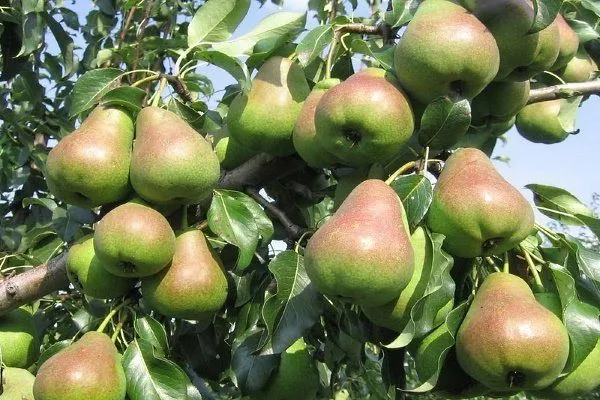
Pear variety "Beauty Chernenko"
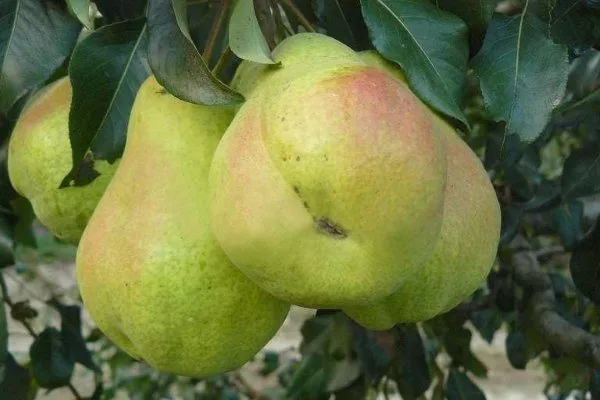
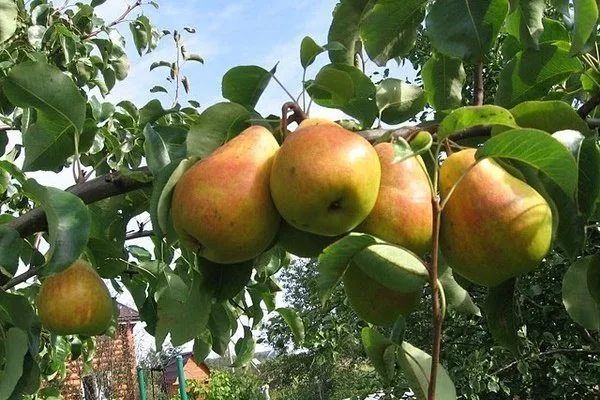
The fruits of a ripe pear are greenish, sometimes with a slight blush, large, elongated-pear-shaped, bumpy
About the selection of the variety
This self-fertile variety was developed by breeders at the Michurin All-Russian Research Institute of Hydrology and Soil Science. The name "Krasavitsa Chernenko" honors its creator. The variety has been zoned in the Central Russian region since 1996, but has also become widespread in the North Caucasus, the Lower Volga region, Ukraine, Belarus, Transnistria, and Central Asia.
We also recommend that you read the article, which will tell you about the most popular varieties of pears.
Description and main characteristics of "Chernenko's Beauty"
This variety is autumn-bearing. Key plant characteristics:
- Tree. Belongs to the vigorous category. Height – up to 5 m. Crown is pyramidal.
- Escapes. Sparse, smooth, slightly curved, with a weak geniculation. The branches have numerous small structures. The branches grow upward.
- Bark. Smooth, without roughness. Color: brown.
- Kidneys. Large, brown, conical, pressed to the shoots.
- Leaves. Broad, dark green, slightly concave. The base is wedge-shaped. The edges are finely serrated. The petioles are medium in length and thickness, without pubescence.
The variety blooms in late May to early June. Bud formation occurs at different times on different parts of the tree. The first flowers bloom on the spur shoots—the short fruiting branches—then the adventitious branches (spearheads), and the last to bloom are the annual shoots. Flowering times depend on the region's climate. Harvest occurs in early autumn or late August.
To form a correct crown, during the first five years of life, the branches are bent away from the trunk at an angle of 50 degrees.
Pear fruits and fruiting
Fruit characteristics:
- taste - sweet and sour, with a light aroma;
- form - elongated, pear-shaped, with tuberosity;
- skin – medium thickness, with a slight wax coating;
- pulp - white, slightly oily, dense and juicy;
- coloring — when ripe, the fruits are greenish, with slight redness; when ready for consumption, they become greenish-yellow with a reddish-brown blush;
- seeds - elongated, brown.
The fruits contain:
- sugars – 9.8%;
- vitamin C – 5.7 mg per 100 g;
The variety maintains active fruiting for 30 years, and the tree's lifespan is approximately 50 years. Lifespan and fruiting capacity depend on agricultural practices. The average yield per tree is 120-140 kg per year, but can reach up to 200 kg per tree.
Advantages and disadvantages
The "Beauty" variety combines excellent fruit taste with demanding growing conditions. Table 1 shows the pros and cons of the variety that gardeners should pay attention to.
Table 1
| Advantages | Flaws |
| Self-fertility | great height of the tree |
| High quality fruits | non-uniformity of fruits |
| Not affected by scab | late fruiting |
| Resistance to fungal diseases | low frost resistance |
| Large-fruited | low drought resistance |
| Strong young shoots | the crown is prone to stretching |
| High yield | tendency to overload |
| Long fruiting period | affected by powdery mildew and brown spot |
The main reason gardeners plant "Russian Beauty" is its delicious fruit and high yield. However, before choosing this variety, it's important to weigh the risks, as fruiting is highly dependent on climatic conditions. Besides its low frost resistance, gardeners are also put off by the long wait—the first fruits are only produced in the 6th to 8th year of growth. A good harvest can take another 3 to 4 years.
You can learn about the benefits of the "Russian Beauty" pear variety in the video below:
Pollination
The variety is self-fertile, but requires pollinators to increase yield. Varieties with a mid-season flowering period are preferred. The ideal pollinator for 'Krasavitsa Chernenko' is the 'Lyubimitsa Yakovleva' variety.
Landing site
Poor frost resistance prevents this "beauty" from growing in harsh climates. The variety does not thrive in most regions of the country. Its range is limited to the northern Moscow region. In the southern regions, the pear also fares poorly; droughts degrade the fruit's flavor, making its skin tough and bitter.
"Beauty Chernenko" is zoned in the following regions:
- Central;
- Central Black Earth.
- ✓ Soil pH should be between 6.0-6.5 for optimal growth.
- ✓ The depth of groundwater is at least 2.5 meters to prevent root rot.
To ensure a safe winter in central Russia, the tree is insulated.
The following areas are selected for planting:
- well-lit, sunny;
- protected from wind and drafts;
- without unevenness - so that rainwater does not stagnate;
- located on the south, southwest or southeast side;
- unshaded – the distance to the nearest planting should be at least 4-5 m;
- Preference is given to light and loose soils; clay content in the soil is welcomed - it promotes water retention.
The plants growing in a plot can help determine whether it's suitable for pears. It's not recommended to plant "Beauty Chernenko" in a plot with:
- Plantain, mint, horsetail, buttercups, heather. These indicate increased soil acidity. The best soils for pears are slightly acidic. To reduce acidity, lime is added to the soil. The amount of lime added to the soil is determined by the soil's acidity.
- Horsetail and sedge. They indicate proximity to groundwater, which is undesirable for pear trees. It's not recommended to plant trees near buildings, fences, or other structures that could cast shadows.
- Juniper. This plant is a source and carrier of many diseases that are dangerous for pears.
The time for planting seedlings depends on climatic conditions:
- in regions with a temperate climate – late April or early May;
- in the southern regions – the end of September or the beginning of October.
Only in areas with a favorable climate does the plant have time to strengthen before the cold weather and survive the winter.
Preparing for the landing of the "Russian Beauty"
What you need to do before disembarking:
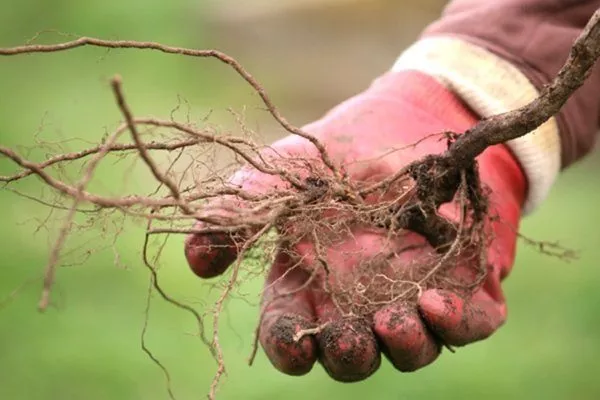
- Trim the largest roots by 10 cm.
- Trim off the top. After trimming the roots and top, the seedling resembles a regular stick. Its length is approximately 70 cm.
- The roots are placed in a bucket of warm water and left for 1 hour.
- Prepare a mixture by mixing the soil removed from the hole with ash (1:1). Add water until the mixture reaches a creamy consistency. Soak the roots in this mixture. Now the tree is ready for planting.
Planting technology
The procedure for planting a pear seedling:
- Pour a bucket of water with 2 tablespoons of dolomite flour into the hole. Then add two more buckets of water.
- A mound is made in the hole from:
- lands;
- turf;
- manure – 2-3 buckets;
- potassium sulfate – 3 tbsp;
- superphosphate – 250 g.
- A 1.5-meter-high stake is placed into the mound, 3-5 cm from the center. It should be positioned on the south side of the seedling to provide not only support but also sun protection.
- The tree is placed so that there is 3-5 cm between the neck and the ground.
- The roots of the seedling are evenly distributed over the mound and covered with soil.
- Dig a trench around the hole, up to 8 cm deep, and water it. Use 20 liters of water per seedling.
- The tree is tied to a stake using some elastic material. Do not tie the sapling with wire, as this could damage the tree.
- Finally, the soil around the tree trunk is sprinkled with mulch.
Tree care
The variety is considered undemanding in terms of care, but to achieve a decent yield – 50-60 kg of pears from one tree – a range of agricultural measures is required.
Watering and whitewashing
Pears don't tolerate excessive moisture. Excess moisture often causes root rot. However, the "Russian Beauty" doesn't like drought; it's watered several times a season, 30-40 liters at a time. The watering is divided into two portions—one in the morning and the other in the evening.
Watering procedure:
- The tree is watered for the first time in the spring, before flowering.
- The second time is after the tree has finished flowering. This watering determines how strong and healthy the buds will be.
- Over the summer, water the tree 2-4 more times as needed. The soil beneath the tree should be moist to a depth of 50-60 cm.
- The last time the pear tree is watered is in the fall.
The watering regime and water rates depend on the age of the tree:
- 1st year. Young trees require frequent watering. They are watered weekly with 10-15 liters.
- 2-5th year. Water once every 2-3 weeks with 20-25 liters.
The watered soil is later loosened and mulched to retain moisture. Sprinkler irrigation is the recommended method of watering.
Whitewashing is done twice a year – in the fall and spring. The purpose of this procedure is to protect the tree from mice, insects, frost, and thermal burns. The trunk and first-tier branches are treated with a composition that protects against rodents and insects. Ingredients:
- lime – 2 kg;
- powdered clay – 1 kg;
- copper sulfate – 300 g;
- water – 7 liters for mature trees and 12 liters for young ones.
Top dressing
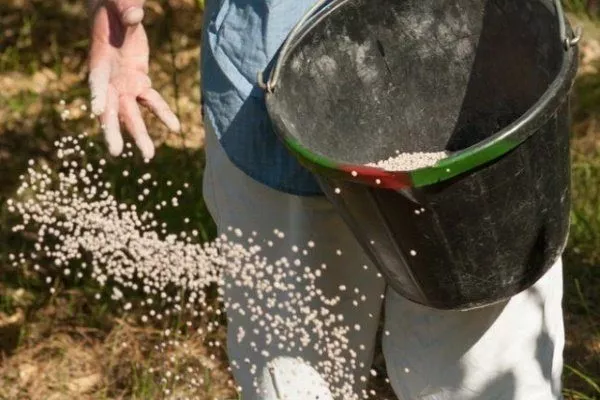
After planting, no additional fertilizer is applied to the seedling. Regular fertilization begins in the second year. Fertilize the tree twice a year: in spring and fall. Organic fertilizer is applied every three years, and mineral fertilizer is applied annually. Table 2 lists the methods and timing of fertilizing pear trees.
- In the first year after planting, no organic matter is required.
- In the second year, add rotted manure at a rate of 5 kg per square meter of the tree trunk circle.
- In the third year and thereafter, add compost or humus every fall.
Table 2
| Substance | Deadlines | How to contribute? |
| saltpeter | flowering period | Under the root. Dry matter – 30 g/m2, in the form of a solution – 1:50. |
| urea | bloom | Under the root. For 5 liters of water, take 80-120 g. |
| nitroammophoska | May | Under the root – 150 g per 30 l. Per tree – 3 buckets of solution. |
| urea | end of September | Under the root – 600 g per 10 l of water. |
| mineral fertilizers | beginning of autumn | Apply potassium chloride (1 tbsp) and granulated superphosphate (2 tbsp) per 10 liters of water to the roots. The proportions of these substances increase over time. |
Trimming
'Beauty Chernenko' belongs to the vigorous group. The tree requires regular pruning.
The first pruning is done in the tree's second year. The time for pruning is spring, before bud break. Here's how to prune:
- 1st year. All shoots are pruned, leaving only 3-4 strong shoots – these are reduced by 30%. The main shoot is cut back to 20-25 cm.
- 2nd year. The procedure is repeated, forming the second tier of the crown from two or three branches – they are pruned by 20-25%. The remaining shoots are cut out.
- 4th year. A third tier is created from 1-2 shoots. The main shoot is pruned again to prevent the tree from growing too tall. Excessive growth often interferes with proper tree development. The distance between adjacent tiers is 40-60 cm.
- 5th year. Crown thinning is carried out to prevent thickening and to lighten the crown.
- 8-10th year. Rejuvenation pruning involves trimming the ends of branches by 30% and pruning the main trunk by 40%. This reduces the tree's growth, improves wind resistance, and makes it easier to maintain.
To stop the tree's growth and thin out the crown, you can remove its entire upper part.
To prolong fruiting, tree branches are bent back starting at two years of age. Typically, the shoots and trunk form an acute angle, making it difficult for such branches to bear fruit. By bending the branches back to 60-70 degrees, the gardener facilitates the fruiting process.
To bend branches, use one of two methods:
- tie weights that pull down the branches;
- tied to a rope, which is secured to stakes driven into the ground.
In the fall, at the end of October, sanitary pruning is performed. The plant needs 2-3 weeks before frost to regain its strength. During sanitary pruning, the following branches are removed:
- dry;
- deformed;
- damaged.
All pruned branches are burned. Use disinfected pruning tools. The wounds are covered with pitch. Paint can be used instead of garden pitch.
Preparing for winter
The variety tolerates frost down to -25°C, so insulation is essential:
- Leaves, weeds, branches, and other debris are removed from under the tree.
- To destroy insects, dig up the soil near the tree.
- The soil is mulched (sawdust/peat) – 15-20 cm. With the arrival of spring, the mulch is raked away.
- The trunk and thick branches are painted with lime mortar.
- To insulate the trunk, use spruce branches or burlap. To secure the insulation, use a 1:1 mixture of clay and manure.
- Snow is shaken off the branches to prevent them from breaking. There should be a 40-50 cm thick snow cushion under the tree.
Diseases and pests
The variety is resistant to scab and fruit rot. However, pests and diseases can significantly reduce yields. Potential problems and how to combat them are listed in Table 3.
Table 3
| Diseases and pests | Diagnostics | Treatment and prevention |
| Pear sucker | A sticky grey coating appears on buds, buds and shoots | During the budding stage, the tree is treated with Fufanon. In the fall, the leaves are removed and the soil is tilled. |
| Codling moth | Pears fall off before they ripen, with larvae inside them. | Treat the tree with Iskra-M before and after flowering. Apply Iskra-D 3-4 weeks before harvest. In the fall, thoroughly dig the soil and collect fallen fruit. |
| Brown spot | Brownish spots appear on the leaves | Before flowering, treat the tree with a 3% Bordeaux mixture. To prevent this, carefully dig up the soil. |
| Powdery mildew | A whitish coating appears on young leaves, ovaries and shoots, darkening over time | The tree is treated with Baktofit four times per season, with 10-14 day intervals. Before flowering, it is sprayed with Kuprosil. After flowering, it is sprayed twice per summer, with two-week intervals. |
| Black crayfish | Cracks appear on the branches and trunk. | Damaged areas are removed with a wire brush. They are then treated with 2% copper sulfate and covered with garden pitch. |
Harvesting and storing pears
"Krasavitsa Chernenko" is a table variety, so its fruit is best eaten fresh. Although the pears ripen in September, they can be picked a little earlier, in late August, while they are still yellow and haven't developed their characteristic blush. Fruit picked slightly underripe from the tree keeps better.
Pears are harvested only in dry weather. It's important not to break the stems when harvesting, as this will ensure a long shelf life of the fruit, about two months. Pears are stored in a cellar or refrigerator. The fruit should be undamaged. The optimal storage temperature is 1-3°C.
The fruits of the "Beauty of Chernenko" are suitable for preserves, jams, compotes, pastilles, and candied fruits. Only firm, slightly unripe pears are used for processing—they retain their sweetness and firmness. This variety is not suitable for drying.
Transportability
The fruit is quite transportable, but unripe specimens fare better. The riper the pears, the softer they are, and the more difficult they are to transport—they get bruised, crushed, and spoiled.
To prevent pears from being damaged during transportation, they are sprinkled with dry sawdust or hay when placed in containers (wicker or wooden boxes).
Reviews of the variety
Another drawback is poor frost resistance. If a frost hits and you haven't bothered to insulate the tree, it could easily die. But sometimes, even insulation doesn't help; my pear died in its 11th year. I'm inclined to think that it's better to plant this variety not as a seedling, but graft it onto a more frost-resistant rootstock.
"Krasavitsa Chernenko" has earned the recognition of gardeners for its excellent fruit flavor. This variety is easy to grow, but does require specific growing conditions. Provided all the agronomic requirements are met, it bears fruit successfully not only in the southern regions but also in the temperate zone.