
Bryanskaya Krasavitsa is a pear variety that appeals to gardeners for its attractive appearance, ease of care, and high yield. The fruits are juicy and soft, with a pleasant aroma. This pear can be stored for a long time without losing its appearance.
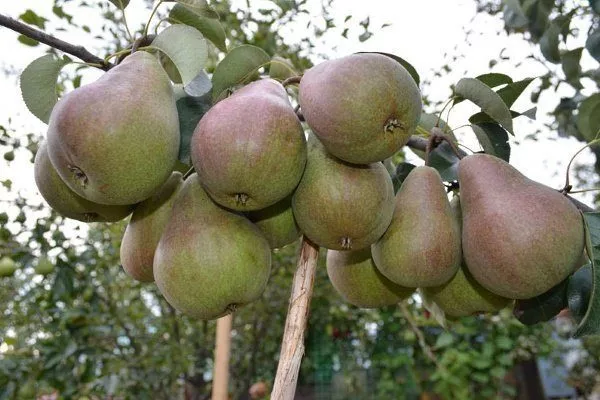
The Bryansk Beauty pear has a blush that will turn dark burgundy only when ripe.
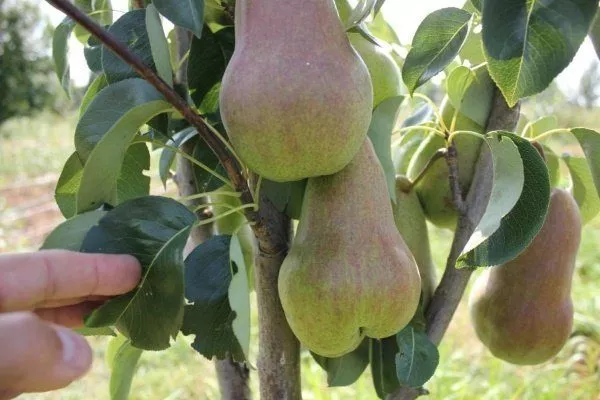
The fruits are elongated, pear-shaped, and bumpy; the color of unripe pears is dark green with a reddish blush.
History of selection
The "Bryanskaya Krasavitsa" pear variety got its name for a reason. It was developed near the city of Bryansk. Breeder N. I. Rozhnov discovered this new variety, the merits of which were appreciated by many breeders. To this day, no one knows the story behind this variety's discovery.
It is believed that varieties such as "Novogodnyaya" and "Williams Krasny" were used in the selection process. Initially, the variety was bred specifically for the Central Black Earth Region, but quickly became popular in many other regions. The pear spread throughout central Russia, including as far as the Urals.
Description of the variety
The tree grows to a medium height, with a rounded crown. The bark of the shoots is burgundy-brown. A distinctive feature of this variety is the unique shade of the terminal leaves on new growth—a bright, burgundy-red. After the terminal bud forms, the leaves on the young shoots turn dark green. The leaves are elongated, medium-sized, with short, pointed tips. The leaf blade is smooth and glossy.
The variety blooms late, with buds opening just before spring frosts. Therefore, critical temperatures early in the growing season have no effect on harvest size. Fruiting occurs in the fifth year. Gardeners harvest approximately 20 centners of fruit per hectare.
The pears are large, weighing up to 210 g on average. They have a regular, elongated pear shape. The skin is golden-yellow, with a slight blush on one side. Small gray dots are present under the skin. The flesh is creamy, medium-dense, tender, buttery, juicy, and sweet.
Pears ripen in the first half of September. At room temperature, the fruit will keep for about 14 days; in the refrigerator, for over 60 days.
Does the variety need pollinators?
The variety is self-fertile, which facilitates self-pollination. No other pollinators are needed for fruit set. This feature is an advantage if suitable pollinators are not available nearby. However, without them, the yield may be low.
Scientists say that self-fertile varieties are unstable, and their yield depends not only on climatic conditions, but also on the area in which they grow.
To ensure a stable harvest, it's advisable to have a pollinator tree growing near the Bryansk Beauty. The key is for both trees to bloom at approximately the same time. If there are already suitable plants in the adjacent plot, there's no need to plant it in your garden. Grafting onto a tree is acceptable for additional pollination. other varieties of pearsBut there shouldn't be too many of them, because they can grow too large.
Landing features
Preparatory work before planting a pear tree is crucial, requiring adherence to certain conditions and requirements. The planting itself is quick and straightforward, but proper preparation will ensure the plant's rapid growth and development.
Selecting a place and time
This pear variety prefers plenty of warmth and light. In shaded areas, shoots stretch, productivity decreases, and fruit develops exclusively at the tree's tops, as these are the only areas exposed to sunlight. The tree's growing site should receive ample sun. Experienced gardeners recommend planting this variety on gentle slopes with a low water table. It's best to avoid damp, low-lying areas where moisture stagnates for long periods.
- ✓ Soil pH should be between 6.0-6.5 for optimal nutrient absorption.
- ✓ The depth of groundwater is at least 2.5 meters to prevent rotting of the root system.
The tree will thrive and bear fruit if planted in loamy or sandy loam soils with a slight acidity. The site should be well protected from strong winds, especially in winter, when low temperatures combine with low humidity. A site where the tree will shelter a fence or outbuildings would be ideal.
Containerized seedlings can be planted throughout the season using the transshipment method. The best time to plant bare-root pears in the Central Region is early spring, before bud break. In autumn, this region experiences prolonged cold days and night frosts. For these reasons, plants planted in the fall may die. In the south, it is best to plant pears in the fall, no later than 14 days before the onset of cold weather. With good weather and adequate humidity, the plants will have time to strengthen and establish roots by the end of November.
Selection of seedlings
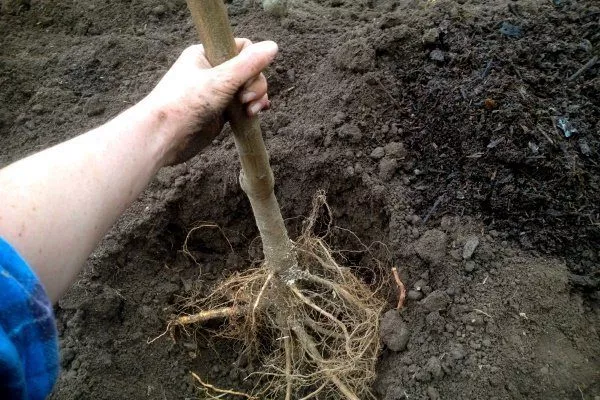
When choosing a seedling, be sure to examine them carefully. Gardeners typically buy one- or two-year-old plants with a well-developed root system and no signs of rot or damage. There should be a thickening on the trunk 10 cm from the root collar—the grafting site.
Seedlings purchased before the cold weather can no longer be planted; they should be dug in. In the garden, dig a trench with one sloping side, lay the plant in it, cover it with soil, and cover it with spruce branches to protect it from freezing in winter and damage from animals.
Staged planting
For spring planting, prepare planting holes in the fall; for fall planting, prepare them in the spring. The planting holes should be 100 x 75 cm. Dig the holes two weeks before planting. Mix the topsoil with two buckets of compost, add 100 g of superphosphate, 100 g of potassium salt, or 500 g of ash.
To help the tree take root better, dust the roots of the seedling with Kornevin or soak them in a solution containing this stimulant for several hours.
How to plant a tree correctly:
- Pour some of the prepared soil into the hole in the center to form a mound.
- Lower the plant, spreading the roots out in different directions. Transfer the seedling from its container into the hole, along with the root ball.
- Drive a stake next to the tree.
- Sprinkle the seedling with soil, shake it lightly to close all the voids, and compact the soil.
- Tie the plant to a stake so that the seedling is not torn out of the ground when the wind swings.
- Water the pear tree, adding 20 liters of water into the irrigation furrows.
- Mulch with a layer of hay or straw.
- Prune the tree to encourage lateral growth (if planted in spring).
Spraying with Epin or covering with agrofibre in the first days after planting will help protect seedlings from spring frosts.
Caring for the Bryansk Beauty
The Bryansk Beauty is a low-maintenance variety, but it's important to know how to help the tree grow properly to ensure a good harvest in the future.
- ✓ Yellowing of leaves in the upper part of the crown indicates a lack of moisture.
- ✓ The appearance of small fruits with hard skin indicates a nutrient deficiency.
Regularity of watering and loosening
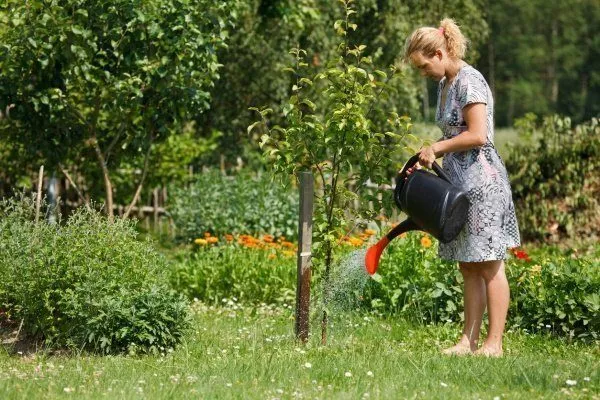
The pear tree has a strong root system, making it capable of fully providing itself with water. However, if water is insufficient, shoot and leaf growth slows in early spring, fruit set is poor in summer, and fruit flavor deteriorates. If sufficient water is not stored in the fall, cold tolerance decreases. Young trees especially need additional watering. Apply 20 liters of water per plant once a week.
Fruit-bearing trees require less frequent watering; ensure they are well-watered during flowering and after flowering. If the pear tree is not sufficiently hydrated during this period, fruit set will be poor. To saturate the soil to a depth of 80 cm, apply 60 liters of water under the plant. In the fall, if there is no precipitation before the first frost, perform a moisture-replenishing irrigation by applying 80 liters of water under the plant.
Water is applied to pear trees through irrigation furrows using sprinkling or a drip irrigation system:
- When sprinkling Pressurized water is sprayed over the crown and soil, thereby increasing air humidity. To reduce moisture evaporation, water the plant early in the morning or evening. Overhead irrigation is not recommended during flowering, as this can wash away pollen and reduce yield.
- Drip irrigation It's convenient to use in large plantings: pipes or drip tapes are laid along the rows of pear trees and water is applied under pressure, evenly distributed to the plant roots through dispensers. This method helps conserve water and prevent soil erosion.
Keep the tree's trunk area loose and free of weeds. After watering or rain, loosen the soil around the tree to a shallow depth to avoid damaging the roots located in the surface layer. Next, lay straw and compost around the trunk. A layer of mulch not only prevents moisture evaporation and weed growth, but also activates beneficial soil microflora, inhibiting the development of pathogens and protecting the root system from overheating in the summer heat and from freezing in the winter.
Top dressing
To produce a productive crop, pear trees require a large amount of nutrients. For these reasons, it's advisable to fertilize pear trees with organic and mineral fertilizers. Apply organic fertilizer to the tree in the fall every 3-4 years during tilling—25-30 kg per mature tree. Use compost, manure, humus, or litter as fertilizer.
Organic fertilizers enrich the soil and accelerate the tree's absorption of mineral nutrients. Apply organic fertilizers in liquid form or by digging, and mineral fertilizers in dry or dissolved form:
- Before flowering, fertilize the tree with 60 g of saltpeter or 120 g of urea.
- After flowering, spray the plant with a 5% urea solution. This will help the pear tree grow faster.
- In the fall, apply 120 g of superphosphate and 60 g of potassium chloride to the soil. For plants under 6 years old, apply half as much fertilizer.
Additionally, you can fertilize the tree in the fall using 700 g of wood ash, and in the spring, sow green manure plants around the outside of the tree trunk circle – they saturate the soil with nitrogen and then become a natural mulch.
Tree pruning
Bryanskaya Krasavitsa is a vigorous pear variety. The tree requires regular crown shaping and thinning. This procedure promotes proper crown formation, making maintenance easier and increasing the amount of light reaching the ripening fruit.
Carry out pruning as follows:
- Pruning is carried out in the second year of the tree's life, in the spring, before bud break. Select 3-4 of the strongest shoots, shorten them by 30%, and prune out the rest. Shorten the main shoot by 20-25 cm.
- The following year, repeat the process, forming a second crown tier consisting of 2-3 branches. Remove shoots and prune branches by 20-25%.
- In the fourth year, begin forming the third tier of branches from one or more shoots. Remove the main shoot completely, as this tree will grow tall, which may cause problems.
Thinning pruning involves removing branches that thicken the crown. It's performed in the tree's fifth year. This procedure involves removing all branches growing horizontally upward. Thin out some young branches—this is necessary to create a lighter crown. From the plant's eighth to tenth year, rejuvenation pruning is performed: remove 25-30% of the ends of the main branches and prune no more than 40% of the main stem. This will make the pear tree shorter and more wind-resistant.
The pear tree also requires sanitary pruning, which should be done at the end of October. Don't delay pruning so the tree has time to recover before the frost. Remove all dry, crooked, broken, or deformed branches, and burn them. After pruning, treat the cut surfaces with several coats of garden varnish or oil paint to prevent the spread of infection.
Preparing for winter
The Bryanskaya Krasavitsa pear variety doesn't tolerate frost well, with temperatures falling below -25 degrees Celsius. The tree requires preparation for the winter:
- Remove all leaves, branches and debris from under the tree.
- Dig up the soil around the tree trunk – this will destroy overwintering pests.
- Mulch the pear tree with a deep layer of peat or sawdust. Remove the mulch in the spring; this should be done promptly to prevent the roots from rotting.
- Treat the trunk and branches of the first tier with a solution: mix 300 g of copper sulfate, 1 kg of powdered clay, and 2 kg of lime in 7 liters of water. For trees up to 4 years old, use 10-12 liters of water to avoid burning the trunk. This treatment helps protect the pear tree from pests, rodents, and frost.
- Take burlap or spruce branches and cover the trunk.
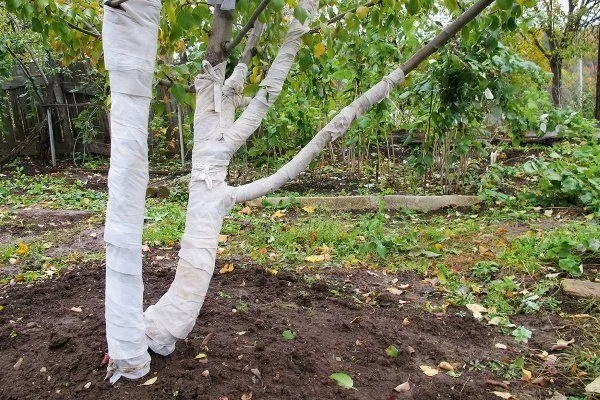
By following all these rules, you will be able to protect the pear tree from freezing and dying during the winter.
When snow falls, shake it off the branches to prevent them from breaking. Create a snow cushion under the pear tree – 40-50 cm high.
Diseases and pests
This pear variety is characterized by disease resistance, but leaving it unattended and without proper care is a mistake. The Bryansk Beauty occasionally suffers from the following diseases and pests:
| Disease/pest | Symptoms | Methods of control |
| Powdery mildew | When the disease occurs, a whitish coating forms on the shoots, leaves, or flowers of the pear tree, which eventually turns brown, and then dark spots appear. | Treat the tree with Topaz or Spor. After harvesting the fruit, treat the plant with 1% Bordeaux mixture. After the leaves fall, collect and burn them. |
| Pear moth | A butterfly that lays its eggs on the skin of a pear. Over time, larvae emerge and eat the fruit's seeds. | Spray plants with a wormwood decoction. The herb should be harvested during flowering and dried a year before use. Pour 800 g of the herb into 10 liters of water and let it steep for several hours. Bring to a boil for 30 minutes. Strain the decoction and dilute it in 10 liters of water. Apply the solution to the plants 2-3 times before flowering. |
| Leaf roller | Small caterpillars that burrow into buds as they swell. The pests chew out the buds, then move onto the foliage and feed on the sap. The leaf roller curls the leaves into tubes. | Treat all trees in the garden with Karbofos: dissolve 30 g of the product in 10 liters of water. Spray all trees during bud break.
It's also recommended to use a tincture of tobacco, tobacco dust, or shag. Add 400 g of any ingredient to 10 liters of warm water and let steep for 48 hours. Strain and dilute in another 10 liters of water. Spray the plants with this preparation throughout the season if the first treatment doesn't work. |
| Scab | A disease that appears in early spring. A greenish-brown coating forms on the leaves. This causes the foliage to dry out and fall off. The disease can then spread to the fruit, where gray-black spots appear. | Prevent the disease: In early spring and late fall, treat the tree and soil with 500 g of urea dissolved in 10 liters of water. For a mature tree, use 5 liters of solution, and 1 liter per square meter of the trunk circle.
Use Bordeaux mixture: dissolve 100 g of quicklime and 100 g of copper sulfate in 10 liters of water. Apply to the tree before bud break and after flowering. |
Advantages and disadvantages of the variety
The variety has more advantages:
- This is a self-pollinating variety;
- attracts with beautiful, large fruits;
- the fruits ripen quickly – the harvest is collected already in the third year;
- the variety is compatible with other crops (quince rootstocks);
- plants are frost-resistant;
- The trees are not prone to fungal diseases and are often resistant to pest attacks.
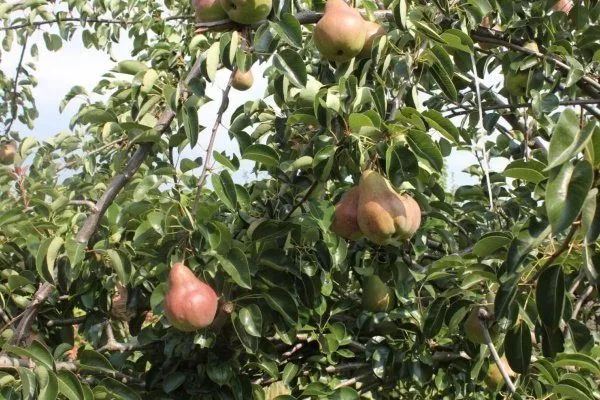
Bryanskaya Krasavitsa is a pear variety that is among the leading varieties developed for black soils. Gardeners value this pear for its excellent adaptation to the climate of other regions.
Gardeners' reviews
Many gardeners speak positively of the variety, citing its ease of care and resistance to various diseases and pest attacks.
Bryanskaya Krasavitsa is a pear variety favored by many novice and experienced gardeners. Its fruits boast excellent flavor and appearance. They remain intact during transportation and have a long shelf life. If you follow the planting and care guidelines, you'll enjoy sweet fruits year after year.