
The Hera pear is a winter-hardy variety favored by gardeners for its numerous characteristics. Its disease resistance, high yield, and easy care make it a popular choice for cultivation in our country. Proper care is essential to ensure a good yield and high-quality fruit.
History of selection
It was created by experienced breeders, including Yakovlev, Gribanovsky, Savelyev, and Akimov. The crossbreeding process involved using genetic material from two varieties: Reale Turinskaya and Doch Zari. The variety has been in testing since 2003.
Description of the Hera pear variety
Hera is low-maintenance and attracts gardeners with its medium-sized tree and large fruits. A botanical description of the plant is provided below.
The appearance of the tree
Characterized by a narrow pyramidal crown, reaching a height of up to 4 m. Detailed description of the plant's qualities:
- The fruits form on both annual shoots and perennial branches. They are straight, medium-thick, brown in color, and free of hairiness.
- The medium-sized buds are round in shape and are tightly pressed to the branches.
- The branches are covered with oval, medium-sized leaves, colored dark green.
- The foliage has a smooth and shiny surface.
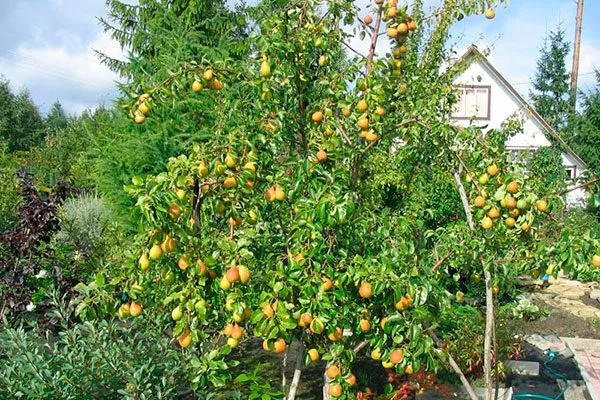
Fruits and their taste characteristics
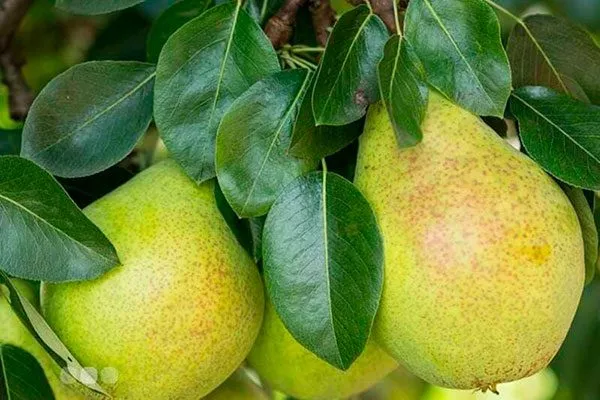
They have a regular, broad pear shape. Their stalk is medium-sized and inclined. Detailed fruit characteristics:
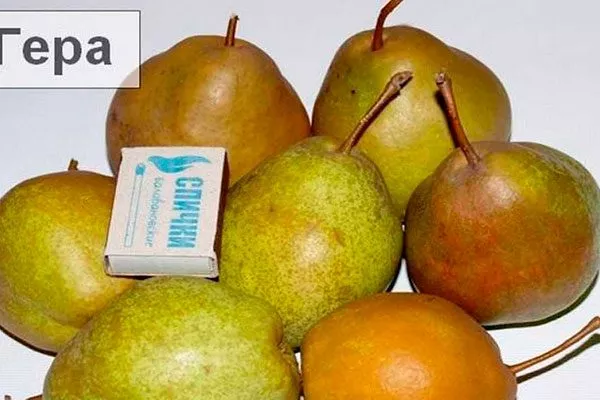
- Weight varies from 175 to 250 g.
- The fruit is green, with a reddish or pink blush depending on ripeness. A rusty mesh pattern is present on the surface.
- The skin is shiny, dry and of medium thickness.
- The pulp is cream-colored and has a fine-grained, juicy structure.
- The aroma is weak, subtle, barely perceptible.
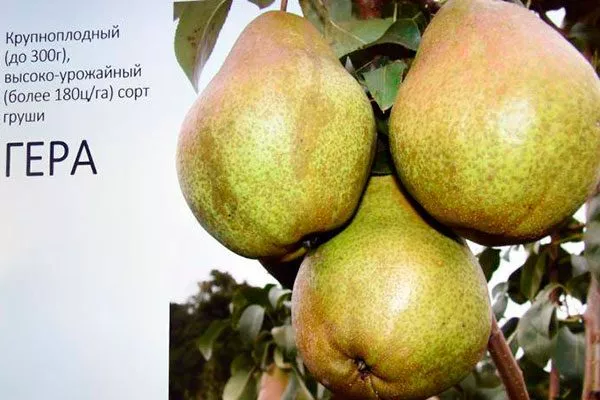
The taste is rated as sweet and sour and receives 4.3 points.
Characteristics of the variety
The Hera pear has a number of unique varietal characteristics that make it an attractive choice for cultivation. Below is a detailed description of its qualities.
Drought and frost resistance
Due to its moderate drought tolerance, this variety is rarely used in the southern regions of the country. Planting Hera in Crimea will require constant watering due to lack of moisture, which negatively impacts fruit development. In arid climates, young fruits often fall off before they have time to fully develop.
The plant has good frost resistance, as it was specifically developed for cold climates. In winter, it can withstand temperatures down to -40°C. The tips of young shoots may freeze, but this does not significantly affect yield.
Resistance to diseases and pests
It is immune to most diseases common to this crop. If not properly cared for, it can be susceptible to pest attacks and disease spread.
Self-fertility and pollinators of the Hera pear
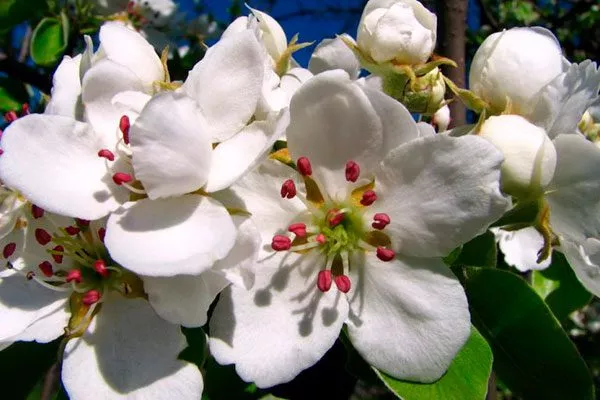
It is considered a self-pollinating variety, producing both male and female flowers. To increase yield by 30-40%, planting pollinators nearby is recommended. The following varieties are considered excellent neighbors: Osennyaya Yakovleva, Samara Winter, and Concord. They should be planted no more than 5 meters apart.
Fruiting period
The crop begins bearing fruit 4-5 years after planting. The fruit is harvested in the second half of September.
Productivity
It exceeds the yield of other hybrid varieties, as a single tree can produce up to 40 kg of fruit. With proper care, up to 50 kg of fruit can be harvested per season.
Transportability and storage
Fruit can be stored in a cellar for up to six months without spoiling. To prevent premature rotting, follow these guidelines:
- Harvest fruit before it is fully ripe.
- Fold carefully, avoiding damage to the skin.
- Use wooden boxes for storage.
- Do not tear off the stems.
- Avoid storing near vegetables, bananas and other fruits.
Scope of application
The fruits are eaten both fresh and canned. They are added to salads, and overripe specimens are used to make jam, compotes, preserves, and even wine. They are often used in baked goods and can be frozen.
Advantages and disadvantages of the Hera pear
According to the description and reviews, this variety is preferred for cultivation in central Russia. It is widely known among gardeners for a number of advantages:
The only drawback of this variety is relative: if the fruits are picked and stored incorrectly, they may darken and lose their marketable appearance.
Optimal conditions for growing
Wild pears grow in Europe and Central Asia, where they are deciduous shrubs. The fruits of these plants are typically small and of poor taste. Cultivated, the Hera pear is grown in home gardens in the Urals, Western Siberia, Ukraine, Belarus, Japan, and China.
- ✓ Soil pH should be between 6.0-7.0 for optimal growth.
- ✓ The groundwater depth must be at least 2.5 m to prevent root rot.
This is facilitated not only by high yields, but also by low maintenance requirements and high frost resistance. Optimal growing conditions include fertile, loose soil with neutral or low acidity. In acidic or overly wet soils, seedlings do not thrive and produce small yields or none at all.
Planting and caring for the Hera pear
It is advisable to plant pear seedlings in the ground in the fall, especially if the region has a moderate climate and there are no sudden changes in weather.
Landing rules:
- Choose a location with adequate light and no drafts. Before planting, dig a hole 80 cm in diameter and 1 m deep. If the soil is predominantly sandy, add peat moss in a ratio of 1:2.
- Prepare the planting site a week before transplanting the seedling by adding composted fertilizer and watering. Add 60 g of potassium sulfate. The next day, mix the composted soil and add 30 liters of water. Transplant the seedling a week after digging the hole.
- A day before planting, leave the seedling in a bucket of water to activate biological processes.
- Place the plant in the hole and fill it with soil. Then, carefully compact the soil around it to create a hole. Water the tree generously.
- To prevent damage, install a support made of a wooden stake to which you tie the trunk.
- Two weeks before planting, begin hardening the seedling, gradually increasing the time it spends outdoors.
- Three days before planting, treat the roots of the seedling with a root formation stimulator according to the manufacturer’s instructions.
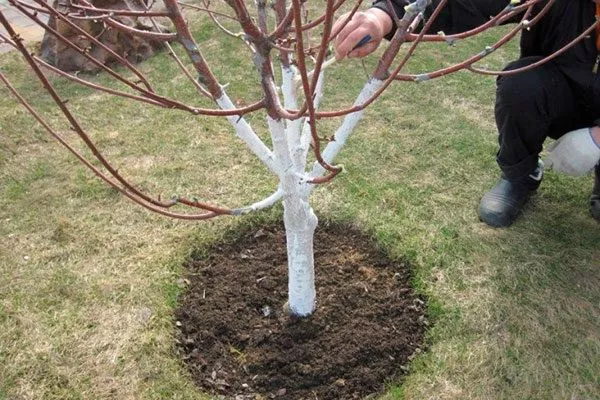
Caring for the seedling is easy and doesn't take much time. Follow these guidelines:
- Watering. The crop is drought-resistant, but for maximum yield, ensure the soil is moist during and after flowering. Calculate the watering rate: use 30-40 liters of water per 1 square meter of soil. Water using both a spray bottle and irrigation furrows.
Water in the evening to avoid splashing water on the leaves. For surface watering, loosen the soil around the trunk and create furrows 10 to 15 cm deep. To prevent the soil from drying out, mulch it with readily available materials such as chopped straw, sawdust, or leaves. - Top dressing. To maintain soil fertility, fertilize regularly throughout the year. During flowering, apply nitrogen-containing fertilizers around the edges of the tree trunks. During summer, use complex fertilizers. In the fall, after fruiting has finished, add phosphorus-potassium fertilizers to the soil.
- Trimming. Carry out this procedure at any time of year. Shape the crown in the fall, and in the spring, remove shoots frozen from winter. Avoid leaving stumps on branches. Remove branches that thicken the crown.
Preparing for winter
Mature trees don't require any winter protection, but young trees benefit from some insulation. Winter preparation consists of standard care measures:
- Removing all fruits and leaves.
- Clearing the area around the trunk of fallen leaves and digging up the soil.
- Burning of all plant waste.
- Watering the plant, especially if there has been no rain for a long time.
- Covering the ground around the tree with sawdust.
- Whitewashing tree trunks.
To protect against rodents, wrap the trunk with agrofibre.
Reproduction
There are several ways to increase the number of seedlings. Choose the most suitable option for propagation at home:
- By layering. A labor-intensive process that involves burying part of the fruiting branch into the soil to stimulate root growth. To do this, create a small mound of soil under the crown.
- Cuttings. Cut a piece of the tree shoot and place it in a special solution that promotes root growth. Then place the cutting in fertilized soil. With proper care, the plant will begin to grow vigorously.
- By vaccination. The most popular method involves grafting a branch from one plant onto the trunk of another.
Any of these methods allows you to increase the number of varietal trees at minimal cost.
Diseases and pests
Breeding is aimed at minimizing susceptibility to various diseases, allowing the pear to almost completely avoid septoria and anthosporium leaf spot. Despite this, the plant may be susceptible to some other infections and pest attacks:
- Black crayfish. Affects all parts of the plant, including leaves, branches and fruits.
- Moniliosis. Causes premature rotting of fruits.
- Cytosporosis. Causes the tree bark to dry out.
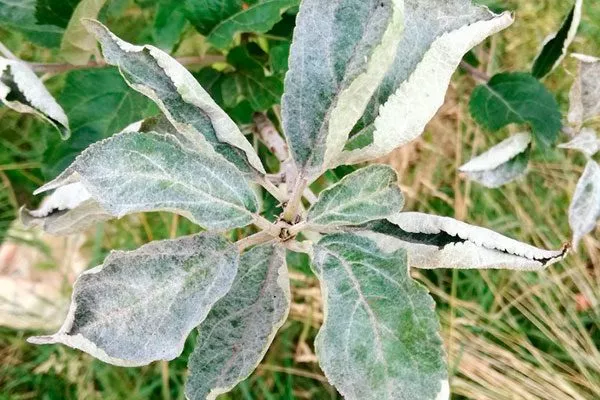
- Powdery mildew. Destroys young shoots, leaves and fruits.
- Rust. Promotes early leaf fall.
- Codling moth caterpillars. They cause damage to fruits.
- Green aphid. Affects leaves and promotes the appearance of sooty mold.
- Psyllids. Completely destroys the plant.
- Leaf rollers. They eat holes in the tree leaves.
- Ticks. They feed on the juices from the leaves and disrupt growth processes.
Harvesting and storage
Begin harvesting no earlier than mid-September, when the fruits are already saturated with juices and micronutrients sufficient for full ripening. Ideally, harvest before heavy rains begin.
To store fruits, prepare special wooden boxes:
- Place straw, paper, or sprinkle sawdust and sand on the bottom.
- Place the fruits in layers, leaving small gaps between them.
- Place the boxes in a cool room with a temperature of -2 to 0°C.
If the specified conditions are met, the shelf life of the fruit will be 4-5 months.
Gardeners' reviews of the Hera pear
The Hera pear is a good choice for home gardens due to its disease resistance, high yield, and ease of care. It is important to consider the possibility of certain diseases and pests, which require regular treatment and careful maintenance.