
The Feeria pear is a winter variety with a late ripening period. This tasty and productive pear is widely used in cooking, and even an inexperienced gardener can grow it.
Origin and zoning
The Feeriya variety was developed by a group of breeders at the Michurin All-Russian Research Institute of Genetics and Fruit Plant Breeding. Two varieties were used in the study: Daughter of Zari and Talgarskaya Krasavitsa. The variety was accepted into the State Register in 2006.
The variety is zoned for the Central Black Earth Region, but it can also be grown in harsher climates—in the Irkutsk, Perm, Novosibirsk, and Omsk regions.
Description of the plant
The Feeria pear tree is medium-sized, growing up to 2 meters in height. Its crown is neat, broadly pyramidal, and moderately dense. The shoots are arched and covered with tan bark.
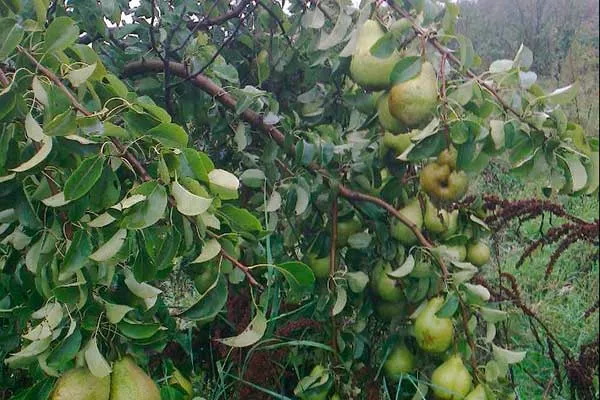
The leaves are green, smooth, ovate, leathery, and glossy. They have pointed, serrated edges. The stipules are awl-shaped, and the buds are conical, slightly deviated from the branches.
Fruit characteristics
The fruits have a classic elongated pear shape. The color is yellow-green, with a raspberry hue. Initially green, the fruits turn yellow with age and acquire a beautiful blush. During storage, the pears acquire a light burgundy hue.
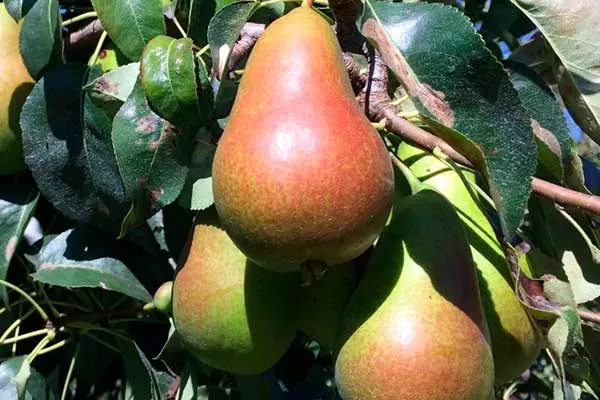
The flesh is white, juicy, and medium-dense. The skin is medium-thick and oily, with a waxy coating on the smooth surface. Subcutaneous punctures are virtually invisible.
Composition and characteristics of fruits:
- Dry matter - 13.3%.
- Sugar - 8.6%.
- Acid - 0.1%.
- Ascorbic acid - 8 mg/100 g.
- P-active substances - 112 mg/100 g
- Tasting score: 4.4.
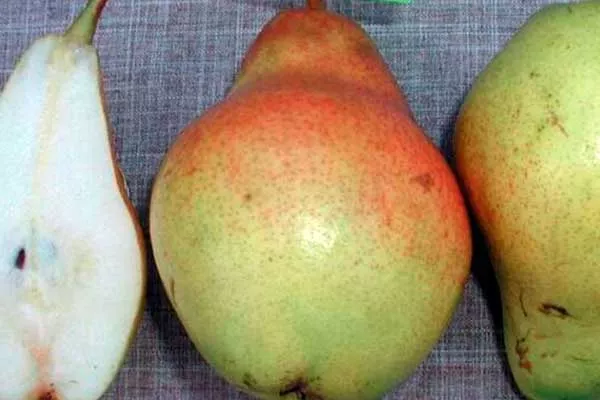
The fruits are large and uniform, weighing from 130 g to 220 g. The taste is sweet and dessert-like, with a slight tartness. The fruits have a pleasant pear aroma.
Ripening and yield
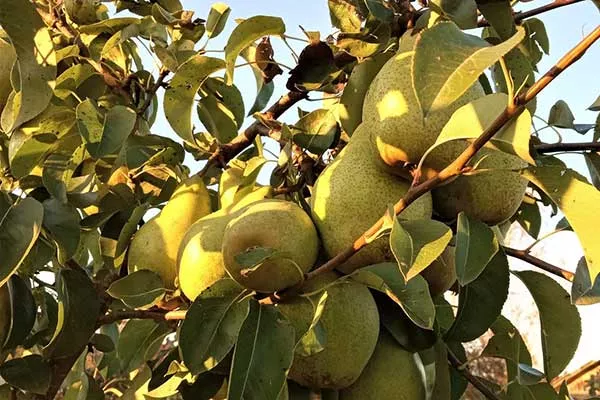
This winter variety bears fruit late—pear harvesting begins in September. The Feeria pear is highly productive, with commercial cultivation yielding an average of 145 centners per hectare. A single tree produces approximately 45-50 kg of fruit per season.
Pollination and fruiting
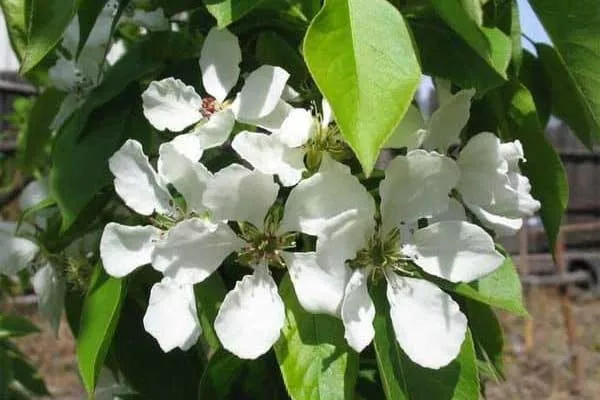
The variety is self-pollinating, but cross-pollination increases yield. Therefore, the presence of pollinator varieties that bloom at the same time as the Feeria pear is encouraged. The first harvest occurs 5-6 years after planting.
- ✓ Resistance to temperature fluctuations during the flowering period.
- ✓ Self-pollination ability, which is rare among winter pear varieties.
Advantages and disadvantages
This variety boasts numerous advantages, making it popular among gardeners and farmers. Along with its advantages, it's important to consider all the Feeria pear's drawbacks to determine whether it's suitable for your needs.
Landing features
To ensure the Feeria pear tree grows, develops, and bears fruit successfully, it's important to plant it correctly. The tree requires specific growing conditions, without which it will not only fail to achieve high yields but can also risk losing the tree.
- ✓ Soil pH should be between 6.0-6.5 for optimal nutrient absorption.
- ✓ The depth of the fertile layer is at least 60 cm to provide the root system with the necessary elements.
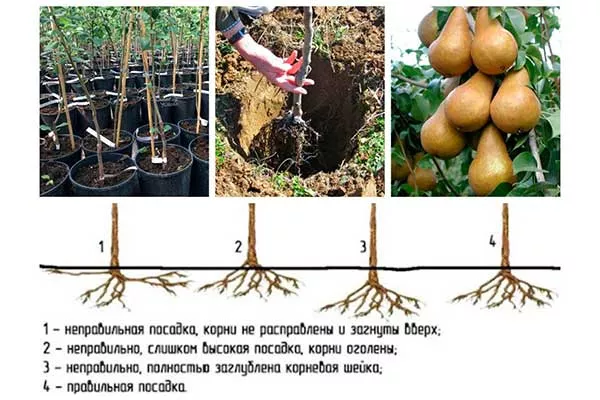
Landing features:
- Requirements for the site. Pear trees are planted in sunny locations. Sod-podzolic and chernozem soils are ideal. Lowlands and marshy areas where water accumulates are contraindicated. The maximum groundwater level is 2.5 meters above the ground surface. The Feeria pear tree does not tolerate drafts.
- Planting dates. The Feeria pear, like all other fruit trees, is recommended to be planted in spring in regions with harsh winters. Fall planting is recommended only in the south of the country.
- Preparing the landing site. The holes are dug at least a couple of weeks before planting, and if the seedlings are planted in the spring, then all preparatory work is carried out in the fall - digging and fertilizing the soil, digging holes and filling them with nutritious soil mixture.
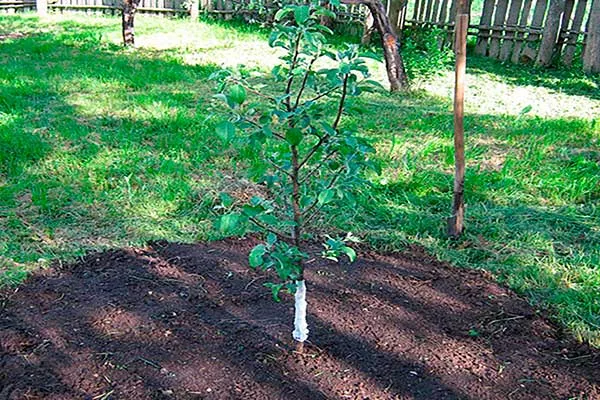
The recommended hole dimensions are 80 x 80 x 80 cm. A drainage layer of gravel, crushed rock, or broken brick is placed at the bottom. A support is driven into the center of the hole. It is recommended to place a mixture of manure and dry grass on top of the drainage layer, followed by a soil mixture of fertile soil, humus, and mineral fertilizers. - Planting a seedling. The tree is placed on top of a mound of potting soil, the roots are covered with soil, compacted, watered, and mulched with peat. Mulching slows moisture evaporation and weed growth, prevents soil cracking, and reduces the need for watering and tilling.
Subtleties of care
To reap a bountiful harvest every year, planting a pear tree successfully isn't enough; it also requires proper care. This variety requires standard care, including watering, fertilizing, pruning, and preventative spraying.
How to care for a pear:
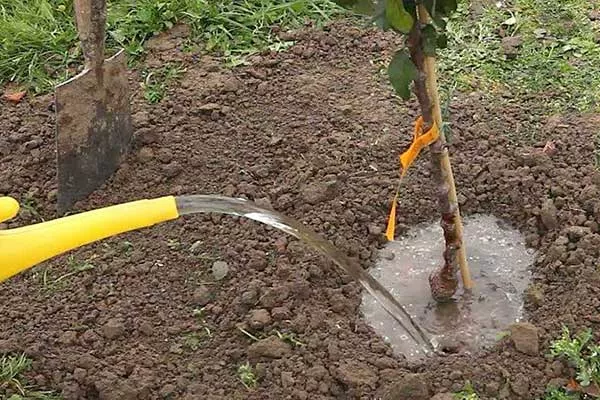
- Water. Young trees require regular watering, while mature trees are watered several times a season—before flowering, during fruit ripening, and after harvest. Water only when there is no precipitation. On average, trees are watered 4-5 times a summer, with more frequent watering during droughts.
- Fertilize. It is recommended to combine watering with fertilizing. Fertilizer is applied 3-4 times during the season. In spring, trees require nitrogen, and during fruit formation, phosphorus and potassium. After harvesting, add organic matter such as diluted cow manure or chicken manure.
- Loosen. After each watering, irrigation, or rain, it's recommended to loosen the soil around the tree trunks to prevent the formation of a hard crust that would impede air flow to the roots. The loosened soil is then mulched with straw, freshly cut grass, peat, etc.
- Whiten. In early spring and fall, trunks and skeletal branches are whitewashed with a lime solution. In addition to copper sulfate, birch tar and wood glue are added. The addition of pepper and tar helps repel rodents and aphids. A ready-made solution containing insecticides is also available.
- Cover for the winter. This variety is frost-resistant, but it still requires some preparation for winter. First, clean the tree's trunk area, apply fertilizer, water it to replenish moisture, and perform other preparatory measures.
The trunk is wrapped in non-woven fabric or burlap and secured with twine or netting. A thick layer of humus is added to the root zone. Windbreaks are installed on the north side.
Need for pruning
Pruning is essential not only for the tree's health but also for its consistent fruiting. If branches are not pruned according to established guidelines and rules, the fruit will become smaller and the crown will become denser. To form a proper crown, the tree's central conductor is shortened to 0.5 m above the ground in the first year of planting. All lateral branches are pruned directly above the buds.
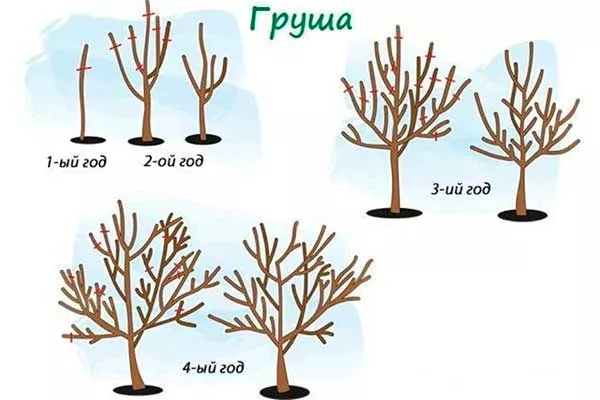
In the second year of planting, the central conductor is shortened again by 20 cm, and the lateral branches by 5-6 cm. This creates tiers in the crown, with the lower branches being shorter than the upper ones. Subsequent pruning follows the pattern described above, simultaneously removing branches growing inward to prevent overcrowding and shading.
Pest and disease control
The variety has a fairly high immunity, but under a combination of unfavorable factors it can be affected by various fungal diseases.
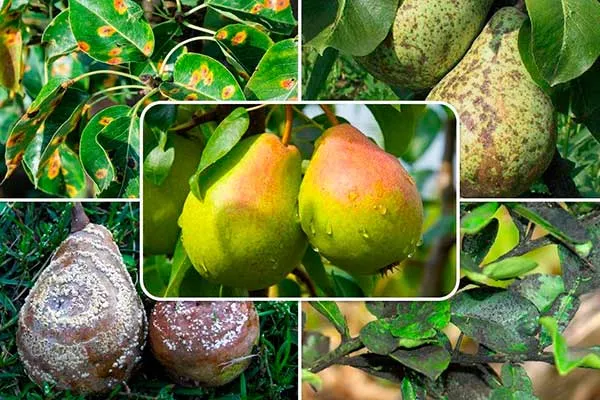
The Feeria pear is particularly resistant to common diseases such as powdery mildew, scab, and fruit rot. Unlike most varieties, Feeria is virtually unaffected by spider mites, leafhoppers, pear moths, leaf rollers, and aphids.
However, trees are sprayed prophylactically to completely prevent damage to the fruit and tree. Fungicide treatments of the crown and soil are carried out in the spring and fall. Insecticide treatments are carried out according to the standard schedule.
Collection and storage
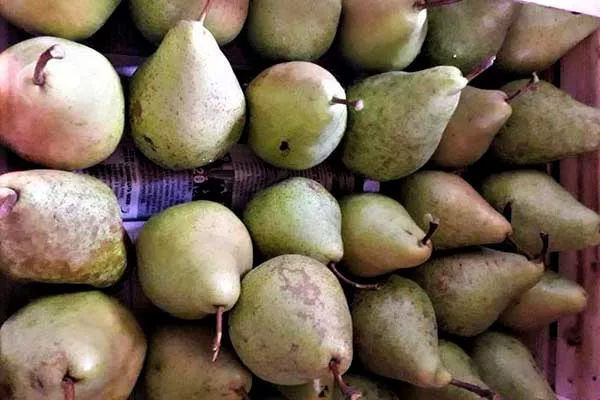
The fruits are harvested when they reach technical ripeness. They are placed in wooden crates and stored in a cool, dark place. The fruit's shelf life is 4.5-6 months. During storage, the pears retain their juiciness and flavor, and they also retain their excellent marketable appearance.
Application
This variety is used not only by amateur growers but also commercially. This pear is often grown on an industrial scale. Today, the Feeria pear—beautiful, shelf-stable, and transportable—is sold in almost every hypermarket in the country.
Feeria fruits are versatile and can be eaten fresh or processed. Winter pears are used to make preserves and jellies, compotes and juices, dried fruits, and even make delicious wine.
Reviews of the variety
The Feeria pear is an excellent choice for gardeners growing fruit trees in challenging climates. This variety combines frost resistance and hardiness with excellent flavor and marketability, making it suitable for commercial cultivation.