
The Duchesse pear is a versatile variety popular with many gardeners. It produces juicy fruits with a pleasant aftertaste. It is used medicinally for cold remedies, fresh consumption, and desserts.
General characteristics of the cultivar type
Duchesse pear belongs to the dessert pear group, with its tender, melting, juicy, and sweet flesh. This variety has won the hearts of gardeners and is often grown in home gardens.
The appearance of the tree
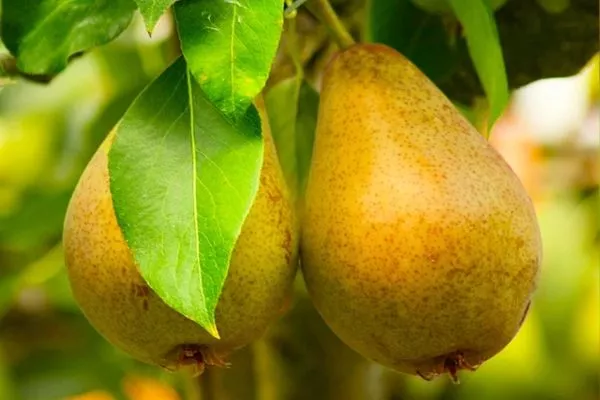
The trees grow to a medium height and can reach up to 4-5 meters in height. The crown is rounded and pyramidal in shape, with the bark and skeletal branches tinted gray, and the upright shoots of the current year having a yellowish tint.
The trees are densely covered with large, elliptical leaves with elongated, pointed tips and textured veins. The foliage has a glossy surface and is emerald in color. Duchesse lily blooms in May, before the leaves emerge. Flowers are typically gathered in clusters of 5-7 flowers each.
Fruit characteristics
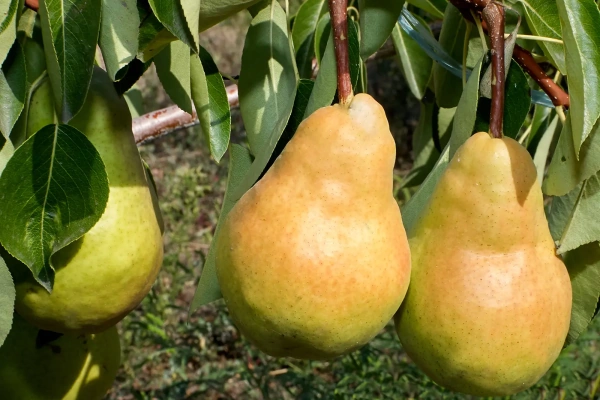
Duchesse pears are large. The weight of a single pear can range from 180 g to 1 kg. When ripe, the skin takes on a beautiful yellow hue. Some varieties have a slight tan.
Regionalism
The pear is ideal for growing in the Moscow region. It has also proven successful in the Caucasus, Central Asian regions, and European Russia.
Pollination and reproduction
This variety is not self-fertile. It requires pollinators to produce fruit. Plant varieties with similar flowering times near Duchesse. The most suitable varieties are:
- Williams Bon-Chretien;
- Forest beauty;
- Clapp's Favorite;
- Bere Bosk.
The Duchess pear is propagated in several ways:
- ready-made seedlings;
- layering (the shoot is buried in the middle part);
- rooting of cuttings cut during summer or autumn.
Place cuttings taken from trees in a nutrient-rich substrate on the site, water and fertilize.
- ✓ The substrate temperature should not be lower than +12°C to activate root formation.
- ✓ The air humidity around the cuttings must be maintained at 85-90%.
Frost resistance
The Duchesse pear tree is characterized by low cold tolerance. It is recommended to grow this variety in southern and central Russia.
Resistance to diseases and pests
The tall tree is famous for its good resistance to various diseasesIt is also extremely rarely attacked by pests – they practically do not touch the pulp of the fruit.
Life expectancy
The Duchesse pear tree has a lifespan of 80 years. The fruiting season returns every two years.
Duchess varieties
The Duchesse pear cultivar includes several subspecies. Despite their relationship, each variety has some distinctive features.
| Name | Ripening period | Disease resistance | Frost resistance |
|---|---|---|---|
| Duchesse d'Angoulême | The last month of summer | Average | Low |
| Winter Dean (Winter Duchess) | Mid-October | High | High |
| Summer Duchess | Mid-August | High | Average |
| Duchess Moscow Garden | Not specified | High | Average |
Duchesse d'Angoulême
This pear is frost-tolerant and popular in Crimea and the Caucasus. It's a medium-yielding variety, producing decent yields of 70-150 kg per tree.
The pears begin bearing fruit early. They are predominantly blunt-conical in shape and can weigh up to 1 kg. On average, they ripen in the last month of summer.
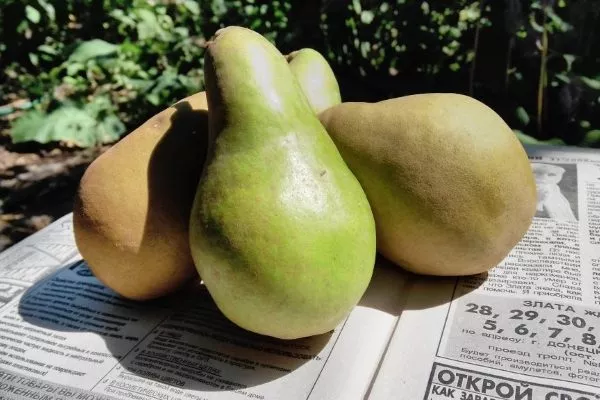
The fruits can remain on the trees for a long time—until late autumn. Gardeners prize the Duchesse d'Angoulême for its beauty, delicate flavor, and pleasant pear aroma.
Winter Dean (Winter Duchess)
This variety originates from Belgium. Its fruit quality is similar to that of the summer variety, but ripening occurs somewhat later. It has a high frost resistance. The plant requires little care, but be sure to plant it in fertile, light soil for best establishment.
The fruits are prone to losing their characteristic flavor and becoming susceptible to scab during rainy and cold weather. A single pear can weigh up to 500 g. The skin is yellow with a blush. The flesh is juicy, slightly tart, and has a honey-like flavor. The aroma is characteristic of pear.
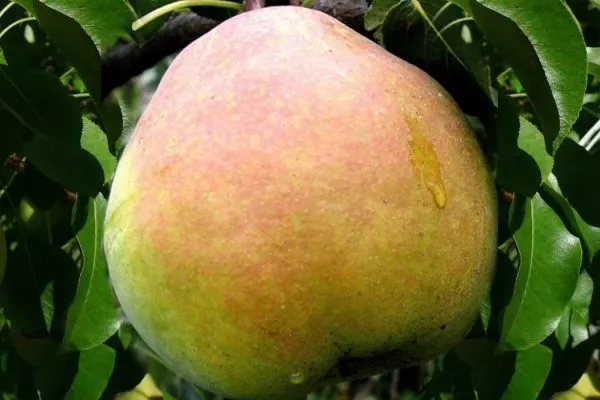
The first fruiting occurs seven years after planting. The harvest is in mid-October. One mature plant produces an average of about 100 kg of ripe fruit, which can be stored until spring.
Summer Duchess
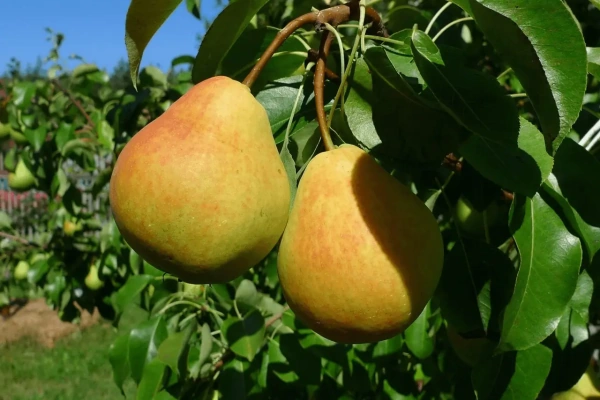
This subspecies is undemanding regarding soil, but is characterized by late flowering. The inflorescences are medium-sized and resistant to sudden temperature fluctuations. The fruits have an elongated, classic shape, averaging 200 g in weight. The fruits are juicy and have a muscat flavor.
Duchess Moscow Garden
This variety can reach a height of approximately 30 meters. The tree is covered with oval-rounded, slightly leathery leaves. During flowering, the plant produces large white flowers with delicate pink petals.
Pears grow large, weighing between 800g and 1kg. A single plant yields 100-250kg. The Duchess Moskovsky Sadovy variety is easily propagated by seed. Growing and caring for it are easy. The fruit is used for making preserves, marmalade, and other delicacies.
A brief history of selection
Pear varieties of the Duchess type grow throughout almost all of Russia. They are among the most beloved by amateur gardeners. They are characterized by rapid ripening and high yields.
The variety literally translates as "Duchess." Duchess was developed by the renowned English breeder A. Wheeler. In 1816, Englishman Richard Williams first presented the pear variety to the London Fruit and Horticultural Society, although the first mention of the variety dates back to 1796.
Pros and cons of the Duchess variety
Before planting the Duchess pear, familiarize yourself with its advantages and disadvantages. After weighing the pros and cons, you'll decide whether it's worth growing in your garden.
Landing features
Although the Duchess cultivar is considered easy to grow, follow a few guidelines when planting and provide ongoing care. If you plant the tree correctly, you'll end up with plenty of large, tasty fruit.
Deadlines
It's preferable to plant pear trees in the spring so the seedlings have time to overwinter and take root. Ideally, planting should take place in mid-April, before the tree's buds open.
Landing location and conditions
Choose your Duchesse pear site carefully, as it will grow in the same spot for many decades. This fruit tree thrives in light and warmth, so choose a well-lit area protected from cold winds and strong drafts.
Planting pear trees in shaded areas can result in poor development, fewer flowers and fewer ovaries, which can lead to reduced yields.
The best planting location is a plot with black soil or loamy soil. The variety does not tolerate sandy soil, marshy areas, or salt marshes. Avoid planting in low-lying areas or where the groundwater level is more than 2.5 meters below the ground surface.
How to choose a seedling?
The choice of seedling directly affects the tree's future development and fruiting. Avoid purchasing planting material from untrusted sellers, as you may end up with a seedling of an unknown variety. Choose specialized nurseries instead.
For planting, choose a two-year-old tree. It will establish itself better and more quickly in a new location. Pay attention to the root system and shoots. The roots should have several flexible and elastic branches. There should be no damage or growths on the roots.
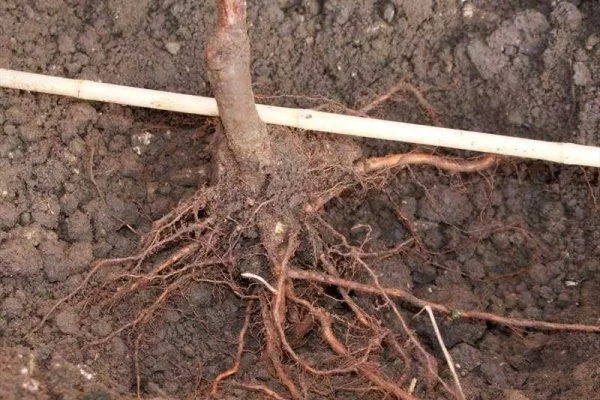
The seedling should have one central stem and at least four lateral branches. Inspect these branches carefully to avoid selecting a plant with dry or damaged areas. If the planting material has foliage, it should also look healthy.
- Soak the roots of the seedling in water for 4-6 hours to restore turgor.
- Treat the roots with a root formation stimulator according to the instructions.
- Remove damaged and dry roots down to healthy tissue.
Preparing a tree for planting
To prepare the seedling for planting, soak it in water for a few hours, then dip it in a slurry (a clay solution with a small amount of mullein). You can also use growth stimulants, such as Kornevin.
Planting technology
Plant the tree correctly to ensure it takes root and survives. Follow these steps:
- When planting in spring, prepare the soil for the pear tree in the fall. This will help the soil settle faster.
- Dig a planting hole measuring 100x70 cm. The root system should fit freely into the hole.
- Prepare a nutrient substrate: mix the topsoil from the hole with the same amount of peat moss and 30 kg of compost. Avoid using fresh cow manure, as it can burn the root system.
- Place a wooden stake on the side of the hole so that its height is greater than the seedling itself.
- Place the seedling in the hole, then fill it with the prepared substrate and compact it carefully.
Tie the seedling to a stake and water the tree generously. You'll need about 10 liters of water.
Caring for Duchess
After planting, you won't have any difficulties caring for your fruit tree. The main thing is to maintain a regular watering schedule and fertilize it promptly to ensure proper plant development and consistent fruit production.
Watering
It's important to be sensitive to the weather when watering. If there's a severe drought and no rain, water the pear tree generously. One mature tree requires about 30-40 liters of water. The older the tree gets, the more moisture it needs. Increase the watering by 30 liters annually.
Be sure to water the plant in early May before the flowers bloom, when the fruits begin to ripen, and after harvesting.
Top dressing
There's no need for additional feeding for the first few years, as the seedling is sufficiently supplied with the fertilizer added to the planting hole. Beginning in its third year, begin adding additional fertilizer.
Every year in the fall, scatter 30 g of ammonium nitrate, potassium chloride, and superphosphate over the tree trunk area and rake it in to a depth of 15 cm per square meter. Also, apply organic fertilizer every three years—manure or compost at a rate of 10 kg per square meter.
Mulching
Mulching is an important maintenance procedure that helps protect tree roots from frost in winter and heat in summer, retain moisture in the soil, and maintain soil looseness during watering and precipitation.
Mulching also provides oxygen to the roots and provides additional nutrients as the mulch gradually decomposes. Use freshly mown grass, straw, or sawdust for this procedure.
Trimming
Like other pear trees, Duchesse should be pruned in early spring before the buds swell. Immediately after planting, perform formative pruning:
- Shorten the main shoot and side shoots by a quarter. Make the cuts above the buds, but leave at least 4-5 healthy shoots on each branch.
- Next year, cut the side shoots back by 8 cm and shorten the central conductor by 2.5 cm. The lower branches should be longer than the upper ones.
This procedure allows you to form a pyramidal crown. Continue pruning using the same principle.
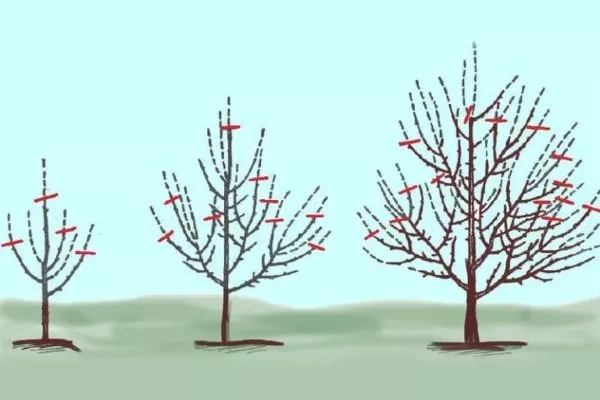
No less important is the procedure of rejuvenation of a fruit tree. Trimming This is necessary for the plant's recovery, further development, and fruiting. Perform this procedure in early spring before the sap begins to flow.
Proceed as follows:
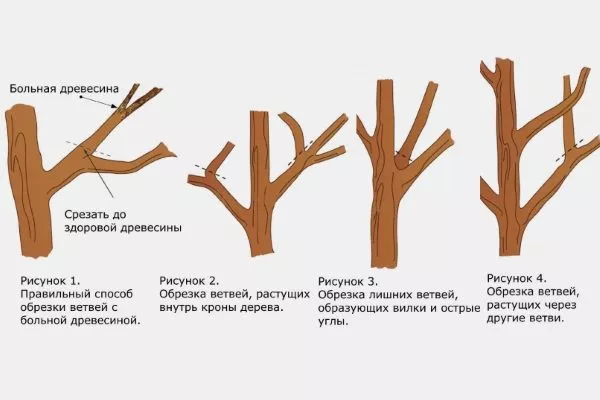
- Remove some of the shoots that are thickening the crown.
- Get rid of all broken, frozen, diseased and dried shoots.
- Remove branches growing at a sharp angle or parallel to the central trunk. Also, trim back any shoots that are growing too close to fruiting branches and are interfering with their fruiting.
- If the remaining branches have grown too long, it will make it more difficult to care for the pear tree and harvest ripe fruit. Therefore, trim them back by 1/4.
Preparing for winter
Since the Duchess pear has average winter hardiness, apply a 15 cm thick mulch around the tree's trunk before frost sets in. This will protect the plant's root system from freezing. In winter, rake any fallen snow into the root zone.
Diseases and pests
In certain climatic conditions, the Duchess pear May be affected by pathogens and harmful insects. Learn about the diseases that are dangerous for fruit trees:
- Scab. The disease manifests as dark spots on the undersides of leaves. The fungus then attacks the fruit. To combat the disease, remove leaves in the fall and treat the crown with Tridex fungicide.
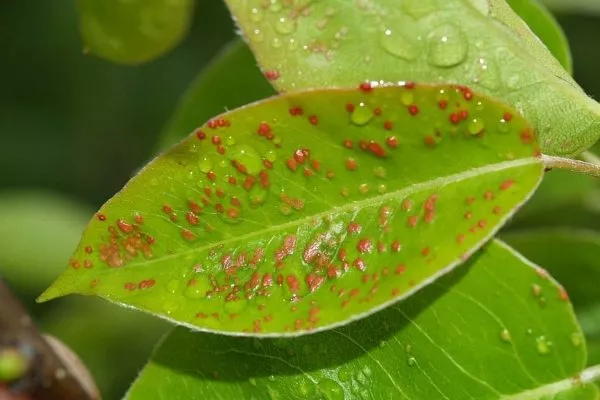
- Rust. Brown spots appear on the surface of the leaves. This is a fungal disease that can be treated by removing fallen leaves and spraying the foliage with Cuproxat.
- Moniliosis. A dangerous disease that affects young shoots and fruits. It's difficult to control. Take preventative measures: burn fallen leaves and spray with Mycosan and Horus.
- Bacterial burn. Harmful microorganisms enter the plant through flowers. The infection spreads quickly. If you see curled and darkened leaves or ovaries on the tree, carefully cut them off and burn them. Treat the cut area with a 1% copper sulfate solution.
Then, use an antibiotic at a concentration of 50 mcg/ml. Recommended medications include: Chloramphenicol, Rifampicin, and Streptomycin.
| Fungicide | Concentration | Protection period | Features of application |
|---|---|---|---|
| Tridex | 0.2% | 14 days | Do not use during flowering period. |
| Cuproxate | 0.25% | 10 days | Effective at temperatures above +15°C |
| Bordeaux mixture | 1% | 7 days | Requires reapplication after rain |
To combat scab and moniliosis, it is recommended to treat the plant with Bordeaux mixture 3 times during the growing season:
- Before bud break, use a 3% solution of the chemical for spraying.
- Before the buds open, carry out a second treatment.
- After the ovaries appear, spray the plant with a solution of the preparation at a concentration of 1:100.
Instead of Bordeaux mixture, it is permissible to use fungicides, which should be applied in accordance with the instructions.
The Duchess pear can also be attacked by pests:
- Leaf roller. The insect can cause significant damage to leaves in a short period of time. Severe damage causes them to curl and dry out completely.
To combat the pest, spray the plant with Metaphos or BI-58 N insecticides. - Weevils. These insects spread rapidly throughout the tree and can significantly reduce crop yields. They live in the tree's crown.
Use insecticides Karbofos, Metaphos, BI-58 N to control pests. - Gall mites. The insects are found on the underside of the leaf, and severe leaf curvature is visible where they are located. The pests are capable of feeding on cell sap. How to control pear mites The insecticide Sanmite will help.
Why doesn't the pear tree bloom?
It happens that a plant stops blooming. The main reason for this lack of flowers is that the tree has not yet begun to bear fruit. However, there are many other possible causes:
- flower buds froze due to recurrent spring frosts;
- excess moisture in the soil;
- dense crown;
- the appearance of root rot;
- excess of nitrogen in the soil (active development of vegetative mass occurs to the detriment of fruiting);
- iron deficiency;
- too alkaline soil;
- the presence of diseases or pest attacks.
To get the plant to bloom again, eliminate all of the above reasons.
Harvesting and storage
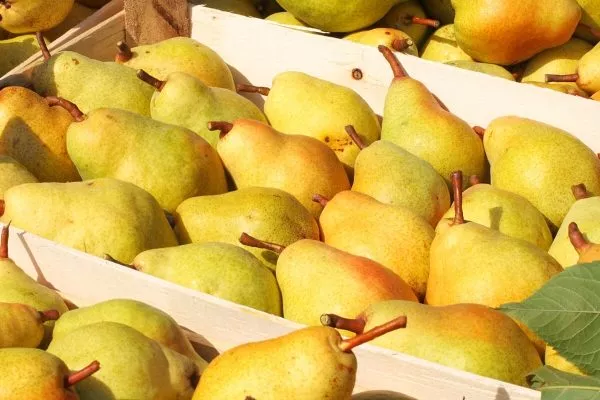
The harvest of Duchesse pear varieties begins in August and continues until mid-October. Summer pear varieties ripen earlier, while winter varieties ripen later. To harvest the fruit, use a ladder and a basket lined with a cloth.
Pick ripe pears carefully to avoid damaging the branches. Once the basket is full, transfer the contents to crates. Early ripening pears have a shelf life of 14 days. Late ripening pears can be stored for up to 120 days.
Keep pears in a cellar to preserve their nutritional value and flavor. Late-ripening varieties can be transported long distances. Ripe fruits are suitable for general processing. They can be used to prepare:
- compotes;
- juices;
- jams, preserves;
- smoothie;
- fruit salads;
- baby purees;
- canned goods.
Reviews of the Duchess variety
I consider the only drawback to be the low yield – due to the impossibility of normal fruiting without pollinators, I get no more than 40 kg of fruit per tree, sometimes even less. But this is a minor issue, as it can be resolved. This year, I plan to graft another variety onto the fruit tree.
The last few years, the harvest has been small. I use the fruit to make preserves and jellies for sale. I also make juice, because homemade and natural is better than store-bought.
We really like the taste of the fruits—we use them for drying, compotes, jam, and preserves. My wife especially loves them for their juiciness, sweetness, and rich aroma.
The Duchess pear is an excellent choice for both beginner and experienced gardeners. It's suitable for all owners of country plots. This fruit tree is easy to grow and care for. It doesn't require much time for care and disease and pest prevention. The pears grow to be delicious and aromatic.