
The Detskaya pear gets its name from its small fruit size and exceptional sweetness. It's not a cultivar, but a hybrid, and therefore boasts excellent characteristics—hardiness, resistance to diseases and pests, frost, and drought. A synonym for this variety is Detskaya.
History of selection and growing regions
The exact year the hybrid was developed is unknown, but it is believed to have occurred several decades ago. Several scientists are considered the originators: Yu. A. Petrov and N. V. Efimova. The work was carried out at the Selection and Technological Institute of Horticulture and Nursery.
Recommended for planting in the south, central Russia, and central Russia. The variety is used in mass production in Tajikistan, Uzbekistan, Kyrgyzstan, Armenia, Europe, and elsewhere.
The appearance of the tree
This is a tall plant, reaching a height of 500 cm. The seasonal growth rate is 45-55 cm. Characteristic features of the tree:
- crown – initially, at a young age, highly spherical, but later becomes pyramidal;
- shoots - powerful, but not numerous;
- branches – have a slight pubescence on top;
- leaves - dark green, shiny, smooth;
- leaf blade shape – oval and shortened, with a pointed top;
- bark – first olive-yellow, then light brown.
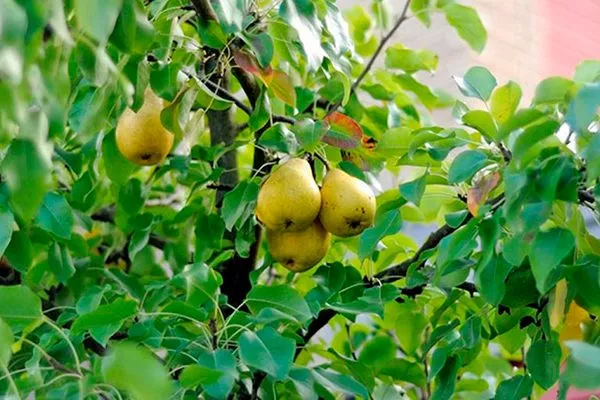
Fruits and their taste characteristics
The pears are quite sweet and juicy, with no tartness whatsoever. They ripen unevenly, so you can enjoy them for a long time. They can be stored in the refrigerator for up to 30 days.
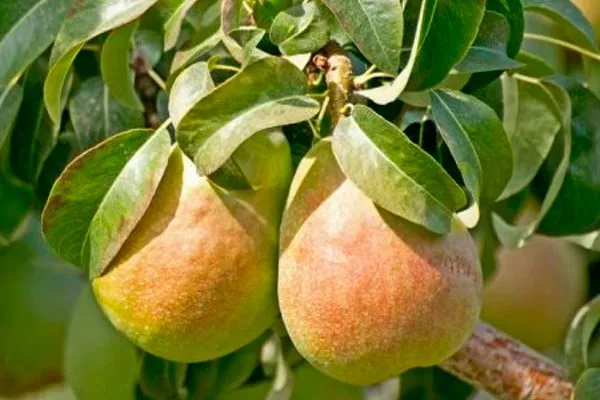
The fruits can be distinguished by the following characteristics:
- weight - 75-80 g;
- form - shortened pear-shaped, with pearls (lumpy elevations) around the calyx;
- peduncle – medium-long and medium-thick;
- seeds - brown;
- skin color – light yellow, with an orange-pinkish blush on one side;
- pulp shade – classic cream.
- ✓ Presence of pearls (lumpy elevations) around the calyx of the fruit.
- ✓ Light yellow skin with an orange-pink blush on one side.
The Detskaya variety is versatile, and even more so—these pears are the only ones that can be preserved whole for the winter due to their modest size. The pulp is used to make dvem, jam, candied fruit, dried fruit, sauces, confectionery, and frozen.
Pollinators of the Children's pear
| Name | Disease resistance | Frost resistance | Ripening period |
|---|---|---|---|
| Children's Pear | High | High | Early ripening |
| Chizhevskaya pear | Average | High | Mid-season |
| Lada pear | High | Average | Early ripening |
| Cathedral Pear | Average | Average | Mid-season |
Since the hybrid is self-pollinating, it does not require pollinators. However, to increase yield, it is recommended to plant several different trees blooming simultaneously in the same plot. The Chizhevskaya, Lada, and Kafedranaya pear varieties are often used as pollinators.
Productivity
One tree can produce 25-35 kg of fruit per season, and the average yield per hectare was 4.7-4.8 tons during the testing years. The Detskaya pear is often used in breeding to develop new early-ripening varieties, as it is considered an ultra-early variety.
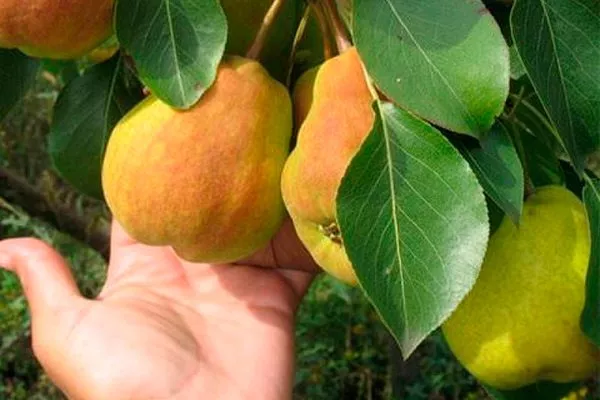
Ripening period
This is an early-ripening variety, so the first fruits can be harvested in late July. The Detskaya pear begins bearing fruit in its fourth or fifth year, producing juicy and aromatic fruit for 1.5 months.
Optimal conditions for growing
The variety is easy to grow, but for successful planting and a decent harvest, you need to follow a few rules:
- The optimal time is autumn, since during spring work the plant spends energy not on rooting, but on growing the above-ground part.
- Selecting the right location is crucial for the successful planting of a Detskaya pear seedling. This species prefers well-drained, fertile soil with a deep water table.
- If you have heavy clay soil, you should improve it by adding sand, humus, and mineral fertilizers during digging. This will not only improve the soil structure but also make it more fertile.
- Pear trees have a well-developed root system, penetrating 6-8 meters into the soil. Therefore, if groundwater is shallow, the root system is at risk of rotting.
- Garden pears are usually grafted onto quince or wild seed pear. The timing of first ripening and the tree's height depend on the graft. For example, when using quince, the first fruits appear after three years, and the crown height reaches 5 meters.
If grafted onto a pear rootstock, the first harvest can only be obtained after five years, and the tree will grow over five meters. It is important that the graft site be carefully prepared, free of cracks, spots, and growths.
Planting and caring for a children's pear
When choosing a planting site, choose fertile, well-drained soil with a pH of 6.2 to 6.7. Before final planting, carefully cultivate the soil, possibly using specialized herbicides. It is recommended to plant trees in rows spaced at least 200 cm apart.
- ✓ The soil pH level should be strictly within 6.2-6.7 for optimal nutrient absorption.
- ✓ The depth of groundwater is at least 6 meters to prevent rotting of the root system.
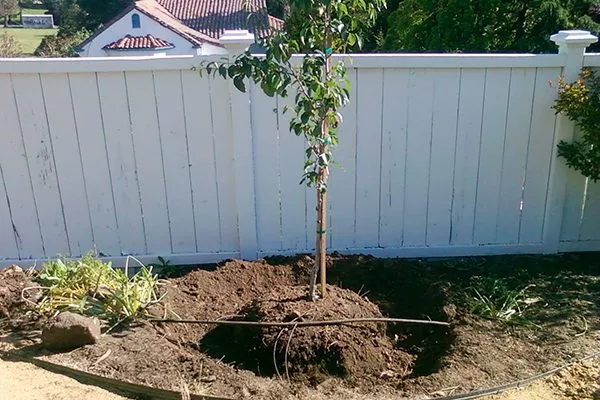
Other growing features:
- Watering should be done regularly to keep the soil moist, except during prolonged droughts or when growing in sandy soils. If possible, installing an irrigation system is the best option.
- This variety requires complex fertilizer for optimal growth and development. Proper application of fertilizers has a positive effect on the quality of the leaves and the taste of the fruit.
- First, it's necessary to correct soil acidity and ensure sufficient amounts of essential micronutrients, such as nitrogen (N), phosphorus (P), potassium (K), and magnesium (Mg). Trees of this variety require 150 kg of potassium, 120 kg of nitrogen, 30 kg of magnesium, and 20 kg of phosphorus per hectare throughout the season.
The application of these nutrients plays a key role during bud formation and fruiting. Micronutrient deficiencies can lead to various problems, including stunted and dropped flowers, leaf deformation, necrotic spots, and disruption of nitrogen fixation in plants. - Boron is an essential element for this variety. Insufficient nutrition can lead to low yields and deformed fruits.
- Foliar feeding is recommended during dry and sunny weather (at an optimal temperature of 12-26 degrees).
- Tree pruning involves several key stages. First, after planting, the trunk is shaped and five main branches are selected to form the tree's framework. In subsequent years, crown shaping and sanitary pruning are performed.
- Removal of branches that tend to form an additional trunk, lateral shoots, damaged and dried shoots is carried out in early spring.
- In the summer, shoots growing vertically and directed inward into the crown, known as “water shoots”, should be pruned.
- When pruning, it's important to avoid damaging the lower part of the crown, as this can disrupt the tree's balance and structure. It's also not recommended to remove young branches, as they may bear fruit in the future.
- The fruits are harvested a few days before they are fully ripe. They should be picked with the stems attached and stored in a cool, dark place with high humidity. The area should be ventilated periodically. The fruits should be regularly inspected for rot.
Protection from cold
The Detskaya pear has winter hardiness comparable to other varieties native to Russia, withstanding low winter temperatures and spring frosts. Mature trees tolerate heat and drought well. However, a deficiency of iron, zinc, manganese, and boron can reduce the tree's frost resistance.
To ensure that the Detskaya pear variety survives the winter cold well, several precautions must be taken:
- It is recommended to wrap the tree trunk with special insulation or straw to protect it from frost.
- It is worth making sure that the roots of the pear tree are covered with a layer of dry leaves or hay to retain heat and protect them from freezing.
- It's important to ensure proper watering of your pear tree during the winter. Avoid overwatering, as this can lead to root freezing. It's best to water your pear tree in the morning so the water has time to soak in and prevent it from freezing by evening.
It's important to pay attention to the tree's condition before winter sets in. Before frost, it's recommended to prune the tree and remove all diseased or damaged branches. This will help the pear tree survive the winter better.
Diseases and pests
This tree is highly resistant to fungal diseases, but requires treatment for other diseases. Sulfur-based fungicides are widely used for this purpose. Insecticides, widely available in stores, are effective against insects.
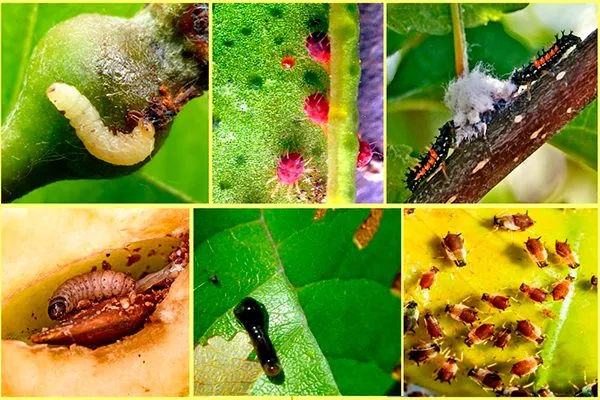
To save a tree, it is best to start with prevention:
- In the fall, all fallen leaves should be removed and burned. At this time of year, trees are sprayed with a 5% urea solution, and a 7% solution is used to treat the trunk area.
- When the buds begin to open, prepare a Bordeaux mixture solution with a concentration of 3-4%. You can also use 10 g of azophoska or 40 g of a copper oxide-based preparation, diluting 6 g per 10 liters of water.
- After flowering, another treatment must be carried out.
If conditions are favorable for the development of scab (high humidity, low temperature), the number of treatments can reach 6. It is necessary to maintain intervals of two or three weeks.
Advantages and disadvantages of the pear variety "Children's"
Among the positive qualities, gardeners particularly highlight the following:
There's one drawback: the need for crown shaping and pruning. Some gardeners dislike the pears' small size, but others consider it an advantage.
Reviews of the Children's pear variety
The Detskaya pear variety requires special attention and care during the winter to ensure it continues to delight with its delicious fruit the following season. However, the rest of the year, it is considered an easy-to-grow variety. It boasts a delicate flavor and juicy flesh, strong immunity, and high yields, making it a favorite among many gardeners.