
The Dessertnaya pear is a frost-hardy and disease-resistant variety. It is characterized by a late ripening period and excellent fruit flavor. Gardeners choose this variety for its ease of care. With proper care, the plant will reward you with a bountiful harvest.
History of selection
This hybrid variety, developed at the Crimean Horticultural Experimental Station (FSBI "NBS-NNC"), is the result of crossing the Bere Bosc and Olivier de Serre varieties. A.F. Mileshko, O.S. Kharchenko, P.E. Solyanikov, and B.O. Osmanov collaborated on its creation.
Description of the tree and fruits
The trees have a sparse, broadly pyramidal crown, reaching up to 6 m in height. Distinguishing features:
- The shoots are thick, light brown in color.
- The smooth bark of the erect branches is colored light gray.
- The shoots are covered with large, broad, bright green leaves. They are boat-shaped and have pointed tips with small serrations along the edges.
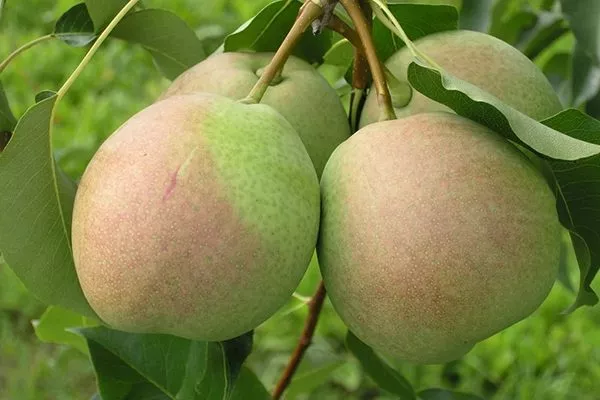
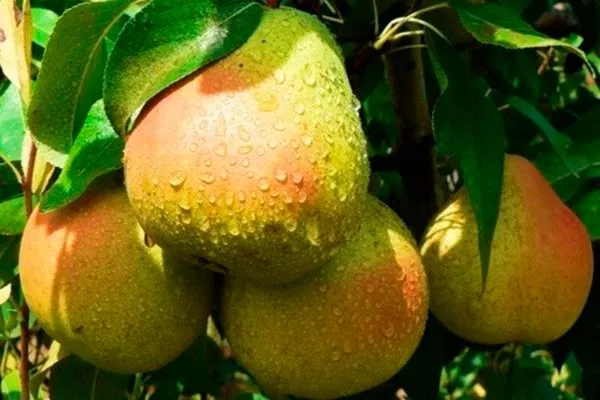
- The fruits are large, weighing on average 240-430 g. They are short-pear-shaped, uniform in size, with a slightly bumpy surface.
- At the stage of technical ripeness, the peel is colored yellowish-green, then it acquires a yellowish color and a golden blush on the side where sunlight penetrates.
- The skin is thin, strong and smooth.
- ✓ The fruits of the Dessertnaya variety have a characteristic almond flavor, which distinguishes them from other varieties.
- ✓ The bark of the branches has a light gray tint, which is a distinctive feature of the variety.
Periods of ripening, flowering and fruiting
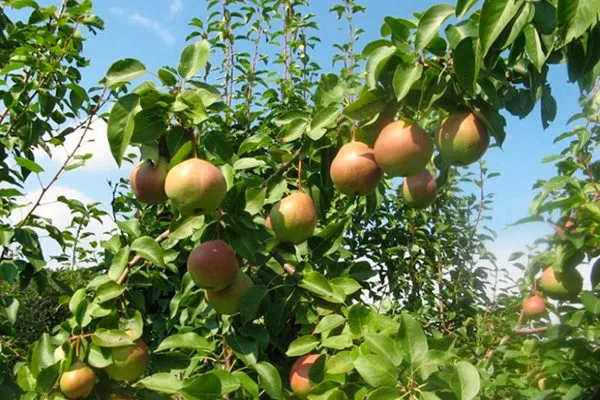
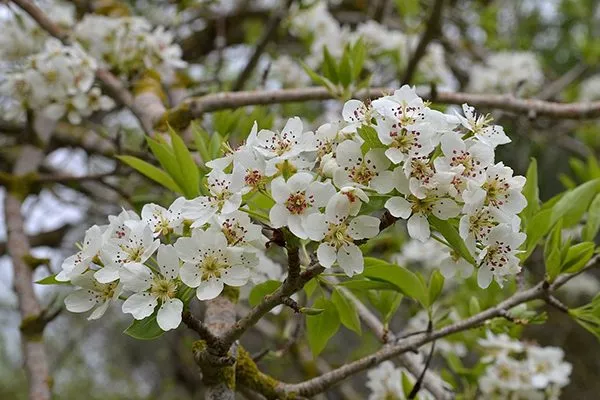
Flowering begins late and lasts about a week. This autumn variety ripens in the second ten days of September. The fruits are highly transportable. Marketability is high, reaching 95-97%. Refrigerated at 2°C, they can be stored until the end of January.
Pollination
It is partially self-fertile, so it is recommended to plant other plants that ripen at the same time nearby. The following varieties are considered the best pollinators: Maria, Vassa, Crimean Winter, Zolotistaya, Dekanka du Komis, Yakimovskaya, and Izumrudnaya.
Advantages and disadvantages of the variety
Has strengths and weaknesses.
When purchasing seedlings, it is important to consider all these aspects to avoid disappointment in the future.
Dessert Pear: Planting the Variety
The correct planting stage is critical, as it determines the young tree's adaptation rate and subsequent growth. Follow these guidelines:
- Desired dates. Planting can be done in either spring or fall, but it's important to do it during the plant's dormant period. In spring, plant the seedling before bud break, and in fall, after leaf fall.
To ensure that a young specimen does not freeze in winter before the onset of cold weather, at least 1 month must pass between planting and the onset of frost. - Choosing a suitable location. The plant thrives in warmth, so choose sunny spots at slightly elevated elevations. The groundwater level should be no higher than 2 meters above the surface.
There are no specific soil requirements, but it's preferable to choose sites with well-drained soil and slightly or neutral acidity. If the acidity is too high, add dolomite flour, lime, or chalk to correct it. - Neighborhood with other cultures. Apple trees make good neighbors because they share similar growing conditions and needs. Plant nearby crops such as tomatoes, peppers, cucumbers, raspberries, currants or gooseberries, black poplar, box elder, and grapes.
Avoid placing pear trees near plants that can negatively impact their growth, such as plums, cherries, cherry plums, sweet cherries, peaches, apricots, and walnuts. Junipers can harbor rust spores, which can infect fruit trees. - Selection and preparation of planting material. Purchase seedlings from trusted suppliers, paying attention to age (1-2 years), a strong root system, and the absence of damage on the trunk and shoots.
Before the procedure, immerse the plant in a growth stimulator solution for several hours, and then dip the roots in a clay slurry. - Site preparation. Begin preparatory work early, preferably in the fall. First, dig the area, removing weeds and debris, then add organic fertilizer. Prepare 50x50 cm holes, lay a drainage layer at the bottom, and fill with nutrient-rich soil.
- The process of planting young seedlings. Follow the classic procedure: form a small mound of soil, place the seedling on it, spreading out the root system. Fill with nutritious soil.
- ✓ The optimal planting depth for a seedling should be such that the root collar is 5-7 cm above the soil level.
- ✓ The distance between seedlings should be at least 4-5 meters to ensure sufficient space for the crown to grow.
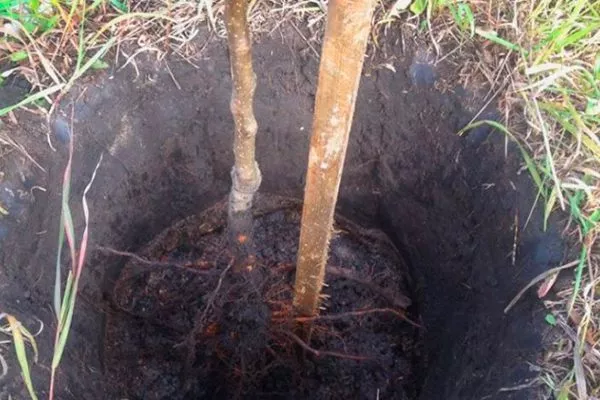
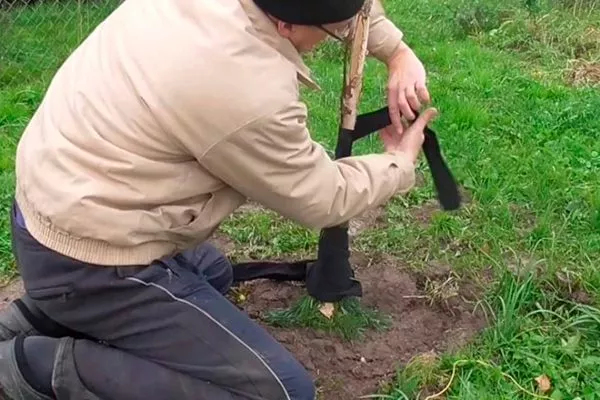
After the procedure, water each plant thoroughly and tie it to a support. Mulch the soil around the tree to retain moisture.
Caring for a pear tree
Crop care involves a number of agricultural procedures that require regular attention. Provide basic care:
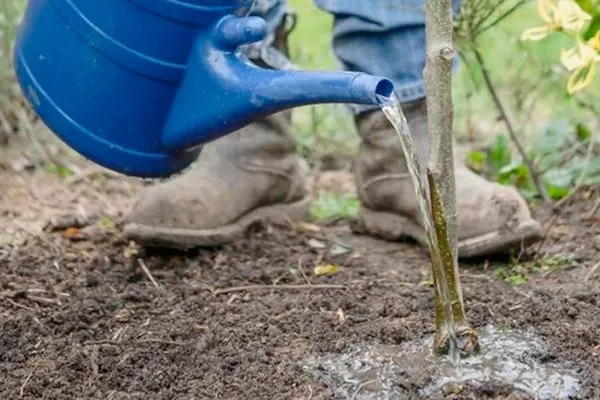
- Watering. After planting, ensure the plants establish themselves by regularly watering them weekly during the first season. Mature trees generally don't require frequent watering, except during critical growing seasons: before bud break, before and after flowering, and when preparing for winter.
Moderate natural precipitation can provide sufficient moisture throughout the season. - Feeding scheme. The plants receive nutrients from the planting hole, so no fertilizer is needed in the first few years. In subsequent years, fertilize the plant 3-4 times a year. Use different fertilizer formulations depending on the time of year and the pear tree's needs.
Preparing for winter
In warm southern regions, it can grow successfully without additional shelter, but in central Russia, additional insulation is necessary before the onset of winter.
Preparatory work:
- Install wind protection to prevent frostbite and damage to trees during cold weather.
- Mulching the tree trunk circle helps retain heat and moisture and protects the roots from temperature fluctuations.
- Insulate the trunk with fallen snow – it provides additional insulation for the roots and lower parts of the tree from low temperatures.
- Wrapping the trunk and base of skeletal branches with burlap or other available material helps protect plants from freezing and weathering.
Diseases, pests and prevention
The most dangerous disease for the crop is scab, which appears as black spots on the surface of the fruit. To combat this disease, use chemicals such as Strobi, Skor, and Horus. Spray twice, 7 days apart.
Pests that attack the crop include aphids, codling moths, leaf rollers, and leafhoppers. To control them, use appropriate insecticides such as Decis, Agravertin, and Iskra. Digging around the tree trunk and removing weeds is an effective preventative measure against insects.
Collection, storage and transportability
This is an autumn variety. The fruit is harvested when slightly unripe. It is then stored. After some time, it reaches its peak flavor.
Store the fruit in a cool (1-5°C), well-ventilated area for several months. Stack them in 2-3 layers in wooden boxes, after sorting them. Check the fruit periodically, removing any that show signs of rot.
Gardeners' reviews
The Dessert pear is a popular choice for inexperienced gardeners because it's easy to grow, requires no special skills, and requires little maintenance. With minimal attention, you can reap a bountiful harvest.