
The Decora pear is a popular variety for cultivation in central and southern Russia due to its high yield, compact size, and shelf-life. Proper care and adherence to harvesting and storage recommendations will ensure excellent results.
Who developed the variety and when?
Russian breeder M. V. Kachalkin devoted considerable effort to cultivating this variety. He succeeded in developing a dwarf variety with beautiful and tasty fruits.
Description of the Decora columnar pear tree
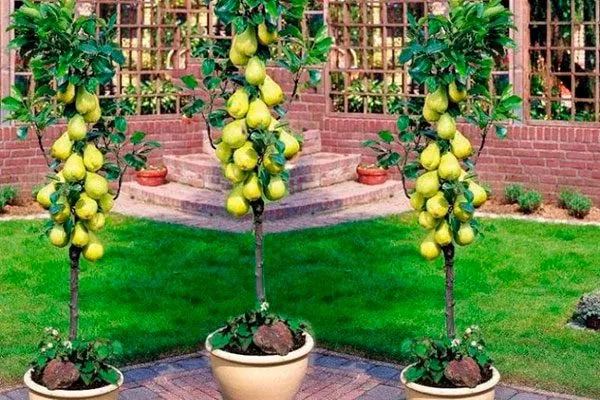
This compact plant reaches up to 2 m in height. Distinguishing features:
- Characterized by a thin and fragile trunk.
- The branches are short, closely adjacent to the trunk and directed vertically upward.
- Due to its compact size, it takes up little space on the plot and is ideal for dense planting.
Characteristics of fruits
This columnar tree stands out from other varieties due to its unique appearance and certain developmental characteristics.
Caloric content
It has a relatively low energy value of 47 kcal per 100 g. One ripe fruit contains up to 100 kcal and 30 g of carbohydrates.
Thanks to its low glycemic index of 38 units, pears can be consumed in moderation by diabetics and obese people.
Taste
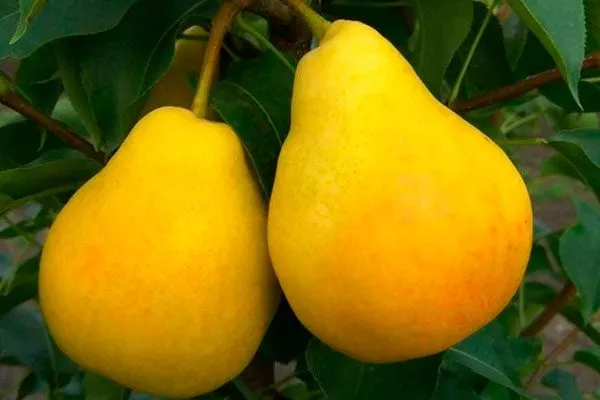
The fruits have a sweet and sour taste with a distinctive aroma. The flesh is white, very juicy and tender, not tough. With long-term storage, the flavor not only remains intact but actually improves, especially if the fruits were picked unripe. They gradually ripen, becoming sweeter and even more saccharine.
Fruit sizes
This is a dwarf variety. The fruits remain large, even compared to regular pears. Ripe fruits can weigh up to 200-250 g.
Application
The crop is grown in orchards and front gardens as an ornamental. The fruits are suitable for fresh consumption, baking, and canning. They are rarely used commercially due to difficulties with storage and transportation.
Features of the variety
The characteristics of the columnar pear are in no way inferior to those of its older relatives. It has high frost resistance, resistance to some diseases, and consistent fruiting.
Pollination
It is self-fertile, so it doesn't require pollinators to produce fruit. The plant can act as a pollinator, exchanging pollen with other columnar and tall-growing species. Neighbors that favor pollination include 'Chizhovskaya,' 'Pamyati Yakovleva,' and 'Lada.'
Life expectancy
The average lifespan is 15-20 years. Proper care is essential to maximize the fruiting period.
Winter hardiness
It can withstand temperatures down to -20°C. Young specimens require shelter, otherwise they may not survive harsh climate conditions.
Productivity
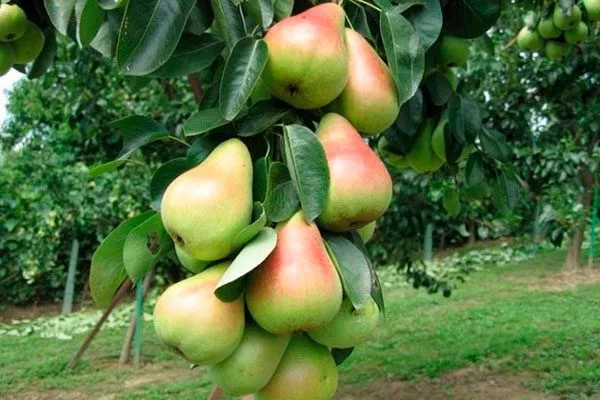
The tree begins bearing fruit in the second or third year after planting. Initially, the yield is small, but peak productivity occurs around the fifth year. A single tree can yield up to 20 kg of pears.
Fruiting cycle
This variety is not a cyclical fruiting variety. It produces abundant harvests every year and requires no breaks.
Disease resistance
It has high disease resistance and is much less susceptible to disease than many other varieties. Preventative measures are necessary to maintain its health.
Which regions are best suited for the Decora pear variety?
Zoned for the northern regions of European Russia, it is also grown in the following conditions:
- Central Russia;
- Northern regions of the European part of Russia;
- Siberia;
- Ural regions.
Cultivation is possible in areas with milder climates.
Pros and cons of the Decora variety
Before planting a crop in your garden, be sure to thoroughly examine its positive and negative qualities. Advantages of the crop:
Among the shortcomings, gardeners note only one - the poor preservation of ripe fruits.
Optimal conditions for growing
Choose a well-lit location with loose, fertile, and slightly acidic soil. For successful cultivation, ensure optimal conditions:
- Provide regular fertilizing, watering and loosening of the tree trunk circle.
- In southern regions, planting should be done in the spring, but in the central zone, it is better to postpone this procedure until September-October, so that the young plants have time to take root and adapt to the new conditions before the onset of frost.
- Give preference to high-quality planting material, purchasing it from specialized nurseries.
- When inspecting a seedling, look for signs of disease and make sure it has enough lateral shoots to allow it to root quickly.
- ✓ The presence of at least 3 well-developed roots with a length of 20 cm.
- ✓ Absence of mechanical damage and signs of disease on the bark and leaves.
Avoid choosing low-lying areas, marshy areas or places with high groundwater levels.
Planting and caring for the Decora pear
The best time to plant seedlings in the ground is spring. Prepare the planting holes a few days before planting. Determine the spacing between seedlings—50 cm is ideal, and 1-1.5 m between rows to ensure access to fresh air and sunlight.
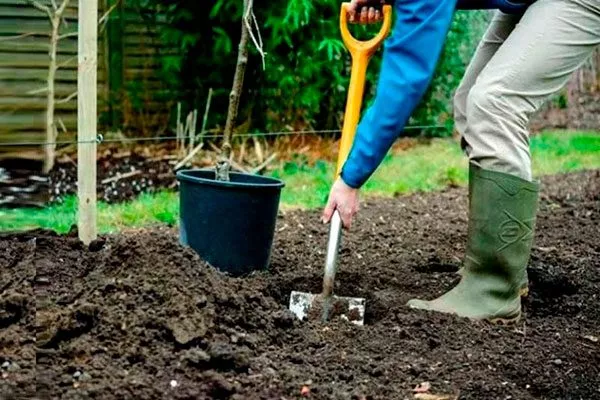
Please follow these planting guidelines:
- Dig a hole measuring 80x60 cm, pour in 8-10 liters of water.
- When the moisture is absorbed, add 30 kg of humus mixed with sand in a 2:1 ratio.
- Mix the soil removed from the hole with potassium sulfate and superphosphate.
- Start preparing the seedlings: soak the root system in water, placing it in a container for a while.
- Fill the bottom of the hole with 1/3 of the soil, then place the seedling in the center and gently spread out the roots. Add the remaining soil on top, compacting the surface with your hands.
The final step is to water the seedling thoroughly. For ease of planting, you can make holes around the plant and install a support for the tree.
Care includes several important stages:
- Watering should be regular during the first year. Do this at least twice a week, especially during dry periods.
- Start fertilizing the plants 2-3 years after planting, using nitrogen fertilizers. Apply a urea solution in the spring, and replace it with slurry or fresh chicken manure in the first half of summer.
- Regular pruning, starting from the first year after planting, will ensure proper crown formation and tree growth.
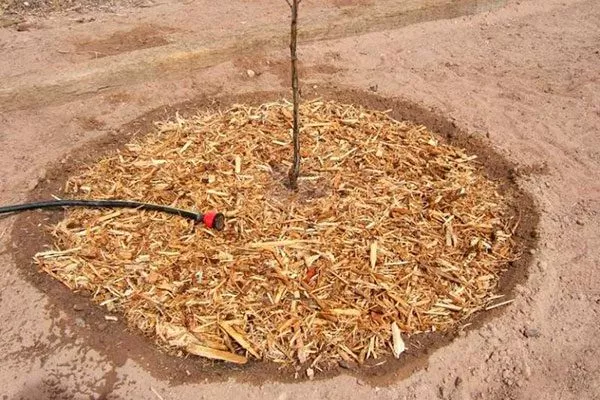
Loosening and mulching the soil around the seedlings is no less important for care.
Preparing for winter
In the southern and central regions of Russia, columnar pears do not require pre-winterization. In northern regions, providing insulation is essential.
Before the cold weather sets in, install a special wooden trellis around the tree and cover it with agrofibre, creating a greenhouse effect. Fill all available space inside the trellis with dry leaves, hay, and compost.
Diseases and pests
It is disease-resistant but can be attacked by insects, including fruit midges and aphids. Fruit midges damage flowers and fruit buds, causing premature pear drop. To prevent pest attacks, spray the tree with insecticides during bud formation.
Aphid infestations cause wilting and damage to leaves and young branches. To control the insects, regularly spray plants with Malathion or use folk remedies, such as a soap solution.
Propagation of columnar pear
Propagating columnar pears from seed can be difficult and time-consuming. Therefore, many gardeners prefer to use alternative methods to increase the number of seedlings:
- Graft. This allows you to create hybrid plants by grafting dwarf seedlings onto rootstocks such as serviceberry or quince. Perform the grafting process in late April or early May. Prepare cuttings for the procedure in winter. Begin the process in cloudy weather or in the evening.
Grafting can be done in several ways: behind the bark, in a cleft, and in a lateral cut. - Cuttings. Prepare green cuttings about 25-30 cm long in advance, each with at least 5 leaves and 2 internodes. Soak the cuttings in a rooting solution, such as Kornevin, then plant them in soil mixed with sphagnum moss. With proper care, the cuttings will root quickly.
Any of these methods is good because it allows you to preserve parental characteristics.
Harvesting and storing fruits
By following certain rules, you can ensure the safety of fresh fruit. Helpful tips:
- Pick the fruits when they are still green and just beginning to turn yellow.
- Don't tear them off the stem.
- Harvest on dry, clear days.
- Separate damaged fruits from healthy ones and store them separately.
- Place the pears in boxes in a single layer and place them in the basement.
- Store boxes of different fruits in separate places to avoid affecting the ripening rate.
- Maintain the storage temperature at no higher than +3°C and humidity at around 85%.
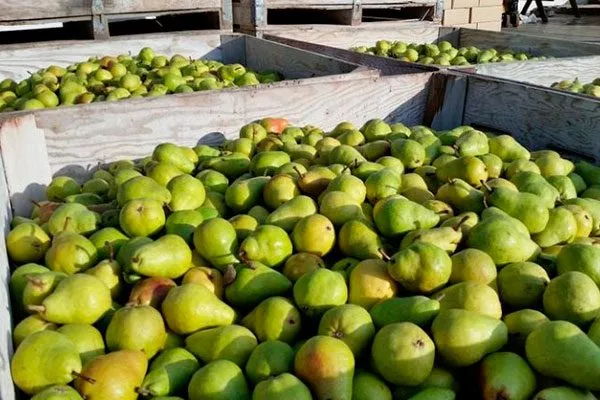
Inspect regularly and remove ripe fruits once a week.
Reviews of the Decora pear
The Decora pear is characterized by high frost and disease resistance. Gardeners choose this variety for its minimal growing and care requirements. This cultivar has attracted attention for its compact crown and medium-sized fruit. To ensure the fruit remains juicy and retains its flavor, ensure timely care.