
Blackening of pear tree foliage is a problem faced by many gardeners. It can occur on trees of any age. There are many causes, ranging from improper cultivation practices to nutrient deficiencies. Before addressing the problem, it's important to correctly identify the culprit.
Causes of blackening of leaves on a pear tree
The change in color of pear leaves is often provoked by diseases and pestsSome of them can kill the tree. Blackening is common due to exposure to unfavorable conditions. Symptoms are always specific, but easy to identify.
Fire blight
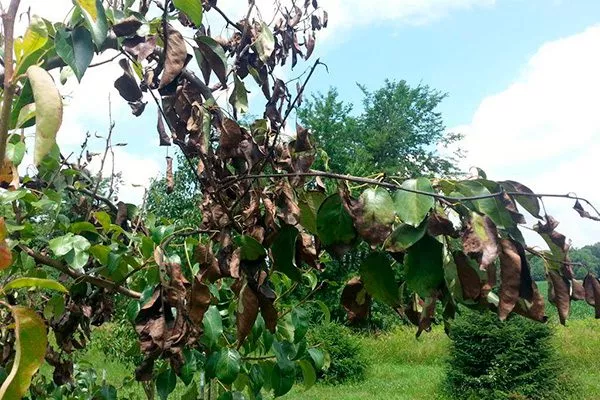
The diseased tree has black leaves, but they don't fall off. Young growth is the first to be affected, and the tops of the branches curl downward like hooks. The first sign is wilting of the flowers. Some buds turn brown, brown, or black. Sometimes, all the inflorescences die.
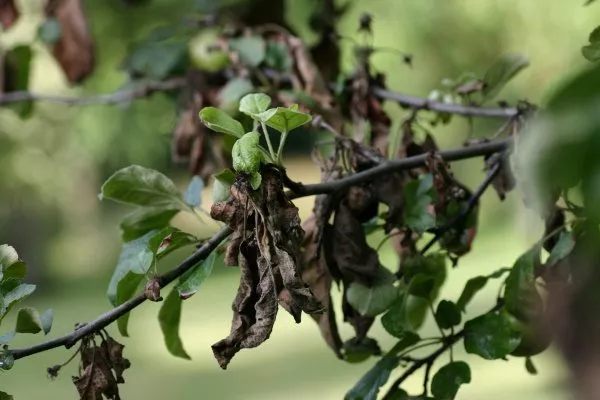
The unusual color doesn't appear immediately. At first, the leaves become covered with brown spots, located closer to the edges. Later, the hue deepens, and the spots grow in size, occupying the entire surface of the leaf.
What other symptoms can be used to determine fire blight:
- the shoots seem burnt, juice begins to ooze, and they wither;
- there are wet dark spots on the bark of the trunk;
- The buds and fruits are covered with pale red spots.
The disease is caused by the bacterium Erwinia amylovora. It develops in the vascular system of fruit trees. It enters the tissues through pollen-laden flowers, cracks in the wood, or insect bites on the leaves. The disease most often occurs in late June or early July.
Pathogens are spread by pests, birds, wind, and precipitation. Sometimes, a gardener can infect a pear tree by pruning with untreated tools. The bacteria are not affected by winter; they tolerate the cold in the xylem of the perennial plant.
Pear scab
The consequences of the disease include a 40%, sometimes 100%, reduction in yield. The tree becomes weak and unable to form buds, and there is no growth. If treatment is not given, the tree will die in winter, unable to withstand the cold.
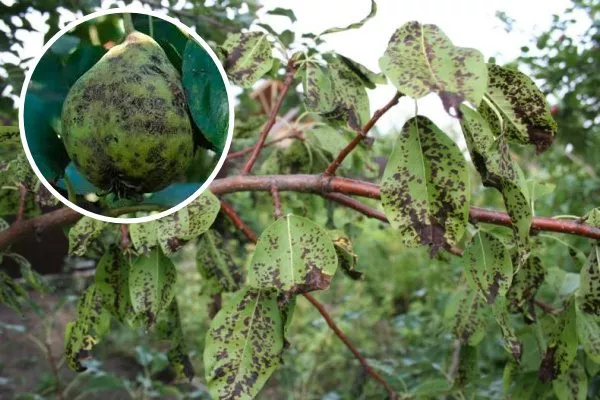
Signs of damage:
- yellow spots form on the above-ground parts of the tree, which become dark as the disease progresses, excluding leaves older than 25 days;
- a rich olive bloom appears;
- dents are noted;
- the top layer of the bark is peeling off (not typical for all pear varieties);
- there are swellings on the shoots and petioles, they crack;
- fruits acquire gray-brown ulcers, fruits may become deformed;
- ripe pears are excessively hard and have poor taste;
- Black leaves are falling.
Scab is the most common disease. It is caused by the fungus Venturia pirina Aderh. Spores are released during the growth phase of green foliage. In dry regions, the process occurs a month later. In areas with high humidity in the spring, the parasite becomes active earlier.
Sooty mold
The main symptom of the disease is black spots of varying shapes on pear tree leaves. The sooty coating can be wiped off with a finger. It also appears on shoots and fruits. As a result of the parasite's influence, leaves die, new shoots fail to form, and the fruits lose their characteristic flavor.
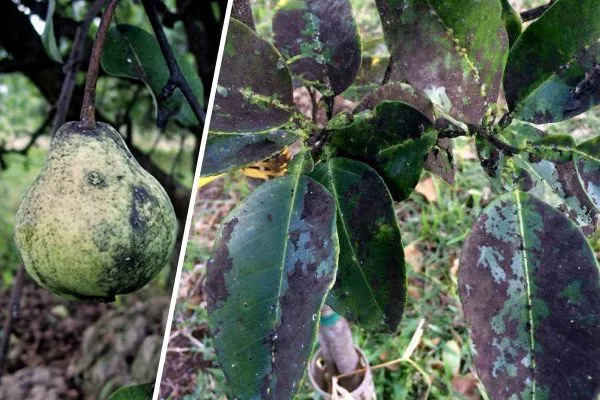
Active growth occurs in conditions of insufficient light, stagnant soil, poor air circulation, and dry, hot weather. Plants that have suffered sunburn or bacterial burn are especially vulnerable.
Pear gall mites
If round swellings of green or yellow color with a circumference greater than 3 mm appear on the leaves, then the pear is affected gall mitesParasites alter the structure of tree tissue. The pests themselves live between the deformed cells, where they reproduce. They feed on plant sap.
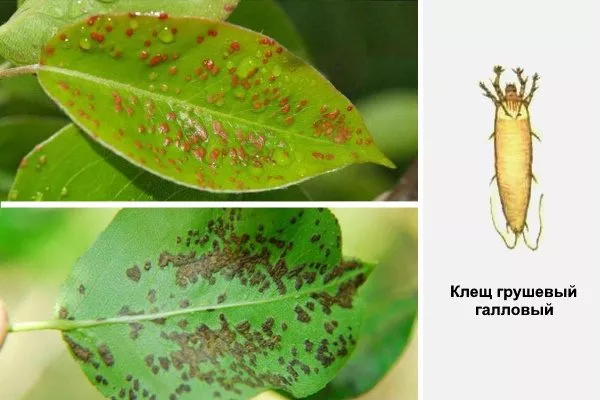
Initially, symptoms appear near the main vein; later, the swellings affect the entire leaf. A single leaf blade can contain up to 100 blisters. With this spread, complete blackness is observed. The perennial parts become unable to hold on and fall off.
There are several reasons for this to occur:
- transfer of the larvae of a miniature pest (body about 0.2 mm) by insects, birds, and wind;
- lack of sanitary and formative scraps;
- excess phosphorus in the soil where the pear grows.
Adults can survive the winter in plant tissue. In this case, parasitism begins before the first leaves appear.
Unfavorable conditions
Pear tree leaves can turn black, curl, dry out, and fall off as a result of prolonged drought. The crown of the tree is the first to suffer, as this is the part that receives the most sunlight.
Most often, a perennial's unusual coloring is due to a lack of beneficial micronutrients. What may be observed:
- Yellow spots along the edges of the leaves, which turn black over time. Marginal burn may occur—parts dry out along the edges and curl downward. This indicates a potassium deficiency. A critical deficiency leads to stunted tree growth, reduced frost resistance and yield, and smaller fruit.
- Dark yellow spots on old leaves located on the lower tierAs the season progresses, they turn black and dry out. The cause is a calcium deficiency. By the end of summer, the shoots may also suffer.
- Blackening of leaf tips followed by curling, early leaf fall. Lateral branches are growing vigorously, while crown shoots are slowing down. This is all a result of not using boron-containing fertilizers. Young plants are the most affected.
If top dressing is applied I've been following the recommended dosage, but the leaves still turn black. This is likely due to the root system. The tree is unable to absorb nutrients. The shoots were damaged by rodents, frost, high humidity, and temperature fluctuations.
What to do – proven treatment methods
Once you've identified the cause of your pear tree's blackened leaves, you need to choose the right treatment method. Proper care is a common measure for all cases.
Fungal diseases that cause blackening of leaves
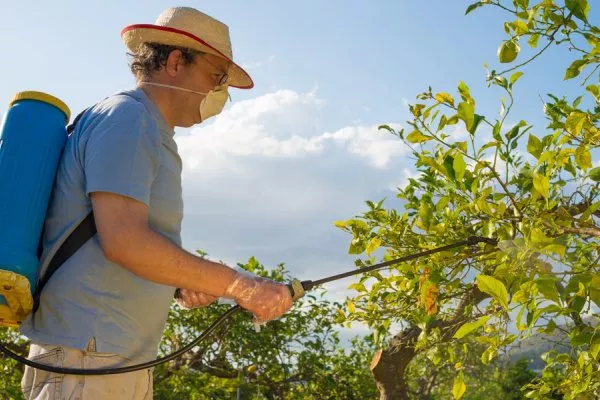
If a tree is affected by scab, first remove the affected parts. Burn the cuttings. Spray with fungicides. A total of three treatments are recommended. The first two should be spaced 15 days apart, and the last one should be done 10 days later.
What medications are allowed to be used:
- Speed. 20 ml per 10 liters of water. The last spraying should be done no later than 20 days before harvest. The solution is effective at temperatures no higher than 12 degrees Celsius.
- Strobe. 2 g per 12 liters (for a plant over 4 m tall) or 8 liters (for a tree over 2 m tall) of water. Two treatments, separated by 10 days, are required. The final treatment should be carried out 30 days before harvesting fruit.
- Horus. 3 g of the substance per 10 liters of water. 4 sprays, the last treatment 28 days before eating the pears.
- ✓ The air temperature during processing should not exceed +25°C for most preparations, otherwise their effectiveness is sharply reduced.
- ✓ The interval between treatments must be strictly observed to avoid developing resistance in pathogens.
You can resort to folk remedies to combat parasites. The main thing is to avoid treatment during the tree's flowering stage.
Recipes:
- Dilute 80 g of mustard in 10 liters of warm water. Spray the perennial four times per season.
- 5 g of potassium permanganate per 10 liters of water. The tree can be treated with this solution three times over the summer.
- ✓ Folk remedies are most effective in the early stages of infection or as a preventative measure.
- ✓ Treatment should be carried out in the evening to reduce evaporation and increase exposure time.
Chemicals are suitable for eliminating scab and sooty mold. However, this is an additional measure. The main one is eliminating the pests, without which the fungus has no food.
Wash off the aphids with water. Use a hose with good pressure. This method is suitable for mature perennials; young trees may be damaged. Some insects will still remain, so perform a one-time foliar treatment. What you can use:
- Fufanon. 11 ml per 10 liters of water. Consumption: 5 liters per specimen. Protection period: 20 days.
- Iskra-M. 1 ml per 1 liter of water. This is the norm for 10 square meters of planting.
- Decis-Profi1 ml of product per 10 liters of water. Enough for 2-5 mature plants, depending on the size of the crown.
If the parasites are fed by aphids, then folk methods are suitable:
- Boil 300 g of wood and herbal ash in 20 liters of water. Add the resulting solution to 9 liters of cold water.
- Grate 300 g of 72% laundry soap and dissolve in 10 liters of water. Let the mixture sit for 24 hours.
To combat leafhopper, you need commercially available products. For example, Sumithion. 2 g per 10 liters of water. The rate is 6 liters per 1 square meter of planting. Two treatments are required, 40 days apart.
Treatment of fire blight of pear
If fire blight occurs, trim away all damaged parts down to healthy tissue. Treat all cuts with alcohol. Use disinfected tools. Burn the trimmings.
What to do next:
- Spray the tree with Fitolavin. 20 ml per 10 liters of water. The last treatment should be two days before fruit harvest. The solution can be used four times per season.
- After the sap flow stops (at the end of autumn), carry out sanitary pruning.
How to treat for gall mites?
Getting rid of gall mites on pear trees is difficult. This is because they live in the plant tissue, where the active ingredients of pesticides cannot penetrate. All pesticides act only by contact.
The only way to get rid of the pest is to treat it when the parasites emerge from the ground. This is typically from mid-May to early July. It's best to begin treatment when buds are opening and flower buds are forming.
The following compositions show good results:
- Actellic. 1 ml per 1 liter of water. Per tree. One-time spraying at temperatures no higher than 25 degrees Celsius.
- Apollo. 4 ml per 5 liters of water. Consumption per square meter. One treatment is sufficient to control ticks.
You can also use Ikra-M and Fufanon. Folk remedies are ineffective in this case. If there are numerous pests, you can take 1 kg of fresh hot pepper pods, add 10 liters of water, boil for 2 hours, strain, and spray the tree. However, this recipe is a supplement to the main treatment.
How to eliminate the shortcomings of care?
If the blackening of pear leaves is caused by a lack of fertilizer, there's only one solution: adding micronutrients. Applying fertilizer to the roots isn't practical, as the plant's roots receive their nutrients first, and the leaves won't receive their share for a long time.
It's better to resort to spraying. What to use:
- 50 g of potassium sulfate per 10 liters of water to provide the perennial with potassium;
- 15 g of boric acid per 10 liters of water to replenish boron deficiency;
- Calcium chelate 10 g per 10 liters of water, this will help normalize calcium levels.
If the leaves have been damaged by hot weather and improper watering, the pear tree has already suffered serious damage. Here's how to fix the situation:
- Restore the soil moistening procedure to normal.
- Mulch the tree trunk area. Materials such as sawdust and straw will help retain moisture in the soil layer.
- Be sure to remove any damaged branches. Spray the remaining branches with water. Begin work in the evening or morning to prevent sunburn.
- Apply potassium sulfate (20 g per 1 sq. m) to the roots. This will help support the immune system.
Prevention
Following proper agricultural practices will help protect your pear tree from diseases, pests, and foliage blackening. These include more than just choosing the right location, watering, and fertilizing.
Preventive measures are divided into classic and deterrent. The latter is necessary if the tree already has a fungus or mite. The goal is to prevent the pathogen from developing in the following season.
Standard procedures:
- Autumn pruning to thin out the crown. Remove not only old shoots, but also deformed and crowded ones.
- Timely removal of fallen leaves, where parasites often overwinter.
- Thorough digging of the soil to drive out the larvae that have settled in the layers during the cold season.
- Whitewashing tree trunks in November and December. This protects the bark from sunlight, and reduces the risk of cracks forming in the spring, which can lead to infection.
- Disinfection of tools. Often, diseases are transferred by the gardener himself, from sick trees to healthy ones.
- Preventative spraying with copper sulfate is recommended in the spring before bud formation and in the fall after leaf fall. A 3% solution is suitable.
- Monitor soil acidity. The ideal pH is 5.5-6.5. Otherwise, there is a high risk of bacterial blight.
- Foliar treatment for aphids, leafhoppers, and scale insects. Use 30 Plus. 500 ml per 10 liters of water. 2-5 liters per tree, depending on crown size.
Blackening of pear tree foliage is an unpleasant situation that any gardener can encounter. The consequences of this discoloration are dire: decreased yield, smaller fruit, altered fruit flavor, stunted growth, and sometimes death. There are several causes, all of which are easy to identify. Treatment is possible in most cases.