
The Bogataya pear is well-known among Russian gardeners. This variety has proven itself to be high-yielding and frost-resistant. Even in harsh climates, it produces a bountiful harvest every year. It is a medium-sized plant that doesn't require any complicated planting or cultivation techniques.
History of appearance
Fruit trees of this variety were bred in the Urals. Chelyabinsk breeders from the South Ural Research Institute of Poultry and Vegetable Crops (YuUNIIPOK) aimed to produce a pear that would surpass the Chizhovskaya variety in frost resistance and flavor.
Description of the Bogataya pear variety with photos
Trees of this cultivar are easily recognized by their strong, straight trunk and large, skeletal branches. Every year, starting at four years of age, they produce numerous medium- to large-sized fruits.
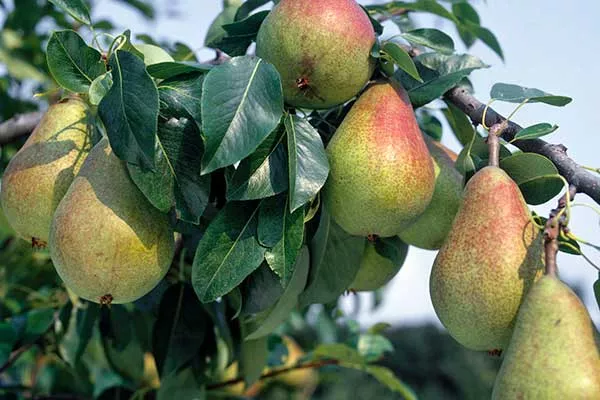
Tree
The Bogataya pear is distinguished by the following characteristics:
- medium height (it reaches 4 m in height, however, under favorable conditions the tree can grow to 8 m);
- semi-spreading crown;
- medium degree of foliage;
- color of the bark on the trunk and skeletal branches: brown with a greenish tint;
- leaves: oval, not pointed, slightly concave, with a wavy edge;
- leaf color: green, dark shade, with a glossy sheen;
- petiole length – medium;
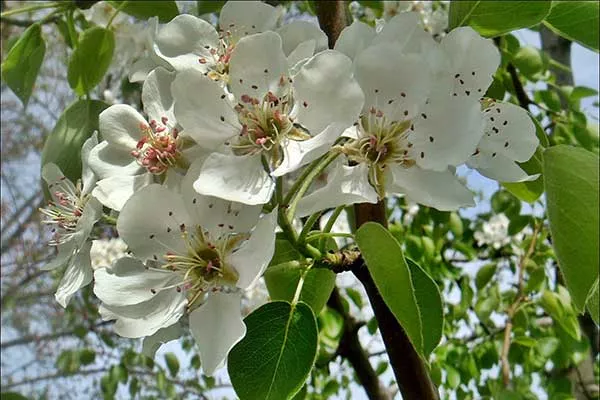
- the inflorescence is a brush in which flowers are collected (from 5 to 7 pieces);
- The flower is cup-shaped, has white petals, and lacks a distinct aroma.
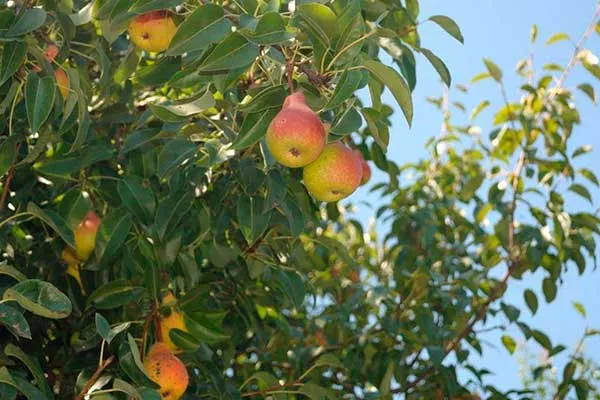
Fruit
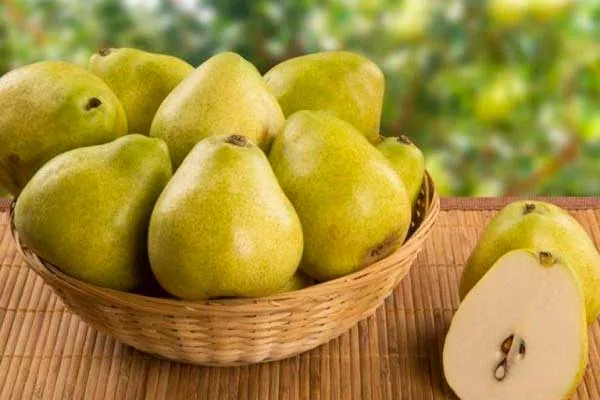
The Bogataya harvest boasts an attractive marketable appearance, allowing gardeners to cultivate it commercially. Its fruits possess the following characteristics:
- medium or large size (pear weight ranges from 120 to 230 g);
- rounded shape;
- short stalk;
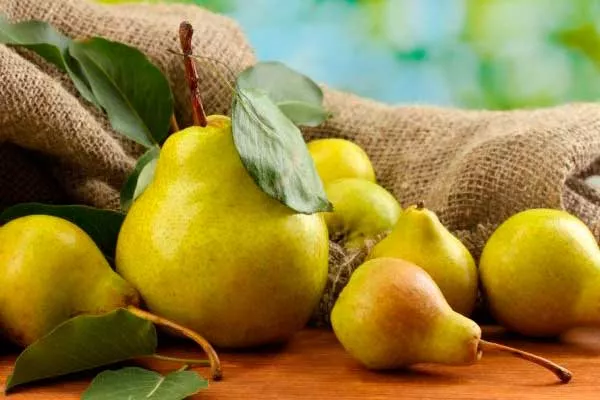
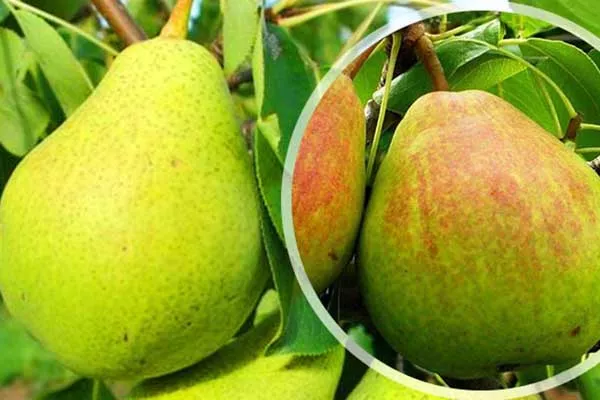
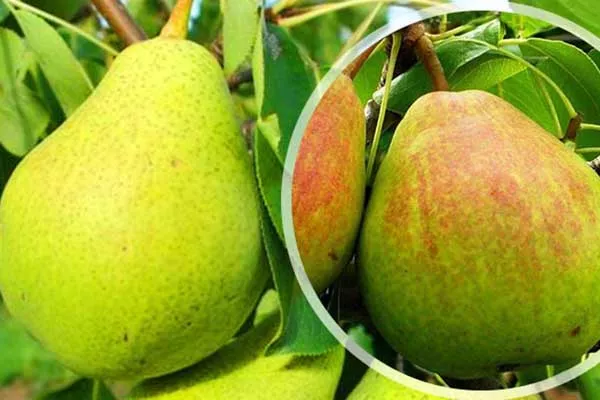
- colour: green (harvestable maturity) or yellow-green with a washed-out crimson blush (consumer maturity);
- dense, fine-grained pulp of a light cream color;
- skin: thin, medium-dense, smooth, semi-oily.
- ✓ Above average resistance to scab, which reduces the need for chemical treatments.
- ✓ The ability to bear fruit even after frosts down to -32°C, which makes the variety ideal for regions with harsh winters.
Characteristics of the Bogataya pear
This variety is popular among domestic gardeners due to its high yields and product quality. It is also frost-hardy and easy to grow.
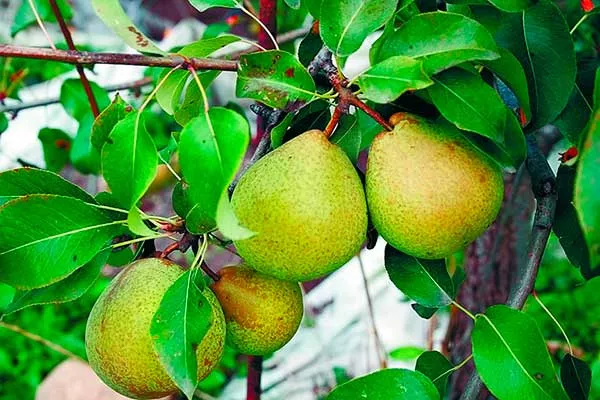
Taste characteristics
The flavor of this pear variety is considered good and refreshing. It is predominantly sweet with a pleasant tartness. It is completely devoid of astringency. The flesh is aromatic, juicy, melts in the mouth, and has a semi-oily texture.
The pulp of this variety's fruit surpasses that of many autumn and winter pear varieties in its chemical composition. It contains:
- 16.5% - dry matter;
- 13.1% - soluble;
- 9.1% - sugars;
- 0.45% - titratable acids.
The P-active substance content in 100 g of Bogataya pear pulp is 166 mg. This variety of pear is used for both table and dessert purposes. The fruits are used to make jam, pastilles, marmalade, candied fruit, and various desserts. They are also used to make juice and compote. They are delicious even without heat treatment.
Ripening period
Fruit trees of the Bogataya variety bloom beginning in the second half of May. Flowering continues into June. The fruits ripen in the fall and are ready for harvest in the last weeks of October.
Productivity
The variety's yield is stable and high, especially when compared to winter pear varieties. A single tree produces 60 to 70 kg of fruit.
Frost resistance of the Bogataya pear
The variety is characterized by high winter hardiness. Bogataya trees are resistant to temperatures as low as -32°C, without any reduction in yield.
During the flowering period, pear trees are not susceptible to repeated frosts. This also applies to the buds.
Pollination and pollinators of the Bogataya pear
Trees of this variety are self-fertile. Pollinators help increase their yield:
- other varieties of pear that bloom at the same time as Bogata;
- apple trees blooming at the same time.
Regions for cultivation
Domestic gardeners successfully grow this rich variety in various regions of the country:
- Ural;
- Central;
- Central Black Earth;
- West Siberian.
This pear variety also produces a bountiful harvest in the south. It is most common in the central part of Russia.
Disease resistance
This variety is popular with gardeners due to its strong immunity. Its trees are rarely affected by rot and fungi. Bogataya is particularly resistant to scab. Improper care of this pear variety is the most common cause of pest infestation. The most dangerous pests are:
- leaf and fruit gall midge;
- codling moths;
- copperheads.
At the same time, Bogataya is highly resistant to attacks by gall mites.
Pros and cons
Landing rules
Gardeners plant pears of this variety in their plots in the spring (April and May) or in the fall. Fall planting occurs from September to October inclusive.
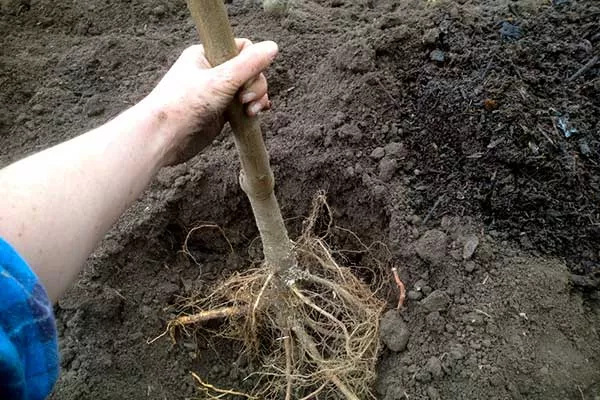
If you have purchased Bogataya seedlings, please consider these important points when planting them:
- Choosing a locationChoose a sunny, well-ventilated area protected from drafts. It's best to plant the pear tree at an elevated location. The groundwater table should be deep (at least 3 m). The distance to buildings should be at least 3 m, and to tall trees, at least 5 m.
- Soil requirementsBogata grows and bears fruit well in loose soil that allows air to reach the roots. It thrives best in soil containing coarse sand. Clay content is minimal, but essential.
- ✓ The optimal soil pH level should be between 6.0-6.5 to ensure better absorption of nutrients.
- ✓ The organic matter content in the soil must be at least 3% to maintain its structure and water-holding capacity.
When trees of this variety are grown in soil containing high levels of calcium, the fruit's flavor suffers, and the flesh becomes coarser and more inconsistent. Experienced gardeners cultivate this variety in areas with slightly acidic soil.
- Preparing a seedling for plantingOn the day of the procedure, place the tree in lukewarm water. Let the roots soak for 5 hours. If desired, add a small amount of growth stimulant to the water.
- Planting holeDig a hole 1 m x 0.7 m deep in the area. Fill it with water. Lay down a drainage layer. Then partially fill the hole with a mixture of soil, peat, and sand (use equal parts). Add superphosphate fertilizer. Apply 0.3 kg per seedling.
- LandingPlace the seedling in the center of the hole. Spread out its roots. Cover them with soil mixture. Ensure the root collar of the seedling is 5 cm above the ground. Finally, compact the soil around the pear tree and water it (40 liters per seedling).
- SupportDon't forget to tie the tree to a stake. Use a rope or a long piece of fabric for this purpose. Tie it in a figure-eight pattern. Make sure the pear tree's trunk doesn't touch the stake.
Care instructions
Trees of this variety require simple care. This includes the following steps:
- In wateringWater young trees once every 7 days, and mature trees once every 30 days. The last watering should be done one month before the end of fruiting. Apply 30-50 liters of water to a five-year-old pear tree, and 50-80 liters to a tree older than five years.
- In regular looseningDon't be lazy in loosening the soil around the tree trunk after each watering of the seedling and heavy rains.
- In fertilizersProvide the tree with 5 fertilizers per season. Use mineral fertilizers and organic matter. In the spring, apply nitrogen mixtures. After fruiting begins, feed the pear tree with complex mineral fertilizers. In the fall, use potassium-rich fertilizers.
- In pruning and crown shapingBegin pruning Bogataya trees in the second year after planting them in the garden. This will ensure a strong skeletal structure and help the plant distribute nutrients evenly.
Prune by cutting off the tops of branches and annual growth to slow down the upward growth of the trunk and encourage horizontal branching.
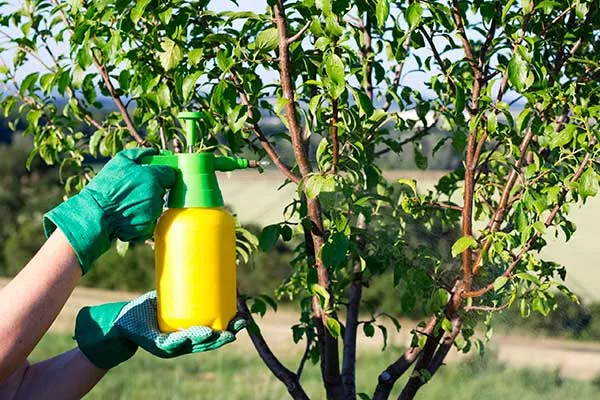
Thinning is also a good idea, as branches are completely removed. This procedure will improve air and light penetration into the crown, stimulating leaf development and the formation of strong, productive branches. Remove any shoots growing at an acute angle or deep within the crown. - In preventive treatment of plants against diseases and pestsCarry out the first spraying in early spring to eliminate existing pests. Treat the pear tree with a urea solution (0.7 kg per 10 liters of water). Do this before the buds swell. Before frost sets in in the fall, protect the tree by treating it against larvae that overwinter under the bark and against fungal diseases. Use Bordeaux mixture for this purpose.
Collection and storage
Harvest after October 15th. Fruits picked on time do not require additional ripening. This variety has excellent shelf life. The harvest can be stored for three months without losing its appearance or flavor.
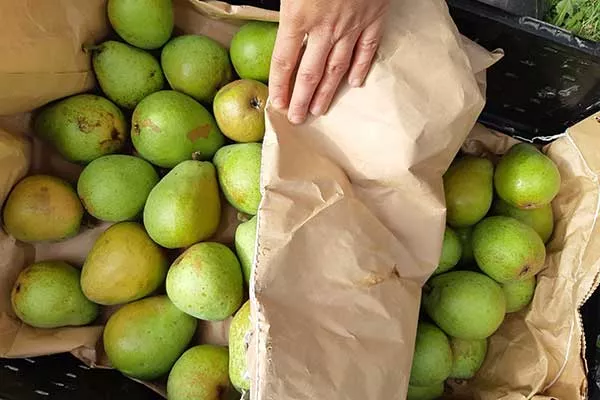
The optimal storage temperature is between 1 and 4°C. Higher temperatures will cause the fruit to rot, while lower temperatures will cause it to shrivel. The recommended humidity for long-term storage of pears is 80-90%.
Gardeners' reviews of the Bogataya pear
Bogataya is a popular domestic pear variety. It's beloved by gardeners for its ease of care, winter hardiness, and high yield. It's an excellent choice for areas with harsh winters. Even severe frost won't prevent the tree from producing a bountiful harvest in October.