
The Bere Bosc pear is a well-known variety not only among consumers and gardeners but also among breeders, as it has given rise to several dozen hybrids. It is considered a mid-season autumn pear that can live for approximately 50-60 years. It is characterized by high yields, low susceptibility to diseases and pests, and other positive qualities.
History of variety selection
In the nineteenth century, the pear was considered the pinnacle of fruit growing in Europe, particularly in France and Belgium. The origins of the Beurre Bosc variety remain a mystery, but the first mentions of it date back to the early 1800s and are associated with the French village of Apremont in the Loire Valley. It is believed that the variety was named after the renowned French botanist Louis Bosc.
Historical and selection features:
- The prefix "Beurre" (French for "butter") is used because of the soft, melting texture of the flesh of these pears.
- There is a theory that the renowned Belgian pomologist Jean-Baptiste Van Mons, who created more than 40 varieties of pears, developed the Calabasse Bosc variety back in 1807, which was later renamed Beurre Bosc in 1835.
- Due to the variety's long history, several alternative names have arisen and some confusion has arisen with them, such as Bosc bottle pear (Bottle), Emperors crown, Alexander pear, Kaiser Alexander, Beurré dApremont, Paradis dAutomne and Cannelle (Cinnamon).
- This variety was tested at the Krasnodar Fruit Experimental Station and included in the State Register of Breeding Achievements in 1947.
- It was permitted for cultivation in the southern territories of Russia and in a number of republics that were part of the USSR at that time, with the exception of the Baltic countries, where climatic conditions were unsuitable.
Today, the Beurre Bosc pear is successfully cultivated in Ukraine and Russia, particularly in the Krasnodar Krai, Stavropol, and Crimea. The Beurre Bosc variety forms the basis for many popular modern pear varieties.
Botanical description of the tree
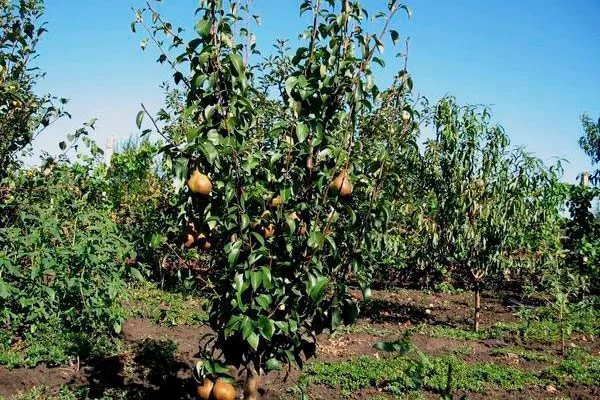
Bere Bosk is a tall and fast-growing tree that can reach a height of up to 400 cm in just a few years. It is characterized by:
- crown – weakly dense, asymmetrical, therefore the tree requires shaping and pruning;
- form - by pyramid type;
- shoots – elbow-shaped and long, thickened and very strong;
- bark – brown with a grayish tint;
- kidneys – pressed tightly;
- lentils – numerous and small;
- leaves - ovoid, large and thick;
- structure and shape of the leaf blade – the tip is long, the base is blunt, the type is entire and thick;
- shade of leaves – dark green with a smooth, shiny surface;
- petioles – shortened, not exceeding 0.9-1.0 cm;
- flowers – large in size, wide in opening;
- petals – with wavy edges, elongated-oblong.
Fruit characteristics and taste qualities
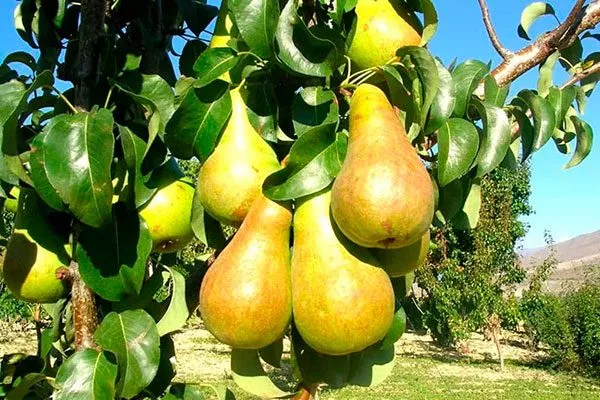
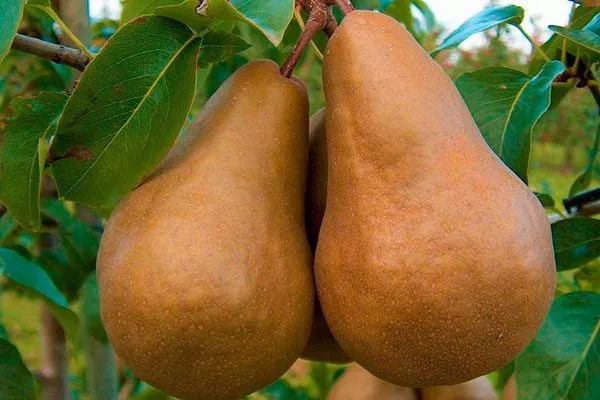
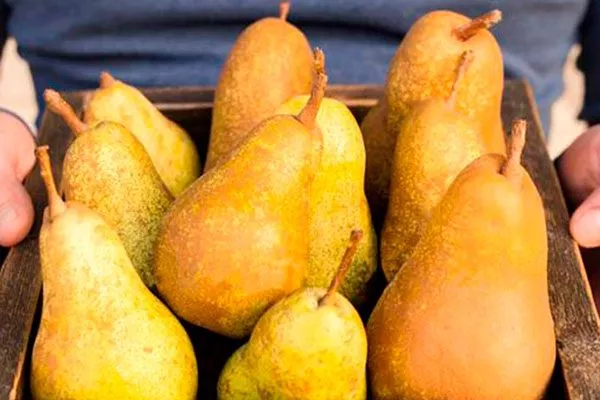
What makes this variety unique is that the fruits can come in a variety of shapes and sizes. This applies to pears grown on a single tree. Brief description:
- form - by bottle type (slightly flattened or elongated);
- weight - minimum 150 g, maximum 250 g;
- peduncle – oblong and thickened, can be straight or curved;
- surface – thin and slightly rough, but not afraid of mechanical impact;
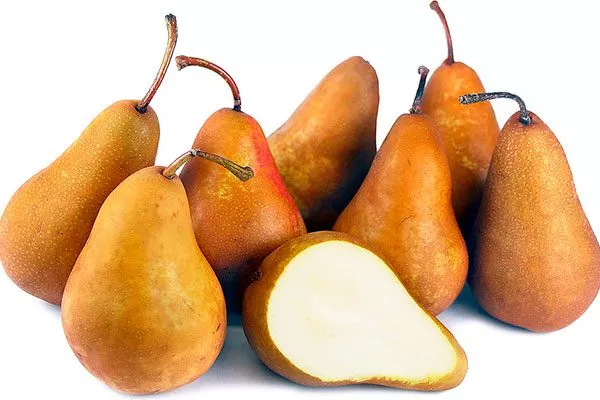
- skin color – initially yellow with a brown tint, later becoming rusty-golden and even bronze;
- pulp shade – it can be creamy and white;
- seeds - standard brown, small in size;
- pulp in an unripe state - crunches when bitten, but already has increased juiciness;
- pulp after full ripening – remains juicy, but becomes melt-in-your-mouth due to its oiliness.
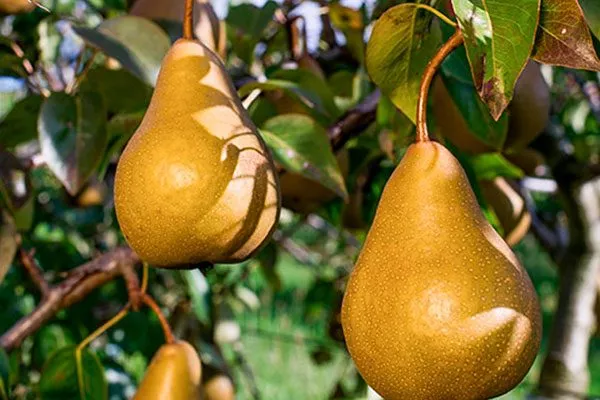
The Beurre Bosc pear has received high scores for flavor, ranging from 4.4 to 4.8 points in taste tests. Its unique dessert flavor is described as marmalade-like, rich, and complex, with spicy notes and an almond finish.
Nutritional value
The chemical composition of Beurre Bosc includes:
- 14.6% dry matter;
- 9-9.5% sugars;
- 0.2-0.25% titratable acids.
The nutritional value per 100 g of product is on average:
- Proteins – 0.35 g;
- Fats – 0.08-0.09 g;
- Carbohydrates – 12-13 g;
- Caloric content – 16-18 kcal.
Purpose of the variety
The Bere Bosc pear is best eaten fresh, as its flesh is not suitable for cooking. Cooking, canning, and compote preparation cause it to lose its texture, soften, and darken.
Characteristics of the Bere Bosk variety
Based on the characteristics of pear varieties, a gardener can assess in advance whether planting a tree in their garden is necessary, feasible, or unnecessary. Therefore, these factors should not be ignored.
When does it bloom and ripen?
Flowering occurs in spring, usually in April or early May, after the threat of frost has passed. The Bere Bosc pear tree blooms profusely. The fruit ripens from early September to October, and they hold well on the branches, not falling off even in strong winds.
Drought and frost resistance
The variety isn't particularly frost- or drought-resistant. This applies even to the warm Krasnodar region. However, there is an exception: the foothills and the Black Sea coast. Here, winter insulation is not necessary.
Fruiting
Trees begin bearing fruit when they reach 5-7 years of age. Each cluster can produce one to five ovaries.
Pollination and reproduction
Bere Bosc is a bee-pollinated variety, requiring multiple trees for effective pollination and increased yield. In orchards, it is recommended to plant varieties such as Williams, Bon Louise, and Bere Napoleon nearby to ensure cross-pollination.
The Bere Bosc pear can be propagated using wild pear seed rootstocks or seedlings of cultivated varieties, but when grafting onto quince, an intermediate graft must be used.
Productivity
This variety is characterized by high yields, which the trees maintain for many years (up to 37, 45, or 50 years). Peak fruiting occurs after 13-15 years of growth. A mature tree can produce 75 to 250 kg of fruit per season, and in some cases, as has been observed in the Krasnodar Territory, yields can reach up to 300 kg per tree.
In Kuban, yields per hectare of fruit plantations where trees are no more than 20 years old are approximately 100 centners. The yield depends on soil conditions, moisture, and climate.
Optimal conditions for growing
The pear tree is demanding when it comes to growing conditions: it thrives in warmth and moisture. Its root system can penetrate deep into the soil, so the groundwater level should be at least 2-2.5 meters below the surface. Other parameters:
- Trees grow poorly on heavy and depleted soils, whereas pear trees thrive on loose, light soils that allow water and air to pass through well.
- Low-lying areas where rain and melt water stagnate for long periods are not suitable for seedlings.
- The ideal growing site should be well-lit by the sun and protected from northern winds; the preferred location of the garden is the south or southwest side.
- ✓ The groundwater level should be no closer than 2-2.5 meters to prevent rotting of the root system.
- ✓ The soil should be loose, light, and able to pass water and air well; avoid heavy and depleted soils.
Landing rules
Autumn is the ideal time for planting trees, and many experienced gardeners prefer this time of year. When choosing a location for planting a Bere Bosc pear tree, ensure it is protected from strong winds. This pear variety appreciates warmth and abundant sunlight—keep these in mind.
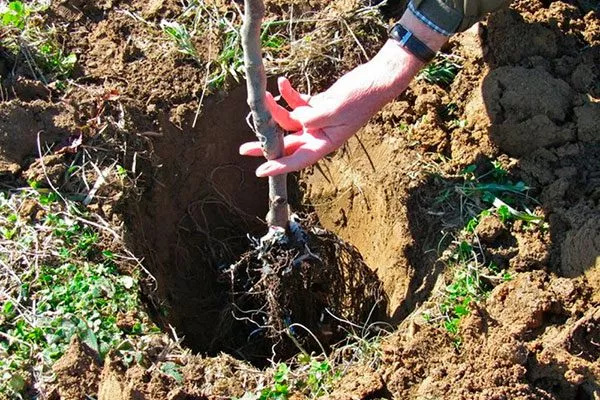
Proper fit involves several important aspects:
- The ideal soil for the Bere Bosc pear is sandy-chernozem.
- Before planting, the plant roots should be soaked in warm water for several hours, and to prevent fungal diseases, it is recommended to add manganese crystals to the water.
- Trees should be planted at least 5 m apart to ensure each specimen has enough space to grow and develop.
- The planting hole is prepared two weeks before planting; its depth should be at least 70–85 cm. Black soil is placed on the bottom, and the soil added to the hole should be mixed with organic fertilizer.
- Before falling asleep, the roots of the plant are carefully straightened out, the young tree is propped up with a support to which it is attached.
- After planting, it is recommended to water the tree using 20-25 liters of water, after which the planting is filled with soil.
Care Features
Pear tree care activities include the following:
- Regular watering. A mature tree requires up to five irrigations per season. During dry, hot summers, when rain is absent, the frequency of waterings is increased. The recommended root irrigation volume is approximately 30 liters per square meter. In arid regions, drip irrigation is effective, and mulching the soil should also reduce evaporation.
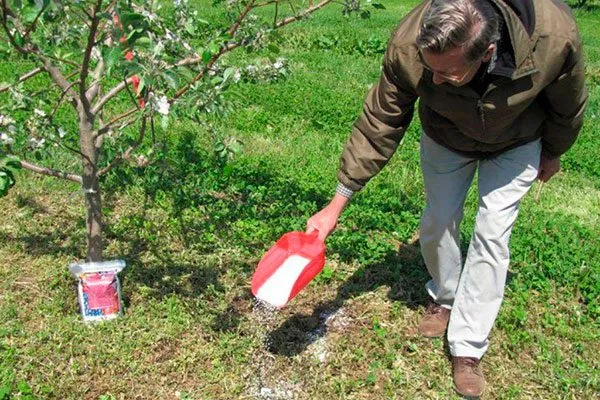
- Fertilization. The fertilizing schedule varies depending on the tree's age. During the first two years after planting, no additional fertilizer is required, as the nutrients added to the planting hole are sufficient. Beginning in the third year, the following fertilizing schedule is recommended:
- In spring, the tree is sprayed with a solution of complex fertilizer such as nitrophoska or ammophoska.
- Every year, humus is added to the soil in the amount of 7-10 kg per 1 sq. m.
- In autumn, wood ash is added to the tree trunk circle.
- Trimming. In the spring, sanitary pruning should be performed, removing all damaged or diseased branches. During the first four years, the crown should be shaped every autumn. As the tree matures, the crown is corrected by shortening particularly long shoots, but lower branches should be left untouched to allow them to grow freely.
Root shoots, which can harbor pests, are pruned in the fall. Fresh tree cuts are treated with garden pitch to prevent infection. - Whitewash. In the fall, whitewashing is used to protect tree trunks and main branches from damage caused by sudden temperature changes and the intense sun during the first half of spring. This can be done using a ready-made mixture, which can be purchased at a gardening store, or you can make your own.
Making your own whitewash mixture includes the following components:- water – 10 l;
- clay – 1.4-1.6 kg;
- lime – 1.9-2.1 kg.
This mixture is applied to the tree trunk and lower skeletal branches up to the height of the first tier of branches. Whitewash also serves as an insect repellent.
Preparing for winter
In the fall, clear the area around the tree trunk of fallen leaves and weeds. When you begin digging the soil, don't forget to add mineral fertilizer. It's also important to water the tree before the onset of frost.
To protect roots from freezing, apply at least a 15-cm layer of mulch around the tree trunk using peat moss or well-rotted sawdust. Young seedlings are protected from frost by wrapping them in protective material.
Diseases and pests – how to deal with them?
Although the Bere Bosc pear variety demonstrates resistance to fungal and bacterial diseases, the risk remains. Special care should be taken when handling garden tools: dirty tools can introduce infection into the tree's pruning wounds.
Wet and warm weather can trigger scab, which can be controlled by spraying with a urea solution and applying fungicides to the soil. Pears can also suffer from gall mites, so preventative spraying is essential.
Tips for harvesting and storing pears
The ripeness of pears can be determined by the following signs:
- the fruits are easily separated from the branch;
- the first fallen fruit appeared;
- the color of the fruit skin has changed;
- the taste became sweet and juicy.
For storing pears, the optimal temperature is maintained at approximately 1-2 degrees Celsius below zero with a relative humidity of 85-90%. It's best to store the fruit in a cellar or garage.
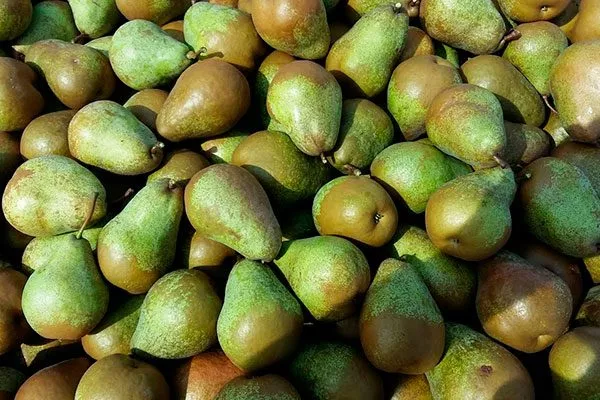
Bere Bosc pears have a shelf life of 35-45 days and are well-suited for transportation. However, refrigeration can degrade their flavor, making the flesh less juicy and crispier. Some pears reach full ripeness within 2-3 weeks of picking.
Advantages and disadvantages of the variety
The Bere Bosc pear variety has a number of significant advantages that make it popular among gardeners:
However, the variety has a number of disadvantages that should be taken into account:
Reviews of the Bere Bosc pear
Given these characteristics, it's easy to see why the Bere Bosc pear is considered a worthy choice by many gardeners. Photos and reviews confirm its attractive quality and longevity. Mature trees require virtually no maintenance and produce a consistent harvest, rarely suffering from pests or diseases.