
The name of the Belorusskaya Pozdnyaya pear speaks for itself: it's a winter variety, developed in Belarus. It's characterized by high yields, excellent flavor, and resistance to some adverse factors. Gardeners also note some drawbacks, so consider the pros and cons before planting.
History of selection
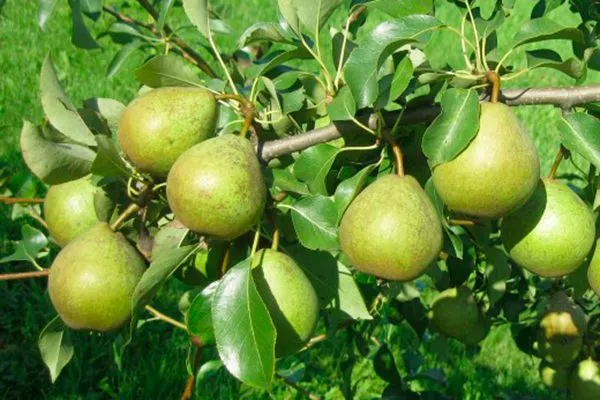
The Belorusskaya Pozdnyaya pear is a winter-ripening variety developed by specialists at the Belarusian Research Institute of Fruit Growing, currently known as the Republican Unitary Enterprise “Institute of Fruit Growing” of the National Academy of Sciences of Belarus.
Peculiarities:
- The new variety was obtained by sowing seeds of the free-pollinated French variety Good Louise.
- The creation of the variety is attributed to the work of Belarusian scientists and breeders N. I. Mikhnevich, M. G. Myalik and G. K. Kovalenko.
- Belarusian Late was registered in the State Register of Plant Varieties of the Republic of Belarus in 1989 and in 2002 it was included in the State Register of Breeding Achievements of the Russian Federation for use in the North-West and Central regions.
Belarusian late pear: description
The variety is characterized by medium growth and medium-sized fruits with high sugar content. Pear quality plays an important role in consumer consumption, and tree characteristics are crucial for cultivation. Therefore, it's important to carefully read their descriptions.
Tree
The minimum tree height when grown in unfavorable conditions is 300 cm. When planted in a region with warm weather, the plant reaches 450-500 cm. Consider other factors as well:
- crown diameter – 250-400 cm;
- tree shape – spherical, spreading, dense;
- shoots – are located at an angle of 80-90 degrees and grow upwards;
- branches – medium-thick, knee-type;
- bark – pubescent, light brown;
- lentils – multiple, small;
- kidneys – with a smooth surface, small in size, conical, bent;
- leaves - elliptical, wavy, finely serrated, light green in color;
- leaf blades – with a smooth surface and a screw-like twist at the top;
- petioles – shortened, medium-thick, without pubescence;
- flowers – large in size, white in color and oval in petals.
Fruit
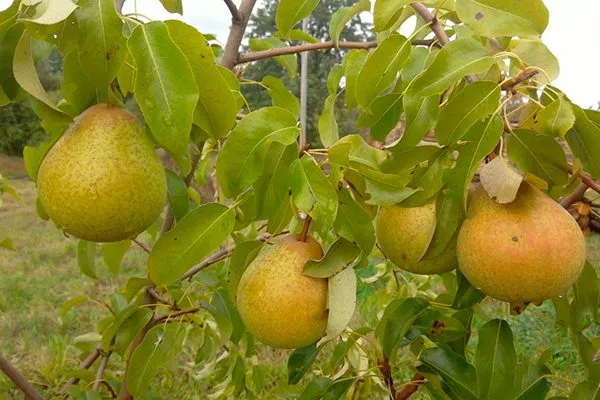
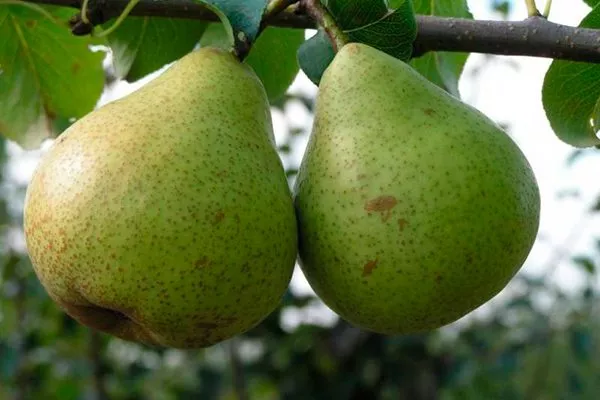
A single pear weighs approximately 115 grams on average. The fruit is wide, pear-shaped, and completely symmetrical. Other characteristic features distinguish this variety from others:
- color palette – initially green, but upon reaching consumer maturity it becomes yellow-reddish-brown (there is even a raspberry tint);
- rustiness – there is, but in small quantities;
- peduncle – shortened, set at an angle;
- subcutaneous inclusions – in the form of a few light brown dots;
- skin – has a slight roughness and a matte surface;
- pulp – tender, juicy, buttery, white in color;
- heart – elliptical and small;
- funnel – small in size and narrow;
- tube under the cup - cup-shaped, narrow and small;
- bones – small, jug-shaped, brown.
Characteristics of the winter variety
Pear trees have a potential lifespan of 150-200 years, but to ensure consistent fruiting, it's important to manage crown density. Rejuvenation pruning is recommended every 18-20 years; fruit-bearing orchards typically remain productive for 55-65 years, after which it's advisable to replace older trees.
Useful substances
The Belorusskaya Pozdnyaya variety has dietary characteristics and is rich in a large number of useful elements, namely phosphorus, fluorine, zinc, iodine, magnesium, calcium, potassium, iron, selenium, vitamins PP, B1, B2, B5, B6 and C.
The nutritional value of this variety is 45 kcal per 100 g, containing 14.55 g dry matter, 9.5 g sugars, 2.78 g dietary fiber, 0.1 g organic acids and 12.10 mg vitamin C per 100 g of product.
Pollinators for the Belorusskaya Late pear variety
To increase the yield of the Belorusskaya Pozdnyaya variety, which is partially self-fertile, it is recommended to have nearby pollinated varieties such as Maslyanistaya Loshitskaya, Konferentsiye and Bere Loshitskaya.
Taste qualities
The fruits of this variety have a sweet and sour dessert flavor and are suitable for making summer drinks, winter compotes, and jams. They are also ideal for fruit platters, baked goods, and ice cream. The tasting score for this pear variety ranges from 4.2 to 4.4 points.
Ripening and fruiting
The Belorusskaya Pozdnyaya pear is a late-ripening variety, typically harvested mid-September. The fruit can be stored for a long time and retains its nutritional value until spring, especially if stored in favorable conditions. Trees begin bearing fruit in their third or fourth year, and yields increase with age.
Productivity
A young tree around 10 years old can yield 45 to 75 kg of fruit, while at a more mature age, the yield can reach 110-125 kg or more, although this may be reflected in the fruit size. In large-scale commercial settings, the yield can reach 150-165 centners per hectare.
Usage
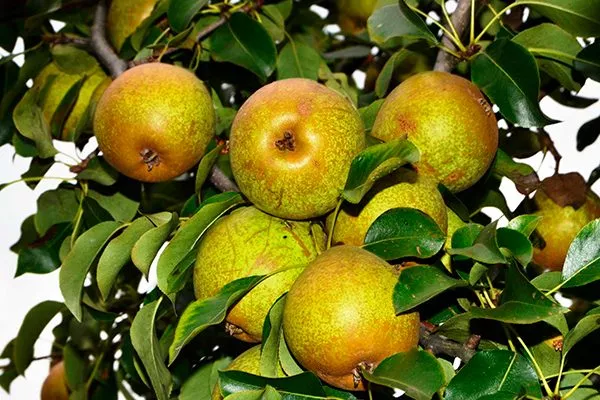
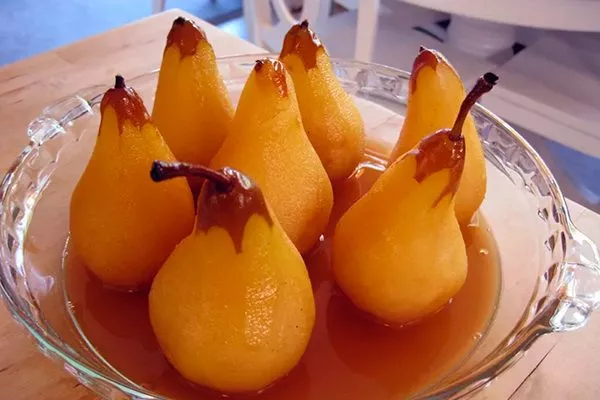
The fruits are versatile: they're excellent fresh, which is preferred by most consumers, and equally delicious when processed. The resulting harvest can be used to make a variety of products, including jam, compote, juice, dried fruit, preserves, and even wine.
Advantages and disadvantages
The advantages and disadvantages of the variety can be grouped based on the reviews of gardeners who have grown Late Belarusian at home.
Landing according to the rules
To ensure a stable harvest of Belorusskaya Late, in addition to studying descriptions and reviews, it is necessary to plant it correctly:
- The optimal time for planting is spring. Wait 4-5 days after the snow melts and begin work. In the fall, seedlings are planted after the leaves have fallen, but before the first frost.
- The planting site must be well-lit, as this affects the sugar content of the fruit and the overall yield. Each tree requires a plot measuring 4.5 x 4.5 m. Clayey or sandy soils should be avoided; chernozem soil with a loose, moisture-retentive structure is preferable. The groundwater level should be at least 200 cm below the surface.
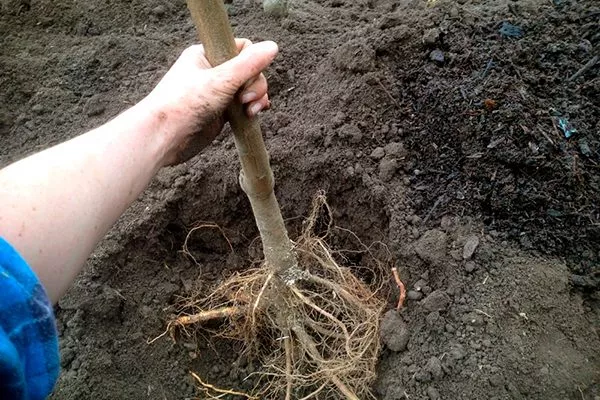
- Soil preparation should begin well in advance. To do this, dig a hole 80 cm deep, mix the excavated soil with sand (20 kg), compost (18-20 kg), potassium (35 g), and phosphorus (5 g), mix everything together, and return it to the hole.
- When planting, the root collar is not buried deep – it should be 6-8 cm above the soil level.
- ✓ The soil pH level should be between 5.5-6.5 for optimal pear growth.
- ✓ Test the soil for heavy metals and salts before planting.
Post-planting care
The pear is considered a relatively undemanding plant, and even a novice gardener can cultivate it effectively if they follow basic care guidelines. Basic cultivation techniques are simple, but they must be carried out systematically:
- Removing weeds from the tree trunk circle. During the first two years of a pear tree's life, it's important to ensure all nutrients from the soil are directed exclusively to the tree's roots, which promotes rapid development and growth. Weed control protects the young tree from pests.
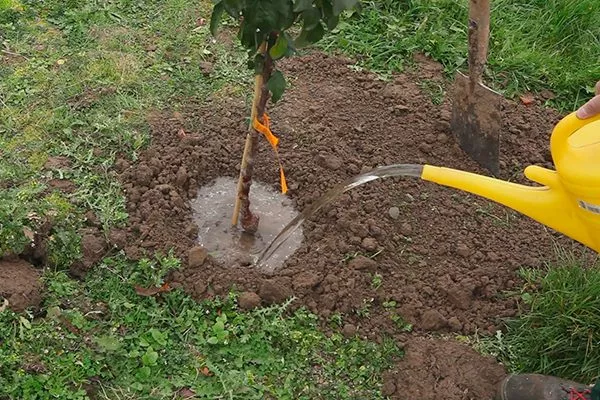
It's recommended to remove weeds by hand or with a scythe, then carefully loosen the soil around the trunk and apply mulch. Avoid digging the soil with a shovel to avoid damaging the pear tree's roots. - Watering. The variety doesn't require frequent watering. However, in dry weather, watering twice a week is necessary. Late August is the time for a moisture-replenishing watering to prepare the pear for winter.

- Tree pruning and shaping. The first pruning is done immediately after planting. If a one-year-old sapling is planted, it is pruned to a height of 65-75 cm. For a two-year-old tree, branches are shortened by a third of their length. The central shoot is pruned by a quarter of its length to stimulate lateral branching and prevent excessive vertical growth.
Annual pruning is performed to remove branches growing inward, as well as damaged and diseased shoots. The main pruning is performed in the spring before buds swell. Use sharp, disinfected tools.
Detailed trimming instructions are provided in the video:
- Top dressing. Two years after planting, apply urea or ammonium nitrate in the spring at a dose of 20-25 g per square meter of pear tree feeding area. In the summer, add 35-45 g of superphosphate per the same area. In the fall, use complex mineral fertilizers without nitrogen.
Harvesting and processing of crops
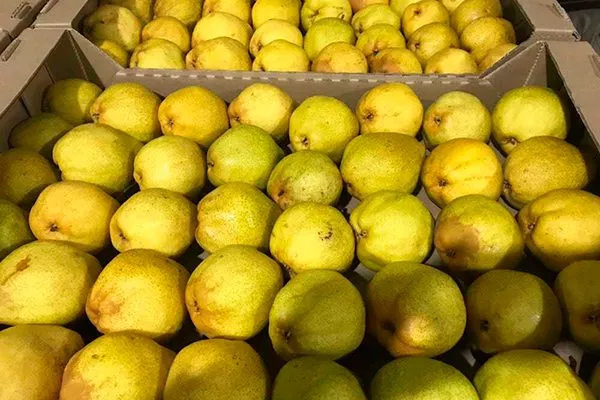
This process is rewarding for the gardener. The fruit is picked in dry weather, to avoid moisture, and undergoes a preliminary sorting. Damaged pears are set aside for processing, while healthy, attractive fruit is reserved for storage and sale.
What is the best way to store fruits?
This variety has excellent shelf life: the harvested crop can remain fresh for up to six months. To extend the shelf life of the harvest, ensure good ventilation.
Other nuances:
- It is recommended to place the fruits in wooden boxes or specialized containers in one or two rows, and wrap each fruit in a sheet of newspaper.
- The optimal temperature range for storing pears varies from +2 to +8 degrees, thanks to which they can be stored for up to five months or more.
- If stored on an unheated balcony, basement, or cellar, pears will remain fresh until the end of winter. It's important to maintain a temperature of 0 to 3°C in the storage area and ensure excellent ventilation.
- ✓ Fruits must be harvested at the stage of technical maturity for maximum shelf life.
- ✓ The absence of mechanical damage on the fruit is critical to prevent rotting.
Preparing for winter
Preparing the Belorusskaya Pozdnyaya pear for winter begins in the fall. It's necessary to harvest all the fruit and carefully remove fallen leaves from under the tree to prevent insects from damaging the bark and laying eggs.
Next, do this:
- On fine days, you should clean the bark of ripe pears from moss, carefully removing the peeling old layer.
- It is necessary to prune dry branches in a timely manner and treat the cut areas with garden pitch, and it is recommended to whitewash the trunks and large branches with lime solution.
- The soil around the trunk of mature pear trees should be dug to a depth of no more than 20 cm to eliminate pests and their larvae.
- To prevent the root system from freezing, the tree trunk area should be mulched with peat or fine wood chips.
- It is recommended to insulate the trunks of pear trees by wrapping them with paper or other breathable material.
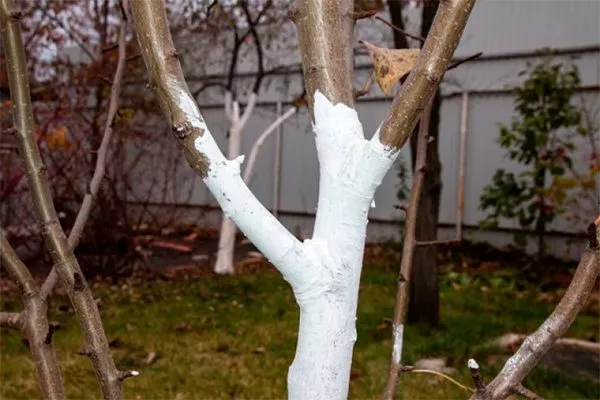
Tree whitewashing is carried out annually from October 15 to November 15 in dry weather. You can buy a ready-made whitewash solution or create your own by mixing:
- 2.2-2.5 kg of lime powder;
- 500 g of copper sulfate;
- 9-10 liters of clean water;
- 100 g of wood glue.
Mix everything thoroughly to completely dissolve the ingredients and let it sit for at least 2-3 hours before use.
Diseases and pests
The variety doesn't boast high resistance to diseases and pests. For example, scab, a fungal disease, can seriously affect:
- infected leaves become covered with brown spots;
- then twist.
An effective preventative measure is annual crown pruning to ensure better ventilation.
Fire blight is another dangerous disease that causes buds to wilt. It can be combated by applying Bordeaux mixture, which contains copper, during the flowering period.
As for insect pests, leaf roller aphids and pear sawflies are quite common on this pear variety. Insecticides are effective against them.
Reproduction
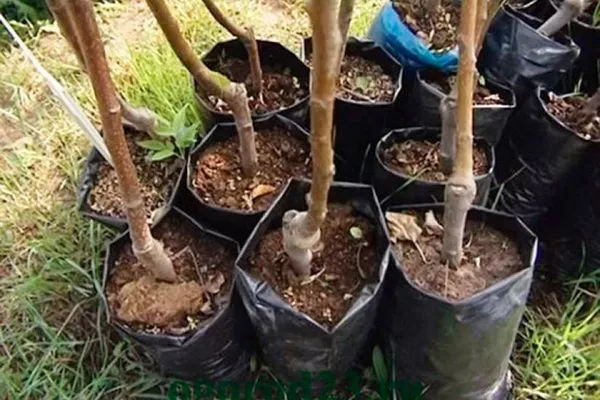
Belarusian late succulent rarely propagates naturally. Nursery-grown seedlings are often preferred. However, other propagation methods can also be used, including:
- seeds;
- budding (by eyes);
- layers (offshoots);
- cuttings;
- using part of the roots;
- vaccination.
Gardeners' reviews
The Belorusskaya Pozdnyaya pear boasts excellent flavor, which even improves after harvest, and excellent shelf life. This variety is widely used in both commercial orchards and private gardens. Gardeners highly value the Belorusskaya Pozdnyaya for its long shelf life and post-harvest flavor enhancement.