
The Augustovskaya Rosa pear is a popular summer pear that inherits the best traits of its domestic and foreign ancestors. This relatively young variety quickly gained popularity—today it is grown in dachas, garden plots, and farm orchards.
History of the variety's creation
The variety was developed at the beginning of this century by breeder S. P. Yakovlev. The Avgustovskaya Rosa variety was created by crossing the cold-hardy Nezhnost pear with one of the best Australian varieties, the Triumph Pakgama. Novika was zoned in 2002 in the Central Black Earth Region.
Description of the variety
The August Dew tree is medium-sized, reaching up to 3 meters. It has a drooping, moderately dense crown and a high capacity for shoot formation. The bark is gray, the shoots are thick, and the leaves are dark green and glossy. The flowers are small, white, and borne in clusters of 6-10.
- ✓ The bark is grey, the shoots are thick, the leaves are dark green and glossy.
- ✓ The flowers are small, white, collected in clusters of 6-10 pieces.
Brief description of fruits:
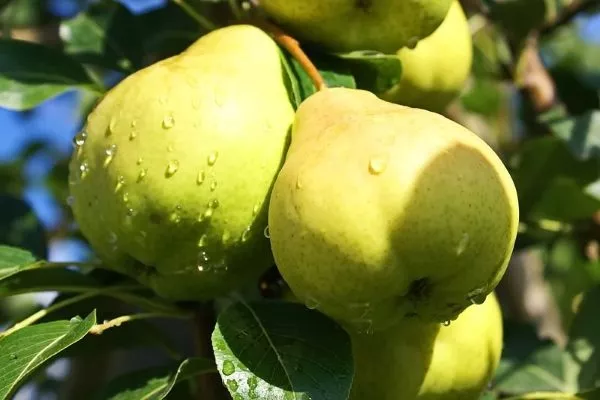
- shape - classic, pear-shaped;
- skin color is greenish-yellow, with a slight pinkish blush and subcutaneous dots;
- weight - 100-200 g;
- pulp - white, fine-grained;
- the stalks are thick;
- grain size - small, the replaceable chamber contains 4-5 small brown seeds.
Watch a video about the August Dew pear variety:
Advantages and disadvantages of the variety
Before planting the Augustovskaya Rosa pear in your garden, you should thoroughly evaluate the tree's agronomic characteristics and the commercial quality of its fruit, comparing all its advantages and disadvantages. This variety may not be suitable for a particular garden or region, or may not meet your specific needs.
Below are the pros and cons of this pear variety:
Characteristics
Along with the characteristics of the tree and its fruit, experienced gardeners choosing varieties for their gardens are interested in the tree's agronomic characteristics. These largely determine whether the tree will thrive and bear fruit in specific conditions and whether it will meet its owner's expectations.
Ripening time
Avgustovskaya Rosa is a mid-season variety; its fruits begin to ripen in the second ten days of August. Mass fruiting begins in the first ten days of September. Ripe fruits are firmly attached to the stalks and rarely fall off.
Early maturity and productivity
Three to four years after planting, young pear trees begin to bear fruit. Gardeners harvest approximately 40 kg of fruit from a single tree. During industrial trials, the variety yielded 150-200 c/ha, significantly exceeding the benchmark used in commercial horticulture.
Sustainability
This variety is distinguished by its relatively high frost resistance—mature pears can withstand temperatures as low as -36°C. Augustovskaya Dew is resistant to septoria, scab, and other fungal diseases. Drought tolerance is average.
Fruit quality
The August Dew fruit has a sweet and sour flavor, and the flesh is juicy and tender. The skin is thin and smooth, barely perceptible when eaten. Tasters rate ripe fruit 4.6 out of 5. The fruit's sweetness stems from its high sugar content.
100 g of August dew fruits contain:
- sugar - 8.5 g;
- acids - 0.59 g;
- arbutin - 2.72 g;
- P-active substances - 40 mg;
- pectins - 0.84 g;
- ascorbic acid - 13.2 mg.
Pollination
For the Avgustovskaya Rosa to produce good yields, pear trees that bloom at similar times should be grown nearby. The variety is not very self-fertile, so pollinators are essential. The best option is the Pamyati Yakovleva pear. It is recommended to plant it at the same time as the Avgustovskaya Rosa.
Planting a pear tree
Proper planting is essential for the successful growth and subsequent life of a seedling. To ensure a healthy and fruitful tree, it's essential to follow all the agronomic requirements for pear planting.
- ✓ The seedling planting depth should be such that the root collar is 5-7 cm above ground level.
- ✓ The distance between trees should be at least 4 meters to ensure sufficient space for the growth of the root system and crown.
Selecting and storing seedlings
It's best to buy seedlings in the fall, when nurseries begin releasing their produce en masse. There's a wide selection of varieties during this period, and in the spring, growers sell what they didn't have time to sell in the fall.
How to choose good pear seedlings:
- age - 1-2 years;
- well-developed roots, without damage, growths or traces diseases;
- clean and smooth bark, without cracks or wounds.
Containerized seedlings with closed roots can be over two years old. They can be replanted anytime from April to October, and survival is unproblematic. These seedlings can be 3-5 years old or more.
If you haven't had time to plant the seedlings you bought, or the climate in your region is more suitable for spring planting, you can dig them in and store them until spring.
How to plant a seedling in the garden:
- Dip the roots in a slurry - a creamy mixture of mullein, clay and water - this will prevent them from drying out;
- Dig a hole (DxW) 30-40x80-100 cm.
- Pour sand onto the bottom, making a layer 5 cm thick.
- Place the seedling at an angle - the roots on the sand, the upper part on the edge of the hole.
- Sprinkle the roots with sand and water it.
- When the cold weather sets in, fill the hole with soil until only the top layer remains above the ground.
Landing dates
The August Dew pear can be planted in both spring and fall. The harsher the winters in the region, the more favorable the spring planting. In fall, planting occurs around October (the exact timing depends on the climate)—a month before the onset of frost. In spring, planting occurs before bud break, but no later than mid-May.
Preparing the planting hole
During the first few years after planting, the tree doesn't need any additional fertilizer. It gets everything it needs from the planting hole. Dig the hole in the fall, or at least 3-4 weeks before planting, to allow the soil to settle and the fertilizer to dissolve.
How to prepare a planting hole:
- Dig a hole measuring 100 x 70-80 cm (D x W). In sandy soils, increase the hole diameter to 100 cm or even more. When digging, set aside the top fertile layer (about 30 cm)—it will be used to create the soil mixture.
- Place a drainage layer of broken brick, expanded clay, or crushed stone on the bottom to prevent waterlogging, which is harmful to the pear tree's roots. The layer should be 10-15 cm thick. Drainage is not necessary on sandy soils; instead, place a layer of clay on the bottom to retain moisture.
- Mix equal parts fertile garden soil with black soil, peat, humus, and sand. Add 300 g of superphosphate and 3 liters of wood ash. Mix thoroughly.

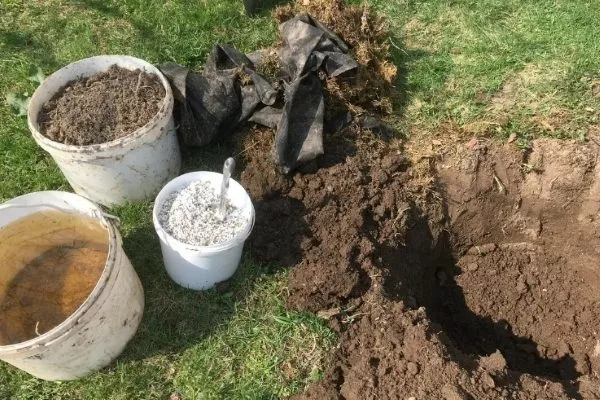
Fill the hole with the prepared mixture and cover it with a waterproof material to prevent the nutrients from leaching out. Now the hole will "saturate" until planting day.
Step-by-step planting instructions
On the day of planting, carefully inspect the seedling—whether purchased or preserved by burying it. Trim any damaged or dried roots with sharp, disinfected pruning shears, leaving a white edge.
Planting order:
- Soak the seedling in water or a growth stimulator solution for 3-4 hours.
- Open the planting hole and remove some of the soil mixture to make room for the seedling's root system.
- Drive a stake into the ground 10-15 cm from the center. A wooden stake, plastic, or metal pipe will do. The key is to ensure the stake is approximately 1 m above the ground and is positioned on the north side of the seedling to prevent frost cracks.
- Form a small mound of soil from the soil mixture and place the seedling on it. Carefully spread the roots so that none are bent; they should lie freely on the slopes of the mound. The root collar should be approximately 5-7 cm above ground level.
- Fill the hole with the soil mixture removed before planting. Add it gradually, compacting each layer periodically.
- Tie the tree to the support with a soft material so as not to damage the bark.
- Form an earthen rampart around the perimeter to prevent water from flowing out of the tree trunk circle.
- Water the pear with warm, settled water. You'll need about 20 liters.
- Trim the seedling so that its height above the ground is 60-80 cm. Shorten the branches by 50%.
- Once the water has been absorbed and the soil has dried out slightly, loosen it and mulch with loose material. Use hay, sawdust, compost, etc.
Mulch will not only prevent moisture from evaporating quickly but also slow down weed growth. Furthermore, mulch is an excellent way to gradually and unobtrusively add organic matter to the soil.
Also watch a video about choosing and planting a pear tree seedling:
Care and agricultural recommendations
The August Dew pear isn't particularly demanding, but standard agricultural practices are essential. For the tree to produce good yields, it requires watering, fertilizing, and regular pruning, pest and disease prevention.
Top dressing
Start fertilizing the pear tree 2-3 years after planting, since at first the tree will have enough nutrition from the planting hole.
Recommendations for fertilizing the August Dew pear:
- In spring, apply 2 kg of any organic matter under the tree. However, never spread fresh manure, as this can cause severe root burn. During this period, you can also apply mineral nitrogen fertilizers, such as ammonium sulfate (30 g per square meter). However, only in non-acidic soils.
If the soil is acidic, fertilize the tree with calcium ammonium nitrate (30-40 g per square meter). If the soil is covered with turf, increase the nitrogen dose by 50%. - In the fall, apply potassium sulfate under the tree - 20 g per 1 sq. m. Once every 3 years, scatter superphosphate under the pear tree - 60 g per 1 sq. m.
- Apply fertilizer throughout the entire tree trunk circle. It should roughly correspond to the perimeter of the tree's crown.
Apply organic matter to young trees in early spring by mulching. Cover the soil with 5-6 cm of organic fertilizer.
Watering
The tree requires regular watering. If it experiences a water deficit, it will drop ovaries or even fruit. Water the pear tree so that the soil at a depth of 15-25 cm is always slightly moist, not dry. However, waterlogging should be avoided, as excess moisture can cause rot in the roots and trunk.
Recommendations for watering:
- It is undesirable for water to touch the trunk when watering, so rake a small earthen rampart around it;
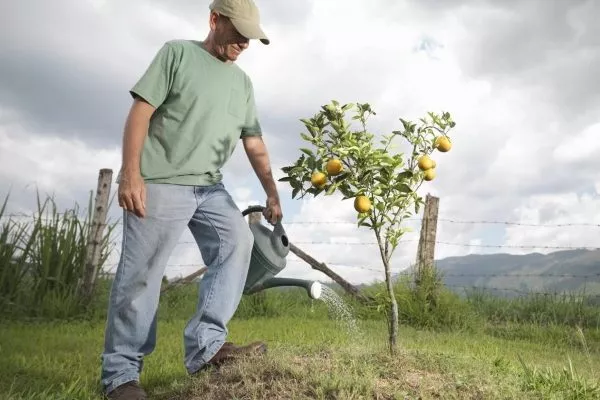
- Begin watering in the spring, before the tree blooms. A mature tree should be watered approximately every three weeks. Apply approximately 30-50 liters of water per tree. Adjust the frequency and amount of watering depending on the weather and soil conditions.
- Water young trees more frequently, about once a week, preventing the soil from drying out. The recommended watering rate is 10-20 liters of water.
- In the fall, perform a moisture-recharging watering. Each pear tree requires 60-100 liters of water, depending on its age.
- Avoid sudden changes in soil moisture. This is especially dangerous during fruiting, as the fruit may crack if the tree is given too much water immediately after a drought.
Soil care
The soil around the tree trunk is loosened after watering and heavy rains, when it has dried out slightly. Mulch the soil regularly. Gardeners often water the tree directly through the mulch after covering it. This can lead to slugs, May beetles, and other pests. These pests should be collected and destroyed, and the tree and the area around the tree trunk should be treated with Decis, Fufanon, or similar products.
Shaping and pruning
The August Dew tree is short, so the recommended crown shape is an improved bowl. This ensures good ventilation, light, ease of maintenance, and harvesting.
Formative and regulating pruning scheme:
- A year or two after planting, select 3-4 branches on the trunk, spaced 15-20 cm apart and pointing in different directions. These will become skeletal branches. Prune them by 30-40% of their length.
Cut all other shoots to a ring. Shorten the central conductor slightly as well. - After another year or two, begin forming secondary branches. On each main branch, select a pair of shoots spaced 50-60 cm apart. Shorten them by 50%, and cut all the others back to a ring.
- Next, adjust the length of the branches so that they are approximately the same length, but none of them compete with the central conductor.
- Thin the crown periodically, as this variety tends to become dense. Remove all vertical shoots and those growing inward. This type of pruning is called "regulatory pruning" and should be done before bud break.
The tree also requires maintenance and sanitary pruning. The latter is performed both in spring and fall, removing diseased, dry, frost-damaged, and damaged shoots.
Principles of maintenance pruning:
- target — maintain crop yields at a high level;
- the simplest option - pruning, which consists of shortening young shoots by 5-10 cm (this stimulates branching);
- second method - replacement of fruiting branches with replacement shoots.
Tree pruning should be done with a sharp, disinfected tool in a 1% copper sulfate solution. When pruning branches, avoid leaving knots and shoots, as they become breeding grounds for fungal diseases and insect pests.
Additionally, watch a video on how to prune a pear tree in spring:
Preparing for winter
Preparing a tree for winter begins in October. The method of insulation depends on the tree's age. Young trees require more careful insulation.
How to prepare a pear tree for winter:
- Remove dried fruit from the tree—insect pests may overwinter in them—and rake up all fallen leaves.
- Apply a moisture-recharging watering and whitewash the tree trunk, including the skeletal branches. Prepare the solution by mixing 2.5 kg of slaked lime or chalk with 0.5 kg of copper sulfate. Add 100 ml of casein adhesive mixture.
Before applying whitewash, clean the trunk from moss, lichen, and dead bark. - Cover the tree trunk circle with a thick layer of sawdust - 15-20 cm.
- Wrap the trunk and shoots of young pear trees with non-woven material. When snow appears, rake it closer to the trunk.
Diseases and their treatment
The August Dew pear has a fairly strong immune system, but under unfavorable weather conditions and serious violations of agricultural practices, it can be affected by various diseases - fungal, viral, bacterial.
Table 1. Common pear diseases and how to combat them:
| Name of the disease | Symptoms | Control measures |
| Scab | The leaves become covered with olive spots, then the fruits are affected - they rot and become covered with cracks. | Collect and burn diseased parts of the tree, treat with fungicides, for example, Horus. |
| Moniliosis | The fungus attacks the leaves and shoots, causing them to wither and darken, as if they were burned or frostbitten. | Pruning diseased shoots from 20-30 cm of healthy wood, treatment with Fundazol or its analogues. |
| Sooty mold | The fruits and leaves become covered with a black coating. | Collection and destruction of affected fruits. |
| Black crayfish | The appearance of wounds on the bark, the formation of dark spots around them. | Removal of diseased areas, spraying with copper sulfate (30 g per 1 liter of water) followed by coating with a manure-clay mixture (1:1). |
| Fruit rot | The appearance of brown spots. | Treatment with Hom, after flowering - with Oxyhom (according to the instructions). |
| Mosaic disease | The leaves become covered with yellow and light green spots. | Destroying a tree is not a cure for the disease. |
Pests and their control
The variety is fairly pest-resistant, but severe insect infestations can cause significant yield losses. Timely preventative measures can help, and insecticide treatments can be used when symptoms appear.
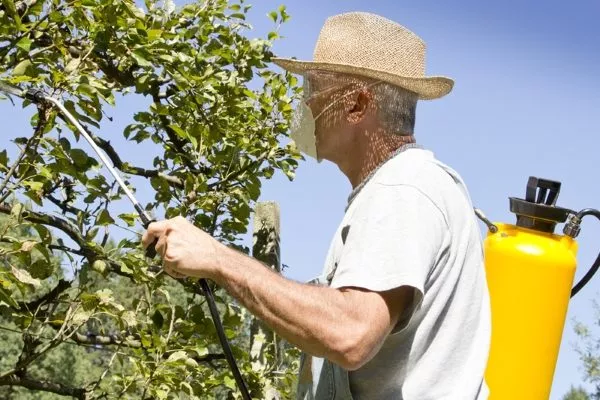
Table 2. Pear pests and how to control them:
| Pest | Signs of defeat | Control measures |
| Aphid | The leaves, especially at the tops of the shoots, are covered with small green, white or other colored insects. | Treatment with Fitoverm, Iskra, Confidor; for minor lesions, spray with tobacco or soap infusion. |
| Pear codling moth | Caterpillars gnaw holes in the fruit pulp and eat it away. | Spray once a month with Fitoverm, Agravertin or their analogues. |
| Pear blossom weevil | Small sucking insects gnaw out flowers, causing them to turn yellow and die. | Spray with Aktara, Inta-Vir or their analogues. |
| Red fruit mite | The leaves become covered with light spots and then turn grey-red. | Treat the tree with Fufanon or Fitoverm 1-3 times per season; in case of widespread infestation, it is recommended to use acaricides such as Apollo or Demitan. |
Harvesting and storage
It's recommended to start harvesting from the lower branches, gradually moving upward. August Dew pears are quite easily damaged, so avoid squeezing or throwing them when harvesting. It's best to harvest in the morning or evening. The fruits are picked with the stalk attached.
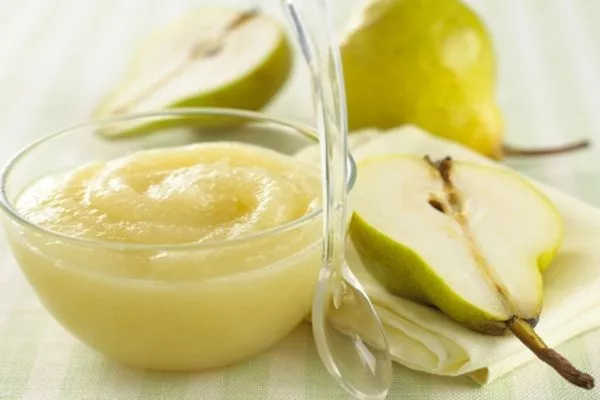
Only whole fruits, free of dents, broken stems, or other damage, are stored. The shelf life under normal conditions is two weeks, and in the refrigerator, two to three months. This variety is delicious fresh and preserved. The fruits are used to make jams, preserves, compotes, salads, porridges, purees, and juices.
Pears plucked from the tree are first placed in baskets and then stacked in two layers in crates. They are stored in a basement at a temperature of 1 to 3°C and a humidity of 85%.
Gardeners' reviews
The August Dew pear is one of the best pears for regions with harsh climates. The tree quickly adapts to growing conditions and provides its owners with a substantial harvest of delicious, long-lasting pears.