
The Aromatnaya pear is a popular variety, resistant to frost and drought. It is widely sought after by gardeners in our country due to its high yields and early fruiting. With proper care, the plant will thrive, its immunity will be strengthened, and the fruit will be large and juicy.
Origin
It was obtained from seed from an accidental pollination of the Josephine Mechelnskaya variety. The hybrid was developed at the Crimean Horticultural Experimental Station in 1962 through the joint efforts of R. D. Babin, A. F. Mileshko, and V. A. Yakimov. It was accepted for state variety testing in 1992.
Size and shape of the tree
The plant grows compactly, reaching up to 1.2 m in height. This makes it suitable for growing in small spaces. The crown has a pyramidal shape. The branches are abundantly covered with medium-sized, dark green leaves.
Characteristics of fruits
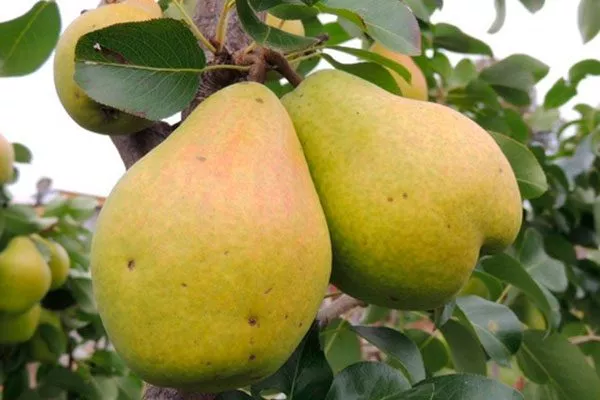
They grow large and uniform, with an average weight of about 300 g, but some specimens reach a weight of up to 500 g. Other distinctive features:
- The shape is broadly pear-shaped.
- The peel is yellow-green in color with a slight blush on the sunny side.
- When harvested, they acquire a golden-yellow color with a carmine blush on most of the fruit.
- The peduncle is slightly inclined.
- The pulp is creamy, oily, has a pleasant aroma and excellent taste.
Ripening and fruiting
Harvesting time is crucial. Fruit ripens by the end of August and can be stored until January of the following year. This variety is characterized by rapid ripening—the first fruits can be harvested as early as 5-6 years after planting.
The crop is characterized by high yields. Gardeners harvest approximately 1 ton of fruit from a 1-hectare plot. The fruit tolerates long-distance transportation well, does not crack, and retains its marketable appearance.
Growing and care
Pear seedlings require special attention when planting. They grow best in loose soil with a slight clay content. It's important that the soil is well-drained and breathable, yet retains moisture at the plant's roots.
- ✓ Soil pH should be between 6.0-6.5 for optimal nutrient absorption.
- ✓ The depth of groundwater is at least 1.5 m to prevent root rot.
For successful planting, choose sunny areas protected from strong winds. Plant the seedlings in spring or fall. Experienced gardeners recommend planting in September or October.
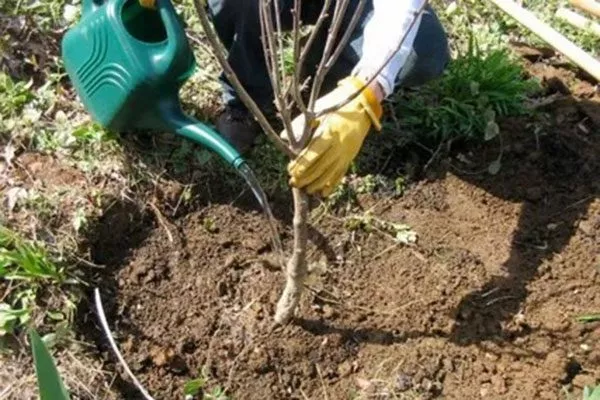
Prepare for boarding in advance:
- Dig a hole with a diameter of approximately 70-80 cm.
- Mix the top layer of soil with organic and mineral fertilizers, add wood ash if necessary.
- Fill the hole with the mixture to the level where the tree will be planted.
Use fertilizers containing nitrate or urea. Chicken manure is also suitable. Avoid using fresh manure, as it can damage the plant's roots if left to decompose for a long time.
The crop will thrive if cherries, plums, or sweet cherries were previously grown in the area. Peaches, chestnuts, walnuts, currants, raspberries, and potatoes are poor neighbors for pears.
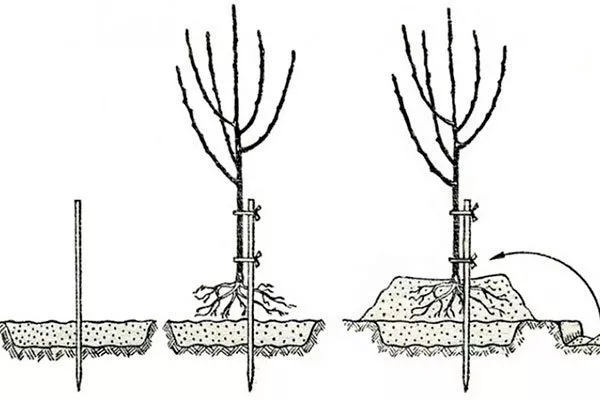
Step-by-step algorithm:
- Place the support in the center of the hole.
- Place the seedling and straighten the roots.
- Fill the hole with soil, compact it thoroughly, but so as not to damage the roots.
- Carefully tie the trunk to the stake using cloth or rope.
- Make a small depression for watering.
Proper care of pear trees includes a number of agricultural practices:
- Watering. During the first year after planting, water the plant once a week, using 10-20 liters of water per plant. In subsequent years, increase the amount of water, but reduce the frequency to 1-2 times per month.
Mature trees are best watered using sprinklers. After watering, loosen the soil and mulch the area around the tree trunk. - Top dressing. No additional feeding is required for the first 1-2 years after planting if the soil was fertilized before planting. Fertilize twice a year: in the fall and in the spring. In the fall, use mineral and phosphorus-potassium fertilizers. In the spring, fertilize with nitrogen-containing fertilizers.
- Trimming. Shape the pear tree's crown in early summer or late autumn for optimal development.
- Prevention of diseases and pests. Regularly remove fallen leaves and fruit. Destroy all diseased plants and their debris. Treat trees with copper or iron sulfate and Bordeaux mixture after the leaves have completely fallen and before the growing season begins in the spring.
Gardeners' reviews
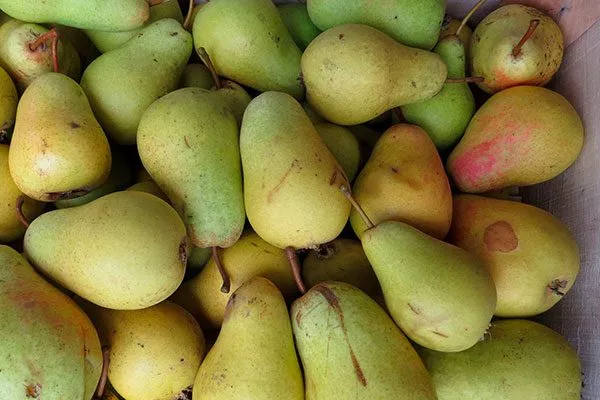
The Aromatnaya pear is characterized by large fruits with juicy flesh. Its easy storage and relative ease of care make it an attractive choice. Favorable planting conditions and moderate soil requirements contribute to its successful cultivation.