
Walnuts are quite resistant to insects and diseases, so every gardener should be able to recognize the symptoms of damage if climate conditions suddenly change or proper tree care becomes impossible. Below are the most common diseases and pests that can affect the tree.
What diseases affect walnuts?
Walnuts are susceptible to fungal, viral, and bacterial diseases. If you detect plant diseases early, you can treat them and avoid serious consequences.
White spot
A fungal disease that rarely affects walnuts. Light-colored spots appear on the undersides of leaves. The disease is more severe in damp, rainy weather, especially in densely planted areas where plants are more likely to infect each other.
To prevent the disease from spreading, care for it properly. Remember that excess moisture only aggravates the disease, so provide more light, reduce watering, and thin out the plantings.
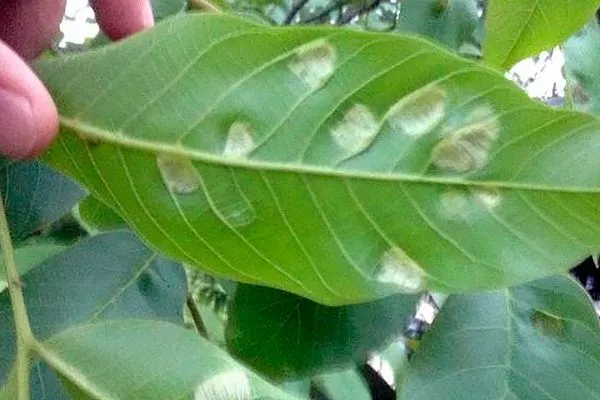
Recommendations for combating white spot:
- If you notice the first signs of infestation, prune immediately: make the cut 5 cm away from the affected area, ensuring healthy tissue is included. Sprinkle the cuts with wood ash and cover with garden pitch.
- Treat the plant's leaves and trunk with 1% Bordeaux mixture.
- Treat the tree trunk circle with the same solution, after five hours loosen the soil and mulch with peat and sand.
Apply the treatment to the leaves and trunk three times, with a 10-day interval between treatments.
To prevent the plant from becoming infected again, treat it with a 3% Bordeaux mixture before bud break. During the summer, when temperatures drop and there are prolonged rains, spray the walnut with the same solution, but at a 1% concentration.
Brown spot (marsonia)
A fungal disease that attacks walnuts when humidity increases and temperature fluctuates.
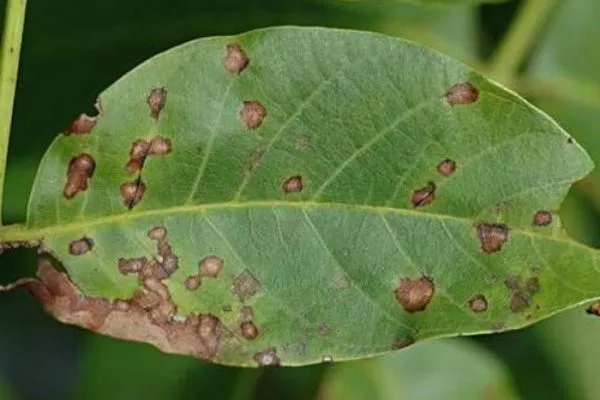
The main reasons for the spread are:
- Incorrect care (no loosening, no mulching, no removal of leaves at the end of the season, etc.).
- Prolonged rainy periods at the beginning of summer.
Brown spot affects young leaves, shoots, and developing fruit. If you don't take immediate action, you risk losing up to 50% of your harvest. The first signs of the disease appear in May: small, round, brown spots appear on the undersides and tops of the leaves.
Treatment recommendations:
- Treat the plant with a 1% Bordeaux mixture solution or any copper-containing fungicide, such as Abiga-Peak, Oxychom, or HOM. Repeat the treatment three times, spaced two weeks apart. Remove all infected plant parts and collect fallen leaves and fruit beforehand.
- Maintain soil moisture. Don't forget to loosen the soil and mulch it: use peat moss and sand.
As a preventative measure, experienced gardeners recommend treating the nut with a 3% solution of copper-containing preparations before bud break and after harvesting.
Fire blight
A bacterial disease that can cause serious damage to virtually any part of the tree. It appears as water-soaked spots on leaves, petioles, fruits, and flowers. Over time, these spots turn black and develop into ulcers.
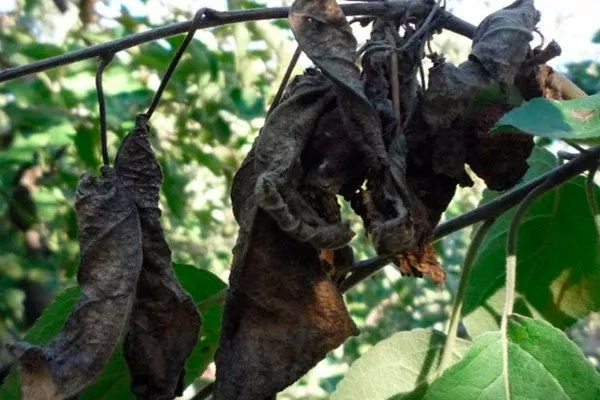
Remove affected plants completely and burn the fruit. If you don't do this promptly, all crops in your garden will become infected.
Methods of control:
- Reduce watering as overwatering increases the risk of fire blight.
- If the infestation is minor, you may still be able to save the trees by spraying them with copper-containing products: 1% Bordeaux mixture, Zineb, or HOM. Apply only in dry, windless weather.
Bacteriosis
An infectious disease that manifests as brown spots on the leaves, branches, and fruit of the tree. It spreads rapidly in damp, rainy weather. If it strikes during flowering, bacterial blight can destroy a large portion of the harvest. The affected parts of the plant gradually dry out and eventually fall off.
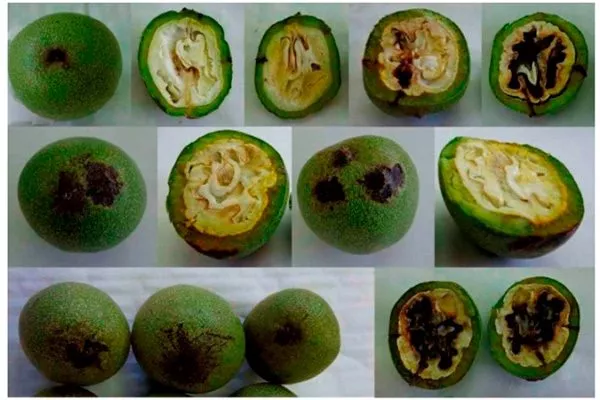
Ways to combat the disease:
- Cut off and burn diseased shoots. Cut them off 15 cm below the affected area. If the disease has just appeared, scrape off the affected areas with a sharp knife.
- In the autumn, carry out deep digging in the garden to enrich the root system with oxygen.
- Copper-containing preparations are often used against bacterial blight. Treat with 3% Bordeaux mixture.
Root cancer
A bacterial disease that can affect the roots of young and mature plants. Root canker causes growths to appear on the rhizomes, leading to the cessation of growth and fruiting. This disease often leads to the death of the walnut tree.
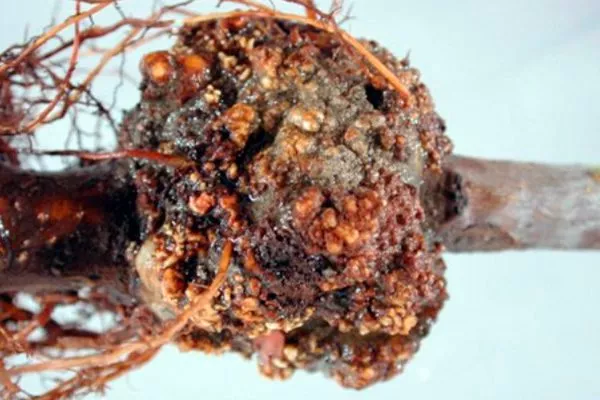
Ways to combat the disease:
- Dig up the seedling and completely remove any growths, clean the root, and then replant the tree. For preventative maintenance, regularly inspect the bark, trunk, and large branches of the plant.
- If you notice growths, damage, or cracks, clean them and treat them with copper-containing products, then caustic soda. Don't forget to treat the cleaned areas with garden pitch and whitewash with lime.
- ✓ The presence of soft, watery growths on the roots that release liquid when pressed.
- ✓ Slowing of tree growth without apparent reason, despite optimal care conditions.
If the damage is too deep, first rinse it with water from a hose and only then begin treatment.
What pests are walnuts afraid of?
Walnut trees are susceptible to a variety of pests, which can infest virtually the entire plant. To prevent this, familiarize yourself with the insects' appearance and how to control them.
Royal nut moth
The royal nut moth is a dangerous pest that appears on young trees. The insect eats the pulp of the leaves and lays eggs in them. Identifying the pest is quite difficult because its coloring is similar to the bark.
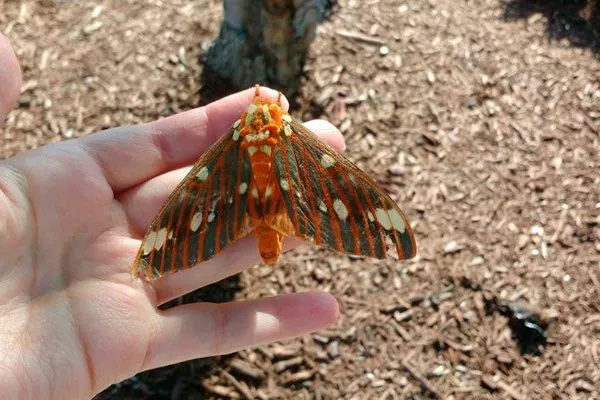
Methods of insect control:
- Spray the plant with strong-smelling products, such as essential oils, marigolds, garlic, or wormwood. These scents repel moths.
- Use chemical treatments: Decis, Decamethrin. Repeat treatments every 15-20 days.
Fight moths promptly, as their presence slows down the tree's growth, which threatens its death.
Codling moth
Codling moths feed on nut kernels. The caterpillars are particularly dangerous, eating the fruit from the inside out, which can lead to the loss of a large portion of your harvest.
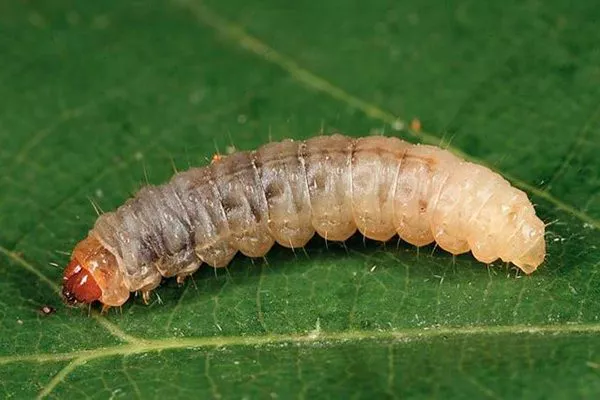
How to fight codling moth:
- Collect all affected nuts and burn them.
- Place trapping belts on trees to collect caterpillars.
- Use insecticides. Gardeners recommend Actellic: dissolve 12 ml in 10 liters of water. Apply in late May or early June.
- In case of extensive infestation, use stronger chemicals: Tanrek, Varant, Calypso.
Wart mite
The warty mite is small, reaching only 1 mm in length. However, this pest can cause significant damage to trees: it infests dormant buds, damaging leaves, and stunting shoot growth.
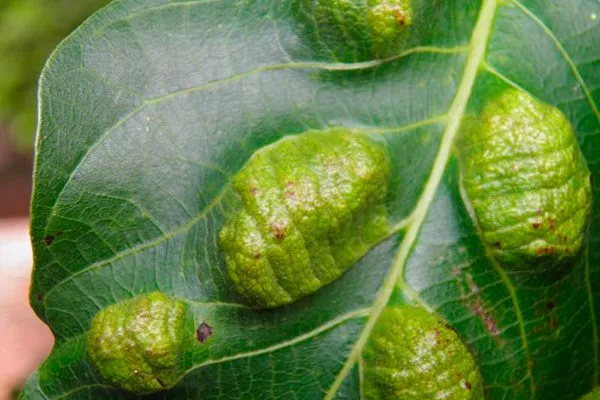
Trying to control the pest with traditional methods is pointless, so use Aktara and Akarin for control. Spray twice a month, 10-14 days apart.
Cruciferous bug
Walnut trees are often attacked by the cruciferous bug. The beetle is small and can be identified by its black antennae and reddish-black shell. The pest has a proboscis, which it uses to feed on leaf sap.
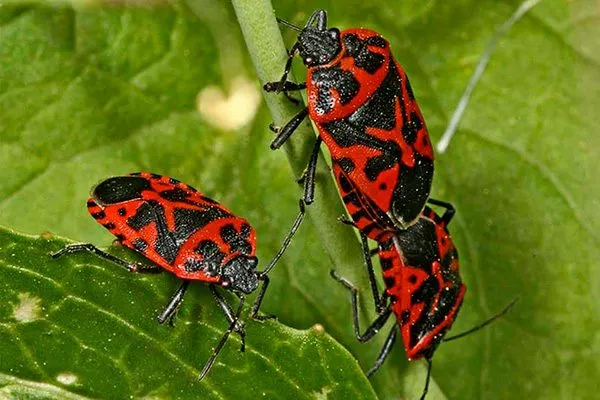
A soap solution will help you deal with the pest: dilute 300 g of laundry soap in 10 liters of water. Repeat the treatment every 14 days until the pests are completely gone. Be sure to spray the plant at night and rinse the solution with clean water early in the morning to prevent sunburn on the foliage.
Aphid
A very common insect that lives on buds and leaves, especially the undersides. These small pests literally cover the foliage, feeding on its sap, which weakens the plant and leads to further desiccation and leaf fall.
Pests can attack walnut trees in large numbers, especially after rain. If you don't start controlling the pests promptly, you could lose a significant portion of your harvest.
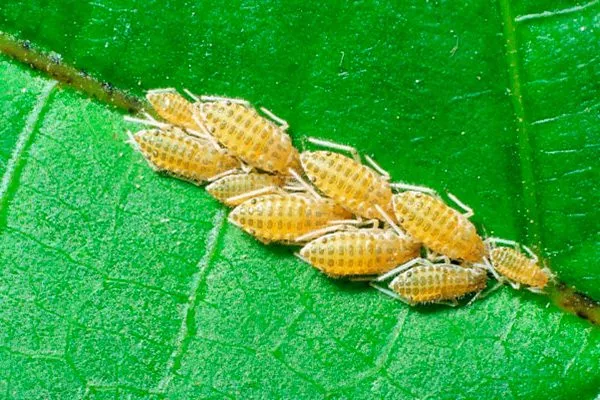
Methods of aphid control:
- Use a soap and soda solution for treatment: dissolve 80 g of grated laundry or tar soap in 1 liter of warm water, add 20 g of washing soda. Treat the plant in the evenings until the pests disappear.
- Prepare a dandelion infusion: soak 400 g and 200 g of chopped leaves and roots of the plant in 10 liters of water. Let it steep for 4 hours, then use it to treat the walnut tree.
- An equally popular infusion is one with essential oil: add 10-15 drops of essential oil (thyme, lavender, or cedar) to 200 ml of cream and 500 ml of water. Spray the nut with the resulting solution twice daily.
- If folk remedies don't help, use chemical treatments such as Decis or Karate. Avoid using them during flowering. The interval between treatments is 20-25 days.
Worms in the fruit
Fruit worms are caused by fruit flies, or Drosophila melanogaster. These parasites resemble common flies, but are more compact and brightly colored. The pest's body is covered with a striped pattern.
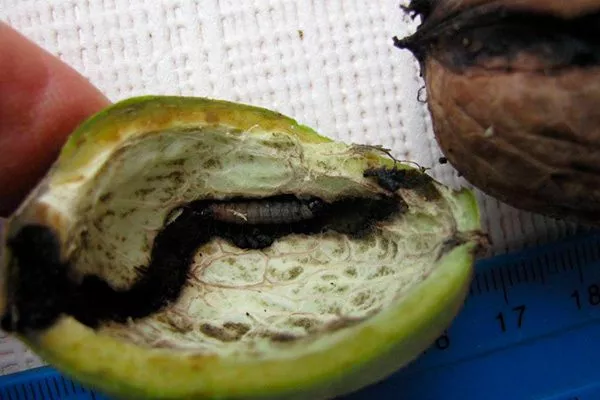
The insect lays eggs in the upper layers of soil, also on leaves and at the junction of the pericarp and petiole. After hatching, the worms search for food, gnawing into the peel and still-soft tissues of the fruit.
Recommendations for insect control:
- The most popular method for killing worms is soil cultivation: loosen the soil as deeply as possible to destroy the parasites' main habitat.
- Be sure to dust the soil with wood ash or tobacco dust.
Also treat the leaves and bark using copper-containing preparations at a 1% concentration.
American white butterfly
The American white butterfly is the most dangerous pest of walnut trees. The insect is completely white, with small, sparse black spots. The butterfly settles on tree branches and feeds on tree foliage. The butterflies then lay eggs, which hatch into caterpillars.
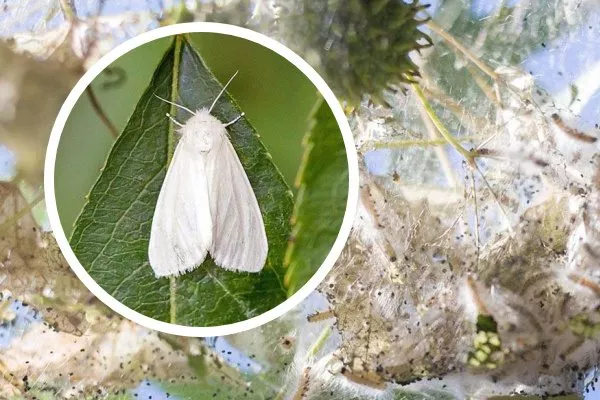
Methods of control of the American white butterfly:
- Destroy insects by burning their nests.
- Use special trapping belts that will prevent caterpillars from reaching the foliage.
- Inspect plants every week.
- Spraying with microbiological preparations is considered effective. Gardeners recommend using Bitoxibacillin, Lepidocid, and Dendrobacillin. Dilute all substances according to the instructions, not exceeding the recommended dosage. Approximately 3-5 liters of liquid are required per plant.
It is quite difficult to fight this pest, since it reproduces several times during one season.
Barkwood
The bark beetle is a small beetle that burrows under the bark, creating tunnels. The insect's presence can only be noticed by the signs of its activity: sap flow and canals in the bark. Because of this pest, the walnut tree's growth is stunted and it becomes severely weakened.
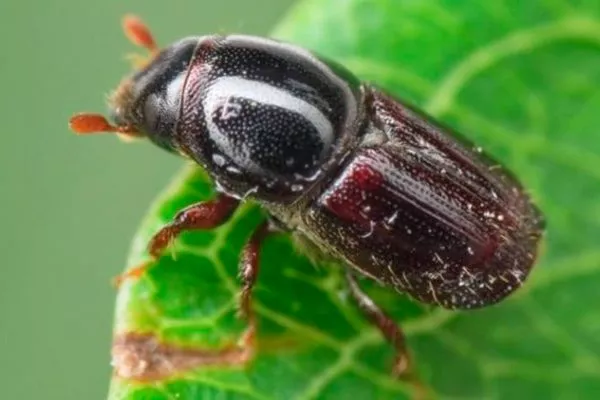
Recommendations for combating bark beetle:
- Inspect the trees. If you find any diseased or damaged branches, cut them out.
- Pests can hide in moss and lichen, so get rid of them.
- Whitewash the main trunk and large branches with lime. Perform this procedure in the spring.
General rules of prevention
Walnut diseases and pests often cause significant damage to the plant, so it's best to combat them before the first signs appear. To do this, follow simple preventative measures.
Spraying
To prevent walnut trees from being susceptible to various diseases and pests, spray them. This will protect the tree and ensure a stable harvest.
Follow these recommendations:
- Use copper-containing products and biologically based products. Before bud swelling, treat the tree with a 3% Bordeaux mixture or copper sulfate of the same concentration.
- Throughout the season, dust with wood ash and spray with an onion peel infusion every 15-20 days. To prepare the solution, pour 10 liters of boiling water over 1 kg of onion peel, simmer for 10 minutes, cool, and strain. Spray onto the leaves.
- At the end of the season, once you've harvested the entire crop and cleared the area, treat the plants with EMOCHKA. This biological solution is diluted with water at a ratio of 1:100. One liter of the prepared solution is used per square meter.
Experienced gardeners recommend using EMOCHKA at any stage of the plant's growth cycle, including when preparing compost. Just follow the instructions.
Soil fertilization
Walnuts are large trees, so they require adequate nutrition to ensure healthy growth, development, and immune support. Walnut trees can quickly deplete soil, so apply fertilizer before bud break and after harvest.
Recommendations:
- For the first time, use nitrogen-containing fertilizers. You can use urea, saltpeter, or manure. It's best to alternate mineral and organic fertilizers annually.
- Apply 30-45 kg of manure to each plant, spreading it evenly around the tree trunk. Then, dig the soil to a depth of 10 cm. First, add 20 g of wood ash, 5 kg of saltpeter, and 7 kg of urea for every 10 kg of manure.
This type of fertilizing will nourish the soil and increase green mass, as well as provide additional protection against diseases and pests. - In autumn, add 5 kg of superphosphate and 1.5 kg of potassium salt.
- Dust the leaves with wood ash and spray with onion peel infusion. This procedure is the best foliar feeding and protects the plant from pests.
Growing walnuts brings considerable income to gardeners. However, the plant can be susceptible to diseases and pests, which seriously impact its yield. Walnut trees are often attacked by various fungal spores. To avoid problems, follow these recommendations.