
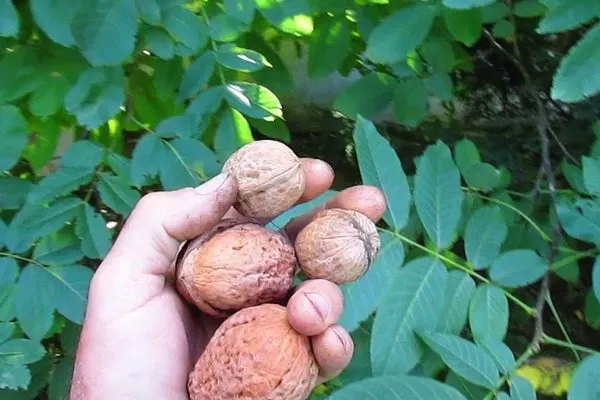
The walnut with the majestic name "Velikan" (Giant) is truly impressive in the size of its fruits – each nut is at least 4.5 cm in diameter and weighs 35-40 g. This variety is considered resistant to all walnut diseases, including brown spot. Another undeniable advantage is its thin shell, making the nuts not only easy to shell but also cost-effective (they produce little waste).
What kind is this?
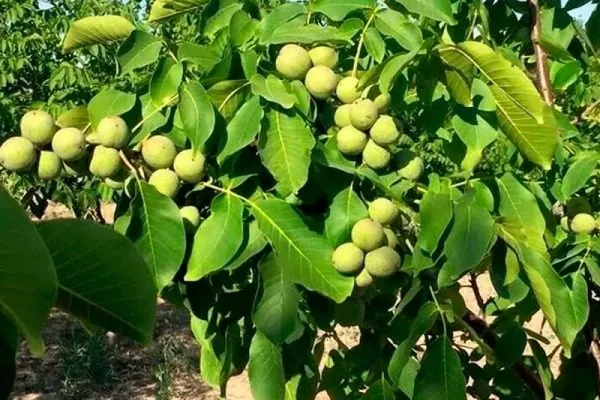
The Giant walnut (Juglans regia Giant) is a variety of walnut tree belonging to the Ash family, distinguished by its impressive size and fertility. It originates in Western Asia but is now cultivated worldwide.
External data
This variety is a majestic tree, reaching 500-600 cm in height, with a broad crown. The Velikan's fruits are impressive, weighing up to 35 g (and sometimes more) and rounded in shape. The thin shell allows for easy extraction of the light-colored inner kernel, weighing 12-15 g.
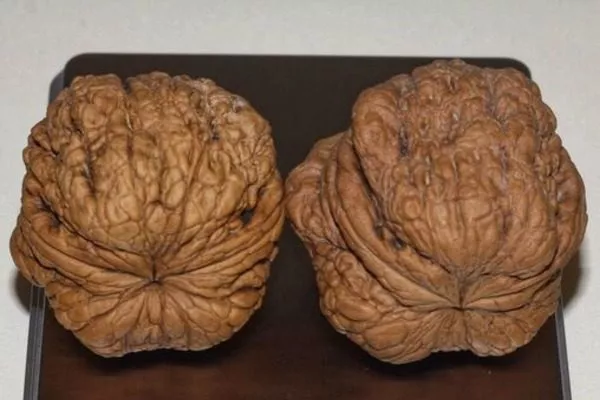
Other varietal characteristics:
- Each fruit usually contains 3-4 nuts.
- Male flowers are borne in pendulous catkins, while female buds are borne in clusters at the top.
- The tree has a wide crown, reaching up to 200-220 cm in width, and a massive trunk.
- The height of the tree can reach 900 cm.
- The leaves of the Giant walnut are large and bright green, creating a pleasant shady area around the tree.
- The root system is powerful and well developed, which ensures plant stability and efficient absorption of nutrients from the soil.
- The leaf blade is a long pinnate leaf with sharp tips of the segments.
Advantages and disadvantages
The giant is loved by both summer residents and farmers, as the variety has many positive qualities:
There are also disadvantages:
The purpose of appearance
Unlike other types of nuts, the Velikan variety was developed taking into account its resistance to frost and drought.
Flowering and lifespan
In mid-spring, the Giant walnut tree is adorned with delicate clusters of bright yellow flowers that open, exuding a pleasant, sweet scent. This variety has the potential to live for over a hundred years, making it an ideal choice for creating cozy, shady corners and long-lasting landscape compositions.
Beneficial properties
The Giant Walnut delights not only with its appearance but also with its many beneficial properties. Nuts are rich in fats, proteins, vitamins, and minerals, which have a beneficial effect on the human body. They are a source of antioxidants, help strengthen the cardiovascular system, lower cholesterol, and improve digestion.

Application
This giant, native to Greece, impresses with its unique flavor and aroma. Its sweetness is combined with a slight bitterness and leaves a lasting nutty aftertaste. These qualities make it an ideal ingredient for culinary masterpieces, including sweets and confectionery.
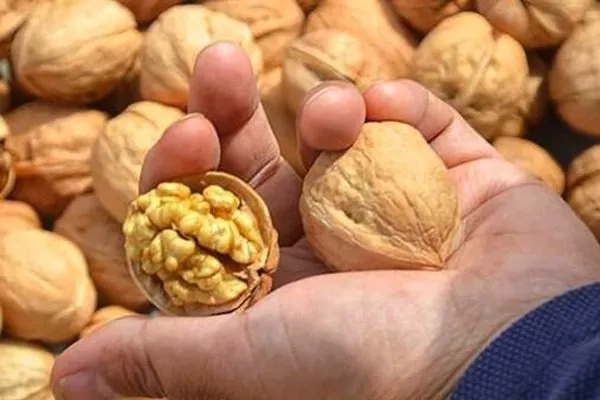
The Velikan variety finds its application in a wide variety of areas:
- It is indispensable in cooking, where it is used to create a variety of dishes and sweets, as well as for the production of cookies, candies, muffins, etc.
- It is no less important in medicine, where its properties help strengthen the immune system, fight diseases, and improve the appearance of skin and hair.
- Velikan walnut wood is an excellent material for furniture and jewelry. Its durability and attractiveness make it popular in the construction and music industries.

- This is an excellent option for enhancing urban green spaces, thanks to its majestic size and adaptability to various weather conditions. It can be placed in parks, gardens, or on streets, creating shady alleys and cozy bits of nature in urban spaces.
Distinctive features
Velikan is a walnut variety similar to the famous Ideal, but it differs by its late fruiting period, beginning in the sixth year. Other characteristics of the variety:
- This variety is distinguished by its ease of care, low-fat fruit, and high resistance to diseases, which can be a problem for less robust trees.
- Fruiting begins in late September and continues until the end of October, and self-pollination is ensured due to the dioeciousness of the plant.
- From the sixth to seventh year after planting, a harvest is expected that can reach 60-85 kg of high-quality nuts.
- The Velikan variety's frost resistance is estimated at -30 degrees Celsius. This variety is best grown in the Moscow region and southern regions.
Growing rules
This nut-bearing plant thrives in full sun and nutritious soil. It can withstand drought, but for optimal growth and flowering, it requires consistent moisture.
When do they plant in different regions?
In the Moscow region and other northern regions, the ideal time for planting seedlings is in the spring, around April, when the snow has completely melted and the air temperature is consistently above freezing.
Preparing for landing
Don't risk buying seedlings at markets, as you might unwittingly buy a variety that won't take root or won't match the variety.
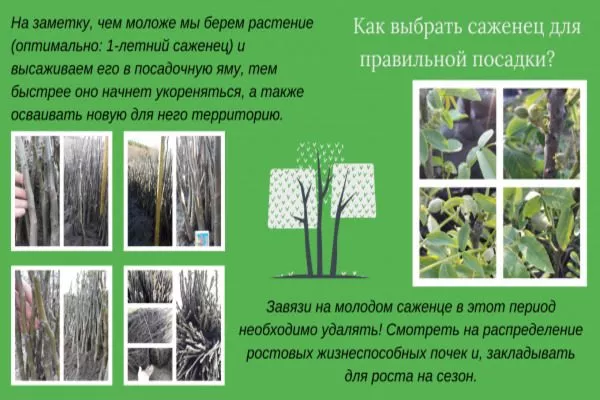
When choosing material for walnut propagation, pay attention to the quality of the roots and other parameters:
- Seedlings with a powerful root system that is larger than the trunk and leaves are considered optimal.
- If the root system is poorly developed, this may indicate problems with vegetation, which reduces the chances of successful cultivation.
- You should avoid purchasing seedlings with already formed leaves.
- The bark should be intact, without any damage or strange spots that may indicate disease or pest infestation.
- The seedling must be less than three years old.
Scheme and technology
When choosing a planting site, preference should be given to soil with good drainage, away from the groundwater level and with a neutral or slightly alkaline reaction.
Requirements:
- The space between plants should be at least 4-5x4-5 m, but it is advisable to increase it to 5x5 or 4x5 m.
- Walnut trees prefer sunny locations. If planted in the shade, the tree may die before it even begins to grow.
- Don't forget: a protective film must be placed at the base of the hole, which will prevent the roots from growing deep and allow them to develop laterally, which is optimal for this variety.

Care
To maintain the plant's health and attractiveness, regular fertilization and crown shaping are necessary. Pruning should be done in winter to ensure a dense crown and enhance the landscape.
Watering
Under normal weather conditions, water no more than twice a month, but during periods of drought and heat, the plant requires more moisture. It is recommended to use 18-25 liters of water per square meter.
Top dressing
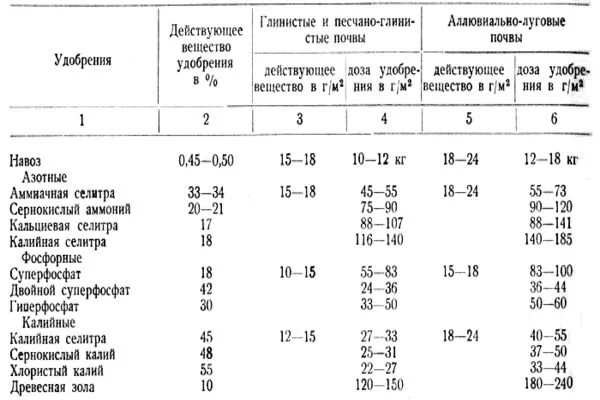
In the fall, it is recommended to fertilize the hazelnut tree with phosphorus and potassium. In the spring, ammonium nitrate should be used. Care should be taken with mineral fertilizers, as they can damage the hazelnut tree's root system. To ensure future fertility, avoid nitrogen fertilizers during the first two to three years after the tree begins bearing fruit.
Whitewash
In the fall, when temperatures drop to 3°C (3°F), whitewash the trunks before frost. In the spring, remove the old whitewash, which may be partially washed away by autumn rains. This process should be completed as early as possible, but only when temperatures are consistently above freezing, to prevent a short-term rise in temperature from triggering the tree's growth.
Trimming
You can improve the quality and quantity of fruit by removing excess and dead branches with a sterile, sharp knife or pruning shears. Avoid this procedure in the spring to avoid excessive sap leakage, which can stunt the growth and development of young hazel trees.
Preparing for winter
To ensure a young tree survives the winter cold, it is necessary to protect its base, from the ground level to the first branch located at a height of 100-110 cm, using agrofibre, spunbond, and similar materials.
The temperature drop shouldn't reach the root system, so use additional compost or manure for cover, spreading it around the trunk to a depth of 10-12 cm. You can also use spruce branches as additional insulation for the base of the tree.
Harvesting
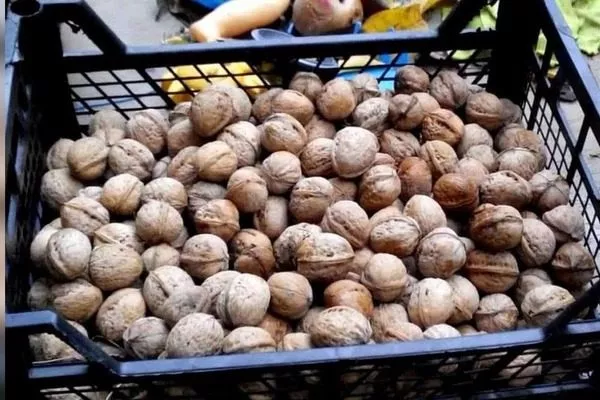
Harvesting time begins in October, when the nuts reach peak ripeness. This can be determined by the peeling of the outer husks. If the outer husks of some nuts don't fall off immediately, gather them into a pile and leave them in the sun for a while to fully ripen. After this, it's recommended to store the nuts in a cool, dry place.
Diseases and pests: how to combat them and prevent their occurrence?
This variety is highly resistant to various diseases, making problems during maintenance extremely unlikely. The main thing is to remember to treat the tree trunks with white paint annually to prevent the development of fungal infections, including bacterial blight.
Pests such as the walnut gall mite, American white butterfly, codling moth, and walnut moth can also be a problem.
Protection features:
- Chemical methods of pest control are questionable due to the presence of oils in nuts that can dissolve organophosphorus and other insecticides, making their use useless.

- It is necessary to use chemical methods of plant protection only in cases of mass pest infestation; in other situations, it is preferable to use biological products.
- It's important to emphasize preventative measures to gardeners: It's strictly forbidden to use the area around young hazel trees for haymaking, as the grassy vegetation serves as a haven for numerous insects. Instead, it's recommended to plant tomatoes or currant bushes in this area.
- It is necessary to carry out regular sanitary pruning of the walnut tree, including the removal of diseased, weak and damaged branches.
- Nuts affected by worms should be collected and destroyed immediately.
- Trapping belts should be placed on the trunks of the walnut trees.
- It is necessary to frequently inspect the leaves and bark for pests.
The Giant walnut is in high demand among gardeners due to its numerous advantages. However, before planting, be sure to keep in mind that the tree will take up quite a bit of space and will not begin bearing fruit until its seventh year.