
The Sadko walnut tree is characterized by high annual fruiting rates and ease of cultivation, which makes it especially appealing to novice gardeners. This variety can be grown in cool climates, as it is frost-resistant. The trees easily resist various infections and pests.
What kind of variety is this?
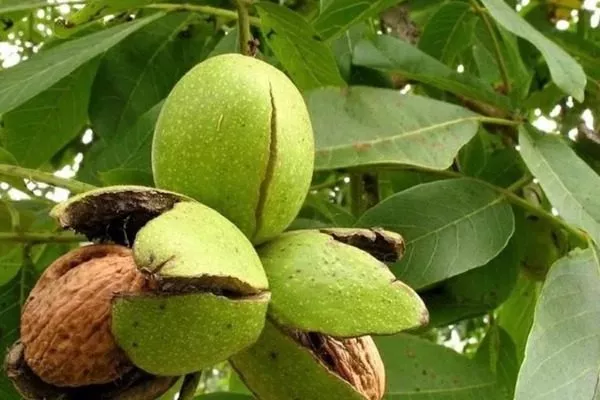
Sadko is a dwarf walnut variety distinguished by its high frost resistance, regular fruiting, and substantial yield. It is ideal for growing in central Russia. This variety is also known as Shugin's walnut, named after its creator, the breeder Shugin.
Characteristics
The Sadko walnut tree plays a vital role in improving the urban environment. It can create natural shade in parks and squares, which improves air quality and enhances overall environmental well-being.
The variety has the following characteristic parameters:
- Ripening time: September, from the first days until the middle of the month.
- Pollination: is carried out independently.
- First fruits: in the second or third year after planting.
- Productivity: high, reaching 8 nuts from each bunch or 40 kg from one tree, while fruiting is stable and annual.
- Frost resistance: tolerates low temperatures well, including severe frosts down to -35-40 degrees Celsius.
- Suitable for cultivation: Central Russia, including the Moscow region.
Appearance
Sadko is a unique walnut variety, the result of years of breeding work that began in the 1980s. It is a low-growing tree, reaching a height of no more than 350 cm. Its leaves are green, while its flowers are white and pleasantly fragrant.
More information:
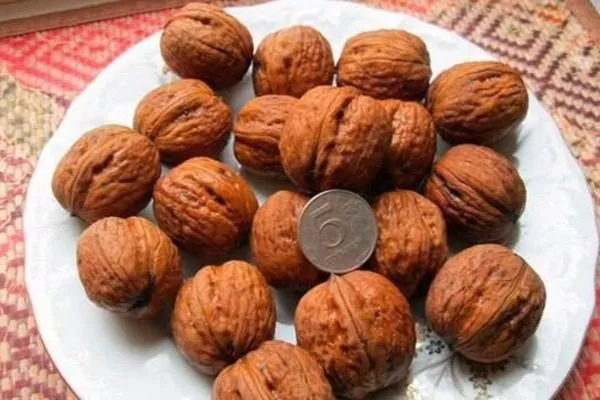
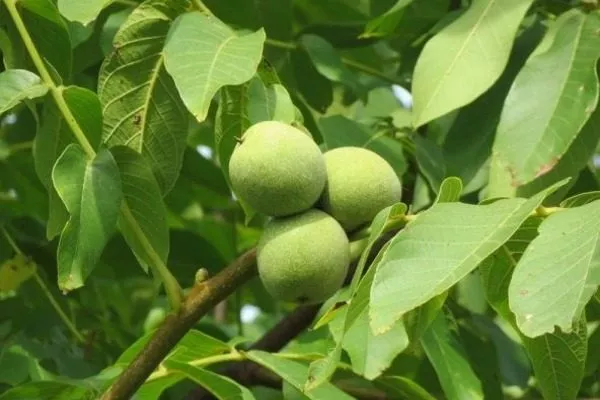
- The medium-sized fruits, weighing 15 to 16 grams, have a delicate, sweet flavor and are easily separated from the thin, light-brown shell. The nuts have a mild, non-bitter taste. The fruits are approximately 3.5 to 4.5 cm in diameter and grow in clusters of 6 to 8.
- Sadko is distinguished by its unisexual flowers – the stamens are represented by small catkins, and the pistils sit at the top of annual shoots.
- The root system is well-developed and strong, which makes the tree resistant to strong winds and branch impacts.
- The leaves are about 25-35 cm long and are distinguished by their feathery shape, dark green colour and shine.
- The stems have a smooth and strong structure.
Advantages and disadvantages
This variety has a number of attractive features:
To date, no serious defects are known for this variety. However, it's worth keeping in mind that prolonged periods of severe frost or a dry summer may reduce the variety's yield.
Brief history of appearance
The Sadko variety was born thanks to the efforts of Ukrainian breeder L.S. Shugin, who moved to the Moscow region from Kharkiv and set himself the goal of developing a variety optimal for the Moscow region's conditions. In the 1980s, his work was crowned with success: a variety was developed that could withstand not only the harsh winter cold but also spring frosts.
List of differences from other plant types
Unlike well-known varieties that grow in the Moscow region, including Ideal, Velikan, Astakhovskiy, Podmoskovie, Kocherzhenko, and others, Sadko is distinguished by its small, dwarf growth, rapid ripening, annual fruiting, and ease of maintenance.
Benefits and harms
Sadko, like southern varieties of nuts, is high in fat and rich in vitamins A, E, C, and trace elements, which strengthen the immune system, improve vision and memory, help lower blood sugar levels, have a calming effect, and are beneficial for women's health, especially during pregnancy, postpartum, and menopause.
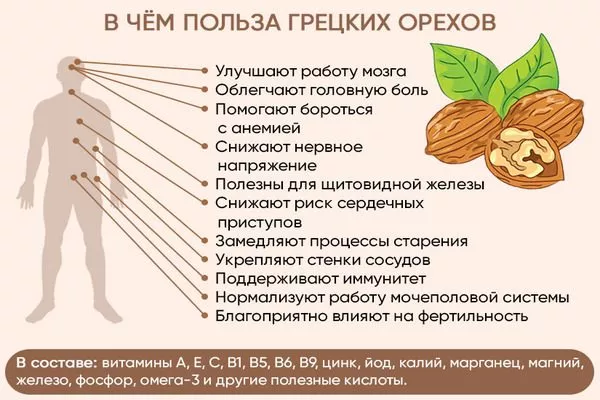
They restore hormonal balance, normalize the gastrointestinal tract, help treat hypertension, anemia and atherosclerosis, and improve heart function.
However, like any other nut, Sadko has its limitations and can have negative health effects if used improperly. It is recommended to reduce or completely eliminate nut consumption for children under five, those with individual intolerances or allergic reactions, and those who are overweight.
Flowering and lifespan
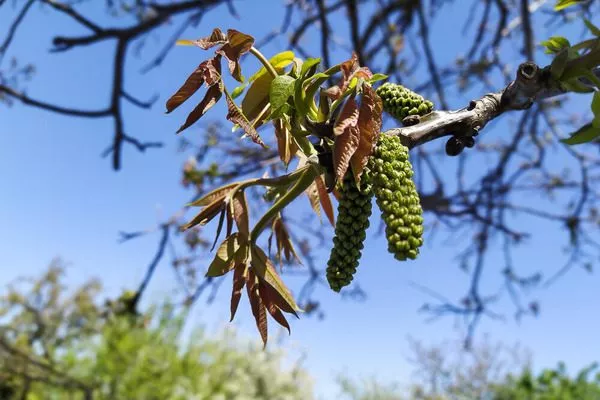
The Sadko walnut tree's bloom is striking in its magnificent duration. In May and June, this small nut-bearing tree is adorned with vibrant male inflorescences in clusters and female flowers, borne singly or in pairs in the leaf axils. This tree giant can live for up to a hundred years, continually impressing with its exquisite flowers and abundant nut harvest.
Growing rules
Cultivation of this variety is no different from standard schemes and rules, so the trees do not require specific care.
When do they plant in different regions?
In more northern regions, including the Moscow region, spring is the preferred time to plant walnut trees. In warmer regions, such as the Voronezh and Rostov regions, it's best to plant walnut seedlings in the second half of autumn.
In the Moscow region, April is the optimal month for planting walnut trees, provided the trees have not yet begun to leaf out. Fall planting is not recommended, as the tree may not have time to establish itself in the soil before the first frost.
Landing
To successfully grow a walnut tree, choose a location with bright light and no shade. The groundwater level should be at least 200 cm deep. Avoid planting trees too close together and avoiding plantings near buildings, as walnut roots can damage even reinforced concrete foundations.
Other aspects:
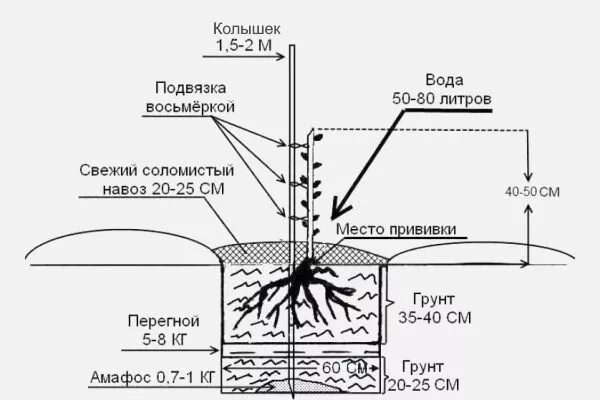
- Seedlings that are already two years old are the best choice for planting.
- The depth of the hole should be at least 50-65 cm.
- Phosphorus fertilizer, compost and fertile soil must be placed at the base of the hole.
- A newly planted tree needs abundant watering, which should be about 50-80 liters of water.
Care
Tree care doesn't require complex procedures. The main focus is:
- Regular irrigation – Trees thrive on moisture, so during hot periods, young plants require weekly watering, consuming about 30 liters of water. Mature trees can be watered less frequently, but with double the amount. During the rainy season, water as needed, carefully monitoring the soil.
- Soil fertilization. This is done twice a year (phosphorus and potassium salts are added in the fall, and nitrogen salts in the spring).
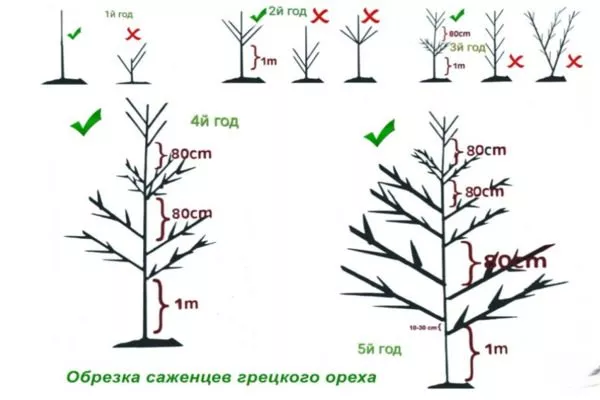
- Crown pruning – It is carried out in March, when the tree reaches a height of 150-180 cm, damaged and weak branches are removed.
- Disinfection – In the fall, after harvesting, the trunk and bases of large branches are treated with white paint/lime.
Diseases and pests
This hazelnut variety has good resistance to various diseases. Only in exceptional situations may the crop be affected by diseases such as:
- fire blight, in which the leaves and fruits acquire a dark shade, while the affected areas should be removed, and the tree treated with copper-containing agents, such as copper sulfate, Bordeaux mixture and others;
- root cancer, When growths appear on the roots, which leads to a cessation of growth and fruiting of the tree, in such cases it is recommended to treat the roots with a 1% solution of caustic soda;
- brown spot, In which brown spots appear on the leaves, and the flowers are also affected, which leads to their falling off, to combat this disease, Bordeaux mixture is used at a concentration of 1%, as well as chemical agents Vectra and Strobi in appropriate doses.
Among the insects that can damage nuts, it is worth noting:
- walnut moth;
- barkwood;
- aphids;
- codling moth;
- white American butterfly.
To combat these pests, various substances are used:
- lepidocide and pyrethroid (effective against moths and white butterflies);
- Dendrobacillin and Bitoxybacillin (effective against white butterfly);
- acaricides such as Actellic (for tick control);
- Insecticides in solution, including Varant, Confidor, Nuprid, Bommandir and others (effective against codling moth).
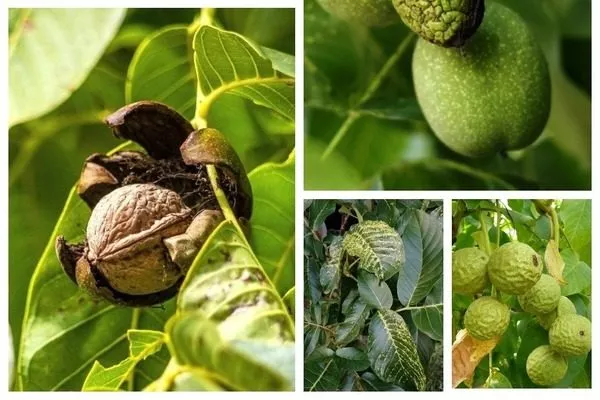
To prevent diseases and pest infestations, it is necessary to carefully prepare the planting site, ensure proper care of the tree, and promptly remove weeds around the trunk, which serve as reservoirs for fungal and viral infections.
Reviews
The Sadko variety is one of the most preferred options for cultivation in the Moscow region. This walnut tree is easy to care for, produces regular and abundant fruit, is highly resistant to adverse weather conditions, tolerates significant temperature drops, and is virtually free from pathogens and pests.