
Walnut trees are considered perennials and tend to grow quickly, which can lead to loss of attractiveness and productivity. Pruning can increase yields and improve the health of the plant. Pruning doesn't require much time or experience; even beginners can handle it.
Why does a walnut tree need pruning?
In late summer or early spring, shoot growth slows as the plant prepares for cold weather. Autumn pruning helps restore the health of the walnut tree. This involves removing all unnecessary parts of the plant—dry and weak shoots, infected, thin, and diseased branches.
What else is pruning necessary for:
- The walnut tree's immunity will be boosted, making it less susceptible to diseases and insect attacks. This process will prepare the tree for winter, ensuring it withstands frosts and produces abundant fruit the following season.
- Pruning improves the plant's appearance: during the procedure, you'll need to remove any intertwined or uneven shoots. Afterward, the plant will look neat and tidy.
- Autumn pruning is essential to prolong the plant's lifespan and ensure a rich and tasty harvest each year. Mature trees require shoot removal to increase the number of fruit-bearing branches.
Inventory and materials for the event
Before you begin pruning walnut, carefully prepare your tools. This will make the job easier, faster, and more enjoyable.
Prepare the basic inventory:
- Secateurs. With its help you can remove small branches up to 2 cm in diameter.
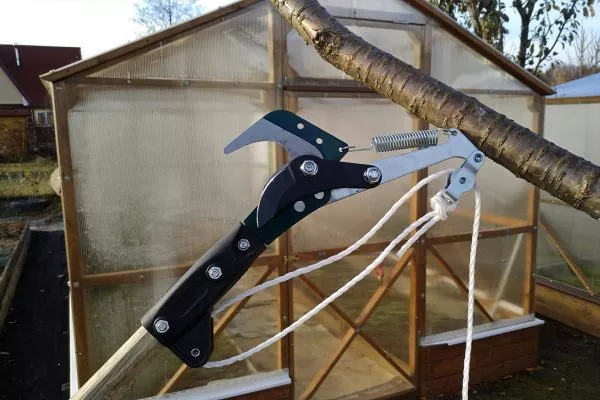
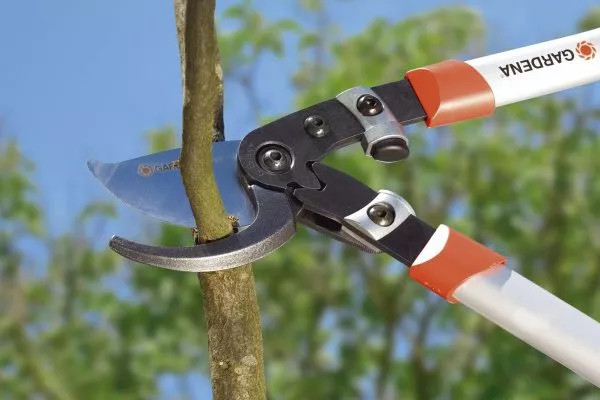
- Loppers. Similar to the previous tool, but with long handles. It's essential for removing branches up to 5 cm in diameter. Learn more about choosing one. lopper Read in our other article.
- Garden saw. The tool has a sickle-shaped blade up to 30 cm long. It is used for cutting large branches.
- Chainsaw. This tool allows you to easily cut down large branches and remove knots. Read about the different types of chainsaws. here.
- Garden shears. They'll come in handy for removing green parts and soft branches that are no more than one year old. The tool is also convenient for cleaning up any damage.
- Ladder or stepladder. You can't do without this equipment; it's needed to process a perennial walnut tree that has grown quite high.
Pruning walnut trees is a complex process, so use a variety of tools and wear protective equipment. Wear protective clothing, gloves, and safety glasses when pruning. During the first year after planting, the tree should not exceed 1 m in height.
Types of pruning
The method for pruning a walnut tree depends on the desired goals and the age of the plant. Today, there are several basic types of pruning that can rejuvenate the plant, keep it healthy, and simultaneously shape the crown and remove unwanted shoots.
Rejuvenating
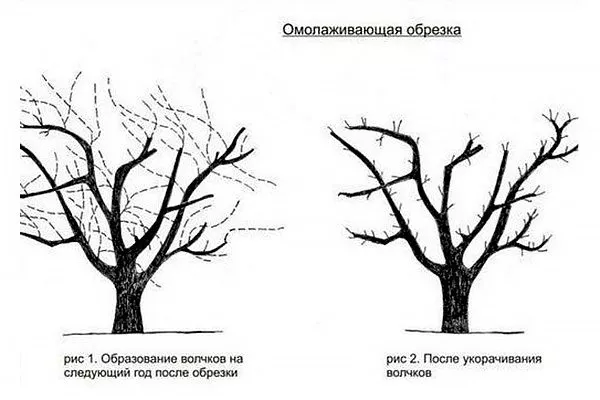
After just 10 years, walnut trees will begin to bear fruit less frequently than before, so consider rejuvenating them with pruning. This procedure will awaken dormant buds and stimulate the development of new shoots. Pruning involves removing side branches, long shoots, and shoots growing inward.
Rejuvenating pruning will allow the plant to regain its greenery after winter, and prevent the overgrown parts from drawing nutrients, allowing the walnut tree to gain strength for fruiting. The crown will be well-shaped and not overly dense.
Pruning recommendations:
- If you want to rejuvenate the plant a little, shorten the skeletal branches by 1/3, remove dried and damaged parts.
- If yield declines, prune every 4 years. To stimulate vigorous growth in the spring after pruning, provide ample watering and fertilize.
- The older the plant, the more intensively you should prune. If the yield is poor, perform rejuvenation pruning annually in the spring for seven years: remove old, damaged, overly high, and inward-growing branches. Also, remove shoots from areas with lateral branches.
A radical rejuvenating pruning provides protection for frost-damaged plants. For plants with a living root system, cut the trunk down to ground level, leaving a small stump. Over time, the plant will produce new shoots, from which you can form a young standard in two years.
Sanitary
Sanitary pruning involves removing dead, diseased, and damaged branches, which can be a source of infection, while eaten-away shoots can harbor insect pests. Immature young shoots will die at the first frost and, in the spring, can trigger the development of fungal diseases.
Sanitary pruning is a preventative measure to protect against disease and prepare the plant for winter. After this procedure, the tree will not waste energy on unnecessary branches, and will therefore emerge from dormancy safely.
Improved-tiered
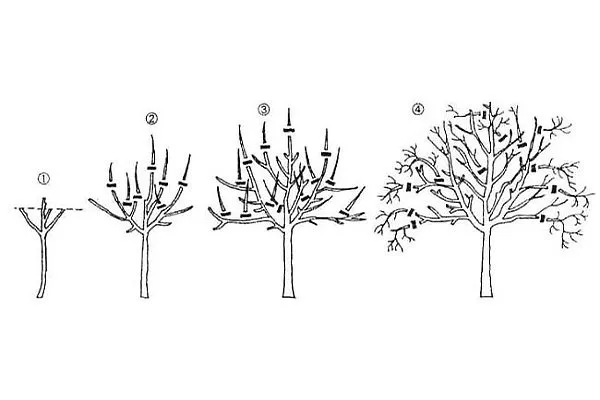
The method involves thinning the crown and creating several tiers of branches. The more space the shoots have to develop, the better the plant will receive ventilation and sunlight.
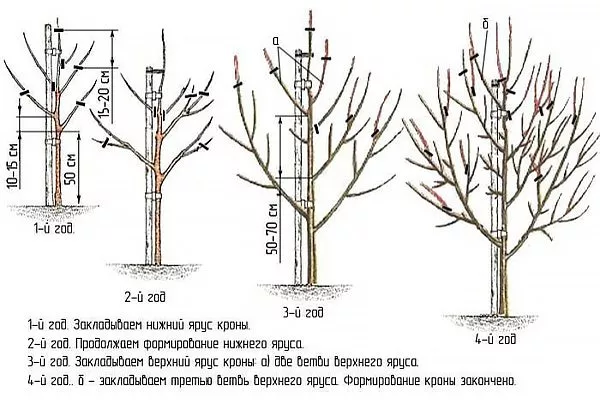
The procedure involves removing the top of the tree and branches located below 1.5 m from the ground. At each level, leave three scaffold branches, leaving a distance of 15 cm between them. Over time, this will create six tiers of branches on the crown. Maintain a distance of 50 cm between layers.
Leader
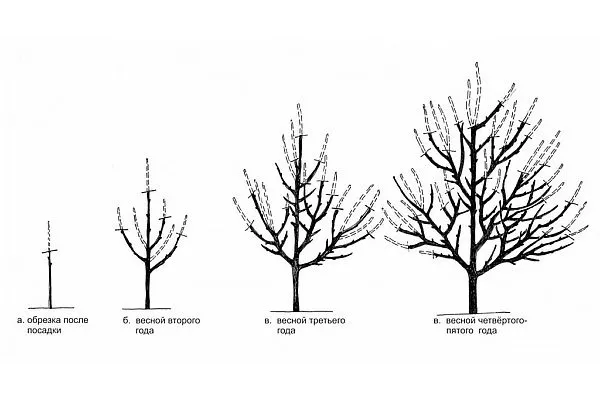
Leader pruning of walnut trees involves distributing the skeletal branches in a spiral, leaving a vertical distance of 50 cm. No more than eight main shoots converge in this pattern.
This pruning method allows for better light and ventilation, which positively impacts future harvests. Once the plant begins to bear fruit, thin out the canes on the lower three tiers, gradually removing any remaining shoots.
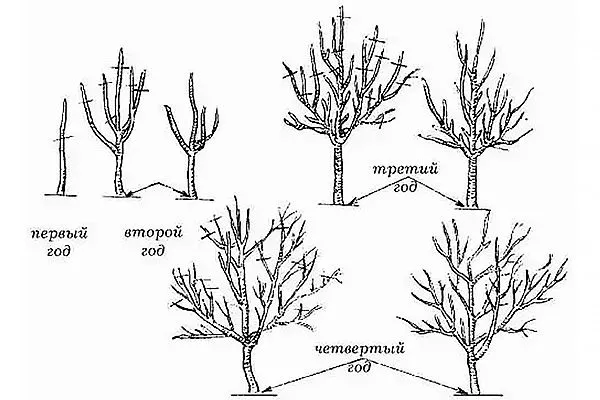
Cup-shaped
This type of pruning is necessary to stimulate the top of the plant, allowing it to grow wider and also to increase yields. A cupped crown will allow for good air and sunlight flow, making it easier to harvest.
Pruning recommendations:
- Prune gradually over three years. The tree will be left with four main branches, evenly distributed around the trunk. Leave 30 cm between shoots.
- Cut off the central branch and cross the remaining shoots with the upper levels. This will stop the plant from growing upward, so the trunk height should be between 1.5 and 2 meters.
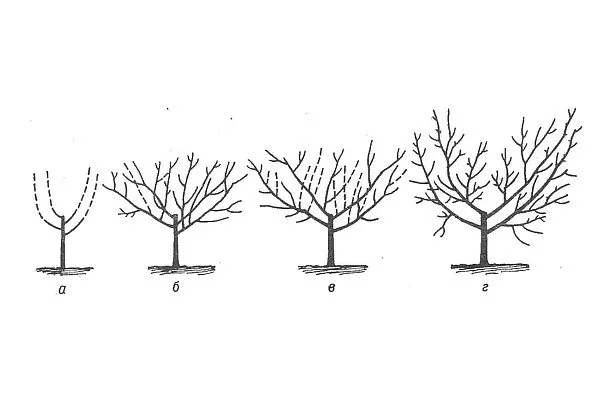
In one barrel
This type of pruning is especially popular for increasing yields. Many gardeners typically prefer to perform the procedure in the summer. Pruning involves removing all skeletal branches, so avoid pruning the main fruiting shoots. Maintain the plant's shape annually.
When to prune a walnut tree?
Pruning branches is very stressful for plants, so gardeners choose the most favorable time for the procedure. Branches should not be removed during periods of intense sap flow, as this will negatively impact regeneration and may cause rot.
- ✓ The air temperature should not be below +5°C for spring pruning to avoid frost damage to fresh cuts.
- ✓ Autumn pruning should be carried out only after the leaves have completely fallen, but before the onset of persistent frosts.
In the spring
After wintering, carry out the pruning procedure when the daytime weather warms up and the nighttime temperature drops to 0°C. In March and April, the plant will respond more readily to pruning and recover more quickly after branch removal. Conduct rejuvenating, sanitary treatments, and crown shaping.
The first spring pruning of seedlings ensures proper trunk formation. Follow these guidelines:
- Leave a strong, healthy shoot and remove the remaining branches. The plant's trunk should be no more than 50 cm in diameter, so tie it to a stake for support. Removing the shoots will ensure that the plant's energy is directed toward the central branch.
- After a year, prune to form the skeleton.
- In March, remove the top, and in May, begin creating the foundation for the skeleton. From the third spring, begin encouraging lateral shoots, which help fill the next tier.
In summer
At the end of July, sap flow slows, so walnuts respond well to branch removal. This is the ideal time to thin out thickening and inward-growing shoots. Maintain a crown of five branches on the plant. Remove the remaining branches at the bud stage.
If the plant is weakened, avoid pruning during the summer. For 2-year-old seedlings, prune shoots to two nodes. When performing formative pruning, do not remove more than 10% of the plant's volume, otherwise the plant will not have time to recover. Perform these procedures no more than once every 2 years.
In the fall
After the leaves fall at the end of the growing season, perform sanitary pruning. Prune the seedlings before the crown becomes untidy.
Pruning mature plants involves removing the following branches:
- unripe;
- fattening;
- damaged;
- dry;
- eaten away by insects.
Carry out regular maintenance to ensure longevity and fruitfulness. Seasonal treatments will help create a beautiful crown in seedlings and increase the yield of mature plants.
Crown formation procedure for better fruiting
To properly shape the crown of a walnut tree, it's important to approach the process responsibly. Follow certain recommendations, and you'll improve fruiting rates and the plant's appearance.
A neglected adult nut tree
If the tree hasn't been cared for in a while, perform some rejuvenating pruning. This type of plant typically produces fruit at the top, so perform this procedure in the spring to encourage new growth.
Follow these tips:
- Remove skeletal branches that are located very high.
- Thin out the crown as much as possible. This will allow the plant to receive more air and sunlight.
- Trim branches so that they point outward rather than upward.
A tree growing as a bush
When growing a walnut tree as a bush, pruning is essential to shape the crown in the correct direction. Distribute skeletal branches in a circle around the trunk, removing any unnecessary branches. Remove shoots growing inward to prevent the plant from wasting all its energy on them.
Be sure to trim off damaged and dry branches, then cover the cut areas with garden pitch to protect against infection.
The difference in shortening branches: young ones - in the first years and old perennial ones
A young walnut tree is fairly easy to maintain, requiring only pruning to shape its crown or a light pruning in the fall. However, an older walnut tree will require more careful attention.
A mature tree that has been neglected for a long time develops numerous sharp forks, leading to a dense crown. During this period, the tree's branches become very long, which leads to reduced yields and makes the walnut susceptible to pests and diseases.
Errors in crown formation
Gardeners often make serious mistakes when pruning walnut trees, which negatively impacts the tree's growth. The most common mistakes when shaping the tree's crown include:
- Using a dirty or poorly sharpened tool. This can lead to a number of diseases.
- Processing cuts with paint. The cuts are coated exclusively with garden pitch.
- Carrying out pruning in cold or rainy weather. The procedure should be carried out when it is dry outside and there is no strong wind.
- Removing a large number of branches. This can be very stressful for any plant.
To avoid mistakes, carefully monitor the weather, prepare the necessary tools and equipment in advance, and do not remove too many parts of the plant at once.
Post-operative care
After the procedure, the plant loses strength and needs to recover. Experienced gardeners recommend using liquid fertilizers applied to the trunk circle. Use potassium and phosphorus fertilizers.
After the fall sanitary pruning, whitewash the base of the trunk and trim off large lower branches. This will protect the plant from infections and insects.
Pruning walnut trees is a procedure that allows you to increase yields and reduce the risk the appearance of parasites and diseases, to ensure proper development. However, this is very complex work, requiring timely preparation and a serious approach.