
Walnuts are a unique natural product that surpasses its counterparts in their beneficial and nutritional properties. These nuts are not only delicious but also help people fight disease and aging.
Description of the tree
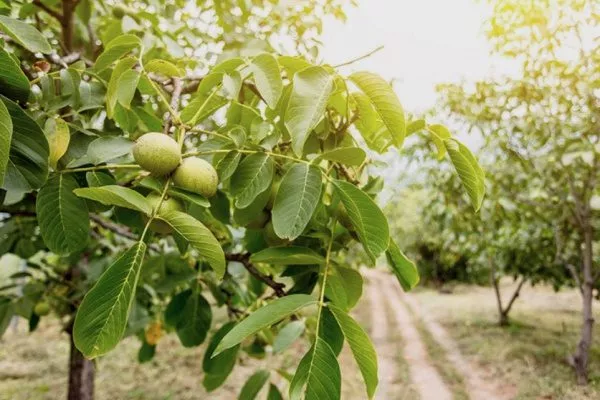
The walnut tree is tall and spreading. At 50-60 years of age, it reaches a height of 25-30 m, with a base trunk diameter of 1.5 m or more. The crown is dense and tent-shaped. The leaves are compound, odd-pinnate, petiolate, pointed at the tip, and 10-12 cm long.
The tree's bark is thick, gray, and cracked. Its roots are powerful, with a central taproot penetrating to a depth of 3 meters or more.
Bloom
| Name | Flower type | Flowering period | Pollination method |
|---|---|---|---|
| Staminate | pale green earrings | end of April | cross |
| Pistillate | rounded, growing in the axils of leaves or at the tips of shoots | end of April | cross |
Walnut flowers are unisexual. They bloom in late April, at the same time as the leaves. Two types of inflorescence are found on a single tree.
Walnut flowers:
- Staminate - pale green catkins.

- Pistillate - round, grow in the axils of leaves or at the tops of shoots.
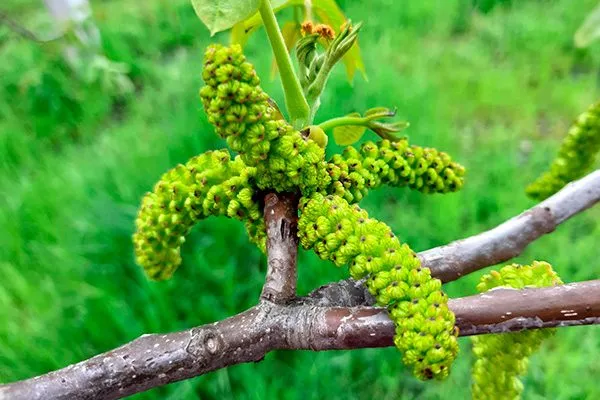
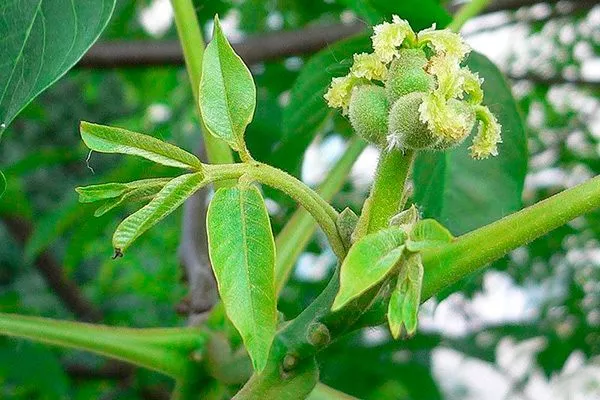
Walnuts are cross-pollinated, as flowering on a single tree can be uneven. The flowering period lasts for about half a month.
The tree blooms for the first time 3-4 years after planting. The number of fertilized ovaries depends largely on the distance to the pollinator (which can be up to 1 km). A dense canopy negatively impacts pollination.
Features of fruiting
Whole nuts weigh 6-15 g. Kernel yield varies by variety and ranges from 40-68%. The tree produces its first fruit at 7-9 years of age. It reaches full maturity at 20 years of age and continues to bear fruit until it is 100-200 years old.
Productivity depending on age:
- first harvest - 3-15 pieces;
- 4-6 years old - 20-40 pieces;
- 10 years - 3,000 pieces;
- 30 years old – 100-200 kg.
At 40 years old, the tree reaches its maximum yield.
There are walnut varieties that produce clusters of 15-30 walnuts. These trees produce yields two to three times greater than those of regular varieties.
Ripening time
Walnuts ripen in early to mid-autumn, 30-40 days after the ovary is formed. The ripening time largely depends on the climate in a particular region.
When does a walnut ripen:
- In the middle zone. The nuts begin to fall in early autumn, but the green shells still cling tightly to them. The nuts must be laid out in a dark place to ripen. Once the shells crack and fall off, they are dried in the sun.
- In the Krasnodar region. Harvesting begins in the first ten days of September. The region's climate allows for large-scale walnut cultivation. The trees grow very large and productive.
- In Crimea. Here, nuts ripen in August. To prevent damage by rodents, harvesting begins earlier. Unripe nuts are laid out in the sun to crack the outer shell. The shelled nuts are then dried and ripened.
Recommended growing conditions
Walnut trees suppress neighboring crops, so it's not recommended to plant them near fruit trees and bushes. Even viburnum and chokeberry trees can't grow in the walnut tree's shade; they become diseased and die.
- 6 months before planting, analyze the soil for pH and nutrient content.
- 3 months before planting, apply organic fertilizer at a rate of 10 kg per 1 m².
- One month before planting, carry out deep plowing to a depth of 50-60 cm.
Growing features:
- the average annual temperature in the region is not less than +10…+12°C;
- temperatures during the active growing season - +20…+25°C;
- winter temperatures - no more than -26…-28°С;
- illumination is good;
- soils - neutral or slightly alkaline; dry, saline soils are not suitable;
- moisturizing - regular and abundant;
- the groundwater level is low.
- ✓ The depth of groundwater must be at least 2.5 m.
- ✓ The optimal soil pH for walnuts is 6.0-7.5.
Walnut trees planted on the upper slopes survive the winter best. To prevent frost cracks on the trunk, it is recommended to whitewash the trees, including the lower portions of the skeletal branches.
Caloric content and composition of fruits
Walnuts are considered one of the healthiest foods on earth. Their consumption is recommended for both sick and healthy individuals, for preventative purposes, and as a source of essential nutrients. The extraordinary properties of walnuts are due to their unique composition.
Walnuts are quite high in calories, so overeating them is not recommended. However, this isn't necessary; to get a "therapeutic" dose, just a few nuts a day is enough.
100 g of raw walnut kernels contain:
- Calories - 654 kcal.
- Proteins - 15.23 g.
- Fats - 65.21 g.
- Carbohydrates - 13.71 g.
- Water - 4.07 g.
- Ash - 1.78 g.
The caloric content of one walnut is 32-40 kcal.
Green (unripe) walnuts are especially rich in vitamin C—50 times more than lemons. These nuts are also among the top 10 plant foods for zinc content.
Walnut kernels contain fatty oil, which is rich in glycerides of various acids, including stearic, oleic, and linolenic. They also contain essential oil, carotenoids, flavonoids, protein and tannins, and amino acids such as cystine, histidine, valine, glutamine, serine, and phenylalanine.
This rich nutritional composition allows walnuts to be effectively used in medicine and other fields. The kernels are especially tasty when lightly roasted, but unroasted walnuts are more beneficial.
Acid content:
- Alpha-linolenic acid - 9.1 g.
- Oleic - 8.8 g.
- Linoleic - 38.1 g.
- Polyunsaturated fats - 47.2 g.
- Monounsaturated fat - 9 g.
Nuts contain beta-sitosterol (from 65 to 87 mg), which allows them to be classified as so-called “women’s products”.
How to properly collect walnuts?
It's recommended to pick nuts when they're fully ripe. These fruits are more nutritious and retain minerals and vitamins better. Wear gloves when picking nuts. The nuts can be shaken off the tree; the harvesting process can take several days.
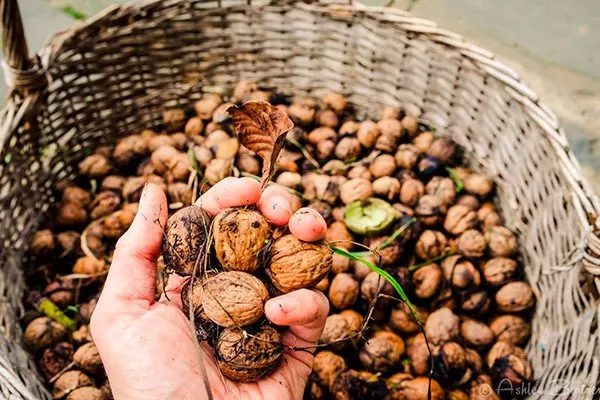
Signs of nut ripening:
- cracked shell;
- yellowing of leaves;
- the outer shell becomes loose.
The harvested nuts are washed if dirty, any remaining shells are removed, and then spread out in a thin layer to dry in the sun. Finally, it is recommended to dry the nuts in an oven at 90°C (194°F) for 2-3 hours. Avoid higher temperatures, as this will cause the kernels to lose some of their beneficial properties.
To clean your hands from nuts use:
- detergents and chemicals - which are usually used when cleaning an apartment;
- ammonia;
- lemon juice;
- hand wash with powder;
- bleach;
- sea salt.
Benefits of walnuts
Walnuts are high in fat, about 65%, including omega-3, which reduces blood fat levels. To meet the recommended omega-3 intake, an adult needs to eat 4-6 walnuts per day.
By regularly eating a few walnuts a day, you can:
- lower blood cholesterol levels;
- improve brain function and memory;
- prevent the development of atherosclerosis (walnuts are powerful antioxidants);
- reduce inflammation;
- strengthen joints and bones;
- improve sleep;
- lower blood sugar in people with type 2 diabetes;
- reduce the risk of developing diabetes;
- strengthen the cardiovascular system;
- improve bowel function;
- reduce blood pressure.
Walnuts are also useful for the prevention of cancer.
For women
Walnuts are recommended for daily consumption by women. In addition to the effects mentioned above, they have special benefits for the female body.
Why do women need walnuts?
- For weight control. Many women gain weight due to metabolic syndrome, which is caused by numerous health issues, including high blood pressure, excess fat and cholesterol in the blood, and obesity. Eating four walnuts daily for two to three months can help minimize this condition.
- To prevent aging. Women over 50 who consume several walnuts a day have a better chance of avoiding age-related diseases than those who do not include this healthy product in their diet.
For men
It's not that nuts are men's favorite food, but many simply don't know how beneficial they are for their male health.
Why should men eat walnuts?
- Zinc, calcium, and magnesium stimulate the synthesis of male sex hormones. High testosterone levels, in turn, increase potency.
- Fiber, essential oils and tannins help restore physical strength.
Eating walnuts normalizes reproductive function and increases sperm production. Men are recommended to eat 10-15 walnuts a day to avoid problems with sexual function.
For children
Children are introduced to walnuts starting at age two, after they've been chopped. Walnuts are recommended for children due to their fatty acids and proteins. This product has an ideal balance of vitamins and minerals, making it suitable even for overweight children.
Regular consumption of walnuts promotes the full mental development of children and their well-being, both physical and emotional.
The harm of walnuts
Walnuts are harmless if consumed in moderation. Their kernels are delicious, and many nut lovers eat them in abundance.
Potential harm from overeating walnuts:
- the product is high in calories, so excessive consumption can lead to weight gain;
- Nuts contain a lot of oil, so eating too much of them can cause diarrhea in some people;
- Sometimes walnuts can trigger food allergies.
Walnuts should be consumed with caution in the following cases:
- intestinal diseases;
- eczema and psoriasis, neurodermatitis;
- increased blood clotting;
- thrombosis;
- obesity.
Avoid eating old, rancid, or moldy nuts. After prolonged storage, fats oxidize, forming dangerous mutagenic and carcinogenic substances. Consuming such nuts can harm the liver, pancreas, and duodenum.
Applications of walnuts
Walnuts have numerous beneficial properties, so their uses extend beyond fresh consumption. A wide variety of products and remedies are prepared using the kernels, membranes, and hard, green shells.
Where and how walnuts are used:
- In official medicine. They were used to treat illnesses as far back as the time of Avicenna. The kernels were used to treat tuberculosis, fistulas, and erysipelas. The green shells were used to stop bleeding and expel parasites. Today, walnut kernels are used to make medications for tuberculosis, arthritis, multiple sclerosis, thyroid disease, vitamin concentrates, gastrointestinal tract support, and more.
- In folk medicine. Walnuts have long been used to prepare various remedies. They are used to treat kidney and liver conditions, prepare astringent mixtures, various tinctures, and decoctions for a wide variety of ailments.
- In oriental medicine. Tibetan medicine divides foods into "warm" and "cold." Nuts are considered a warm food and are recommended for people leading a sedentary lifestyle, as well as the elderly. Moreover, they should be consumed at specific times.
- In scientific research. Despite the proven health benefits of walnuts, scientists continue to research them to scientifically confirm their healing properties. It was recently proven that this product does indeed mitigate oxidative stress, but it's too early to call it an antioxidant panacea.
- For weight loss. Walnuts help you absorb 20% fewer calories than other fatty foods. They satisfy hunger, preventing overeating. Eating a couple of walnuts is enough to fill you up and curb your appetite.
- In cooking. Walnuts are versatile and can be added to meat and fish dishes, baked goods and desserts, salads and sauces. Caucasian cuisine is particularly rich in walnut recipes, and they're even included in soups.
Walnut kernels are sold roasted, candied, and pickled. In Russian, Georgian, and Turkish cuisines, walnuts are popularly paired with eggplant. - In cosmetology. Ancient Greek women used shell ash dissolved in water to remove unwanted hair. Today, various parts of the nut are also used in cosmetic procedures. However, the most sought-after are the oil extracts, which have moisturizing, softening, anti-inflammatory, and anti-aging effects.
Medicinal products from walnuts and their use
All parts of the walnut—the kernels, the shells, and the internal partitions—are beneficial. They are used to produce a wide variety of products and formulations that are successfully used not only in cooking but also to combat various illnesses.
Walnut oil
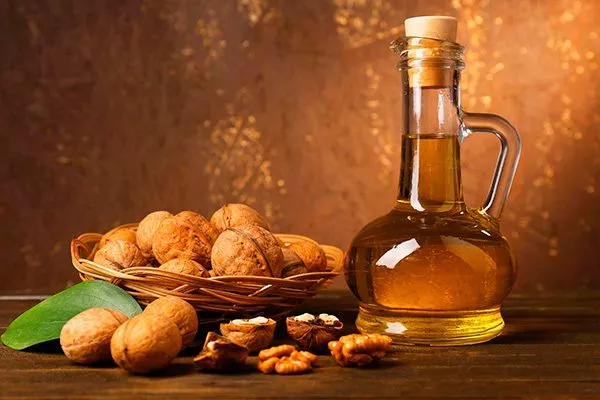
Walnut oil is obtained by cold pressing the kernels. Special varieties of walnuts are used to obtain this product. The fruits are aged for approximately four months after harvesting before pressing. The oil has a beautiful amber color, a pleasant nutty aroma, and a piquant flavor. It has numerous beneficial properties, making it widely used.
Applications of walnut oil:
- In cooking. Walnut oil pairs beautifully with fruit salads and fresh vegetables. It's used for frying vegetables, meat, and fish, and added to dough. Walnut oil lends a refined flavor to French cuisine. In Mediterranean cuisine, it's used with pasta and seafood.
- In cosmetology. Walnut oil is suitable for all skin types and can be used in face masks or as a night cream. It's recommended for aging skin and acne. The oil can be added to your favorite creams, lotions, and other skincare products. It's also beneficial for hair—with regular use, it becomes shiny, strong, and healthy.
- In folk medicine. Walnut oil is a powerful aphrodisiac, enhancing pelvic circulation and improving male potency. For women, it helps alleviate premenstrual syndrome and menopausal symptoms. It is also recommended for constipation, weakened immunity, and for expelling parasites.
Walnut oil should be consumed with caution in cases of stomach ulcers, gastritis with low acidity, and liver dysfunction.
Alcohol tincture of partitions
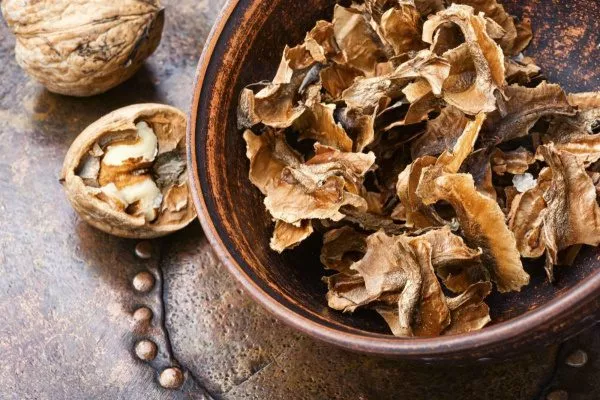
Walnut partitions have unique properties, containing a record amount of vitamins and microelements. They are rich in beneficial amino acids and pectin, which effectively cleanses the stomach and intestines. A tincture of the partitions can be prepared in alcohol, vodka, or plain water.
How to prepare and take partition tincture:
- Pour 100 ml of alcohol over the raw material from 25 walnuts;
- leave for 10 days;
- Take 15-20 drops diluted in a small amount of water.
The tincture is taken three times daily. The course of treatment is two months.
Benefits of walnut partition tincture:
- Replenishes iodine deficiency in the body. Helps with thyroid disease. Improves memory and brain function.
- It has bactericidal, anti-inflammatory, and hemostatic effects. It helps heal wounds and scratches.
- Enhances blood circulation and improves the functioning of the cardiovascular system, increases the tone of the heart muscle.
- It has an anthelmintic effect.
And this is far from the complete list of the beneficial properties of partition tincture. It has antioxidant, immunomodulatory, and rejuvenating effects, and helps prevent cancer.
Tincture of partitions is contraindicated in cases of allergic reactions, blood clotting disorders, esophageal diseases, and dermatological problems. Pregnancy is also considered a contraindication. Overdose may cause nausea, drowsiness, and confusion.
Walnut partitions for diarrhea
Walnuts are often used to treat diarrhea, as they contain many elements that normalize the digestive system. One of the most effective remedies for diarrhea is an infusion of walnut septa. It can combat even the most severe cases of diarrhea.
How to prepare the tincture:
- Peel two dozen nuts and collect all the partitions.
- Chop the raw materials with a sharp knife.
- Mix the chopped partitions with 220 ml of vodka in a dark glass bottle.
- Mix the mixture thoroughly and seal.
- Place the bottle in a dark place and leave it for 24 hours.
- Strain the infusion, squeezing the pulp through cheesecloth.
The recommended dosage for diarrhea is 15 ml. Take twice daily. If the infusion doesn't help, stop using it immediately and consult a doctor. It's recommended to start taking it only after receiving a doctor's approval. The tincture is contraindicated for pregnant women, children, and people with gastrointestinal disorders.
Culinary recipes
Walnuts are widely used in cooking. They're added to various dishes and even used to make jam. They can be crushed, boiled, ground, or roasted—there are countless options.
Green walnut jam
Green walnuts make jam with a unique flavor. There are many recipes for making it—in the shell, with spices, with lemon, and with chocolate. Let's look at a classic jam recipe without any additives.
Tips for preparing raw materials:
- take fruits that are milky ripe with smooth skin, without defects or signs of rot;
- do not use fallen fruit;
- To determine the degree of ripeness, pierce a green nut with a toothpick - in suitable fruits, the tip easily penetrates the pulp.
You will need:
- green walnuts - 100 pieces;
- sugar - 2 kg;
- water - 1 l.
How to cook:
- Place the nuts in a saucepan, cover with water, add sugar and turn on the heat.
- After 10 minutes, remove the brew from the stove and place in a cool place for 6 hours.
- Repeat this cycle 5-6 times. Cooking may take several days.
- Pour the finished jam into jars and seal tightly.
Also watch a video on how to make green walnut jam:
Pancho cake with pineapple and walnuts
Nuts are widely used in cakes, desserts, pastries, and other treats. Here's a recipe for a popular pineapple and nut cake that serves 8.
Ingredients for the biscuit:
- flour - 120 g;
- sugar - 120 g;
- cocoa - 1 tbsp;
- eggs - 4 pieces;
- baking powder - 5 g.
For the filling:
- condensed milk - 200 g;
- sour cream 30% - 500 g;
- walnuts - 100 g;
- vanillin - 2 g;
- Del Monte pineapple - one can.
For the glaze:
- dark chocolate - 60 g;
- butter - 40 g.
You will also need the following:
- cream 33-35% - 100 ml;
- powdered sugar - 50 g;
- vanillin - 2 g.
How to make Pancho cake:
- Beat the eggs and sugar, then add the sifted flour, cocoa, and baking powder. Mix thoroughly to form the sponge cake batter.
- Preheat the oven to 180°C and line a baking pan with parchment paper. Place the dough in the pan and bake for 35 minutes.
- Cool the sponge cake, then remove it from the pan and cut it in half. Chop the top half into 3x3 cm cubes.
- To make the cream, beat the sour cream with vanilla and condensed milk. Mix the cream with the sponge cake cubes.
- Take a deep bowl to form the cake. Layer the layers one by one. First, the sponge cake in the cream, then the pineapple, and then the crust, which should be soaked in pineapple juice. Cover the cake with plastic wrap and refrigerate for 3-4 hours.
- Whip the cream, vanilla, and powdered sugar. Remove the cooled cake from the pan and brush it with the whipped mixture.
- Melt the chocolate with butter. Drizzle the glaze over the cake and sprinkle with chopped walnuts. Refrigerate for another hour.
Also watch a video about making Pancho cake with walnuts:
Salads with walnuts
Nuts are widely used in salads across the world's cuisines. They add a piquant flavor and a unique nutty aroma. Below are a few popular nut-based salads.
With chicken and cheese
A layered salad for a festive table. It has minimal ingredients, but the flavor is superb.
Ingredients:
- chicken fillet - 250 g;
- walnuts - 80 g;
- cheese - 50 g;
- eggs - 2 pieces;
- mayonnaise - 60 g.
Preparation procedure:
- The first layer is chopped fillet, grease it with mayonnaise.
- The second layer is grated egg yolks. Sprinkle with ground nuts on top. And coat with mayonnaise again.
- The next layer is egg whites. And again a thin layer of mayonnaise.
- Next comes grated cheese and mayonnaise spread again.
- The final layer is the remaining walnuts. Refrigerate the salad for 1-2 hours.
Video on making chicken and walnut salad:
With chicken, pineapple and cheese
This savory salad will enhance any feast. Garlic adds a pleasant tang, pineapple adds an exotic twist, and nuts add a unique nutty flavor.
Ingredients:
- boiled chicken fillet - 1 pc.;
- cheese - 200 g;
- nuts - 1/2 cup;
- garlic - 2 cloves;
- pineapples in cans - 500 g;
- mayonnaise - to taste.
Preparation procedure:
- Place the chopped boiled fillet into a salad bowl.
- Grate cheese on top, add chopped nuts and pineapple.
- Season the salad with salt and mayonnaise. Stir. Sprinkle each serving with crushed nuts.
Chicken, Pineapple, and Walnut Salad Video Recipe:
With beets and prunes
This salad will appeal to prune lovers and vegetarians alike. It contains only plant-based proteins.
Ingredients:
- beets - 3 pcs.;
- garlic - 2 cloves;
- nuts - 50 g;
- prunes - 50 g;
- mayonnaise - 5 tbsp. l.;
- salt, pepper - to taste.
Cooking procedure
- Grate the boiled beets and pour hot water over the prunes.
- Place the beets in a salad bowl and add finely chopped prunes. Add chopped nuts and grated garlic.
- Season with salt and mayonnaise. Mix and place in a salad bowl.
Video recipe for beetroot salad with walnuts:
Georgian-style eggplant rolls with walnuts
A popular eggplant appetizer is "Nigvziani badrijani." It's prepared in various ways, but always with walnuts.
Ingredients for 2 servings:
- eggplants - 700 g;
- walnuts - 400 g;
- sour cream 20% - 100 g;
- cilantro - 80 g;
- garlic - 6 cloves;
- hops-suneli - 2 g;
- ground black pepper - 2 g
- salt - 2 g.
How to cook:
- Grate the nuts, chop the garlic, wash and chop the cilantro.
- Mix all the ingredients in a bowl, add salt, pepper, sour cream - this will be the filling.
- Cut the eggplants into strips, cover with water, and season with salt. After 10 minutes, begin frying.
- Season the cooked eggplants with salt and place them on a paper towel. After 10 minutes, spoon the filling onto the eggplants and roll them into rolls.
A video about making eggplant rolls with walnuts:
Questions and Answers
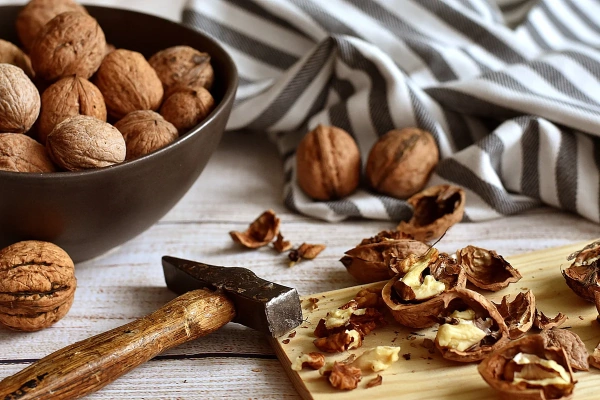
- How many cleaning methods are there? With a hammer, a sharp knife, doors, a screw press (a nutcracker), a nutcracker, freezing.
- What is the best way to store walnuts? In airtight containers. Best kept in the refrigerator.
- How many nuts should you eat per day? Nuts are high in calories, so eating them indiscriminately is not recommended. If you include walnuts in your diet, eat the same amount every day. The recommended daily intake is 5-7 nuts, with a maximum of 10 nuts per day.
Walnuts deserve to be among the top 10 healthiest foods in the world. They are a truly amazing gift of nature, with countless uses in cooking, medicine, and cosmetology.