
With a wide variety of walnuts to choose from, you can find the one most suitable for growing in your garden. Choose the variety that best suits your needs and preferences. Below are the characteristics and descriptions of walnut varieties.
Description of walnut
The walnut is a deciduous tree characterized by its large size and well-developed roots. The fruits form as dry drupes. When ripe, the nuts dry out and begin to split. The size and shape of the nuts vary depending on the tree's cultivar.
- ✓ Soil pH should be between 6.0-7.5 for optimal nutrient absorption.
- ✓ The depth of groundwater is at least 1.5 m to prevent root rot.
Walnut is a moisture-loving crop that thrives and produces good yields when grown in warm climates. The plant prefers well-drained soil.
| Name | Tree height | Fruit weight | Frost resistance |
|---|---|---|---|
| Walnut Ideal | 4-5 m | 11 g | up to -35°C |
| Chandler | up to 28 m | 12-16 g | moderate |
| Astakhovskiy | up to 10 m | 23.5 g | high |
| Skoroplodny Levina | 4-5 m | 8-14 g | high |
| Fruitful | up to 6 m | 8-10 g | high |
| Giant | 5-6 m | 10-15 g | high |
| Skoroplodny Ivan Bagryany | up to 4 m | 15-16 g | high |
| Peschansky | up to 10 m | 15 g | high |
| Kocherzhenko's walnut | up to 4 m | 14 g | high |
| Dwarf 3 | medium sizes | 12 g | high |
| Dwarf 5 | compact dimensions | 10.5 g | average |
Walnut Ideal
The variety was developed in 1947 by agronomists from Fergana, who wanted to study an early-maturing and hardy variety of the crop. This variety is renowned for its ability to be grown in various regions of Russia.
Characteristics of the Ideal:
- Compared to other varieties, the mature tree is not tall – it reaches 4-5 m in height.
- The plant's bark is grey-brown, while the skeletal branches and fruiting shoots are brown.
- The leaves are large, pointed, oval in shape, and green in color.
- The flowers are small, white with a green tint, and are pollinated by the wind.
- The fruit has a thin shell, and the kernels are large and easy to remove. Each nut weighs approximately 11 g.
- After 2-2.5 years from planting, the first ovaries begin to appear on the tree.
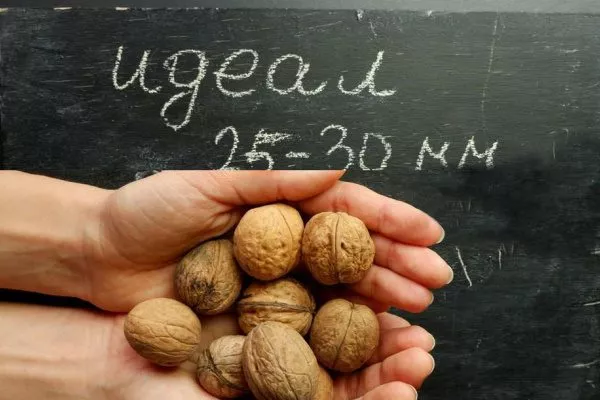
Advantages of Ideal:
- The plant is famous for its high frost resistance and is not afraid of temperatures down to -35 degrees.
- The nuts ripen very early.
- The tree is compact in size, which means other crops can be planted near it.
- The variety grows well in any type of soil.
- It is characterized by high yields – one adult tree produces about 100 kg of fruit.
Negative qualities:
- It has a short lifespan (no more than 50 years).
- Low resistance to recurrent frosts.
Chandler
The Chandler nut was developed at the University of California in 1979. It is one of the most popular varieties among Californians. Because it originated in this country, cultivation of this nut is more common in America than in Eurasian countries.
Chandler's characteristics:
- The tree grows large, it can reach up to 28 m in height and about 1.8-2.0 m in width.
- The plant is characterized by powerful branches, densely covered with elongated, elliptical leaves of a light green color.
- The fruits are oval in shape. The kernel is light-colored, pleasant to the taste, and easily separated from the shell. The nut weighs between 12 and 16 grams.
- On average, 40-50 centners of nuts are collected from 1 hectare.
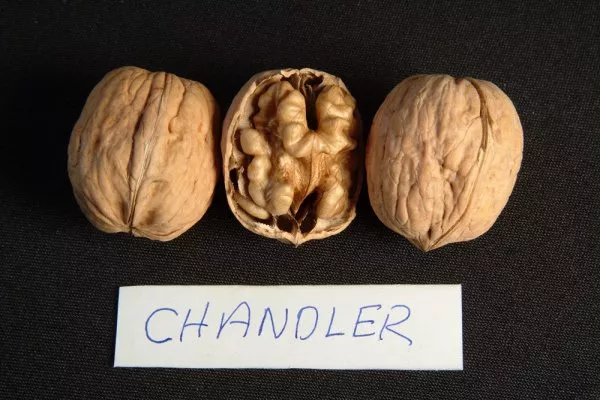
Advantages of the variety:
- early fruiting;
- high immunity to diseases and insects;
- excellent yield;
- good shelf life and transportability;
- drought resistance.
Astakhovskiy
The first seedlings of the Astakhovskiy variety originated in the Bryansk region. The Russian breeder A. I. Astakhov developed the variety. It was developed through selective breeding. It is suitable for cultivation in the Moscow region and the Central Russian region.
Characteristics of Astakhovsky:
- The tree is medium-sized, reaching up to 10 m in height. It has a rounded crown. The branches extend at an acute angle. The bark is gray.
- The leaves are round, with a smooth surface, elongated, and colored green.
- The flowers are green and contain sticky, creamy, two-lobed pistils.
- The fruits are firmly attached to the petioles, oblong in shape, and light brown in color. The kernel is easily separated. Each nut averages 23.5 g.
- One adult tree produces up to 35 kg of fruit per season.
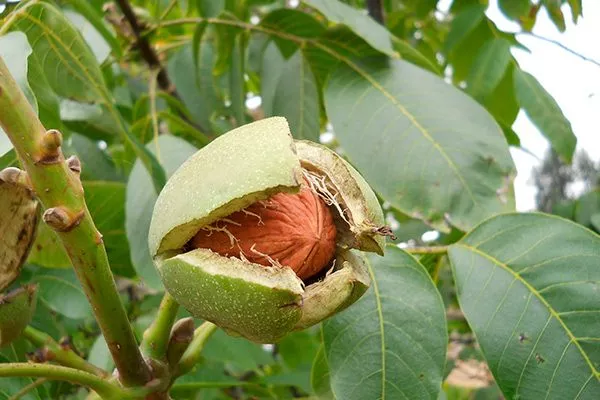
The variety has many advantages:
- high yield;
- resistance to frost and spring frosts;
- increased resistance to diseases and pests;
- precocity.
Astakhovsky has several shortcomings:
- the peculiarities of its cultivation have not yet been fully studied;
- late fruiting – in the 6-7 year of development.
Skoroplodny Levina
The Skoroplodny walnut was developed by Voronezh breeder I. P. Levin. This low-growing variety is capable of bearing fruit in the third to fourth year of growth in the Black Earth Region.
Characteristics of the variety:
- The tree grows small, reaching 4-5 m in height. It produces fruit in clusters of 4-6 nuts.
- The leaves are large, round in shape, and green in color.
- The nuts grow to be medium-sized, weighing from 8 to 14 g. The kernel is easily separated.
- This variety has a distinctive feature: a “papery” shell that can be easily crushed with your fingers.
- On average, about 15-20 kg of fruit are harvested from one adult plant.
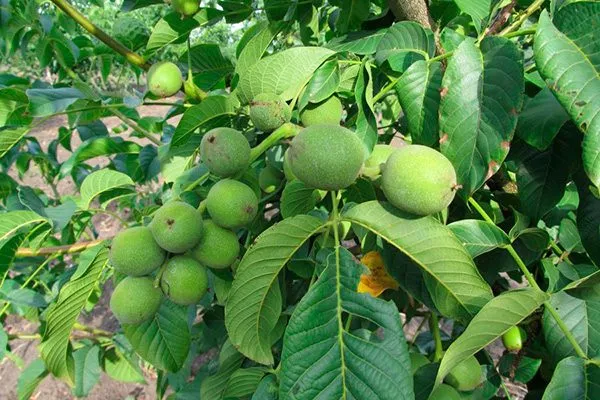
Advantages:
- high resistance to diseases and pests;
- frost resistance;
- large-fruited;
- easy extraction of kernels.
The disadvantage of the Skoroplodny variety is its low yield.
Fruitful
This is a seedling from open pollination of a local walnut variety. The tree is medium-sized, reaching up to 6 m in height.
Characteristics of the variety:
- The crown is wide and oval.
- The plant begins to bear fruit as early as its fourth year of development. The fruits ripen in late September. The nuts average 8-10 g.
- The fruits are tasty and sweet. The shell is thin, making the kernel easy to remove.
- One adult nut tree can produce about 25-30 kg of ripe fruits.
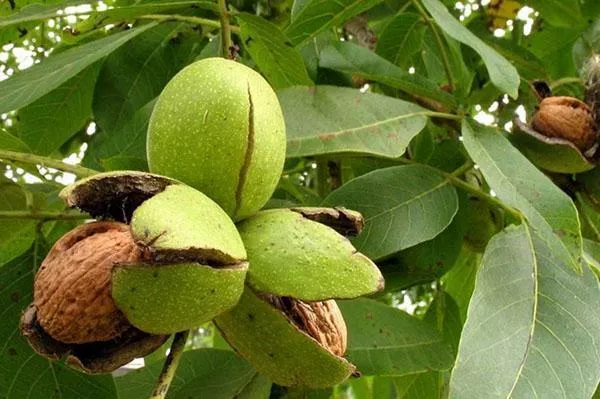
Advantages of the Urozhainy nut:
- long lifespan – up to 100 years;
- resistance to frost and drought;
- undemanding to soil and care;
- excellent taste of fruits;
- easy separation of the kernel.
The disadvantages of the variety include the fruits being not large enough.
Giant
The Velikan walnut was bred specifically for cultivation in regions with cold and arid climates. Its name derives from its large fruits. The Velikan is one of the most popular walnut varieties.
Characteristics of litter:
- The tree is tall and vigorous, with a wide, spreading crown. It grows up to 5-6 m in height.
- The fruits are large and round. The nuts have a thin shell, and the kernel separates easily. Each nut weighs approximately 10-15 g.
- Typically, a cluster contains about 3-4 nuts. Male flowers are collected in drooping catkins, while female flowers are arranged in clusters at the top of the plant.
- One adult plant produces about 40-90 kg of fruit.
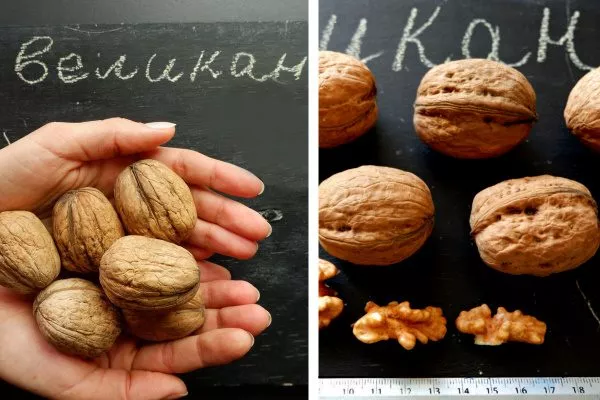
The Giant has many advantages:
- compact crown;
- resistance to common diseases;
- adaptation to the environment;
- high frost resistance;
- The nuts are very tasty and fatty;
- abundant fruiting and high yield.
Skoroplodny Ivan Bagryany (or Sadko)
A dwarf plant with several names—Ivan Bagryany and Sadko. The variety was developed by Ukrainian breeder L. S. Shugin. The scientist planned to develop a variety suitable for cultivation in the Moscow region, and he succeeded.
The plant is characterized by its compact size, growing up to 4 m in height. The fruits are medium-sized and ripen in clusters of up to 8. Each nut weighs 15-16 g. It has excellent flavor. Full fruiting occurs in the 4th to 5th year of development.
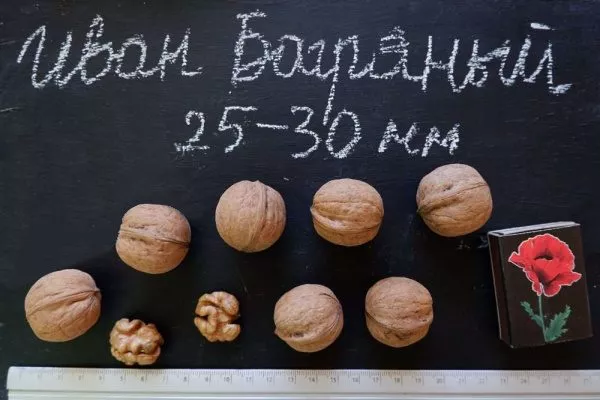
Advantages of the variety:
- resistance to diseases and pests;
- short stature;
- undemanding to soil and care;
- early fruit bearing;
- high resistance to frost and drought;
- excellent yield parameters.
At present, no obvious defects of the variety have been recorded.
Peschansky
The Peschansky walnut is a seedling from an open-pollinated local variety. V. M. Zhdan worked on the selection. In 1988, the variety was accepted for state testing. It is recommended for cultivation in the North Caucasus region.
Characteristics of the Peschansky variety:
- The tree is medium-sized, semi-upright, and of medium growth. The plant reaches up to 10 m in height. The crown is broad and pyramidal in shape. It has medium foliage. The shoots are of medium thickness, straight, and greenish-brown in color.
- The leaves are medium-sized, oblong, with a matte surface and smooth edges. The foliage is green in color.
- The tree bears fruit annually. The nuts are large, averaging about 15 g. The fruits are round-oval in shape with a pointed tip and a wide, wedge-shaped base.
- The shell is thin and dense. The kernel is easily separated and has a creamy hue.
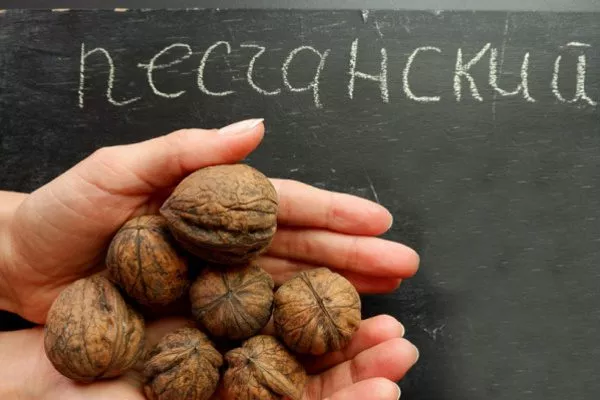
The variety has some advantages:
- resistance to frost and drought;
- resistance to diseases and pests;
- excellent taste;
- distinct aroma.
No significant defects were observed in the Peschansky variety.
Kocherzhenko's walnut
Ukrainian breeder I. E. Kocherzhenko worked on developing the variety. The biologist and geneticist succeeded in developing a highly effective modifier from the Ideal variety.
Characteristics of Kocherzhenko walnut:
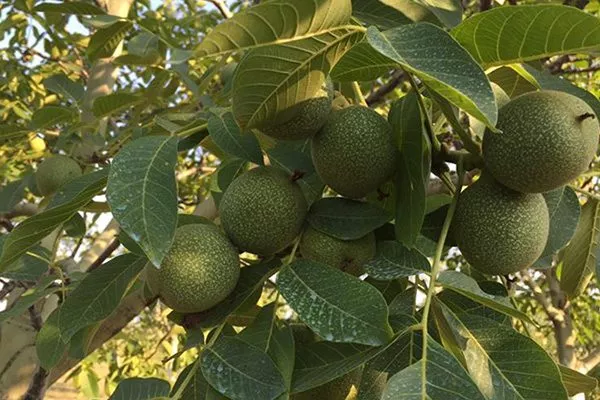
- A mature tree reaches up to 4 m in height and is renowned for its powerful and extensive root system.
- This is an early, fast-growing variety, beginning to bear fruit in its second or third year of development. The maximum yield begins in the sixth year after planting.
- The leaves are large and emerald in color.
- The fruits grow quite large, round, and have a thin shell. The kernel is light brown and easy to remove. The average weight of a single nut is 14 g.
Kocherzhenko has many advantages:
- undemanding to climatic conditions of cultivation;
- high yield rates (a 20-year-old plant produces about 40 kg of fruit);
- increased resistance to diseases, pests, frost;
- excellent taste of fruits;
- a fragile shell that does not create difficulties when cleaning the kernel.
Dwarf
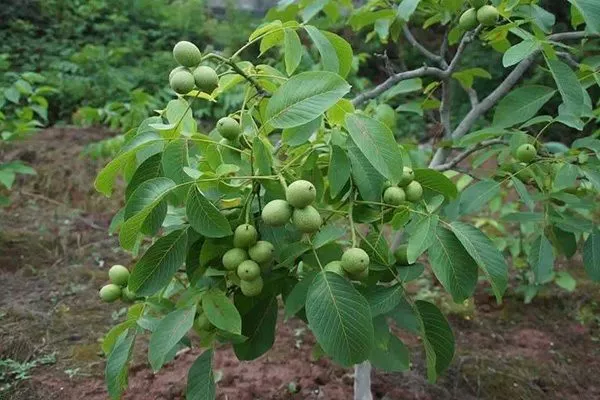
The Dwarf variety is an early-maturing walnut, characterized by cluster-shaped fruiting. As its name suggests, it is a dwarf plant. Several varieties of this variety exist, differing only in fruit weight and shell appearance.
Dwarf 3
The plant is characterized by a medium ripening period. The tree is slow-growing, medium-sized, and has a moderately dense, rounded crown. Branches extend from the trunk at an angle close to right angles and are arranged quite compactly.
Other characteristics:
- The bark of the tree is colored light gray, and the shoots are green.
- The leaves are medium-sized, oval-elongated, with a matte surface and a wavy, entire margin. The foliage is light green.
- The fruits are medium-sized and ovoid. The shell is thin, smooth, and strong. The kernel is easily separated and white in color. Each nut weighs on average 12 g.
- The variety is famous for its good yield – during the period of full fruiting, the plant produces about 28 centners per 1 hectare.
Dwarf 5
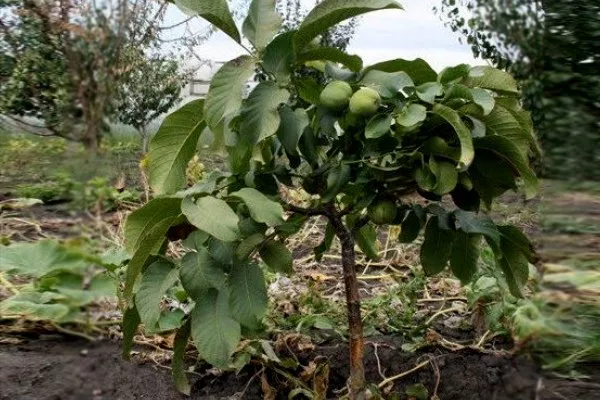
A medium-ripening variety with compact dimensions. It's identical to the Dwarf 3 variety, but the fruits are somewhat smaller—each nut averages 10.5 g.
Criteria for selecting varieties
Each gardener selects a nut variety based on their needs, taking into account growing conditions and climate. There are many criteria that a particular variety selected for cultivation in a specific location must meet.
Criteria for selecting walnuts:
- Winter-hardy varieties. This is a crucial factor for growing in central Russia. These climate conditions are considered harsh for southern crops, so not every variety will thrive, even with adequate shelter.
Only a few varieties can meet the high demands of the changeable climate of the middle zone. - Lateral views. Otherwise characterized as lateral-fruiting varieties, they are considered ideal for breeders.
Advantages include the ability of fruits to form not only on the tips of mature shoots but also on young branches. Thus, yields with this type of ovary formation are significantly increased. - Early-bearing varieties. When planting a crop in their garden, gardeners dream of getting the first harvest as soon as possible. If this is a concern, choose early-bearing varieties that produce fruit as early as the fourth year of development. These varieties have excellent flavor.
- Low-growing varieties. Thanks to their compact size, you can plant more even in a small space. This feature also makes harvesting much easier. Despite their small size, these varieties produce good yields.
- Late species. Late-ripening varieties are suitable for growing in warm climates, such as the Krasnodar Krai. Otherwise, you'll end up with unripe fruit.
Positive qualities include resistance to diseases and pests, excellent shelf life, and excellent taste. Late-ripening varieties tend not to fruit early. - Varieties for different regions of Russia. In addition to all other characteristics, breeders have developed varieties suitable for planting in specific regions. These varieties often contain genetic traits that ensure good ripening in a given location. These traits include frost or drought tolerance, disease resistance, and pest resistance.
- Other criteria. In addition to the factors listed above, when choosing a walnut, pay attention to the size of the fruit, the spread of the crown, the thickness of the shell, and the method of ovary formation.
Walnuts are a heat-loving southern crop. However, breeders have worked hard to develop numerous frost-resistant, early-fruiting varieties that can be grown in various regions of Russia. The key is learning how to choose the right variety based on climate conditions.