
The Dwarf walnut is a productive variety for those who prefer compact, low-growing trees. By choosing smaller trees, gardeners and summer residents simplify their maintenance and harvesting.
Botanical description
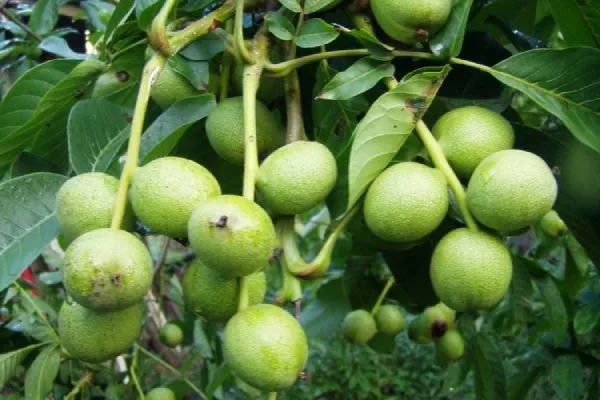
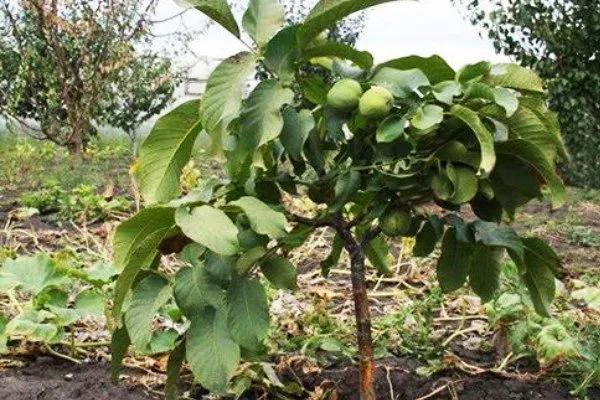
The Dwarf Walnut is a low-growing, compact tree. The tree reaches a maximum height of 2.5-3 m. The nuts (fruit) are large and round. Each fruit weighs 10-20 g.
The walnut tree's branches form a compact, neat, rounded crown. The root system is strong, providing stability to the tree. The leaves are large and bright green.
Flowering and pollination
The Dwarf walnut tree blooms in spring, May-June, producing male and female flowers on different branches. They appear inconspicuous, but have large anthers and pistils, which facilitate pollination and fruit formation.
Varietal characteristics
The Dwarf walnut is an early-ripening variety. Ripening occurs between August 10th and 30th. The tree begins to bear fruit three years after planting. It is quite frost-resistant and produces a good yield—15-20 kg of nuts per tree.
Taste and application
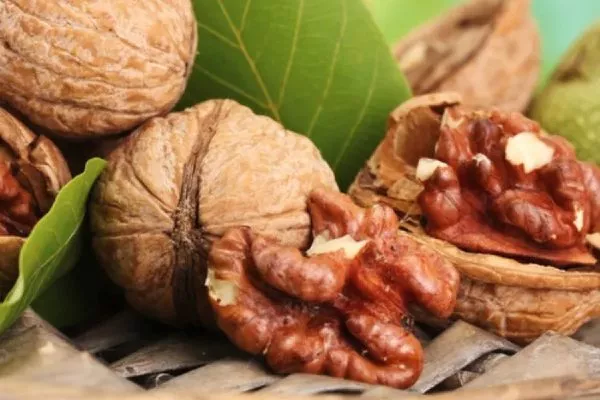
The flavor is pleasant, buttery, and dessert-like. The fruits of the Dwarf variety are ideal for both fresh consumption and culinary delights. The nuts are rich in fat and protein, vitamins and minerals, potassium and magnesium, and have antioxidant properties.
Pros and cons
The Dwarf walnut is rightfully popular among gardeners, as it offers many advantages over taller varieties. Pros:
Cons:
Landing conditions
In order for the Dwarf walnut to grow, develop and bear fruit successfully, it is important plant it correctly.
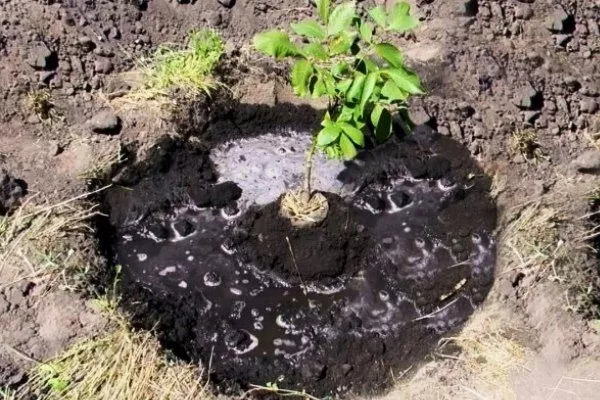
- ✓ The seedling planting depth should be such that the root collar is at soil level.
- ✓ After planting, abundant watering is required (at least 20 liters of water per tree) to ensure good contact of the roots with the soil.
Landing features:
- The nut is planted in a well-lit area, protected from strong winds.
- Between adjacent seedlings, maintain intervals of 1.5-2 m.
- Planting takes place in spring or fall. The latter option is practiced in the south of the country; in the rest of Russia, walnuts are planted in spring to avoid exposing young trees, which have not yet had time to establish themselves and adapt, to the cold.
- Almost any soil is suitable for the Dwarf Walnut tree. It should be well-drained. The optimal pH is neutral or slightly acidic. The most important thing is to create a drainage layer in the hole. This can be made of expanded clay, pebbles, or broken brick. The hole should be approximately 50 x 50 cm in size. It should be large enough to comfortably accommodate the seedling's roots.
Care Features
Dwarf walnut trees require regular watering during droughts. Otherwise, they require moderate watering, taking into account rainfall. Avoid overwatering, as this can lead to root rot. Trees require fertilization: apply nitrogen in the spring and potassium-phosphorus fertilizers in the summer.
Diseases and pests
The Dwarf Walnut has a fairly strong immune system, but it can be attacked by pests such as aphids, codling moths, royal nut moths, and wart mites. For pest control use effective insecticides, such as Karate, Decis or their analogues.
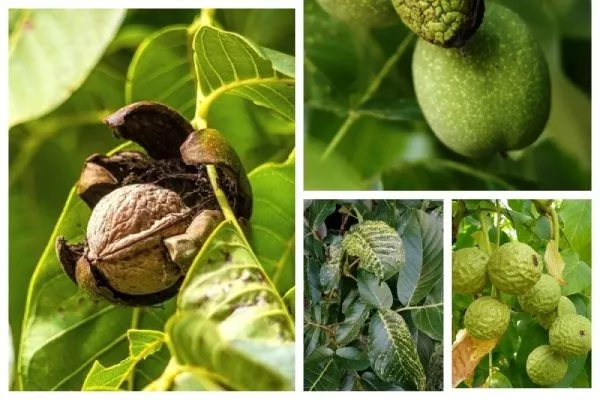
Among the diseases, fire blight and brown spot are the most common. To combat the former, use fungicides such as Zineb or HOM, while copper oxychloride or a 1% solution of Bordeaux mixture are used for the latter.
How does it reproduce?
The Dwarf Walnut can be propagated by fruits or cuttings. The former is too labor-intensive and time-consuming, so cuttings are preferable. If propagated by nuts, they must be germinated first, otherwise the kernels may rot before the pods open.
| Method | Time to first fruiting | Complexity |
|---|---|---|
| Cuttings | 3-4 years | Average |
| Fruits | 6-8 years | High |
Collection and drying of nuts
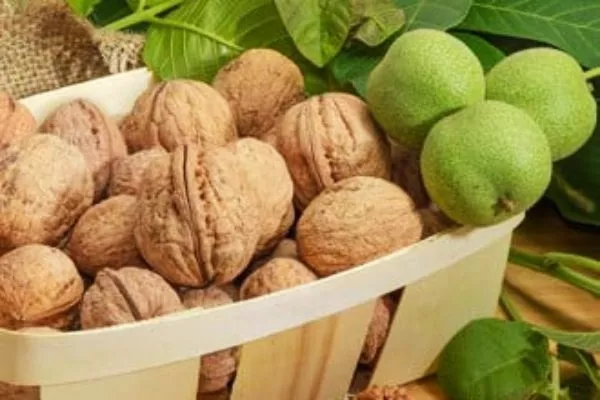
The nuts are harvested when the pericarp begins to visibly split—it should separate easily from the shell. Ripe nuts have light-brown shells, and the kernels are moist and heavy. The nuts ripen unevenly; those on the lower branches and those on the south side are harvested first. The harvest must be completed in several stages.
Drying can be done in an oven at about 50°C, spreading the nuts in a single layer. Drying takes approximately 3 hours.
Reviews
The Dwarf walnut is a promising variety that will appeal to gardeners who don't want to deal with tall trees. The Dwarf's compact tree makes spraying and harvesting easy, while its fruits have an excellent flavor and are ideal for desserts.