
Growing walnuts in your garden is quite a labor-intensive undertaking, but over time, you won't regret planting this heat-loving crop. The process requires specialized knowledge, including cultivation techniques, planting, and subsequent care. Learn the basic steps.
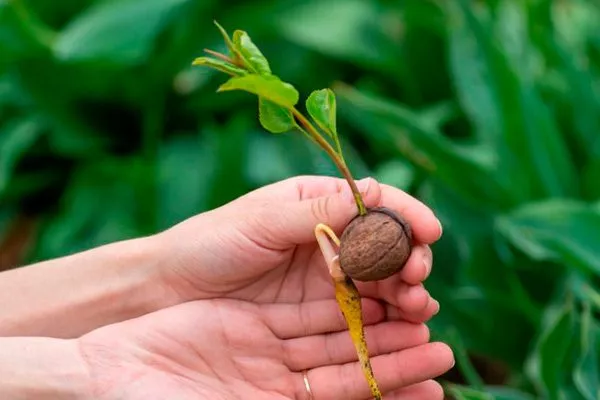
What are walnuts grown from?
You can grow your own walnut tree from seeds or purchase a ready-made seedling. Either way, the second option is much easier, but if you prefer a more challenging approach, try the first one.
| Name | Stratification period | Stratification temperature | Recommended planting period |
|---|---|---|---|
| Seeds | 4 months | +1 to +4 degrees | February-March |
| Saplings | Not required | Not required | Spring or autumn |
- ✓ Select seeds only from healthy, fruit-bearing trees to ensure high germination and quality of future seedlings.
- ✓ Check seeds for damage and signs of disease before stratification.
Seeds
Growing walnuts from their own nuts is painstaking work that requires considerable time. At the same time, it's fascinating to watch the young tree grow. Initially, you'll need some material.
For seeds, it's recommended to use only freshly picked nuts with thin shells and tasty kernels. The shells should be free of blemishes, damage, or other defects. Peel the nuts, leaving the internal membranes and kernels.
Seed stratification takes about four months at temperatures between 1 and 4 degrees Celsius, so store them in the refrigerator or cellar, moistening the seedlings every three weeks. You can transplant the nuts as early as February or early March, and the first sprouts will appear a few weeks later.
Saplings
This heat-loving crop is very popular among many gardeners, as it is characterized by a fairly powerful root system that gradually develops and penetrates deep into the soil layers.
This is an unpretentious plant, but to ensure its survival and good fruiting, consider some growing features:
- Although there are frost-resistant varieties, the crop still prefers warmth and sunlight.
- Planting can be done in both spring and fall. The exact timing depends on the region's climate and the variety chosen.
Growing a walnut tree after planting a seedling is quite difficult; the main thing is to follow care recommendations, including watering and fertilizing.
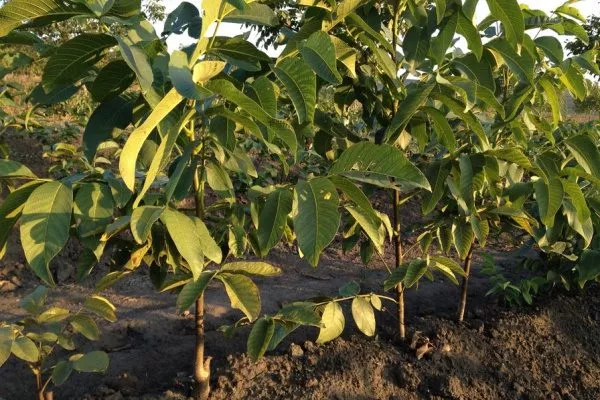
How to prepare walnut seeds for planting?
To grow high-quality, healthy, and strong walnut trees in your garden, follow these guidelines. Below are methods for germinating seeds of this heat-loving crop.
When to start the procedure?
The germination process involves a preparatory process called seed stratification. This determines the overall germination time, which can last from 1 to 5 months.
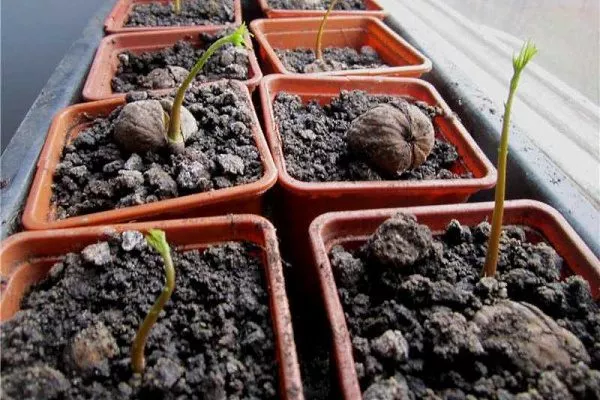
Germination in a pot
You can easily grow a walnut tree at home, but it won't grow in a pot for long; it will only grow to a certain size, after which you'll need to transplant it to your garden.
To grow a walnut tree, prepare a soil mixture of equal parts peat, turf, and humus. Choose a pot at least 30 cm in volume to ensure proper root development. Plant the sprouted seedlings in late April.
Recommendations:
- Fill the pot 1/3 full with drainage material, then add soil. Make a hole 7 cm deep and place the nut seam-side up, then cover with soil.
- Water generously and place in a room with a temperature of 25 to 28 degrees Celsius. Provide good lighting and cover the pot with glass or transparent film.
- The first shoots will appear in two weeks. Until they form, remove the glass for 10-15 minutes daily.
Germination in water
Use only ripe, healthy, freshly harvested nuts for this procedure. If the kernels dry out, they will not be suitable for germination.
Step-by-step instructions:
- Place the future planting material in a container and fill it with water at about 45 degrees.
- Cover the container with a lid and leave it in a very warm place for several days so that the fruits are saturated with moisture.
- After this, drain the water almost completely, leaving only a small layer at the bottom to retain moisture, and place it back in a warm place.
- The process can take up to 20 days. Open the lid every few days for ventilation and check the humidity regularly – add water to the bottom if necessary.
- After the nuts have sprouted, place them in a cellar or basement, cover them with sand, place them in a bag and store until spring, or plant them immediately in a pot with fertile soil.
In the spring, when the soil warms up to +10 degrees, usually in early April, you can plant the seedlings in open ground.
Germination in the garden
For this procedure, select a site with a slightly alkaline or slightly acidic soil and lime it before sowing. Then thoroughly cultivate and loosen the soil.
Next, proceed step by step:
- Make a furrow 8-10 cm deep. Place the nuts in the ground on their edges, leaving a distance of about 40 cm between them.
- Cover the nuts with soil.
- In cold winters, insulate the crops with dry grass or sawdust in a layer of about 20 cm.
- Two to three weeks after sowing, carefully remove the top layer of soil to check for germination. The seeds have germinated when the shells open slightly and a small white root appears.
- Next, place the sprouted nut in a container and place it in a sunny area to continue growing the seedlings.

Caring for sprouting seeds
They love the sun, but can suffer from sunburn and overheating, so cover the seedlings with dry grass or leaves at first. Loosen the soil around the future trees, weed, and fertilize with wood ash every 14 days. This will protect the young tree from bacteria.
Seedlings need protection from harmful insects and birds that can damage the delicate shoots, so use cut-off plastic bottles to cover the seedlings. Prune weak shoots and remove some flowers. In the first few years, the most important thing is the formation of the tree, not the harvest.
Planting walnuts in open ground
Planting walnuts in open ground requires following certain requirements. First, select a suitable site, prepare the planting hole, and adhere to the planting schedule.
Deadlines
When choosing the time to plant walnut trees, consider watering availability. If you can't water young trees, plant them in the fall. If you plant walnut trees in the spring and they experience drought, they will freeze more during the following winter than new seedlings planted in the fall.
Remember that without watering, cuttings will not take root well and may freeze. Young plants with closed root systems can be planted in spring until the end of May and in summer from mid-August.
Selecting a site
When choosing a site for the tree, ensure the area is not prone to flooding and the groundwater level is not too high. It's best to plant walnuts on slightly elevated, wind-protected slopes.

Soil requirements
Walnut trees prefer chernozem, soddy, sod-podzolic, light loamy, and sandy loam soils with a neutral pH and a shallow water table. If you have clay soil, enrich it with compost or peat before planting.
Planting diagram
Planting involves fairly simple steps. You just need to follow a few rules:
- Plant seedlings at 10x10 m spacing to ensure adequate space between them for another 30-40 years. This type of orchard will eventually become dense, with fruiting primarily occurring at the top of the canopy.
- It is acceptable to plant seedlings at a distance of 8x6 m. Dense planting ensures slow growth of the trees, but 30 years after planting, the trees will become very dense.
- The basic planting distance of 10x10 m can be reduced on poorer soils and increased on rich soils.
- When planning the distance between trees, consider the growth strength of each variety.
Preparing the planting hole
If you plan to plant walnuts in areas with less fertile soil, you will need to prepare the soil a few weeks before planting.
- Two weeks before planting, add compost or rotted manure to the soil at a rate of 10 kg per 1 m².
- Check the soil acidity and apply lime if necessary.
- Provide drainage to the area if there is a risk of standing water.
Step-by-step instructions:
- Dig a hole measuring 0.5 x 1 m.
- Remove the soil to the side, then mix it with compost, chopped straw, and rotted manure. To increase soil acidity and enrich it with potassium, magnesium, calcium, and phosphorus, you can add wood ash.
- When mixing soil with manure, do not use lime. Apply lime several weeks in advance.
Pre-prepared soil will not settle after planting. If you start preparing the hole too late and the soil settles, you risk damaging the roots.

How to plant a walnut in open ground?
Walnut planting can be done in several ways, depending on the material used: seeds or seedlings. The procedure does not require much time or effort.
Planting seeds
Plant the walnut in spring in April or in autumn in September-October.
Step-by-step instructions:
- 1-2 months before planting, apply fertilizer: 15 kg of manure, 200 g of superphosphate and 400 g of wood ash.
- Place 3 nuts in a triangle or 4 in a square inside the hole. The vertical strip of nuts should be facing up.
- Cover the nuts with soil. If planting in the fall, do not water, but cover with a 20 cm layer of peat mulch or dry leaves, sawdust, or grass. This will retain moisture and protect the sprouts from the sun.
When planted in spring, the first shoots may appear in just 10 days, and after 6 months they will reach 10-15 cm in height.
Planting a seedling
Experienced gardeners believe that the best time to plant walnuts is in the spring. The planting process is very simple:
- At the bottom of the hole, make drainage from sand, expanded clay, crushed stone, etc.
- Add humus, ash, and superphosphate.
- Be sure to insert a wooden stake into the hole. Only then should you plant the seedling next to it and carefully cover the roots with soil.
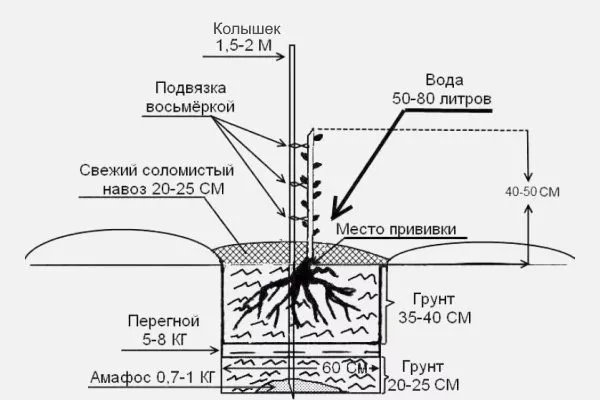
Peculiarities of walnut propagation by grafting
When propagating walnuts by grafting, remember that the plant has fairly large buds, so the bud will also be quite large. Cut it from the scion and insert it under the bark of the rootstock. This procedure ensures that the bud is nourished with moisture and essential nutrients.
Growing walnuts in different regions
When choosing the right time to plant walnut trees, remember that they thrive in warmth and sun, so as temperatures drop, sap flow slows. If you don't plant them in time, they may not have time to adapt to their new location and may die in winter.
For this reason, experienced gardeners recommend planting the tree in the spring, but if necessary, the process can be started in the fall. Planting times vary depending on the region:
- Moscow, Moscow region, Central Russia, Volga region – early to mid-September.
- Krasnodar and Stavropol Krais, the North Caucasus Republic, Crimea – October-November.
- Ural, North-West, Siberia - April-May.
Caring for walnuts
Follow proper care procedures to ensure your walnut tree thrives. Water the plant, fertilize it, and don't forget to mulch, so you'll have a healthy tree growing in your yard.
Watering rules
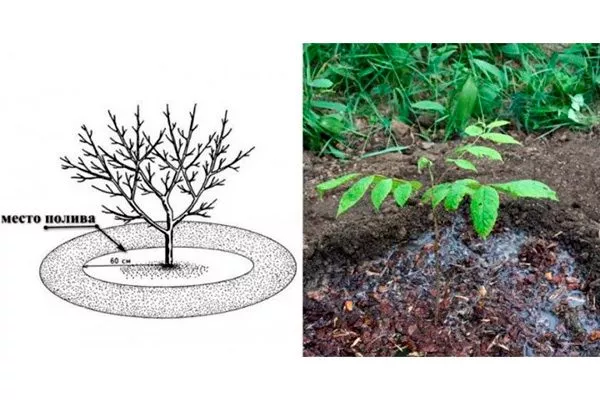
Mature plants can obtain their own moisture by deepening their roots, but young seedlings require additional watering. During the spring and summer, when moisture is most needed, water the tree twice a month. Each tree requires 45-60 liters of water.
When watering, distribute the water around the outer edge of the tree's trunk. Watering the trunk can lead to fungal infections. For trees reaching 4-5 meters in height, water less frequently—once a month.
Mulching
Mulching is an essential procedure, as it reliably protects plant roots from overheating, prevents moisture from evaporating, and prevents harmful insects from penetrating. Mulching also provides an additional source of beneficial nutrients.
Top dressing
During the first few years after planting, do not fertilize the plant, as it will benefit from the fertilizer added to the planting hole. Afterward, use a comprehensive, all-purpose fertilizer, such as OMU Universal. This product contains nitrogen, magnesium, potassium, and phosphorus. Apply 80-100 g of granules per plant, then dig in.
During the upcoming fruiting period, fertilize the walnut tree with humus at a rate of 10 kg per 1 square meter. When preparing the tree for winter, add 200 g of wood ash to the soil to ensure high yields next year.
Liming
One liming session lasts for 5-7 years. Calcium enriches the soil with minerals and also boosts the tree's immunity. The calcium dosage depends not only on the soil's acidity but also on its physical properties.
Crown formation and pruning
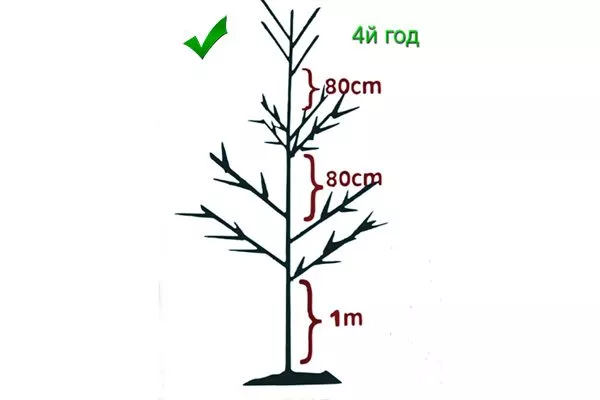
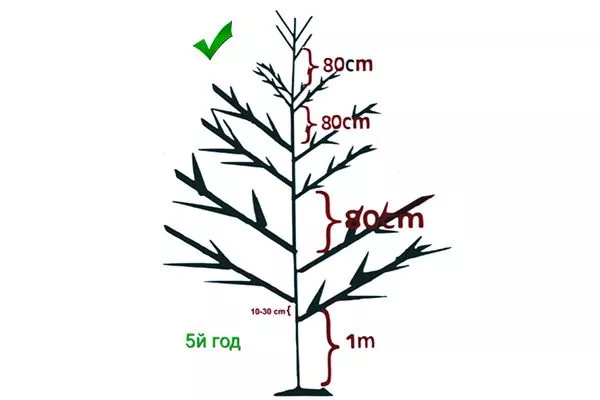
Begin shaping the walnut tree's crown during the first 2-4 years after planting it in its permanent location. This will strengthen the tree's immunity, as the wounds that form after pruning away unwanted growths will be small and heal more quickly.
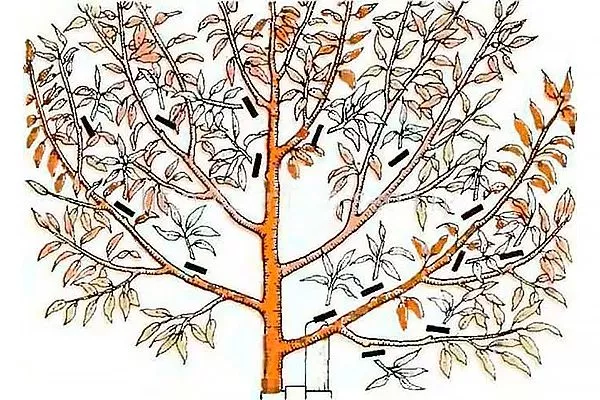
When and how is pruning done?
The best time to perform the walnut procedure in regions with severe winter frosts is considered to be the period that ensures the fastest healing of wounds, since otherwise there is a risk of severe freezing.
In the South, pruning is typically done in February. Perform the procedure so that the wood does not dry out too deeply. In most regions of Russia, pruning occurs from late March to early June. Sanitary and formative treatments can be performed during the summer.
Pruning rules
If you don't shape the crown, over time it may become completely deformed - you'll develop splitting forks with sharp angles, excessively long branches with a minimal number of lateral branches, and dying fruit-bearing shoots due to crown thickening.
To perform sanitary or formative pruning, use a sterilized sharp knife or pruning shears to make even cuts.
Recommendations:
- Prune for the first time when the height reaches 1.5 m.
- The tree trunk should be 80-90 cm, and the crown diameter – 50-60 cm.
- When shaping the upper part, leave no more than 10 skeletal branches on the tree, shorten the shoots by 20 cm, and regularly clear the trunk of shoots.
Objectives of crown formation
Crown shaping in the first few years will yield many benefits. First and foremost, the plant will be well-ventilated and protected from disease. Crown shaping is essential for increasing yield, the tree's attractiveness, and vigorous growth.
By shaping young trees, you will be able to create a strong, well-lit crown with a small number of branches.
Cutting technique
Walnut pruning involves shortening branches. For older trees, perform this procedure if there are broken or damaged branches, as well as any that obstruct access.
There are several pruning techniques:
- On a stump. If time and weather conditions prevent this, use this technique. Leaving the stump will protect the tree from infection. After the appropriate season, remove the stump. Perform this procedure from mid-May to mid-June.
- Without hemp. The method depends on the location on the tree. Branches can be cut diagonally or straight. Straight cuts ensure the branches are horizontal.
Prune young shoots so they grow at a wide angle relative to the guide. Trim the stump as close to the branch as possible to avoid damaging it. Seal the cut with garden pitch.
Carry out the procedure when the young shoots reach 5 cm in length. Choose a dry, sunny day for pruning.
Pruning in the first year after planting
If you've planted a branched tree, pruning involves removing side shoots and shortening the central conductor by 1/3 of its length. Trim off any thin, poorly wooded, or frozen portions of the sapling, and cut the main conductor into a stump.

The easiest way to form a plant is with one shoot:
- Trim the tip, the thinnest and least woody part of the guide, by 1/3 of its length.
- Remove shoots that grow below the planned crown, green ones and those that have become woody.
- Leave 5 shoots. The crown with the modified guideline should have 3-5 branches.
Watch also a video about shaping and pruning a one-year-old walnut tree:
Pruning in the second year
In the spring of the second year after planting outdoors, the plant may develop a crown at the desired height. After that, everything depends on the growing purpose. If you've planted a vigorous variety, don't prune the tree or only remove frozen branches.
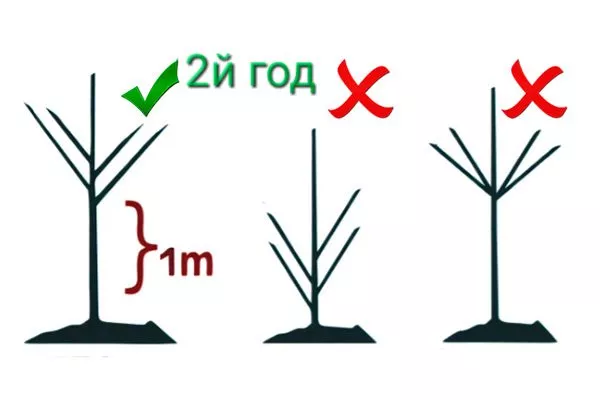
Additionally, watch a video about the formation of two-year-olds:
Pruning in subsequent years
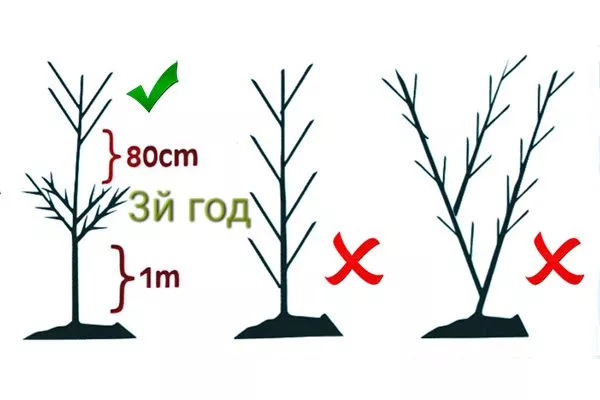
In subsequent years, perform only sanitary pruning. Remove damaged, frozen, and crossing branches. If necessary, shorten shoots, but do not prune more than 1/3 of the crown. Perform this procedure in late spring or early summer.
Diseases and pests, control methods
Walnut trees are highly resistant to diseases and pests, but if not properly cared for, the plant can become ill. Learn about common diseases and pests, as well as ways to combat them.
Walnut diseases:
- Bacteriosis. Leaves become covered with black spots, leading to deformation and death. Fruit affected by bacterial blight lose quality and typically fall off before ripening. The disease can be triggered by an excess of nitrogen-containing fertilizers and prolonged rainfall.
To combat the disease, use Bordeaux mixture, copper sulfate solution, or other fungicides. Treat the plant in several stages. In the fall, collect fallen leaves and burn them. - Brown spot. Brown spots appear on the foliage, gradually expanding until they dry out and die. The same thing happens to the fruit. The disease develops due to damp weather or frequent watering.
Cut off affected stems and foliage. Treat the plant with Strobi (4 g per 10 liters of water) or Vectra (2-3 g per 10 liters of liquid). Apply the first time when buds begin to open, and apply the second time in the summer. - Bacterial burn. A disease that affects leaves, buds, shoots, flowers, and catkins. Initially, reddish-brown spots appear on the foliage. Over time, the infected plant parts die. The disease actively develops during rainy weather.
Remove and destroy any infected parts of the walnut tree. Treat the cut areas with a 1% copper sulfate solution.
Walnut pests:
- Aphid. An insect that infests virtually any crop, aphids damage foliage, feed on its sap, and also transmit various viral diseases. They can form large colonies.
In case of infection, immediately use powerful treatment products: Actellic, Biotlin, Antitlin. - Nut moth. It lays its eggs in the foliage. The caterpillars feed on the foliage, eating it from the inside out. Infestation appears on the leaf blades as dark bumps.
Treat the plant with Lepidocide. If there are numerous insects, use pyrethroids: Decis or Decamethrin. - Wart mite. The pest destroys young foliage but leaves the fruit untouched. Infestations can be triggered by high humidity. When the insect settles on a tree, dark brown bumps appear on the leaves.
To destroy wart mites, use acaricides: Aktara, Akarin, Kleschevit.
Treat diseases and control insect pests promptly, otherwise the plant's yield will decrease or it will die altogether.
How to store nuts?
Fruiting period walnuts Harvest occurs in September. Pick only fully ripe nuts, as they store longer. You can tell the nuts are ripe by the cracked shell, looseness, and yellowing of the outer skin.
Many nuts will fall off on their own; to remove the rest, shake the plant or use a special fruit picker.
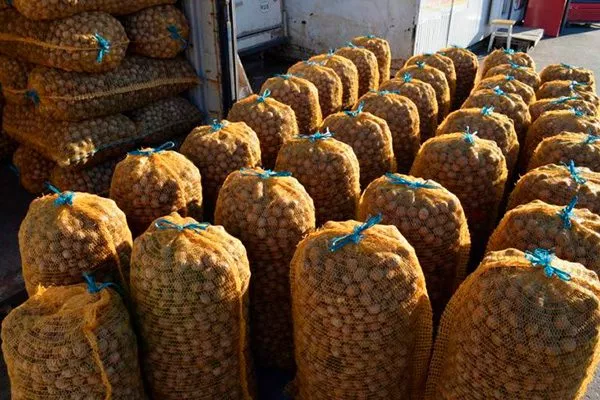
Store unpeeled fruit in nets or cardboard boxes in a dry, ventilated area. They will keep well until the next season.
Growing walnuts as a business
You can build a business growing walnuts, as there's potential to earn quite a bit of money. Furthermore, walnuts are a commodity. long-term storage, is in demand and sells quickly.
Interesting facts:
- The business requires virtually no expenses, and a mature walnut grove requires virtually no maintenance. Simply water the plants and apply root fertilizer.
- In just 5-7 years, you can expect to harvest around 2.5 centners per hectare. Mature plants yield around 40 centners. After 20 years, you can realistically harvest up to 50 centners of nuts per hectare.
- Considering that a kilo of nuts costs about 5-8 dollars, the net profit per hectare is 10-16 thousand dollars.
Even if you have a 2-hectare plot, you can earn around $32,000 per season. You'll also get an additional profit from the shells.
Reviews from those who grew walnuts
Walnuts are a low-maintenance crop, but they prefer warm climates and well-lit areas. With minimal labor, you can grow a high-quality, healthy plant with high yields.