
To propagate a walnut, simply collect ripe walnuts from your chosen tree. This method is quite time-consuming, but simple. It requires no investment other than time and patience. The key is to create the right conditions for germination.
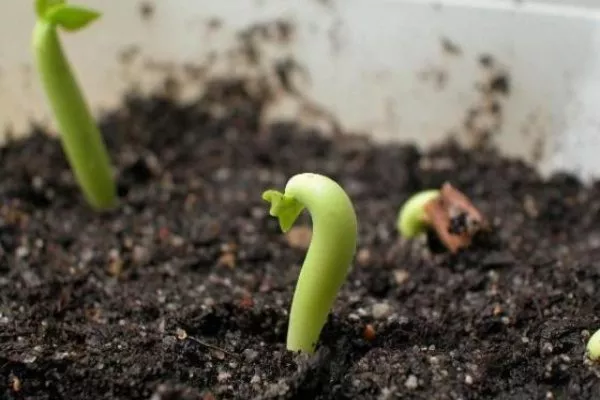
Why sprout walnuts?
Walnuts It can be propagated not only vegetatively but also generatively. In the latter case, the fruit itself—the nut—is used for planting. Its shells are strong and thick, so the chances of spontaneous germination are slim. The kernel usually rots before the shell halves can open.
Unsprouted nuts can, in principle, be planted in the fall, after the fruit has fallen from the trees. However, a large number of nuts must be used due to the low germination rate.
Selecting nuts for planting
Only the finest nuts are germinated. Several criteria are used to select suitable planting material.
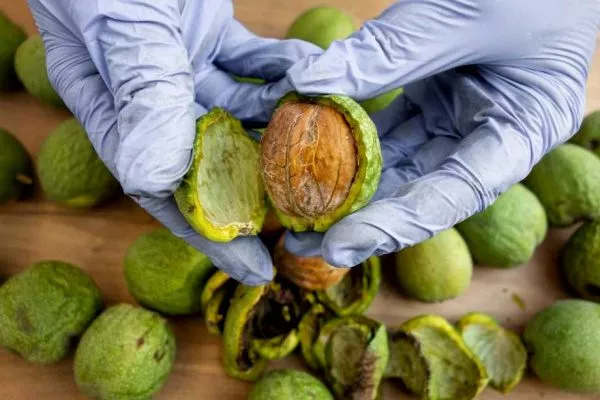
How to choose nuts for planting:
- Variety. Any variety can be used for indoor cultivation, but only those approved for outdoor cultivation. Otherwise, the tree will struggle in local conditions.
- Weight. The nuts should be heavy. Light nuts likely have rotten or dry kernels.
- Shell. Preference is given to nuts with thin shells.
- External signs. We need specimens with whole, undamaged shells. Nuts with holes, dark spots, mold, or rotten areas should be discarded immediately.
- ✓ Nuts must be freshly picked, no older than one year.
- ✓ Naturally falling nuts are preferred as they have a higher germination potential.
Store-bought nuts are not recommended for sprouting. For an attractive appearance, soak them in a chlorine solution. It's better to use home-grown nuts or nuts purchased from private sellers at the market.
Preparation of planting material
Before sprouting, nuts must be prepared, otherwise you may not see sprouts – as often happens in nature, they simply won’t hatch.
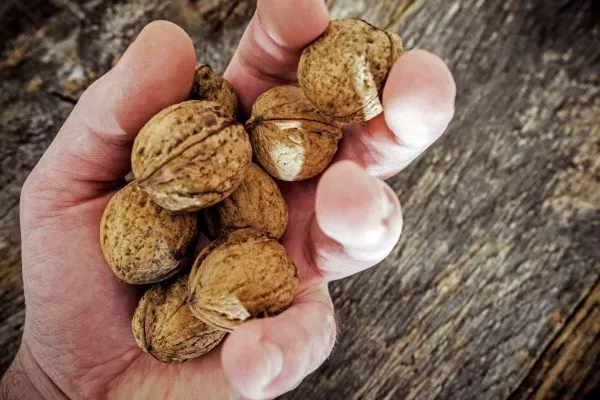
Stages of preparing nuts:
- Peel off the green skin. Removing it will definitely stain your hands—nut skins contain a lot of iodine, so wear gloves. Be careful not to damage the shell when peeling the nut.
- Calibrate. Select the largest nuts for planting. These will grow into large-fruited trees.
- Check for germination. Place the nuts in warm water and wait 30 minutes. Discard any that don't sink within this time—they're not suitable for planting. Nuts that sink to the bottom have dense, heavy cores, and their chances of germination are very high.
- Disinfect. Soak the nuts in a weak solution of potassium permanganate for 30 minutes.
- Stratify the fruits. Bury them in moistened sand placed in a box. Keep it in a room with a temperature of 0 to 5°C for 3-4 months. Moisten the sand once every 2 weeks.
- Check for germination again. Inspect the nuts for mold or damage. Submerge them in water again. Select the ones that sink to the bottom for planting.
Stratification is the process of creating conditions similar to the natural conditions under which walnuts germinate. This lengthy process thins the shells, making it easier for the sprout to emerge.
- Check the temperature in the stratification room daily to ensure it remains between 0 and +5°C.
- Moisten the sand every two weeks using room temperature water.
- Check nuts for mold or damage every two weeks.
Germination methods
There are various ways to sprout nuts and in different environments—in water or soil, outdoors or in a flowerpot. Each gardener chooses the most convenient option.
In a pot with soil mixture
You'll need a suitable-sized container and moist sand. Place the nuts in the second half of January for stratification. This way, they'll be just ready for planting.
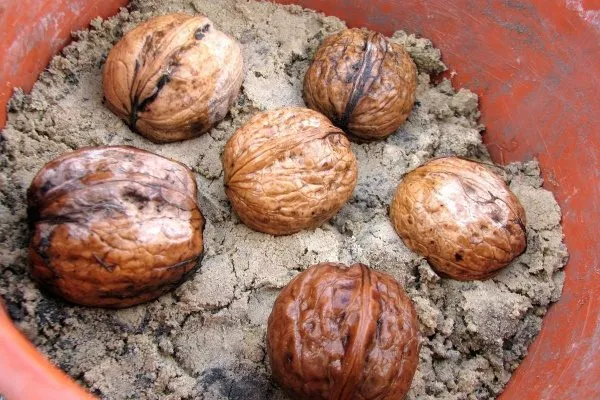
How to germinate nuts in a pot:
- Place the nuts on the sand, making sure they don't touch each other. Cover them with sand and move them to a room with a temperature of 0 to +5°C.
- Check the sand's moisture level every two weeks. If it starts to dry out, sprinkle it with water or use a spray bottle.
- Plant nuts outdoors at the end of April or a little later. The key is to ensure that the temperature is above freezing.
In the water
Planting in soil and sand isn't always suitable for thin-shelled nuts—they often begin to rot after months in a humid environment. For thin-shelled specimens, germination in water is recommended. For spring planting, begin preparing the material in early April.
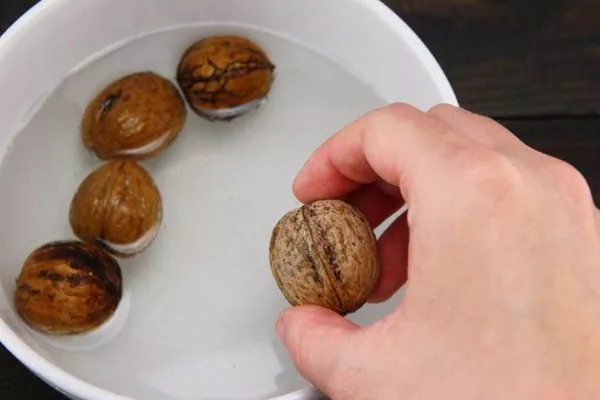
How to sprout nuts:
- Place the nuts in a suitable container and pour warm water (45…50°C). Cover them with plastic wrap and place them near a radiator.
- After a couple of days, drain the water until about 0.5 cm remains at the bottom. Cover the nuts again and store in a warm place for another 3 weeks. Open the container daily. If the water evaporates and the shells dry out, add more water. If there's too much, pour out the excess—there may be high humidity in the container, but the nuts shouldn't be submerged in liquid, otherwise they will mold.
- After three weeks, the shells will begin to crack, and sprouts will emerge. Plant the sprouted specimens in a nursery or directly into the garden.
If the nuts have already sprouted and it's still cool outside, bury them in moist sand and take them indoors with a temperature of around 5°C. When the weather warms up, transplant the sprouted specimens into the garden.
In the ground
This method is suitable for those who do not have extra time to deal with the hassle of germination.
How to germinate nuts in soil:
- Place the ripe fruits on the ground in the fall and cover them with more leaves.
- In the spring, remove the nuts and plant them in the garden.
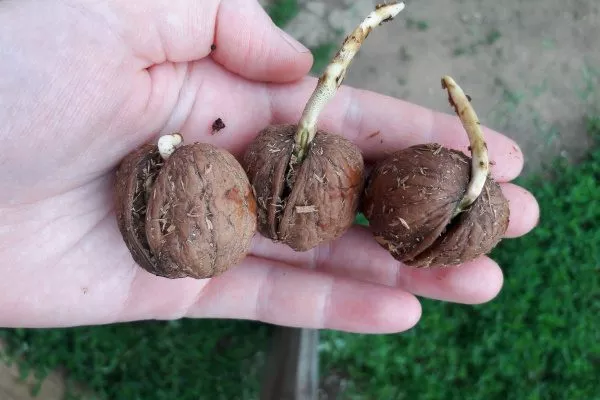
Care before transplanting into open ground
To ensure strong, healthy sprouts that quickly take root in open ground or a large pot, it's important to provide the nuts with proper care during the germination stage.
Details of care procedures:
- Provide the seedlings with sufficient light. Or illuminate the shoots with fluorescent lamps.
- The temperature should be at room temperature. If it gets too warm, ventilate the room.
- Take the seedlings outside when the outside temperature rises to +15°C. Bring them indoors at night.
- Water the sprouts as the soil dries out.
- Mulch the soil around the seedlings with peat. This will help them develop strong roots.
- Feed the seedlings every two weeks with a potassium-rich fertilizer. For sprouts, use a 50% dose.
Planting sprouted walnuts in the ground and caring for them
Seedlings grown from sprouted nuts, planted in the garden After a year. This is done in the spring, when the temperature reaches +15°C.
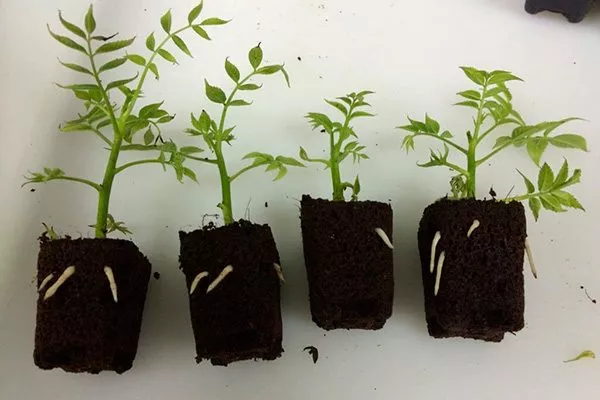
Selecting a landing site:
- Move 7-8 m away from structures and tall trees.
- The height of groundwater should not exceed 1.5-2 m from the ground surface.
- The optimal soil is neutral or slightly acidic.
Prepare the area for planting in the fall:
- Dig up the soil and clear away weeds.
- Spread humus over the area, approximately 5-6 kg per 1 square meter. Also add superphosphate (35 g), potassium fertilizer (30 g), and ammonium nitrate (30 g). Dig the soil again.
- In spring, clear the soil of overgrown weeds and level it with a rake.
- Dig a hole 60x40 cm (depth x width) and fill it with diluted copper sulfate (1 tbsp. per 10 liters of water).
- Mix the soil removed when digging the hole with 10 liters of humus and 1 kg of wood ash.
- Place drainage at the bottom of the hole, then add the nutrient mixture in a 5-10 cm layer.
- Place the seedling, removed from the pot along with the root ball, into the hole. Fill the remaining space with soil.
- Water the seedling, add more soil when the water is absorbed.
- Mulch the soil around the trunk.
Planted walnut trees require careful monitoring and care. Young walnut trees require more care than mature ones.
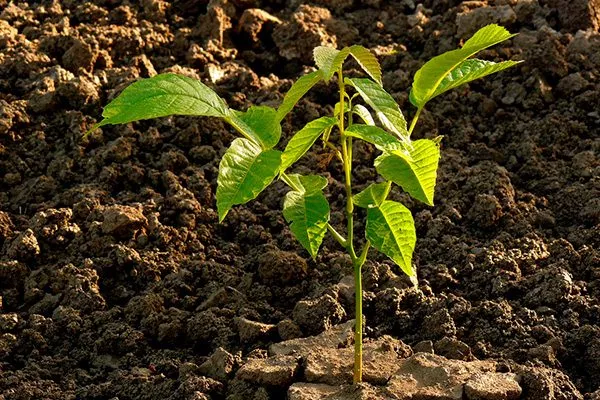
How to care for walnuts:
- Watering. Initially, water the tree every two weeks. Use 40 liters of warm, settled water per square meter. Don't let the soil dry out, but don't allow water to stagnate either. Increasing the frequency of watering is unacceptable, as the tree will not survive the winter well.
- Top dressing. If fertilizer was added to the planting hole, the first feeding should only be done in the fourth year after planting. Nitrogen is added in the spring, and potassium and phosphorus in the fall.
- Trimming. It's carried out in the second year after planting. Each year, the crown is shaped, and weak, dried, and damaged branches are removed. Read more about walnut pruning. here.
Growing walnuts at home
If you want to grow walnuts indoors, create optimal growing conditions for them.
How to provide a favorable environment for walnuts:
- Place the plant pot on a south- or west-facing windowsill. During winter, move the plant to a cooler location.
- The temperature should be at room temperature or slightly higher. During winter, the plant needs rest; it should be placed in a room where the temperature does not exceed 12°C.
- Water the plant weekly. In winter, water less frequently and do not fertilize at all.
- Fertilize your walnut tree according to the same schedule as outdoor trees. Apply nitrogen in the spring and potassium and phosphorus in the fall.
- When the nut grows, pinch off its top. Shape the tree by removing unnecessary, weak, and inward-growing branches. Trim off any damaged or dried-out areas.
The beginning of fruiting
Walnut trees begin bearing fruit seven years after planting. Trees produced by generative methods do not retain the characteristics of the parent plant. To ensure the nut retains its varietal characteristics, propagation is by cuttings or buds taken from fruiting trees.
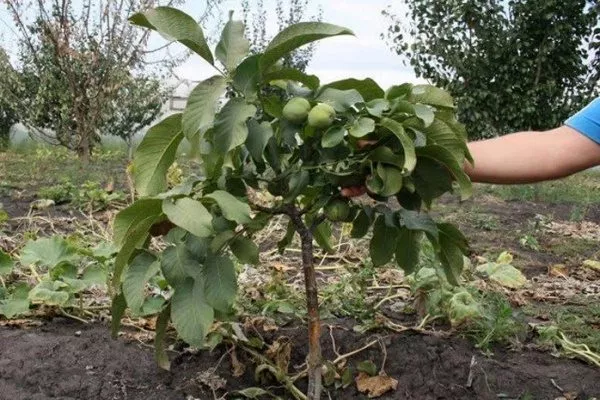
How to speed up walnut fruiting and how to do it:
- Repot the plant two or three times, intentionally damaging the vertically growing roots. However, mechanical stress should be light to avoid killing the young nut. This slows upward growth and stimulates the development of flower buds.
- Carry out girdling in the summer, selecting 4-5-year-old plants first. Make a circular cut on a skeletal branch, being careful not to cut the wood—remove only the bark. Make another ring slightly higher, about 2 cm above.
Cover the wounded areas with garden pitch. This procedure stimulates the redirection of sap from the roots to the generative buds, which promotes fruit formation.
There's nothing complicated about sprouting walnuts. The only thing you need is patience. If done correctly, within a year you'll have strong, healthy seedlings ready for transplanting outdoors.