
The Astakhovskiy walnut is not only a source of vitamins and minerals but also a resilient plant with a strong immune system. Its excellent yield and exquisite flavor make it an ideal choice for garden cultivation. With proper care, it will achieve maximum yield and excellent development.
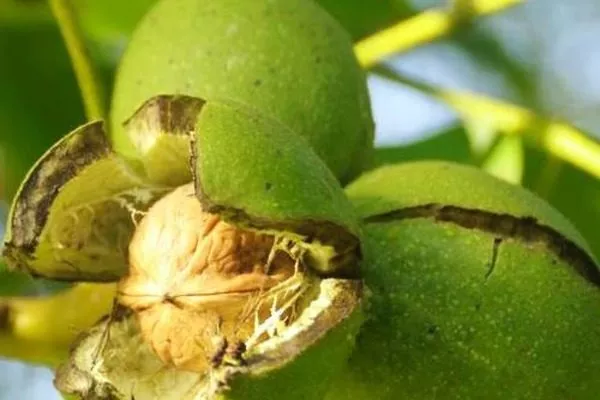
Brief history of appearance
It was bred in 2013 by scientists A. I. Astakhov and M. V. Kanshina from the V. R. Williams Federal Scientific Center for Crops and Insemination. It was included in the register of approved varieties in 2015, two years after its creation.
Appearance
The tree is tall, reaching up to 10 m in height. It has the following distinctive characteristics:
- Crown – rounded, branches extend at an acute angle.
- Leaves - Rounded in shape, smooth, and reaching up to 30 cm in length, they are colored a rich green.
- Flowers - There are male and female specimens (male ones have large green earrings, female ones have green ones).
- Fruits – Oblong, uniform in shape, and light brown in color, each nut weighs approximately 23.5 g.
- Shell - easily separated, makes up 30% of the total mass.
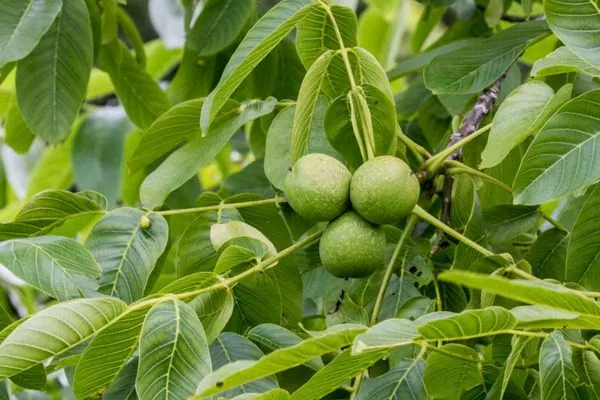
The kernel is dense, white, juicy, with a sweet taste without bitterness, which classifies the variety as a dessert one.
Differences from other species
The Astakhovskiy walnut differs from other walnut varieties in several ways. These include:
- frost resistance;
- strong immunity;
- ripening periods;
- fruit size;
- yield indicators.
Benefits and harms
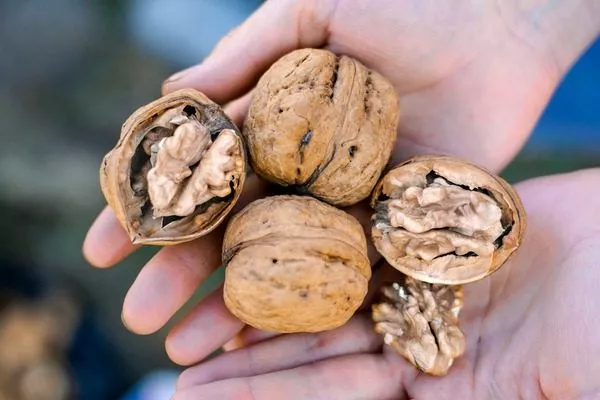
The fruit has high nutritional value. Professional tasters rated the excellent taste with a 5-star rating. It is widely used in cooking and can be eaten as a standalone product.
They contain vitamin A, vitamins B, C, E, PP, K, tannins, phytoncides, linoleic acid, essential oils, and many microelements: potassium, calcium, sulfur, magnesium, aluminum, phosphorus, iron, zinc, iodine, manganese, cobalt, copper, fluorine, etc.
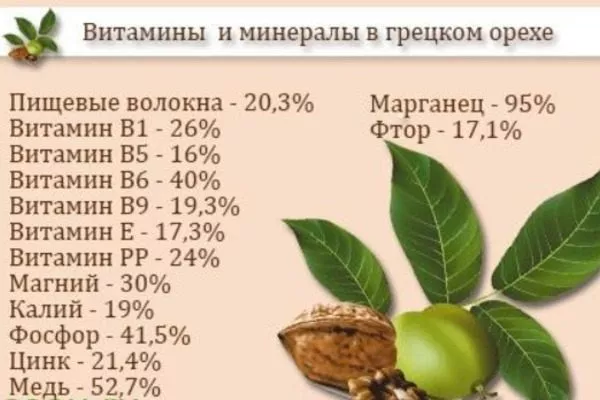
The variety is recommended as an additional source of nutrients in the following cases:
- avitaminosis and decreased immunity;
- atherosclerosis and diabetes mellitus;
- weakening of bowel function;
- arterial hypertension;
- pregnancy.
General characteristics
The ripening period is average, and the first harvest can be expected in the sixth year after planting. Yields from 7 to 10 years range from 10 to 20 kg per tree, and at maturity, they can reach up to 300 kg per hectare.
The crop is characterized by good frost resistance. It is recommended for cultivation in private farms in the Central Black Earth, Central, and Middle Volga regions of Russia.
The fruit has a sweet, non-bitter taste, making this variety particularly appealing to lovers of natural, tasty nuts.
Advantages and disadvantages
Before planting, it's important to examine the pros and cons of Astakhovsky. It has many advantages:
Among the disadvantages, gardeners note:
Growing rules
Proper walnut planting is crucial to its long-term growth and yield. There are several key rules to follow when planting this tree.
When do they plant in different regions?
In warm southern climates, seedlings are planted in mid-autumn. In northern regions with less favorable conditions, planting is done in the spring. In the central region, planting in the fall is not recommended, as the tree may not have time to establish roots before frost, increasing the risk of death.
Landing

Plant growth and development largely depend on how well the seedlings are prepared for planting. The quality of the planting material plays a crucial role. Follow these recommendations:
- Choose a two- to three-year-old, strong seedling with an open or closed root system and a trunk diameter of at least 1 cm.
- Before planting, trim the central root by 1/3 and soak the roots in a stimulating solution or warm water for better rooting.
- Choose a planting location that allows the tree enough space to grow.
Care
The plant requires minimal but thorough care. Follow these recommendations:
- Watering. Provide regular watering—at least once every two weeks if there's natural rainfall. During dry periods, increase the frequency to twice a week.
Before irrigating, remove all fallen tree parts (bark, branches, nuts), as they decompose, releasing toxic substances and promoting the development of pathogenic microflora in the soil. - Top dressing. Because the plants grow vigorously, they don't require extensive fertilization. Fertilizing is only necessary in low-fertility, poor soils.
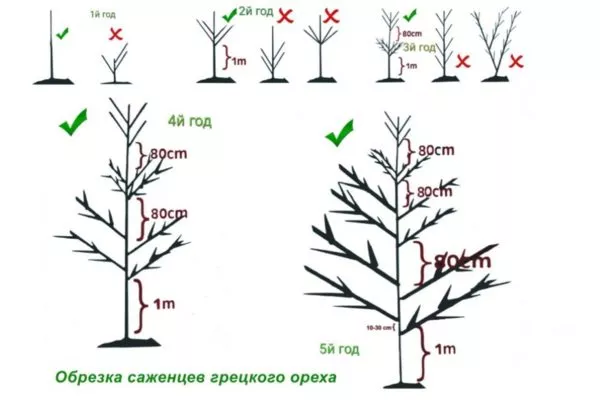
If the plant is planted in unfavorable soil, use nitrogen, organic, and phosphorus fertilizers, adding them to the soil to a depth of no more than 15 cm. Apply nitrogen fertilizers in the spring, and organic and phosphorus fertilizers in the fall. - Trimming. This is a mandatory procedure and is performed twice a season. In spring, sanitary and formative pruning is necessary: remove dry, weak, and frost-damaged branches and shape the crown.
In the fall, carry out sanitary pruning, removing broken, incorrectly growing and diseased branches so that the tree does not waste nutrition on them during the winter.
- Whitewash. To prevent winter damage, whitewash the trunk and base of skeletal branches in the fall with a lime solution or special products. In early spring and on clear winter days, bare trees can be susceptible to sunburn. Whitewashing repels sunlight, reducing the risk of sunburn and bark damage.
Whitewashing is not recommended for young trees, as the lime layer inhibits the normal development of trunks, preventing their expansion, which can lead to trunks that are too thin.
Harvesting
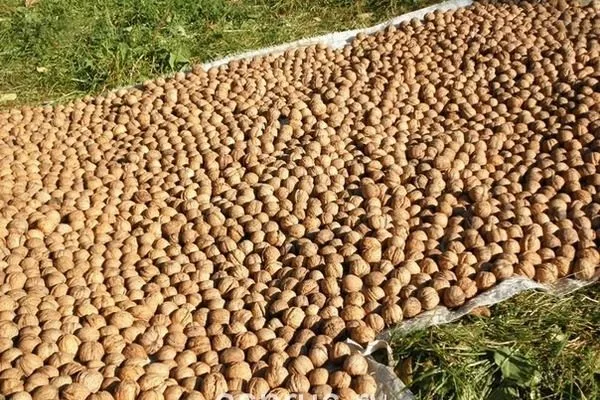
The fruits ripen in mid-September. By this time, the tree has already shed its leaves, making harvesting much easier and faster. They have a long shelf life, so the harvested nuts can be consumed throughout the year until the next harvest.
Diseases and pests
The Astakhovskiy tree has high disease resistance. However, it can be susceptible to insect or rodent attacks. Therefore, inspect the trees regularly and take pest control measures.
Gardeners' reviews
The Astakhovskiy walnut tree boasts a rich flavor and nutritional value. It has long been popular among healthy eaters and gardeners. This frost-resistant and high-yielding variety thrives with proper care. Simple cultivation practices will ensure maximum yields.