
Creating a beautiful garden with delicious fruit can be easily accomplished by choosing a hardy fruit tree, such as cherry plum, that can withstand a variety of conditions. One popular variety in this context is Tsarskaya, a result of domestic selection.
Description of the hybrid cherry plum Tsarskaya
The Tsarskaya plum was created by crossing and open-pollinating a classic cherry plum with the Kubanskaya Kometa variety at the K. A. Timiryazev Moscow State University of Agriculture. The tree is medium-sized, reaching a height of 2.5 meters. The crown is medium-dense, compact, and flattened into a round shape.
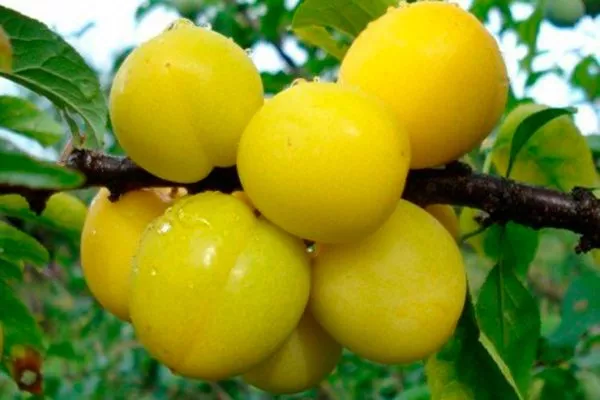
The leaves are a delicate light green, elongated, and have pointed edges. The fruits are medium-sized, weighing between 18 and 25 grams. The yellow flesh has a sweet and sour flavor and a tender, juicy texture. The skin is a vibrant yellow color, dense texture, and a light waxy coating.
Advantages and disadvantages of the variety
When choosing the Tsarskaya cherry plum, it's important to carefully study its advantages and disadvantages to ensure abundant harvests of tasty and healthy fruits in the future. Advantages of the variety:
- Precocity. This variety is characterized by a rapid onset of fruiting, which allows for harvesting relatively early after planting.
- Abundant yield. Cherry plum is known for its high productivity, which makes it attractive to gardeners.
- Resistance to diseases and pests. The variety has good resistance to common diseases and pests, which makes plant care easier.
- Long shelf life and transportability. The fruits are well preserved and their attractive appearance is maintained for a long time, which is important for transportation and sales.
- Attractive appearance of fruits. The bright yellow skin and attractive shape make cherry plum fruits attractive to consumers.
Flaws:
- Self-sterility. This variety requires pollination from other plants to produce fruit, which may require the presence of a number of other cherry plum species in the immediate area.
- Tendency to root suckers. The plant can form a lot of basal shoots, which requires additional attention and care from the gardener.
- Average frost resistance during snowless winters. In conditions without snow, this variety may be less frost-resistant.
- Low frost resistance of roots. The plant's roots are less tolerant of low temperatures, which may require precautions in cold climates.
All these factors should be taken into account when deciding to grow cherry plum and organize its care in the garden.
Pollination
The Tsarskaya cherry plum is partially self-fertile and therefore requires the presence of pollinating trees and insects.
The best pollinators for the Tsarskaya cherry plum variety are shown in the photo.
To ensure pollination of the Tsarskaya cherry plum flowers, donor trees selected from the Pramen, Kleopatra, Puteshestvennitsa, Naydena, and Kubanskaya Kometa varieties are planted at a distance of 2 to 5 meters. It is important that the flowering period of these pollinators coincides with the flowering time of the Tsarskaya cherry plum.
Landing features
To enjoy abundant harvests of ripe and fragrant cherry plums every year, it's important to carefully prepare for the planting process and subsequent care of the seedlings. The first step is to determine a suitable location for the trees and select the seedlings.
Selecting a seedling
When purchasing cherry plum seedlings, carefully inspect the shoots and roots to identify any damage or fungal diseases. Pay attention to the following:
- Inspection of roots. The roots should be strong, elastic, and well-developed, with no broken or dried-out ends. A well-developed cherry plum root system should include 5-6 shoots, each 20-30 cm long.
- Selecting the optimal age of seedlings. The best options are one- or two-year-old seedlings propagated by cuttings or shoots. These seedlings typically recover quickly from frost, making them more resilient.
- ✓ The presence of at least three main roots, each at least 25 cm long.
- ✓ No mechanical damage to the bark and roots.
- ✓ A clearly visible growth point at the top of the seedling.
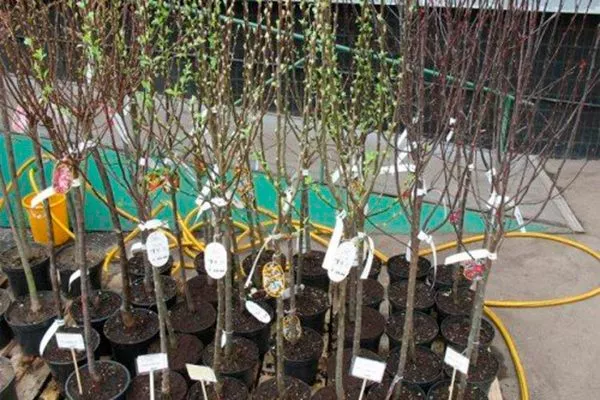
Careful selection of seedlings, taking into account the condition of the roots and age, will help ensure successful establishment and the continued health of the cherry plum in the garden.
Choosing a landing site
The ideal planting location is light, well-drained soil, preferably loam. When choosing a site, consider the groundwater level, which should be at least 1.5 meters, as although cherry plum prefers moisture, it does not tolerate stagnant water.
The planting area should provide good light and protection from cold winds. A site near the house's walls on the south or southwest side is ideal.
Site preparation
Before planting, prepare the area. First, clear the soil of weeds, moisten it, and then dig it thoroughly. If the soil is highly acidic, add wood ash at a rate of 300-500 g per square meter during digging.
Add horse manure if necessary. If the soil in the area is already fertile, additional fertilizer may be unnecessary.
Step-by-step planting process
The preferred time to plant the Tsarskaya cherry plum is early spring, before the buds begin to swell. To ensure vigorous growth, follow these planting recommendations:
- Dig planting holes 2 m apart and 3 m between rows.
- The diameter of one planting hole is 60 cm, and the depth is 70-80 cm.
- Add a mixture of 10 kg of horse manure or humus to the planting hole, adding 70-80 g of potassium sulfate and 180-200 g of superphosphate.
- To ensure good drainage, place a layer of broken brick or crushed stone (15-20 cm) at the bottom of the hole.
- Before planting, soak the roots of the seedling in a mixture of clay diluted with water to a creamy consistency.
- Spread the roots evenly when planting and cover with a fertile layer of soil. The root collar of the seedling should be 6-7 cm above the soil level.
- After planting, form a hole around the trunk with a diameter of 50 cm and water it with 40-50 liters of water.
- Mulch each tree with peat or compost, adding a 7-8 cm layer of dolomite flour or garden lime.
Following these steps will help ensure the successful planting of the Tsarskaya cherry plum and create favorable conditions for its growth and development.
How to plant?
Planting the Tsarskaya cherry plum is a simple process that even a novice gardener can handle. This video provides recommendations for growing and planting this popular crop:
Plant care
Proper and timely care of the Tsarskaya cherry plum not only increases tree yields, but also improves the taste of the fruit and prevents its size from decreasing over time.
Trimming
Proper annual pruning of cherry plums not only promotes proper crown formation but also increases yield and prevents disease. To promote proper growth and formation, prune all branches of a young sapling by a third of their length when planting.
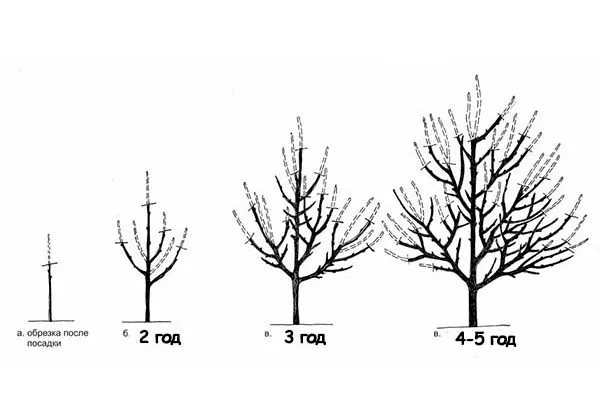
Perform annual pruning in early April. During the first few years of growth, prune branches, leaving 3-4 strong basal branches and removing root suckers. After 4 years, remove the central leader to ensure the crown achieves its optimal shape.
In spring, prune all shoots longer than 50 cm, stimulating vigorous growth and the emergence of new shoots. Also prune any branches that are bent toward the ground by the weight of the fruit.
Watering
Cherry plums prefer moisture, and regular watering is essential for their care. During the growing season, especially if there's no rain, water the tree every 10 days. To ensure adequate moisture, each tree requires approximately 50 liters of water.
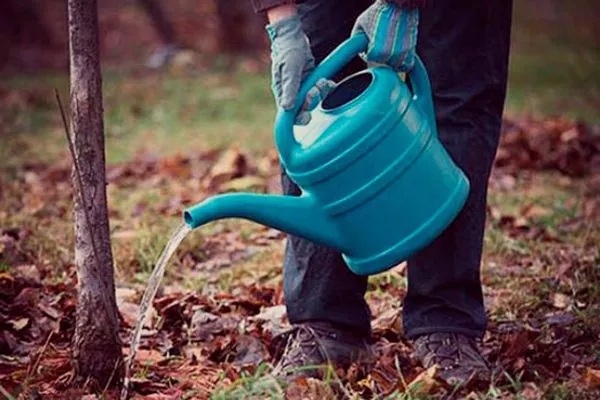
After watering, thoroughly loosen the soil around the tree trunk and weed if necessary. These steps will help maintain optimal conditions for the cherry plum's growth and development.
Fertilization
Important aspects of cherry plum care include digging in the fall and spring, adding 5-6 kg of humus or compost to the soil with 60 g of urea per square meter. If fertilizer was used during planting, apply additional fertilizer starting in the second year after the tree has taken root.
During the entire growing season, feed the cherry plum three times:
- In March, before flowering, add 40 g of potassium sulfate and urea.
- At the beginning of June, during the period of fruit filling, apply 30-40 g of urea and nitrophoska.
- In August, after harvesting, add 35-40 g of superphosphate and potassium sulfate.
These measures provide the Tsarskaya cherry plum with the necessary nutrients and maintain its health and fertility.
Shelter for the winter
Although the cherry plum crown has average cold tolerance and can withstand temperatures as low as -35°C, the plant's roots are more susceptible to low temperatures and can freeze at -10°C. Therefore, during snow-free winters, provide additional protection to protect the trunk from possible rodent attacks.
If there's snow, rake it up to the tree trunk. Mulch the soil with a 5-7 cm layer of horse manure to protect the roots from freezing. The tree trunk can be wrapped in nylon or other breathable material.
Diseases and pests
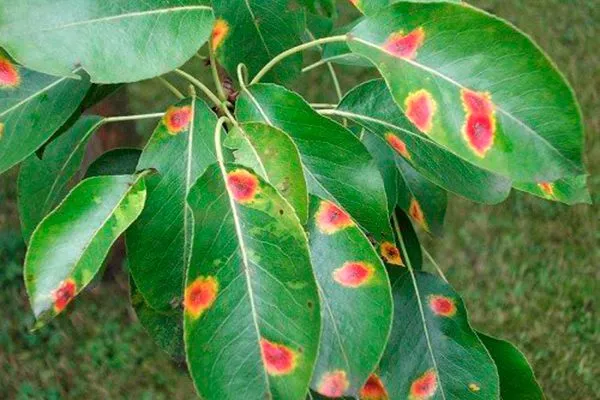
The Tsarskaya cherry plum is susceptible to powdery mildew, moniliosis, and rust. Let's take a closer look:
- Moniliosis. The disease affects the trunk, leaves, and branches, forming a gray coating. Prune and burn the affected parts, leaving 8-10 cm of healthy growth. Treat the trees with Nitrafen or copper sulfate.
Preventive measures: collecting and destroying fallen leaves, mulching the soil with horse manure, wrapping the trunk with nylon. - Rust. Affects leaves, causing them to curl and fall off. This can lead to tree death. Collect and destroy fallen leaves, and treat with Bordeaux mixture.
Preventive measures: regular treatment with a solution of colloidal sulfur and copper sulfate. - Powdery mildew. The disease causes a white coating on leaves, shoots, branches, and the trunk. Remove affected areas during annual pruning and treat wounds on the trunk with copper sulfate.
Preventive measures: treatment with a solution of colloidal sulfur and copper sulfate.
Pests that can damage cherry plums include aphids, brown mites, and plum moths. If infestations are detected, use the following products:
- Actellic;
- Fufanon;
- Karbofos.
During subsequent treatments, alternate the application of products. This helps prevent pest adaptation and ensure effective control.
Harvesting and storage
This variety is high-yielding and produces fruit quickly. A single tree can yield up to 20-25 kg of fruit, ripening in late July or early August. The fruit is harvested several times during the season.
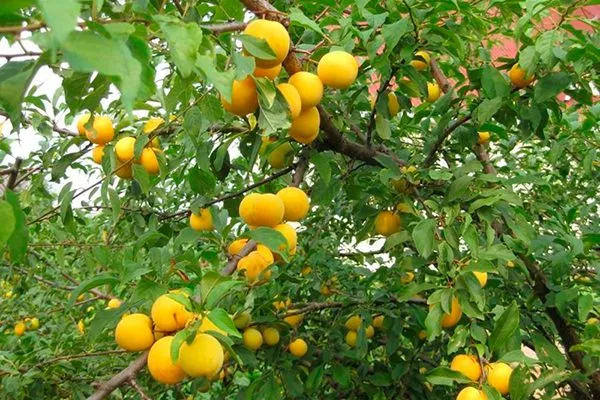
Tsarskaya cherry plums withstand transportation well, but do not store well for long periods. Process them within the first few days after harvesting. At temperatures between 2 and 5°C, cherry plums remain fresh for no more than a week.
Gardeners' reviews
Caring for Tsarskaya cherry plum seedlings is an important and beneficial process for obtaining abundant and delicious harvests. This variety should be cared for with its specific characteristics in mind. Regular pruning, proper fertilization, and careful disease and pest prevention will ensure healthy tree growth.