
Cherry plum Soneyka is a versatile variety that will delight both experienced gardeners and novice amateurs. This hybrid boasts many valuable qualities. Regular care, proper nutrition, and pest control will ensure a bountiful harvest each year.
History of selection
Developed by Belarusian breeders from the Institute of Fruit Growing, the specialists pollinated the flowers of the Mara variety with pollen from diploid plums, which allowed them to create the Soneyka variety.
The experiments were led by Doctor of Agricultural Sciences Valery Matveyev. The hybrid was obtained in 2009.
Description of the culture
The Soneyka cherry plum is characterized by its attractive appearance and excellent taste. Its main distinguishing features are listed below.
The appearance of the tree
Plants grow up to 3 m in height. Their characteristic features:
- Crown – flat-rounded, wide and spreading, especially in mature specimens.
- Skeletal branches – located at a considerable distance from each other.
- Leaves - bright green on the front side, with a slight light shade, oval in shape with sharp, slightly raised edges.
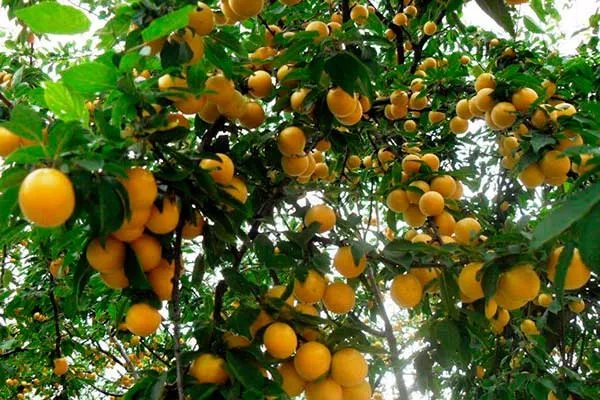
The bark is light brown with a reddish tint, which helps to distinguish the variety from others.
- ✓ The bark is light brown with a reddish tint, which is a distinctive feature of the variety.
- ✓ The fruits change color from greenish-yellow to orange with a reddish blush as they ripen.
Fruits and their taste characteristics
Breeders sought to create a versatile variety suitable for both fresh consumption and a variety of preserves and dishes. It combines all the necessary qualities.
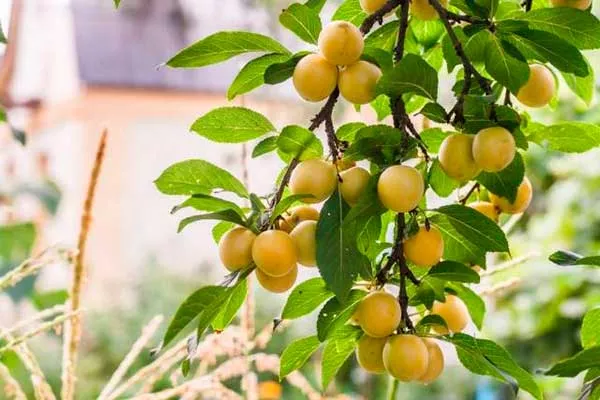
The main differences between fruits:
- rich sweet and sour taste;
- dense peel, which gives an interesting shade to compotes, juices and can be used as a spicy additive in fruit cocktails;
- large size, round shape, weight about 45 g;
- The pulp grows together with the stone, making it difficult to separate them.
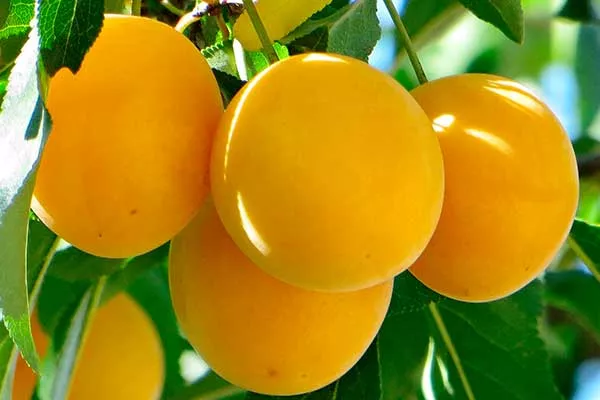
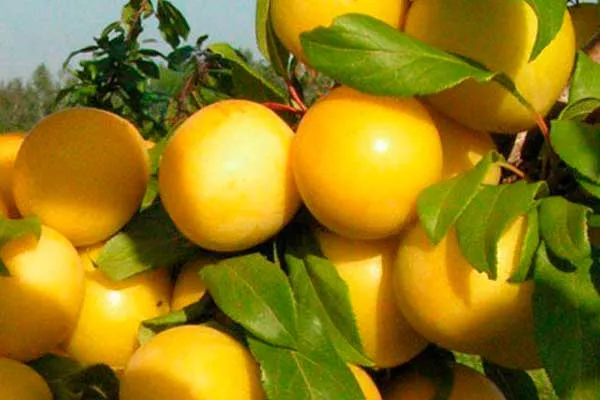
As the fruit ripens, it changes color from greenish-yellow to orange with a reddish blush. The flesh is firm, juicy, bright yellow, with a citrus aroma and a slight tartness.
Tasting evaluation of the fruit and further implementation
Experts rate the hybrid variety's flavor at 4.5 out of 5, demonstrating its excellent taste. The fruits are suitable for fresh consumption, drying, and canning.
Characteristics
The cultivar has a wide range of positive qualities. The Soneyka cherry plum has many characteristics that are important to understand before purchasing planting material.
Cultivation regions
The tree is successfully cultivated in central Russia and throughout Belarus. In areas with milder climates, the hybrid produces fruit well, but in areas with harsher conditions, the plant may not thrive.
Drought resistance
Cherry plum tolerates periods of drought well. However, like its predecessor, the plum, it still produces better and juicier fruit with regular watering.
Frost resistance
It is characterized by high winter hardiness and tolerates frosty winters without loss. However, sudden temperature fluctuations in February can be dangerous for fruit buds.
Self-fertility and the need for pollinators
This is a self-fertile variety, so to ensure a good harvest, plant other varieties with similar flowering times nearby. Eastern European plum varieties are good neighbors. Soneyka produces well next to Altayskaya Yubileynaya and Alyonushka.
Flowering period and ripening time
The crop blooms with white flowers in May, and the fruits ripen by the end of August.
Productivity, fruiting, lifespan
The variety is early-bearing and shows good productivity—up to 40 kg of fruit can be harvested from a single tree. They ripen almost simultaneously, reducing harvest time. The first fruits appear two years after planting.
Application of fruits
Cherry plums are eaten fresh. The fruits are transportable and have a long shelf life. They are used to make preserves, compotes, and jellies, and are also used in cooking. They are also used to create creams, shampoos, and other cosmetics.
Resistance to diseases and pests
Through selective breeding, a variety was developed that is virtually resistant to fungal diseases. It is only slightly affected by insects, but aphids and seed beetles can pose a threat.
For prevention, trees are sprayed with Fitoverm and Fitosporin-M before the leaves appear.
Storage of fruits
Store the harvested fruit indoors at temperatures between 0 and 5°C (32 and 41°F). This will preserve its flavor and nutrients for several weeks. To extend its shelf life, store it in a cool, dark place, away from direct sunlight.
If you plan to store the cherry plums for a long time, freeze them or use them to make preserves, such as jams, compotes, and jellies, which will preserve their flavor and aroma for a longer period.
Landing features
For successful growth and fruiting, the plant requires certain conditions. Follow the recommendations of experienced gardeners to ensure the trees take root well.
Recommended timeframes
The optimal time for planting is spring, which allows the seedling to establish roots before the onset of cold weather. Fall planting is also acceptable, up to mid-September, a month before the onset of frost.
At later dates, the roots may not have time to take root, which can lead to the death of the plant.
Choosing the optimal location
Choose sunny areas protected from northerly winds. Any area of the garden, except the northern part, is suitable.
- ✓ The optimal soil acidity for the Soneyka cherry plum should be within the pH range of 6.5-7.0. Liming is necessary at pH below 6.0.
- ✓ The depth of groundwater should not exceed 1.5 meters to prevent rotting of the root system.
Avoid planting seedlings in low-lying areas where water stagnation or groundwater levels are likely. If the soil is acidic, lime it.
Preparing the hole and seedling
The optimal dimensions of the planting hole are 0.6 m deep and 0.9-1 m wide. Helpful tips:
- Place fertilizer, such as well-rotted manure or compost mixed with soil, at the bottom of the hole.
- Install a stake to support the seedling.
- Before planting, trim only the damaged root tips, removing them down to the healthy area, then soak them in a manure-clay slurry. Adding a solution of the growth agent Heteroauxin will help the tree establish itself without problems.
Planting technology
The tree is compact, so leave 3 m between seedlings and 4-5 m between rows. Step-by-step algorithm:
- At the bottom of the planting hole, form a mound of topsoil mixed with fertilizer.
- Place the seedling in the center next to the stake, spread out the roots and cover them with loose top soil.
- When the roots are completely covered with soil, compact the soil.
- Tie the plant to a stake.
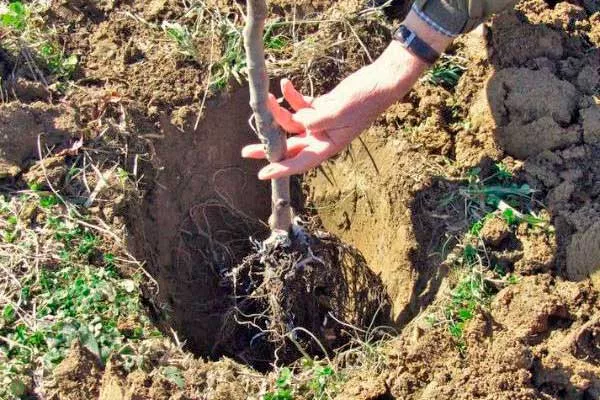
Make a hole around the tree, pour 20 liters of water into it and mulch the soil.
What crops can and cannot be planted next to cherry plum?
The best neighbors are stone fruits and trees that prefer slightly acidic soil. Avoid planting pears and apple trees nearby, as they negatively impact the growth and development of cherry plums.
Further care
Agricultural practices are generally similar to those for other fruit crops. In the first few years after planting, proper crown formation and other maintenance are especially important.
Watering mode
During the first year after planting, water young seedlings frequently – 4-5 times per season, using 20 liters of water. Mature fruiting plants require more frequent watering – 2-3 times per season. The final watering, especially in dry autumns, should be done in mid-October.
How to feed a tree?
Cherry plum responds well to organic fertilizers. Avoid fertilizing during the first year after planting if beneficial fertilizers were added to the planting hole.
The subsequent schedule is as follows: apply organic fertilizers during the first two years, and in the third year, use a complete mineral fertilizer. Calculate the doses per square meter of tree trunk circle: 3-5 kg of organic fertilizer and 5-7 kg of mineral fertilizer.
Trimming
Cherry plum pruning primarily involves thinning: removing diseased, broken, dry, and excess branches that thicken the crown. During this process, shorten long, annual growth.
When yield begins to noticeably decline with age and progressive growth slows or ceases, perform rejuvenation pruning. This involves shortening the ends of scaffold and semi-scaffold branches to 3-4-year-old wood.
Care and loosening of the tree trunk circle
Loosen the soil in spring, summer, and fall, after watering or rain, after applying fertilizer, and before mulching. Keeping the tree trunk area free of weeds ensures maximum moisture retention.
Preparing for the winter period
At the end of leaf fall, spray the trees with Bordeaux mixture to protect against bacterial necrosis. Water them to replenish moisture. Whitewash mature trees, and tie young ones with light-colored fabric (such as spunbond or burlap). Thin out the crown, and fertilize the area around the trunks by digging.
Seasonal treatments
Before bud swelling in April, spray with a 3% solution of Nitrafen to control overwintering pests. Then, follow this schedule:
- Before flowering, in early May, use 1% Bordeaux mixture (in combination with 0.5% Zineb) and Fufanon or Intavir to protect against monilial burn, aphids and leaf-eating insects.
- Three weeks after flowering, repeat the treatment with 1% Bordeaux mixture, adding 0.5% Captan and 0.5% Zineb.
After harvesting in August, spray the trees with Fitoverm or Lipedocide to combat slimy sawflies.
Protection against parasites and diseases
The cherry plum variety Soneyka exhibits good resistance to many diseases, but is still susceptible to some. It's important to begin treatment promptly:
| Disease/Pest | Signs | Methods of control |
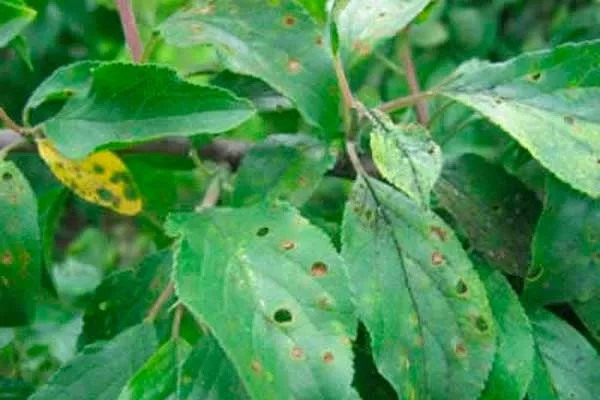
| Perforated spot | Brown spots with holes appear on the leaves. The disease can spread to fruits and branches, causing cracks in the bark and gummosis. | Treatment with a 1% Bordeaux mixture solution or Hom before and after flowering, and three weeks before harvest. Removal of plant debris. |
| Coccomycosis | The appearance of a powdery pink coating on the leaves, drying out of the fruits. | Autumn and spring spraying with Bordeaux mixture, care of tree trunks in autumn. |
| Moniliosis | Darkening branches, drying leaves and fruits covered with rot. | In spring, before buds swell, use a 3% solution of Bordeaux mixture; in summer and after harvesting, use a 1% solution. |
| Fruit mite | Damage to leaves and fruit buds, causing them to fall off. | Removing old bark from branches. Applying Fundazol or Karate during bud formation. |
| Plum aphid | Damage to shoots and leaves, which leads to their drying out. | Insecticide treatment, especially of the underside of the leaves. |
Reproduction
Cherry plum Soneyka is a high-yielding variety, prized by gardeners for its delicious fruit and disease resistance. Increasing the number of seedlings is key to successfully growing and preserving the hybrid's qualities.
There are several effective methods of reproduction, each of which has its own characteristics and advantages:
- Seeds. Soak the planting material in water for 24 hours. Then, place it in prepared soil to a depth of 2-3 cm. This will help you get strong seedlings. This method takes time, as the first fruits will appear only after several years.
- Cuttings. Cut 15-20 cm long cuttings with buds in spring or summer. Root them in a warm, humid place. Use rooting stimulants. This method allows you to more quickly obtain young plants that retain all the characteristics of the mother tree.
- By vaccination. Cherry plum propagation involves using rootstocks, which helps increase disease resistance and adapt to various conditions. This procedure should be carried out in the spring, when the sap begins to flow.
This method requires certain skills, but if performed correctly, it ensures a high survival rate. - By layering. Bend the shoots toward the ground and place them in a pre-dug hole, then cover with soil. While rooting, the shoots continue to receive nutrients from the parent tree.
Choosing the right method based on growing conditions and goals will ensure success in producing healthy and productive plants.
Positive and negative qualities
Before you begin cultivating a variety in your garden, carefully study its advantages and disadvantages to avoid various difficulties in the future.
The hybrid is renowned for its excellent taste and relative ease of care. In one season, gardeners harvest enough fruit to enjoy for a long time.
Reviews
The Soneyka cherry plum is a variety that attracts gardeners with its high productivity and delicious fruit. This plant combines the best qualities of its ancestors, ensuring not only a stable harvest but also resistance to adverse conditions. It's important to carefully study the care requirements for this plant to ensure abundant harvests of high-quality fruit in the future.