
The Cherry Plum Shatyor is a fruit tree that, with proper care, will yield a bountiful harvest. This plant attracts attention with its juicy and sweet fruits, its undemanding nature, and good productivity. Gardeners note the plant's positive qualities, which is why they grow it in their gardens.
Who developed the variety and when?
It was artificially developed at the Crimean Experimental Breeding Station under the direction of Gennady Viktorovich Eremin. The variety is based on the Chinese-American plum Fibing, crossed with an unknown cherry plum species. The result was so successful that it was designated a separate cultivar.
Testing to confirm the characteristics of the Shatyor cherry plum began in 1991. Following their completion in 1995, the variety was added to the State Register. It is recommended for cultivation in the Central and North Caucasus regions.
Description of the culture
Cherry plum is an interesting fruit tree, closely related to plum and cherry. Recently, it has attracted increasing attention from gardeners thanks to the emergence of numerous interesting varieties, one of which is Shatyor.
The appearance of the tree
The plant differs from typical plums in its small size—it reaches only 2.5 meters in height, making it a low-growing tree. This is actually an advantage, as it's easier to harvest from a shorter tree.
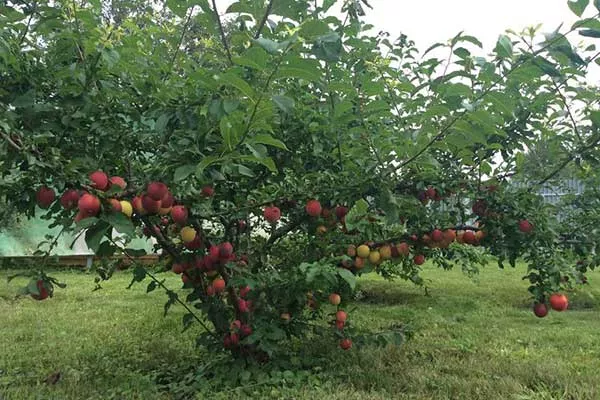
The plant has a dense, flat crown, giving it considerable volume. The branchlets are quite long, reaching 5-7 cm. The leaves are medium-sized, oval, with a wrinkled surface and a pointed tip. Their color is rich green.
Fruits and their taste characteristics
Shatyor is a large-fruited cherry plum hybrid, the fruits of which reach dimensions of 41x39x40 mm and usually weigh about 40 g. Distinguishing features:
- The shape is broadly ovoid, with a noticeable deep ventral suture.
- The waxy coating on the skin is weakly expressed.
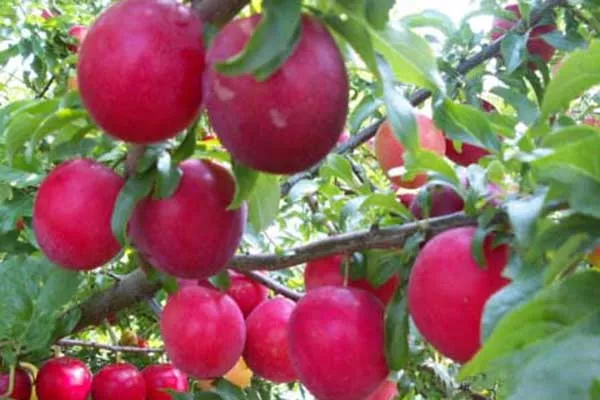
- In the early stages of ripening, the fruits are yellowish-green with a red blush. As they mature, the skin turns a deep burgundy.
- The flesh is yellow, dense, and fine-grained, imparting a distinctive flavor. Juiciness is medium, and the aroma is mild.
- ✓ The leaves have a wrinkled surface with a pointed tip.
- ✓ Fruits are broadly ovoid with a deep ventral suture.
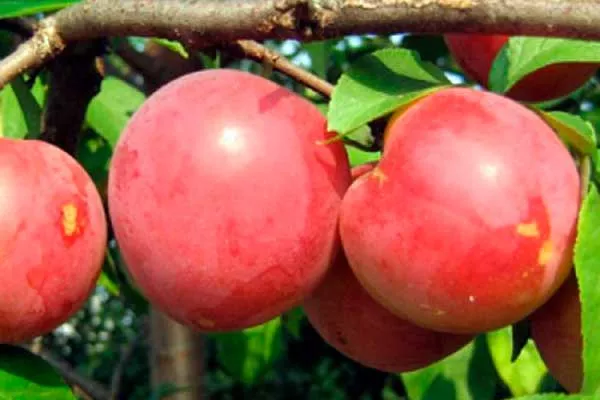
Cherry plums have a sweet and sour taste, with the sweetness predominating. The pit is difficult to remove.
Characteristics
Before choosing this variety, it's important to familiarize yourself with its qualities. This will help you evaluate the productivity of the Shatyor cherry plum and determine whether it's suitable for growing in your area and given the climate.
Drought resistance
The hybrid can withstand short-term moisture shortages. However, during prolonged drought, the tree requires regular watering, especially during the period of fruit set and ripening.
Frost resistance of plum Shatyor
The plant tolerates temperatures down to -25°C. Even if shoots freeze, the tree quickly recovers without reducing its productivity.
Pollinators of cherry plum Tent
It is a self-sterile variety, so to obtain a stable and high yield, plant other cherry plum varieties with the same flowering period in the area to ensure cross-pollination.
Good neighbors:
- Pavlovskaya yellow;
- Pchelnikovskaya;
- Comet;
- Sun;
- Lodva.
Is it possible to pollinate with Tsarskaya cherry plum?
This variety is not suitable for pollinating the Shatyor hybrid plum, as it is a mid-season flowering variety. The Tsarskaya cherry plum begins to form buds 10-14 days later. Furthermore, its frost resistance is lower, making it difficult to grow these varieties together in the same plot.
Flowering period and ripening time
The tree begins to form buds in mid-April, and by the end of the month, all the flowers are in full bloom. Under favorable conditions, flowering lasts about 10 days.
The fruits ripen in three months, and the first harvest is in late July-early August. The ripening period is extended and can last up to three weeks.
Productivity, fruiting
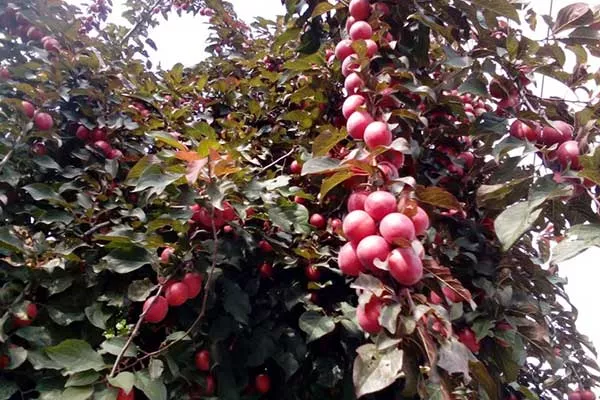
The first fruits appear in the 3rd or 4th year after planting. The yield of one mature tree is approximately 40 kg, which is a good result compared to other varieties.
Application of fruits
The Shatyor cherry plum is a versatile variety. Its fruits have excellent flavor, making them ideal for fresh consumption. Their thick skin and medium-firm flesh make them suitable for processing, including winter preserves.
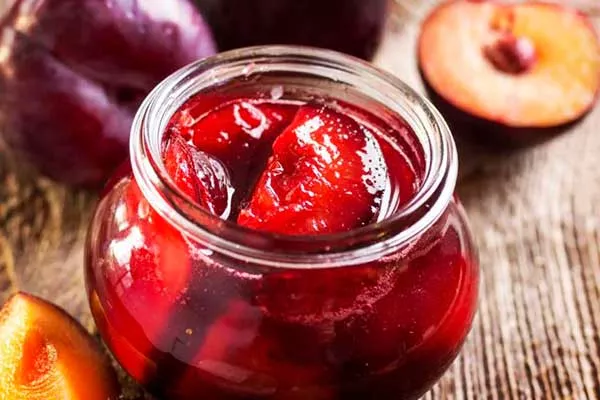
The following products are prepared from fruits:
- compote;
- jam;
- jam;
- juice;
- adjika;
- ketchups.
The average taste rating for canned cherry plum Shatyor is 4.1-4.3 points out of a possible 5.
Resistance to diseases and pests
The hybrid is rarely susceptible to disease and insect attacks. However, to maintain its natural immunity, perform preventative treatment annually in the spring.
Storage of fruits
Fruit stays fresh for several weeks. To do this, store it in a refrigerator or cellar at a temperature of 3-5°C and a humidity of 80-90%. Arrange the harvest in three layers of wooden boxes, lining each box and the bottom with paper.
For storage, select only firm, healthy fruits without visible damage, which are best picked before they are fully ripe.
Landing features
To ensure a seedling grows and develops well, it's important to follow certain recommendations. The future yield of the variety depends on this.
Recommended timeframes
Plant the seedling in the spring, before the buds open. In southern regions, the optimal time for planting is late March or early April, and in central regions, mid- to late April. Fall planting is not recommended, as there is a high risk of the tree freezing during its first winter.
Choosing a suitable location
Choose sunny areas protected from strong gusty winds. Place the cherry plum on the south or east side of the plot.
- ✓ Soil pH should be between 6.5-7.5 for optimal growth.
- ✓ The groundwater depth must be at least 1.5 m to prevent root rot.
The plant is undemanding regarding soil composition, so it can be successfully grown even in heavy clay soils, provided peat and sand are added first. The groundwater level in the area should be at least 1.5 meters.
Although cherry plum is a moisture-loving crop, it doesn't tolerate prolonged waterlogging and may die. You'll achieve maximum yield by planting the seedling in well-drained loam.
What crops can and cannot be planted next to cherry plums?
To ensure the seedling grows properly, consider its potential neighbors. Avoid growing Shatyor cherry plum near trees such as:
- apple;
- walnut;
- cherry;
- cherries;
- pear.
The hybrid gets along best with other types of crops, such as barberry, honeysuckle and blackthorn.
Selection and preparation of planting material
Buy one- or two-year-old seedlings obtained by cuttings or from shoots, as they are able to recover quickly from winter frosts.
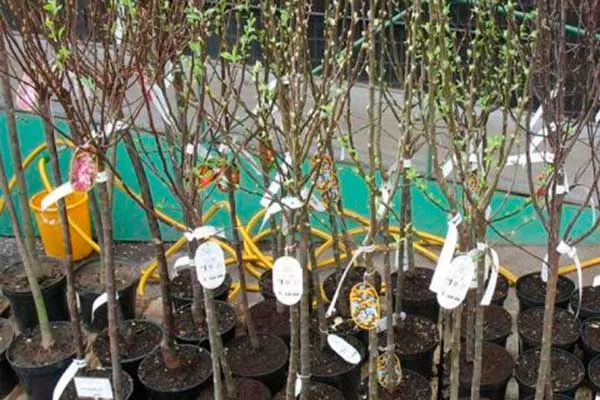
Pay attention to the bark—it shouldn't be damaged. The root system should consist of 5-6 well-developed, flexible shoots without broken or dried-out tips. A day before planting, soak the seedling in a rooting solution or simply in water to stimulate metabolic processes in the plant tissue.
Landing algorithm
Even an inexperienced gardener can plant the Shatyor cherry plum. Follow the standard procedure, but for a good harvest, plant at least two pollinators.
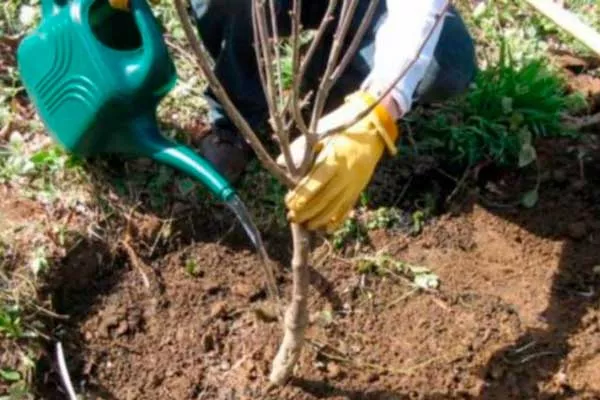
Step-by-step instructions:
- Place a 10 cm thick layer of broken brick on the bottom.
- Fill the remaining 2/3 of the potting soil with a soil mixture of equal parts turf, peat, sand, and humus. Add 200 g of superphosphate, 100 g of potassium sulfate, and 200 g of wood ash, mix thoroughly with the soil, and then backfill the planting hole.
- In the center of the hole, make a small mound of soil.
- Place the seedling and spread out the roots.
- Install a wooden support 1-1.2 m high nearby.
- Water generously and wait until the moisture is absorbed.
- Cover the roots with soil, filling all the voids.
- Compact the soil surface at the base of the seedling by trampling it down with your feet.
- Tie the tree to the support.
- Moisturize well again.
The next day, apply a 3cm layer of peat or humus mulch around the base of the tree to retain moisture in the soil and prevent the roots from drying out.
Caring for cherry plum
This crop requires care and attention to ensure high yields and healthy growth. Proper care involves several agricultural practices. Each of these plays a vital role in ensuring optimal conditions for cherry plum growth and fruiting.
Watering and fertilizing
The hybrid requires regular watering, especially during flowering and fruit ripening. Water at least once a week, especially during dry months. Use warm, settled water to avoid shocking the roots.
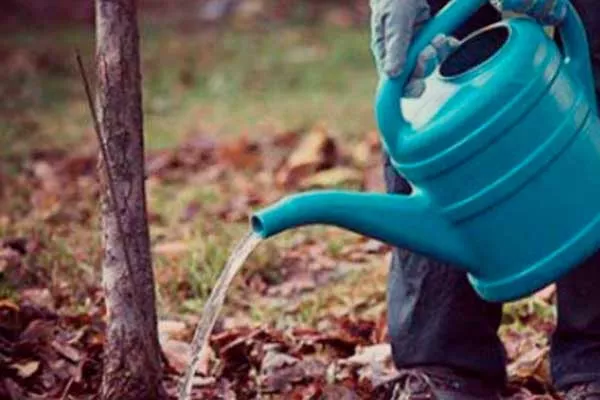
At the beginning of the growing season, use nitrogen fertilizers to stimulate growth, and during flowering and fruiting, use potassium and phosphorus compounds, which promote the formation and ripening of fruits.
In the fall, after harvesting, add organic matter such as compost or humus to improve the soil structure and provide the tree with nutrients for the winter.
Crown shaping
This is an important step that helps ensure good ventilation and light access to the fruit. Pruning should be done in the spring, before the sap begins to flow. Remove diseased, dead, and crossing branches, and shape the crown into a bowl or pyramid. This improves light and promotes even distribution of fruit throughout the tree.
Crown shaping helps prevent diseases and pests, as good air circulation reduces humidity within the crown. Be careful when pruning, using sharp tools to avoid damaging the wood.
Caring for the tree trunk circle
The trunk area requires regular care. Remove weeds, which can compete with the tree for nutrients and moisture. Mulch the trunk area with a 5-7 cm layer of peat, bark, or hay to retain moisture, prevent weed growth, and improve soil structure.
Loosen the soil periodically to ensure oxygen reaches the roots. This is especially important in the first few years after planting, when the root system is not yet fully developed.
Protection against parasites and diseases
Cherry plums are susceptible to various pests and diseases. To protect against them, use preventative treatments. In the spring, before flowering, spray the tree with insecticides against insect pests:
- Aktara;
- Biotlin;
- Decis Profi;
- Golden Spark;
- Inta-Vir;
- Confidor;
- Novaktion
- Tanrek;
- Fufanon.
Monitor the condition of leaves and fruits to detect disease symptoms early. If infection occurs, use fungicides. Regular inspections and preventative measures will help avoid serious problems.
Preparing the plant for winter
Preparing cherry plums for winter involves several important steps. Follow these recommendations:
- In the fall, remove damaged branches and clear away fallen leaves to prevent the development of diseases.
- If your region experiences harsh winters, wrap the trunk and skeletal branches with a special material to protect them from frost and rodents. Spread a layer of mulch around the trunk to retain heat in the roots.
With proper cherry plum care, you can not only reap a bountiful harvest but also enjoy a healthy, beautiful tree that will delight you with its fruit for years to come.
Positive and negative qualities
The Alycha Shatyor variety has both strengths and weaknesses, and it is important to understand them in order to gain a full understanding of the variety and assess the extent of its shortcomings.
Some gardeners note several negative qualities: a prolonged fruiting period, a stone that does not fully separate, and the need for pollinators.
Reviews
Alycha Shatyor is a hybrid plum variety that has gained popularity among gardeners thanks to its excellent characteristics. Its unique combination of high productivity, excellent flavor, and frost resistance makes it an attractive choice for both home gardens and summer cottages. Proper and timely care is essential for obtaining bountiful harvests.