
The sweet cherry plum "Podarok Sankt-Peterburgu" has established itself as a frost-hardy crop. This hybrid variety is resistant to fungal diseases and pests. The fruits have a pleasant flavor, rich juiciness, and are highly beneficial for health. The tree requires little maintenance, making it an attractive choice for gardeners.
Description of the variety
This versatile and widely known variety is the result of hybrid crossbreeding. Hybridization experiments were conducted in the Krasnodar region, and the first successful plantings and harvests took place in St. Petersburg.
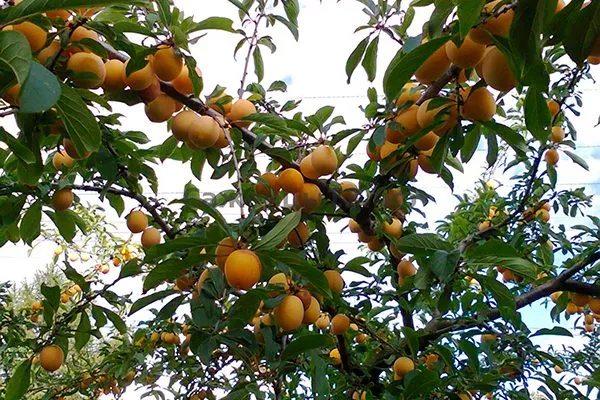
Thanks to the efforts of breeders, the new variety was endowed with high resistance and resilience, achieving maximum productivity. The fruits not only acquired an appetizing and attractive appearance, but also increased in size and acquired improved flavor.
Tree
This plant, with a lush, wide-spreading crown, reaches a height of no more than 3 m, with a convenient, short trunk. Its medium height ensures easy harvesting.
Leaves
The leaves of this plant are rich green, oval-shaped with a pointed tip, and elongated in structure. Each leaflet has a maximally curved base, resembling a boat. The leaf surface is glossy, the edges are wavy, and the leaf size is moderate.
Flowers
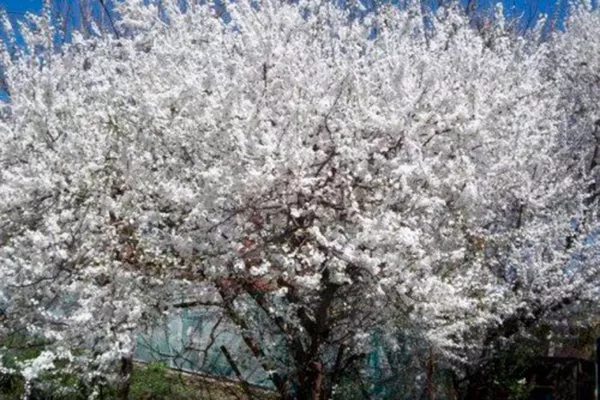
In early May, during the early flowering period, a profusion of snow-white flowers blooms on the shoots and branches, making the tree extremely decorative. Each bud produces up to four white flowers, each with a small, rounded corolla up to 1.5 cm in diameter.
The petals are small, oval, and wavy-edged, creating a striking composition. The white buds are framed by small, yellow anthers. There can be up to 15 stamens, each up to 6-7 mm tall. They are arranged in straight lines, lending the flower additional visual airiness.
Fruit
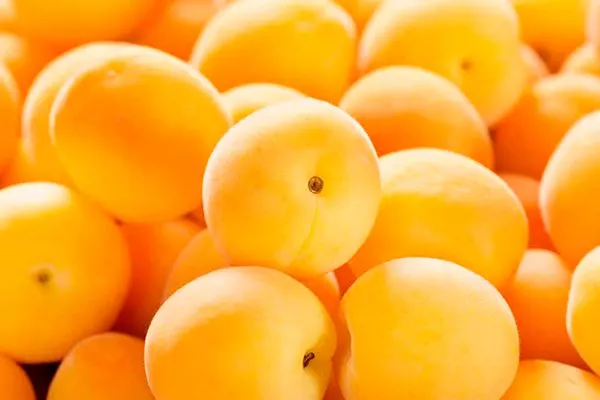
The bright yellow ripe fruits, with an orange tint, are ovoid in shape. The berry's top is pointed, and a faint ventral suture is barely visible. The weight of a single fruit can range from 12 to 20 g.
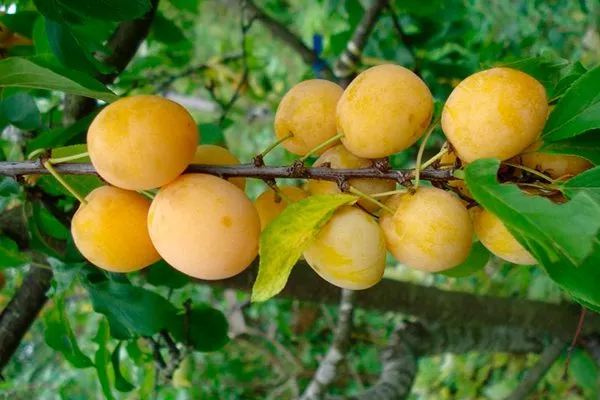
The flesh is juicy, with fine fibers. The skin is thin and elastic, with a light waxy coating and a few subcutaneous yellowish spots. The fruit has a unique flavor, sweet with a hint of tartness.
Ripe fruits are rich in nutrients beneficial to the human body: pectin, vitamins C and A, minerals, fruit acids, sugars, and dry matter of up to 16-18%. The small oval stone, difficult to separate, weighs less than 1 g and accounts for only 5% of the total fruit weight.
Frost resistance
The cherry plum "Podarok Sankt-Peterburgu" stands out for its high winter hardiness, successfully tolerating temperatures ranging from -30 to -35°C and strong winds. This variety also boasts excellent drought tolerance.
The plant exhibits excellent ability to recover from mechanical damage, which makes it resistant to adverse effects and ensures its longevity and high vitality.
Pollinators
This variety requires cross-pollination to produce a fruit, as it is self-sterile. Other cherry plum varieties or wild plums can be used for successful pollination. "Gift of St. Petersburg" effectively acts as a pollinator for other plant species.
Productivity
Thanks to its high yield, 97.6 centners of fruit can be obtained from one hectare of garden plot, which is average for the variety. The Podarok Sankt-Peterburgu cherry plum is often used commercially due to its excellent transportability.
Chemical composition of fruits
The chemical composition of cherry plum fruits Gift of St. Petersburg is presented as follows (per 100 g):
- dry matter: 16%;
- sugars: 8%;
- free acids: 2.9%;
- ascorbic acid (vitamin C): 12 mg;
- pectins: 0.76%;
- bioflavonoids: from 1065 mg;
- carotenoids: 1.7 mg.
This composition reflects the richness of cherry plum fruits not only in fresh taste, but also in nutrients such as vitamins, minerals, and other biologically active compounds.
Distinctive features
The Podarok Sankt-Peterburgu variety stands out for its resistance to low temperatures. The tree can easily withstand temperatures as low as -30°C while maintaining its fruiting capacity, which in no way affects the quality of the future harvest.
Advantages and disadvantages of the variety
Before purchasing a seedling, it's recommended to read reviews. The main advantages of this variety include:
Landing features
Cherry plum is a resilient plant that thrives regardless of soil conditions, establishing and thriving even in cold climates. However, proper planting procedures are essential for optimal survival.
Selecting a seedling
The ideal solution is to choose a seedling grown locally in the region where you plan to plant it. Contact a nursery or reputable seller to purchase a healthy, robust plant. Pay attention to its appearance.
- ✓ Check for a certificate of conformity for the variety.
- ✓ Check for signs of disease on leaves and bark.
Inspect the roots and bark. Choose planting material with a strong, well-developed root system and no mechanical damage or signs of disease.
Choosing a landing site
The cherry plum "Gift of St. Petersburg" produces a bountiful and delicious harvest when grown in a well-lit area protected from drafts and strong winds. A south or southwest exposure is preferred.
During the fall and winter, when winds are more severe, provide the tree with reliable protection. Build a fence or hedge around it. Plant trees in areas that receive full sun but are protected by a building wall.
Soil quality isn't critical for cherry plums, although the plant thrives in loamy soils with a neutral pH. The groundwater level should be at least 80 cm below the surface.
Site preparation
To ensure a bountiful cherry plum harvest, it's essential to properly prepare the soil before planting. Prepare the holes either in the fall, before the cold weather sets in, or in the spring, 15 days before planting. The holes should be 70 x 70 cm deep. Add the following fertilizers to the fertile soil layer:
- Superphosphate – 300 g.
- Potassium sulfide – 40 g.
- Compost – 10 kg (use fresh in autumn, rotted in spring).
- ✓ Use organic fertilizers to improve the soil structure.
- ✓ Check soil pH before applying fertilizer.
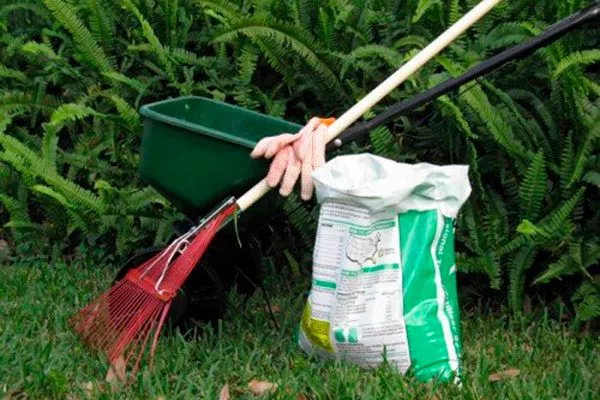
Spread the resulting mixture over the bottom of each hole. If the soil is predominantly clayey, add 20 kg of peat or sand. If the soil is sandy, add 10 kg of turf.
Step by step process
When purchasing cherry plums with a closed root system, water the seedling thoroughly. For bare roots, soak them in a clay slurry for 1 hour before planting. To do this, dilute the clay with water to the consistency of sour cream.
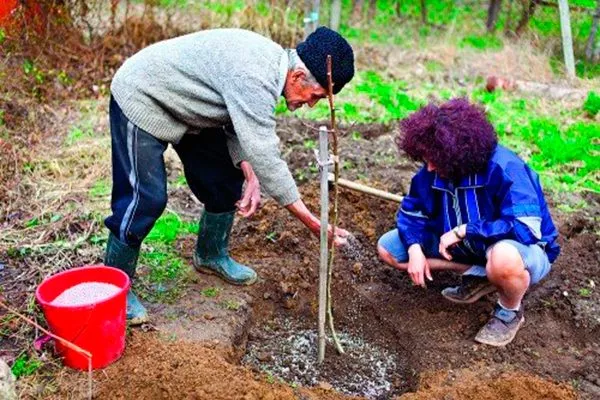
Step-by-step planting instructions:
- Drive a stake into the center of a pre-prepared hole.
- Form a mound of earth in the center of the hole.
- Place the seedling on the mound, carefully spreading the roots. The root collar should be 5-7 cm above the soil level.
- Fill the hole with soil and compact it.
- Tie the young tree to a stake.
- Make a ridge of earth around the tree, creating a small hole.
- Water the seedling with 30-40 liters of water.
- After the water has been absorbed into the hole, lay mulch of straw, sawdust or peat.
Maintain a distance of at least 2.5 m between trees and 3 m between rows.
Plant care
Cherry plum, like other plants, requires care according to optimal methods and at the right time. This plant requires regular watering, soil loosening, pruning, fertilizing, and other agricultural practices that promote a bountiful harvest.
Trimming
Cherry plum requires regular pruning. These are divided into the following types:
- Formative. This is a key step in creating a proper crown. For cherry plums, we recommend shaping them in an improved "cup" to ensure good light exposure to the inner part of the crown and facilitate maintenance and harvesting. Pruning should be done in early spring during the first 4-5 years after planting.
- Regulatory. Apply as needed. If the crown becomes too dense, remove inward-growing branches and suckers. Perform this procedure in early spring.
- Sanitary. Includes removing dead, damaged, and diseased branches. Perform in late fall and/or early spring.
Cherry plums also require maintenance pruning to maintain high yields. This is done in summer by shortening young shoots by 10-15 cm.
Watering
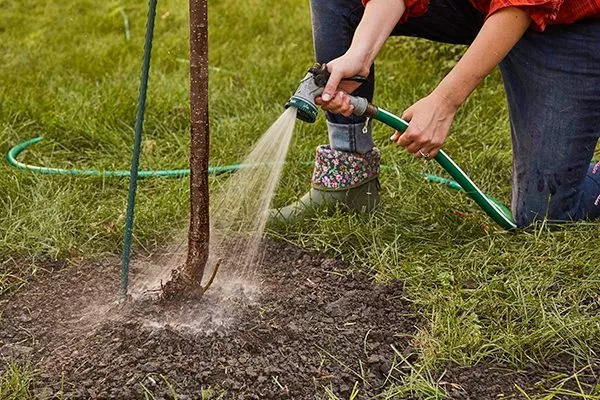
Drought-resistant cherry plum requires three waterings during the season. The first watering should be done after flowering in June. The second watering should be done in July, when the fruit's pit is forming and shoot growth slows.
Top dressing
With the arrival of spring, apply nitrogen fertilizer to the soil. This will ensure successful and rapid growth of the cherry plum and also improve its survival rate. If the seedlings were planted in a well-fertilized hole, you can skip applying fertilizer next spring.
For mature trees, it's recommended to evenly distribute phosphorus-nitrogen-potassium fertilizers around the roots. Cherry plums can be fertilized before bud break, for example, by spraying with urea. This method will provide the plant with nutrients and protect it from pests and diseases.
Preparing for winter
In late autumn, in October or November, clear the root zone of debris, leaves, and dry grass. Cover the trunk of the hybrid cherry plum with a lime mixture intended for fruit trees, which will provide reliable protection against hares and rodents.
Wrap the tree trunk with a thick layer of spruce branches. Use burlap or other covering materials. A thick snow cover in winter provides maximum protection from freezing.
Fighting diseases
The cherry plum variety "Podarok Sankt-Peterburgu" exhibits high resistance to fungal diseases. Early detection, eradication measures, and annual preventative maintenance guarantee healthy trees and abundant harvests.
Cherry plum can suffer from such diseases.
- Moniliosis. Grayish formations appear on the fruit. Spray the tree with Bordeaux mixture (300 g per 10 liters of water) during leaf fall.
- Coccomycosis. It appears as small reddish spots on the upper surface of the leaf and a pink, powdery coating on the underside. Spray the tree after flowering and harvest. Use 1% Bordeaux mixture or Hom.
- Hole spot. The disease is accompanied by reddish-brown spots on the leaves. After 7-14 days, the spots die and develop holes. Spray the plant before bud break and after flowering. In the first case, use ferrous sulfate (300 g per 10 liters of water), in the second, use Bordeaux mixture (100 g per 10 liters).
Preventive measures include:
- Collection of fallen leaves and diseased branches and their subsequent burning.
- Regular cleaning of dead bark on tree trunks.
- Rapid response to the first signs of disease.
- Treatment of wounds and cuts using garden pitch and copper-containing preparations such as Medex or Medex-M.
- ✓ Regularly inspect the tree for signs of disease.
- ✓ Carry out preventive treatments in early spring.
Spray trees with 5% urea solution after harvest.
Pests of cherry plum
Cherry plum pests are similar to plum pests, but control methods differ slightly. The following insects can attack the Gift of St. Petersburg:
- Aphid. It sucks the sap from young leaves. Treat the plant in early spring or late fall. Use a 1% DNOC solution.
- Rose leaf roller caterpillar. It skeletonizes leaves and eats flowers. Before bud break, spray plants with a 6% oil emulsion. Before flowering, apply 0.15% Metaphos or 0.2% Vofatox.
- Acacia false scale. It feeds on the sap of leaves and shoots. Before flowering, apply 5% product No. 30. During the growing season, use 0.2% Metaphos; after harvest, apply DNOC according to the instructions.
To protect your plant from pests, regularly inspect the tree and leaves. Apply preventative treatments.
Harvesting and storage
Harvest the fruit at the technical stage of ripeness, when it's still unripe, especially in dry weather. The fruit should be free of rot and mechanical damage. Store cherry plums in a cool, dark place at a temperature of 2-7°C and a humidity of 80-95%.
Gardeners' reviews
Growing and caring for cherry plums is a fascinating endeavor that yields not only delicious and healthy fruits but also delights with their resistance to adverse conditions and diseases. This variety boasts excellent flavor and adaptability to harsh climates.