
The Naydena cherry plum is a high-yielding and delicious variety that easily adapts to a variety of climates. Its fruits are delicious and attractive, and have an excellent marketable appearance.
Description
The medium-sized tree has a standard cherry plum trunk and a well-dense crown, resembling a flat sphere.
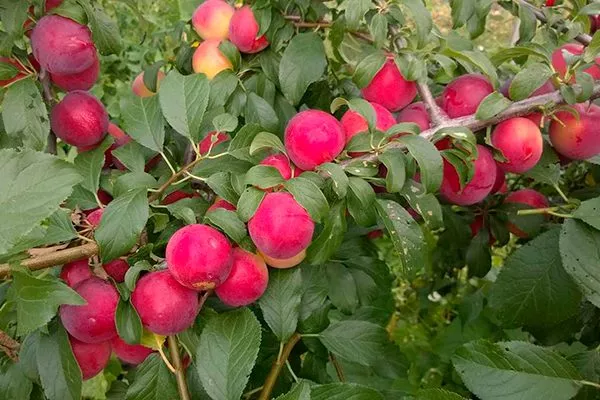
Brief botanical description of the Naydena variety:
- Tree. Height: 2.5-3 m. The trunk is straight with grey bark and large, sparse lenticels.
- Escapes. Thick, poorly branched, with a horizontal growth pattern and a diameter of up to 4 cm. The upper parts of the shoots are green, while the lower parts are woody, brown, with a reddish tint. The bouquet branches (fruiting structures) are characterized by vigorous growth and live no more than 3 years.
- Leaves. Large, oval-shaped, with pointed tips. Light green in color. Glossy surface. Leaves with serrated edges.
- Ovaries. The flowers have small, numerous petals. The calyx is bell-shaped, and the petals are white. The flowers have a strong, pleasant fragrance.
Description of fruits
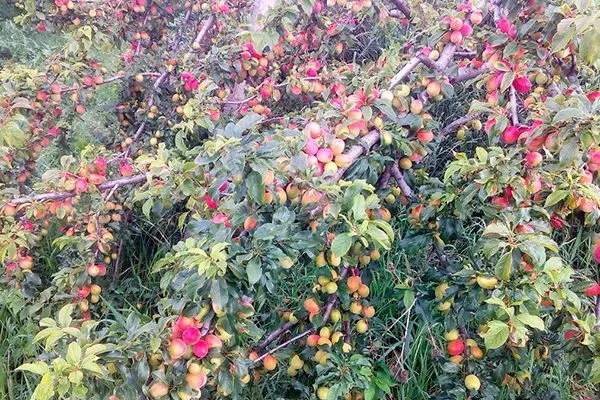
Immediately after flowering, Naydena produces fruits approximately 3 cm in diameter. They are medium-sized, weighing approximately 30 g. The shape is round, ovoid, with a virtually invisible central seam. The skin separates easily from the flesh. The base color is yellow, with a burgundy or red-violet tint.
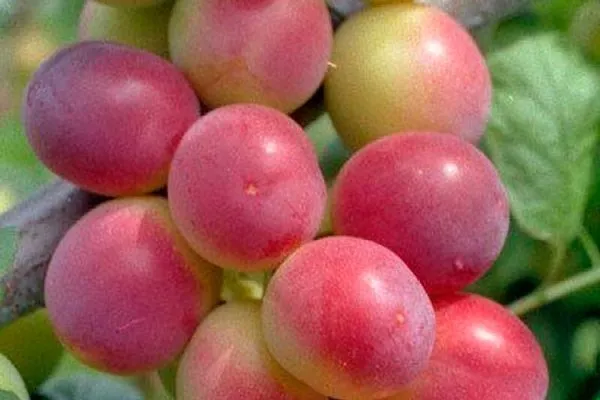
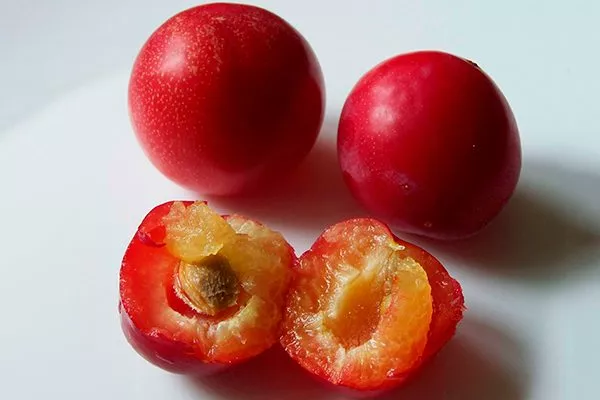
The fruits are covered with a waxy coating. They often have subcutaneous dots and a few streaks. The skin is medium thick. The flesh is yellow or orange, fairly dense and fibrous. The stone is medium in size and difficult to separate from the flesh.
Characteristics of the variety
The Naydena cherry plum has good agronomic characteristics, making it attractive for amateur and mass cultivation.
Characteristics of the Naydena variety:
- Early maturity. The first harvest can be obtained 2-3 years after planting.
- Ripening periods. The variety is early ripening; harvesting can begin as early as mid-July.
- Productivity. Stable and tall. A single tree can yield 35-50 kg.
- Self-pollination. The plant is self-sterile and cannot self-pollinate. It is necessary to plant several trees in the garden.
- Transportability. Good.
- Drought resistance. Average
- Winter hardiness. High.
- Resistance to fruit cracking. High.
- Resistance to diseases and pests. High.
- Flowering time. Beginning of April.
- Ripening period. Mid-early.
- Fruiting period. Mid-July.
Who developed the variety?
The Naydena cherry plum was bred by breeders from the Crimean Experimental Breeding Station and their Belarusian colleagues.
Two varieties were crossed:
- Chinese plum Skoroplodnaya;
- Russian plum Dessert.
From its first parent trees, the Naydena cherry plum inherited high yields and excellent taste, and from the Chinese plum it also inherited winter hardiness and early fruiting.
Thanks to its adaptability, the variety has spread not only to the southern, but also to the central and northwestern regions of Russia. The Naydena variety was zoned in 1993 in the Lower Volga and Central Black Earth regions.
Taste and composition
Under favorable conditions, the apples are very sweet. Their sugar content is moderate, and the acidity is practically imperceptible. The slight tartness in the flavor comes only from the skin.
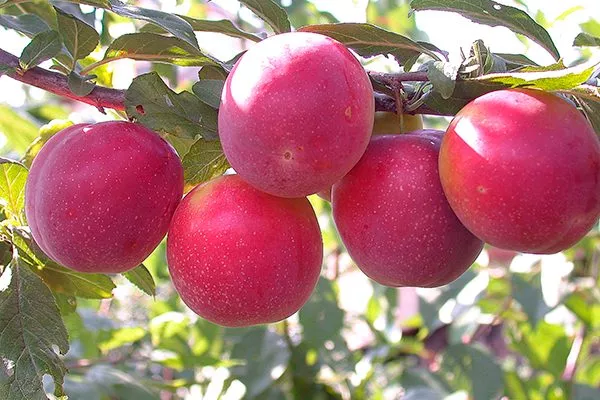
Tasting score: 4.3. The fruits are delicious fresh and are also used to make jam, preserves, and compotes.
Chemical composition of the pulp:
- raw materials - 12.3%;
- sugars - 8.1%;
- acids - 1.7%;
- sugar-acid index - 4.8;
- pectin substances - 0.35%;
- ascorbic acid - 6.4 mg/100 g.
Pros and cons
The Naydena variety has many advantages, making it popular among gardeners, summer residents, and farmers. This cherry plum does have some drawbacks, but they are not significant.
Requirements for soil and climatic conditions
To ensure that cherry plums grow and develop well, produce good yields, and produce fruits of high quality and taste, it is necessary to create favorable growing conditions for them.
Requirements of the Naydena variety:
- Soil. Cherry plum grows well in stony-gravelly, chernozem, and gray forest soils with a neutral pH. The structure and mechanical composition of the soil can vary. Fertile, well-drained, and permeable soils are ideal.
- Groundwater. The variety is quite tolerant of high groundwater levels. The minimum acceptable height is 1.5 m above ground level.
- Light. This variety requires good light, so it should be planted in the sunniest areas, protected from drafts. Trees should be protected from strong winds, especially from the north and northeast. The more sun, the tastier and sweeter the fruits.
- Neighborhood. The Naydena cherry plum thrives alongside other fruit trees, including gooseberries and black currants. It should not be planted alongside apple trees or plums.
Landing rules
The well-being and development of young cherry plum trees directly depends on proper planting. It's important not only to follow the proper planting procedures but also to select the right site.
Landing dates
Naydena cherry plums are planted in spring or fall if bare-root seedlings are used. Concealed-root trees can be planted throughout the season—from April to mid-autumn.
In regions with mild winters, planting is recommended in the fall. Cherry plums are planted a month before the onset of cold weather—this period gives the seedlings time to establish themselves, adapt, and prepare for winter.
Selecting a seedling
To ensure that a plant quickly and successfully takes root, grows and develops, and then turns into a full-fledged, fruit-bearing tree, it is necessary to choose the right planting material.
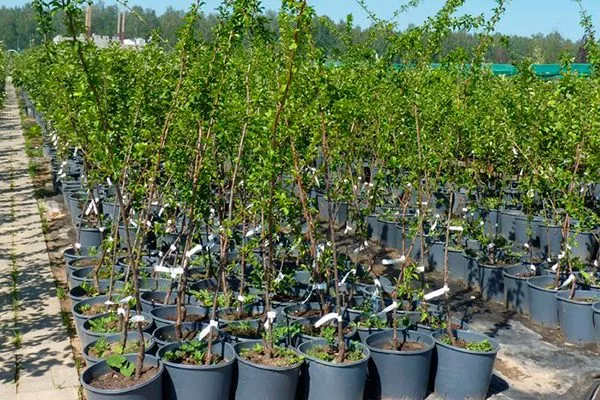
What to look for when choosing seedlings:
- optimal age — 1-2 years, they take root better than older specimens;
- roots - healthy, firm and elastic, without signs of disease or other damage.
You can purchase zoned Naydena seedlings that match the varietal characteristics at nurseries and retail outlets licensed to sell varietal material. Buying seedlings at markets or along the roadsides is prohibited, as you risk acquiring wild plants.
Planting technology
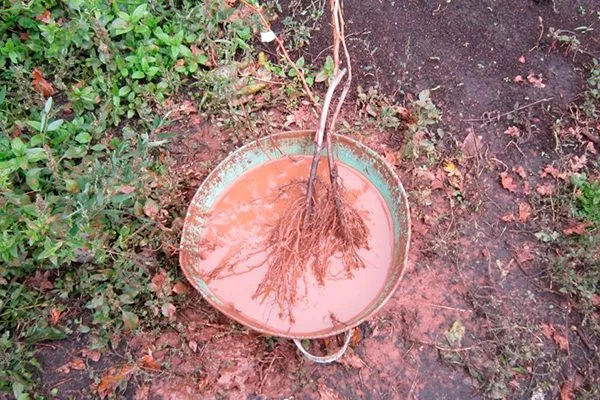
The size of the planting hole depends on the size of the seedling's root system—it should fit comfortably within the hole. Immediately before planting, soak the roots in a clay slurry mixed with a growth stimulant, such as Heteroauxin or Kornevin.
Planting order:
- In the fall, dig up the area, removing stones, rhizomes and other debris.
- Dig a hole approximately 60-80 x 60-80 cm. If the groundwater level is high (above 1.5 m), add a drainage layer to the bottom. Cherry plum does not tolerate stagnant water at the roots, so it is necessary to protect it from waterlogging below ground. Use brick, gravel, expanded clay, etc. The drainage layer should be 12-15 cm thick.
- Drive a metal or wooden support 1-1.5 m high into the center of the hole.
- Fill the hole with fertile soil mixed with humus. Add 60 g of potassium and 200 g of phosphorus fertilizer. Pour in 3-4 liters of diluted wood ash.
- Form a mound from the soil mixture poured into the hole. Place the seedling on it, carefully spread the roots, and then cover them with soil. Note that:
- the neck of the seedling should be at ground level after planting;
- for a grafted tree, the grafting site should be located above the ground surface;
- In a self-rooted seedling, the root collar is deepened into the soil.
- Firm the soil and tie the seedling to the support with soft twine. Don't use wire, as it can damage the bark.
- Form a tree trunk circle and water the planted tree with warm, settled water. The recommended watering rate is 10 liters per seedling.
- Once the water has been absorbed, mulch the tree trunk area with humus, peat, sawdust or other organic matter.
- ✓ The seedling planting depth should be such that the root collar is at soil level, which will prevent it from rotting or drying out.
- ✓ The distance between seedlings should be at least 3-4 meters to ensure sufficient space for the growth of the root system and crown.
Planting holes are prepared at least a month in advance. The distance between adjacent holes is 3-4 meters. If work is postponed until spring, then the holes are prepared in the fall. The hole is covered with a waterproof material.
If the seedling is planted before winter, it is also recommended to cover it with a waterproof material, such as a tarpaulin.
Care Features
The Naydena cherry plum is not a capricious or overly demanding variety, but it will require some care to obtain a good harvest.
How to care for Naydena cherry plum:
- Watering. Under normal conditions, trees are watered once every 3-4 weeks. The soil should be moist to a depth of 25 cm. In hot and dry weather, cherry plums are watered more frequently. The recommended water consumption for one mature tree is 35-40 liters.
Trees must be watered after flowering, during fruit set, and when the fruit begins to ripen. The last time cherry plums are watered is after harvest. The soil is loosened and mulched after rain and watering. The mulch is changed three to four times a year, including before winter. - Fertilizers. Fertilizing the Naydena cherry plum begins after fruiting. In the spring, nitrogen fertilizers are applied to stimulate foliage growth. Potassium-phosphorus complexes are applied in midsummer and fall. Superphosphate can be applied before winter, for example, to help the trees survive the winter. Organic fertilizers are applied to the cherry plum once every three years.
- Trimming. The tree is pruned for the first time immediately after planting. There are two types of pruning: sanitary and formative. The latter is recommended to be done in the spring; severe pruning before winter is not recommended—the tree doesn't need stress before winter.
Pruning is carried out in March, before the buds open. All damaged, frozen, broken, dry, and diseased branches are removed. The first rejuvenating pruning is carried out at 8 years. - Preparing for winter. Fallen fruit and leaves are removed from the area around the tree trunk, and then the area is dug over shallowly to avoid damaging the roots. The tree trunk is then whitewashed. In regions with cold winters, a shelter is provided by covering the area around the tree trunk with a thick layer of mulch, hilling it up high, and raking away snow in the winter.
Diseases and pests
Under unfavorable growing conditions, as well as if cultivation technology is violated, cherry plum can be affected by diseases and insect pests.
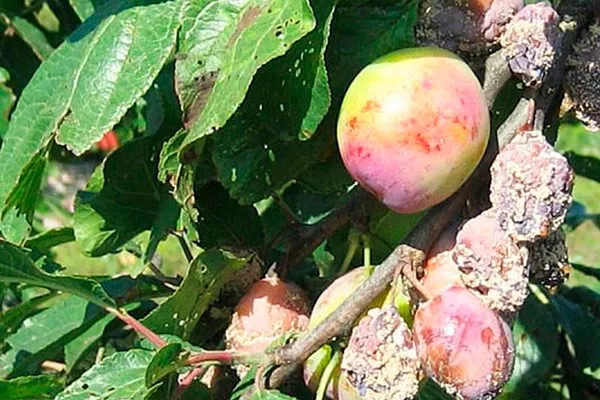
Most often, the Naydena variety suffers from:
- gum flow;
- leaf rust;
- gray rot;
- brown spot.
Also, Naydena cherry plum can be affected by powdery mildew and monilial burn.
Most often, the Naydena cherry plum is affected by the following pests:
- bark beetle;
- codling moth;
- bark beetle;
- silkworm downy.
If diseases and pests are not controlled, cherry plum yields can be significantly reduced.
Control and prevention measures:
- In early spring, spray the trunk and skeletal branches with a lime solution mixed with insecticides. This treatment kills insect pests and their eggs, fungal spores, and bacteria.
- Before bud break, trees are treated once with a 2% copper sulfate solution or a 3% Bordeaux mixture. You can also spray the tree with a 5% urea solution. The soil around the trunk is treated with a 7% urea solution, which serves as both a fertilizer and an insect repellent.
- Throughout the growing season, the tree is treated with biofungicides and bioinsecticides every two weeks for preventative purposes. Recommended disease control products include Trichodermin, Fitosporin-M, Pentofag, Gamair, and their analogs. Insecticides such as Bitoxibacillin, Lepidocide, Fitoverm, and other products can be mixed with these.
| Disease | Sustainability | Preventive measures |
|---|---|---|
| Gum flow | Average | Regular sanitary pruning |
| Leaf rust | High | Treatment with copper-containing preparations |
| Gray mold | Low | Soil moisture control |
Biological products are effective only at temperatures above 18°C. They are harmless to people, birds, and pets. It is not recommended to use pesticides in the garden. They should be used only for severe infestations, and only in the spring—before bud break or flowering.
The Naydena cherry plum is a versatile hybrid variety that possesses all the qualities prized by gardeners. It's productive, ripens early, and its fruits are suitable for a wide variety of uses.