
The Lama cherry plum is beloved by our gardeners and summer residents not only for its beautiful and delicious fruits, but also for its high winter hardiness, which allows this variety to be grown in regions with climates that are problematic for fruit trees.
The appearance of the tree
The Lama cherry plum is a medium-sized tree, reaching a height of 1.5-2 meters. It has a spreading, flattened, rounded crown and smooth, reddish bark with a blue-violet tint. The bark darkens over time and becomes rougher.
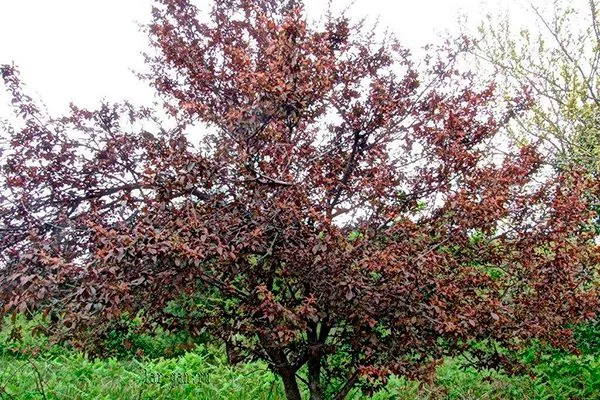
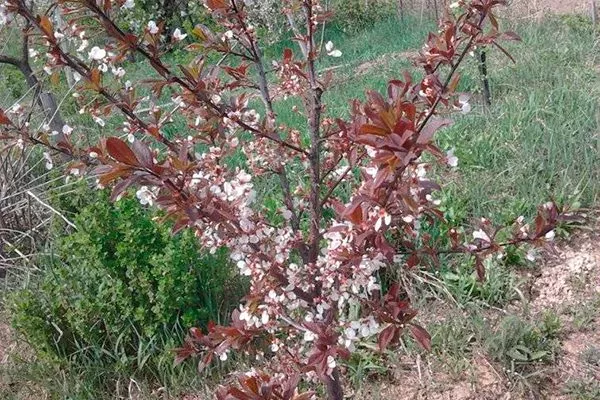
The greenish-burgundy leaves are lanceolate and reach 18 cm in length, with serrated edges. The Lama cherry plum's flowers are white or pale pink, fragrant, and clustered in clusters of 4-5. The flowers are 3-3.5 cm in diameter.
Fruit
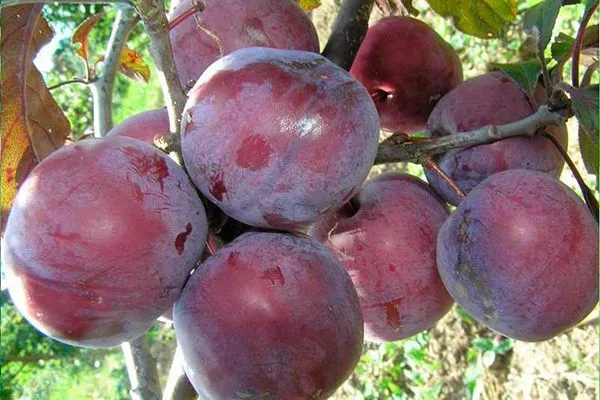
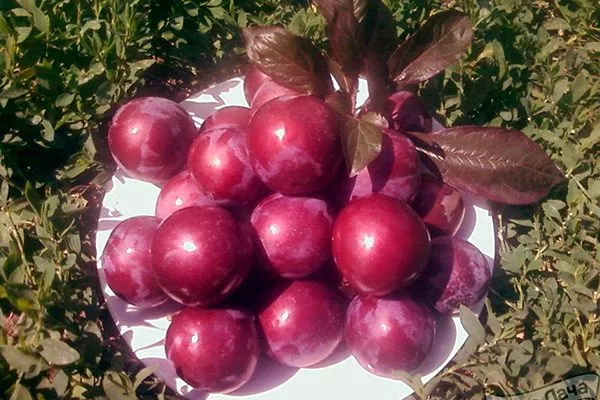
The Lama cherry plum fruits are round-oval with a short stalk that remains dry when picked. The plums are dark purple in color, becoming almost black as they ripen. The skin is covered with a thick waxy coating, beneath which are numerous subcutaneous dots. The fruits have a faint ventral suture.
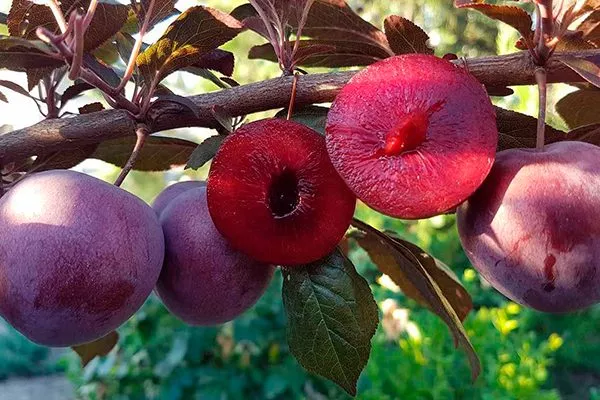
Each fruit weighs an average of 30-40 g. The flesh is dark red, juicy, and fibrous. The flavor is sweet and sour, with a refined aroma featuring delicate fruity and almond notes. Unripe fruits have a characteristic crunch. The pit is small and easily separated from the flesh.
The fruits are easily digestible and contain many beneficial microelements, acids, and glucose. The tasting score is 4.4.
Characteristics
The Lama cherry plum has excellent agronomic characteristics, allowing it to be grown in various regions of Russia.
Characteristics of the Lama variety:
- Productivity and fruiting. The Lama cherry plum is a mid-late variety. It is early-ripening and begins bearing fruit in the second year after planting. Young trees produce up to 40 kg of fruit, while mature trees yield up to 300 kg.

- Pollination. The Lama variety is self-sterile, so a single tree is not enough. Cherry plums such as Mara, Kometa, and Vitba can be used as pollinators.
- Frost resistance. The variety is winter-hardy and can withstand frosts down to -35°C without any damage to its condition.
- Bloom. It is lush even in two-year-old seedlings. The trees begin to bloom in late April or early May. The flowers can withstand spring frosts down to -5°C.
Breeding history
The Lama variety was developed by Belarusian breeder V. A. Matveyev in 2000. The work was conducted at the Republican Unitary Enterprise "Institute of Fruit Growing" (Samokhvalovichi, Minsk District). Seedlings of the 9-250 Pissardi variety and a pollen mixture of hybrids were used in the selection.
Growing regions
The variety is zoned for central Russia and is suitable for regions characterized by unstable and harsh climates. Today, the Lama variety thrives in Moscow and the Moscow region, central Russia, the Far East, and the Khabarovsk Krai.
Application and storage
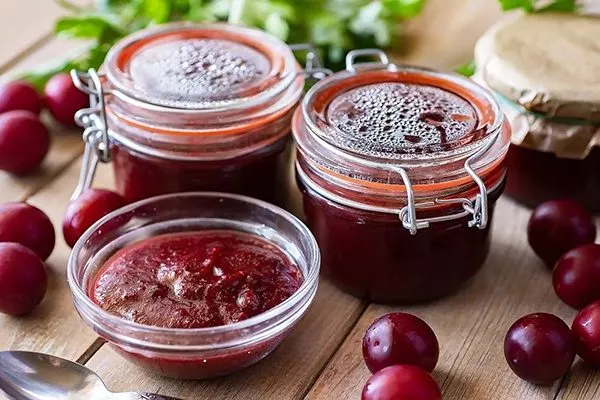
Lama cherry plums are used to make jams and compotes, and they also make excellent preserves and jellies. This variety is also used in the food industry, with the fruits used to make marmalade, sauces, and baked goods.
The fruits can be stored for a long time in a cool, humid environment. Under favorable conditions, Lama cherry plums can retain their commercial and culinary qualities for 3-4 months.
Advantages and disadvantages
Before planting the Lama variety in your garden, it's helpful to evaluate all its advantages and disadvantages. This will help you determine whether this self-fertile cherry plum is suitable for your intended purposes.
Location and soil requirements
To ensure the Lama cherry plum produces good yields, it's important to select the right location in the garden. The tree's health and productivity depend on the correct location.
Landing site requirements:
- good lighting, it is recommended to choose the sunniest areas;
- reliable protection from drafts and blowing winds;
- The optimal planting location is the western slopes of low hills; in the lowlands the tree produces smaller yields and the quality of the fruit is lower;
- maximum groundwater level - no higher than 1.5 m;
- Soils with neutral acidity are needed; acidic and alkaline ones are not suitable.
Planting material
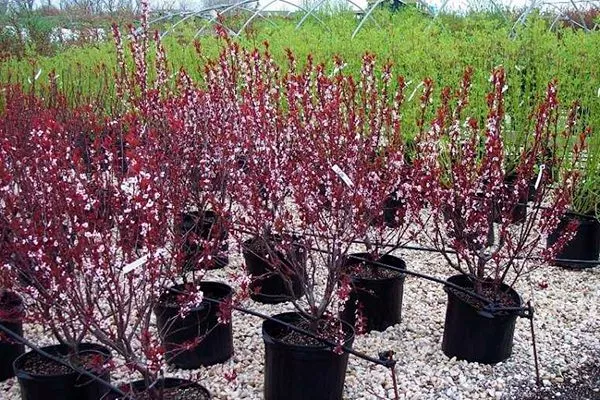
It's best to buy seedlings from local nurseries that offer regionalized varieties. It's recommended to buy them in the fall and plant them in the ground. When transporting seedlings, wrap the roots in a wet cloth and plastic wrap first.
- ✓ Check for a certificate of conformity for the variety.
- ✓ Pay attention to the root system: it should be well developed, without signs of rot or damage.
The optimal age for planting seedlings is 1-2 years. Experienced gardeners prefer to buy bare-root trees. It's important to carefully inspect the root system; it should be free of dry, rotten, or damaged shoots. The trunk should also be flawless—straight, free of damage, defects, and signs of disease.
When purchasing containerized seedlings, check to see if the fine roots have sprouted through the holes in the packaging. The advantage of containerized seedlings is that they can be planted not only in spring and fall, but also in summer.
Landing rules
Cherry plums are planted in the fall or spring. The choice of planting time depends not only on the gardener's preferences but also on the regional climate and the root type. Fall planting is common in areas with mild winters, while in other regions of Russia, cherry plums are planted in the spring—this gives the seedlings a better chance of successful establishment.
Principles and features of planting Lama cherry plum:
- First, prepare the soil by adding components to improve fertility and looseness. Organic matter is added to low-fertility soils, sand to clay soils, wood ash to acidic soils, and so on.
- The hole is prepared several weeks in advance or in the fall if planting is planned for spring.
- The hole should be large enough to accommodate the root system without bending. Approximate dimensions are 60-65 cm deep and 90-100 cm wide.
- A 15-20 cm thick drainage layer is placed at the bottom of the pit. For this purpose, loose material, such as fine crushed stone, is used.
- The fertile soil obtained by digging the hole (the top 15-20 cm thick layer) is mixed with peat and humus, and superphosphate is added. Half of the prepared soil mixture is filled into the hole, which is then covered with a piece of roofing felt and tar paper.
Care
The Lama cherry plum is an easy-to-grow variety that doesn't require much attention from gardeners. Minimal care is sufficient for the tree to produce excellent harvests.
- ✓ Provide the tree with sufficient sunlight.
- ✓ Maintain optimal soil moisture levels, avoiding overwatering.
How to care for Lama cherry plum:
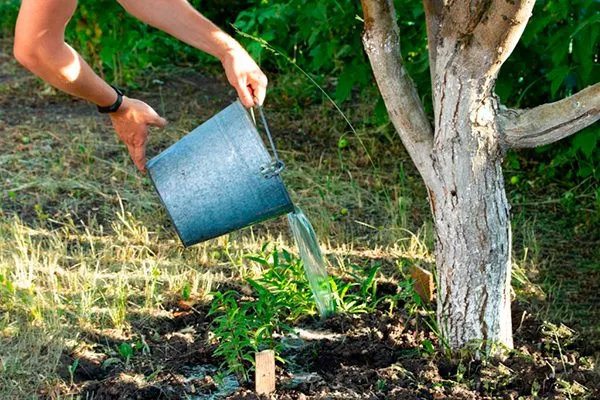
- Water. Young trees are watered every two weeks if there's no rain. Cherry plums over two years old should only be watered during dry periods, as they don't tolerate overwatering well—it promotes aphids, causes bark rot, and reduces fruiting.
The recommended watering rate for young cherry plums is 30-40 liters. Mature trees require watering during fruit formation and after harvest. Unlike most fruit trees, cherry plums do not require winter watering. - Feed. The first fertilizer application is made one month after planting—spraying the foliage with a 0.5% urea solution (1-2 liters per tree). Mature trees are fed with mineral and organic fertilizers, such as manure and compost. Fertilizer is applied three times per season:
- in spring - nitrogen-containing compounds that stimulate the growth of green mass;
- before flowering - diluted infusion of mullein (1:10), it is added after watering so as not to burn the roots.
- in autumn - complex mineral fertilizers designed specifically for fruit trees.
- Trim. In early spring, before bud break, perform sanitary and formative pruning. For normal growth and development, a tree requires approximately 10-12 skeletal branches. During pruning, all damaged, frozen, dry, broken, deformed, and diseased branches are removed.
To prune the tree, use disinfected and sharpened tools, such as pruning shears and garden shears. The cuts are sealed with oil paint or garden varnish. - Mulching. During dry periods, the tree's trunk area should be covered with a layer of mulch, such as peat, hay, or straw. If the mulch needs replacing, dig it in along with the soil, but don't dig the spade deeper than 5 cm, as this can damage the cherry plum's roots, which are located too close to the surface.
Preparing for winter
In the fall, the trunk and thick sections of skeletal branches are whitewashed. A lime solution mixed with copper sulfate and casein glue is used for this purpose. This will protect the bark from sunburn in the spring and help kill some pests.
To protect the thin bark of cherry plums from rodents during the winter, special nets or woolen casings wrapped in sheet metal and burlap are used. The area around the tree trunk is covered with a thick layer of mulch to protect the surface roots from freezing.
Diseases and pests
The Lama cherry plum has excellent resistance to most common diseases. However, under unfavorable conditions—such as prolonged heat or heavy rains, high groundwater levels, or a lack of fertilizing—the tree can be susceptible to various diseases and pests.
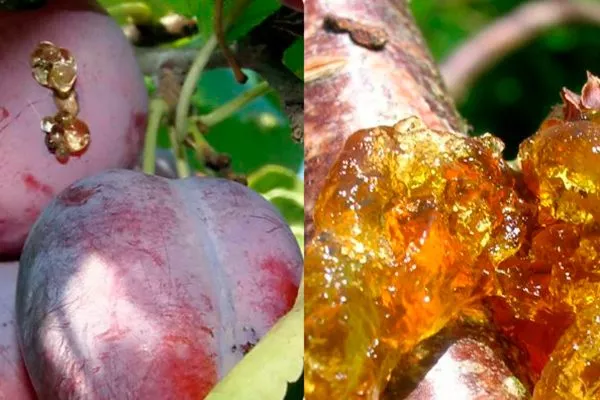
Most often the tree gets sick:
- Shot hole (clasterosporium). This fungal disease causes brown spots on young shoots and leaves. It can be controlled by spraying with a 2% solution of Nitrafen or a 3% solution of Bordeaux mixture.
- Verticillium wilt. This fungal disease blocks the flow of water and nutrients to plant tissue. The diseased tree cannot be treated. It should be dug up and destroyed, and replaced with peas, beans, carrots, cabbage, or beets.
- Monilial burn. Spores of this fungal disease infect leaves and annual shoots, causing flowers to darken, ovaries to dry out, and fruit to drop. Spraying with Hom can help correct the situation.
Most insect pests spend the winter under the bark or in the tree trunk circle. Therefore, it's crucial to keep this area clean—regularly weed and loosen the soil, whitewash the trunk, and remove old bark.
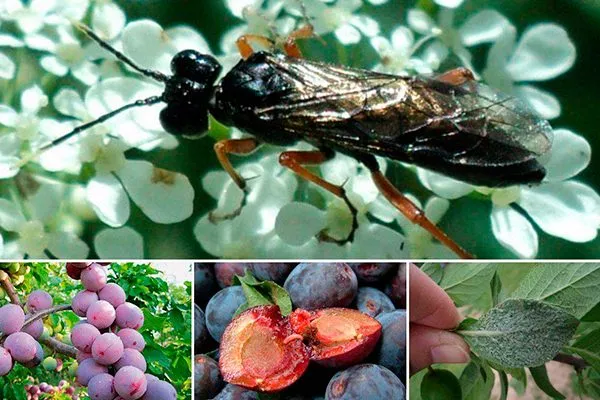
Most often, Lama's cherry plum is affected by:
- Aphid. A light and dark green insect up to 2.5 mm long. The pests nest on the undersides of leaves. Aphids suck the sap from the leaves and ovaries, causing them to dry out and die. The tree is sprayed with a 1% DNSC solution. For prevention, it is recommended to treat the tree in the spring with a solution of laundry soap.
- Brown fruit mite. These dark-red insects lay eggs under the tree bark. In the spring, the larvae crawl along the green foliage and feed on the plant's sap, causing the leaves to turn brown, dry out, and fall off. Spraying with 10% malathion or 10% benzophosphate helps control the mite.
- Plum codling moth. This gray-brown butterfly with a purple tint lays up to 80 eggs on fruits or the undersides of leaves. The hatched, pale pink caterpillars chew through the fruits and seeds, and gnaw through the petioles. Spraying with 0.2% Metaphos or 0.3% Malathion helps control the codling moth.
The Lama cherry plum is ideal for regions with harsh winters, yet is in no way inferior to southern varieties in terms of flavor. The purple fruits have an excellent marketable appearance, transport, and store well. This variety is equally valuable for both fresh cherry plum lovers and preservers.