
In the world of fruit crops, there's a special alliance of those who prefer simple and undemanding plants. Among them, the columnar cherry plum stands out – a true ideal for those who value ease of care and abundant harvests. This amazing tree boasts not only an exquisite growth form but also incredible resilience to adverse conditions.
Main characteristics of columnar cherry plum varieties
Columnar cherry plum is very popular among gardeners due to its numerous characteristics and ease of care. This plant produces good harvests with proper care.
What does the concept mean?
Cherry plum is so named because of its unique growth habit. Trees of this species are characterized by an upright, columnar crown, with lateral branches extending from the main trunk at an acute angle and pressed against it, creating a shape reminiscent of a pyramidal poplar.
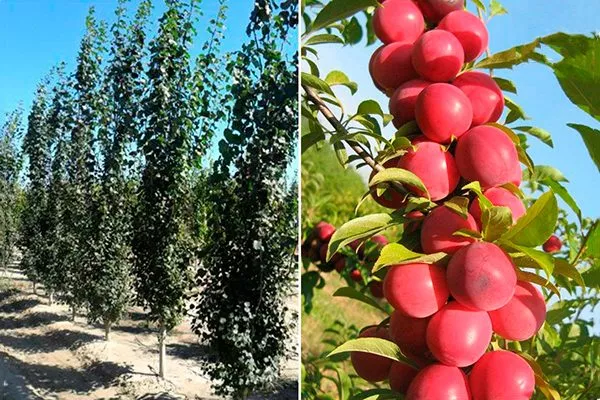
This crown structure makes the tree compact and easy to grow even in confined areas.
Peculiarities of the species
This cultivar possesses a number of characteristics that distinguish it from other common varieties. Columnar cherry plum is highly frost-resistant, able to withstand temperatures down to -30°C.
Columnar cherry plums begin bearing fruit as early as the second or third year after planting. The yield is 5-15 kg. Although this yield may be lower than that of regular cherry plum varieties, columnar trees can be planted closer together in the garden, which compensates for this shortcoming.
| Parameter | Columnar cherry plum | Common cherry plum |
|---|---|---|
| Tree height | 2-3 m | 4-6 m |
| Crown width | up to 40 cm | 3-4 m |
| The beginning of fruiting | 2-3 years | 4-5 years |
| Yield per tree | 5-15 kg | 20-40 kg |
| Planting density | 1.5 m between trees | 4-5 m between trees |
| Frost resistance | up to -30°C | up to -25°C |
The compact crown requires little maintenance, thanks to good ventilation and light, making it ideal for pollinating insects. Fruit yields increase each year until the tree reaches ten years of age.
Botanical description of the variety
The root system is superficial and fibrous. The trunk is robust, thick, and capable of supporting significant crop loads. It produces good foliage, but the crown's spreading diameter is limited to just 40 cm.
The lateral shoots are thickened and acquire a brownish-green hue when ripe. The buds are small, narrowly conical, and gray-brown in color. The leaves are elliptical with a pointed tip, retaining a dark green color and a smooth surface with moderate venation.
The buds, 1.5-2.5 cm in diameter, are represented by pink or white petals that form five round parts.
Columnar cherry plum blooms later than other varieties. Annual growth is limited to no more than 15 cm.
Habitats
This variety was developed and adapted to the climatic conditions of Crimea, but due to the plant's high resistance, it can be successfully grown in the central and southwestern zones of Siberia, including the Altai region.
Climate conditions
Columnar cherry plum, as a cultivated plant, is adaptable to a variety of climatic conditions, making it a popular choice for gardeners in various regions. General recommendations regarding climatic conditions:
- Columnar cherry plum prefers warm climates and thrives in areas with long summers. Temperatures during the growing season promote good growth and development.
- The crop has high frost resistance, which makes it suitable for growing in northern regions with cold winters.
- Columnar cherry plum prefers moderate rainfall, but can tolerate occasional drought. Regular watering is important during periods of drought, especially during fruit set and ripening.
Application
Cherry plums can be enjoyed fresh, made into compotes for the winter, used as pie filling, and used to make preserves, marmalades, and jams. If you puree the plums with sugar in a 1:3 ratio, the resulting mixture will keep well all winter in the refrigerator.
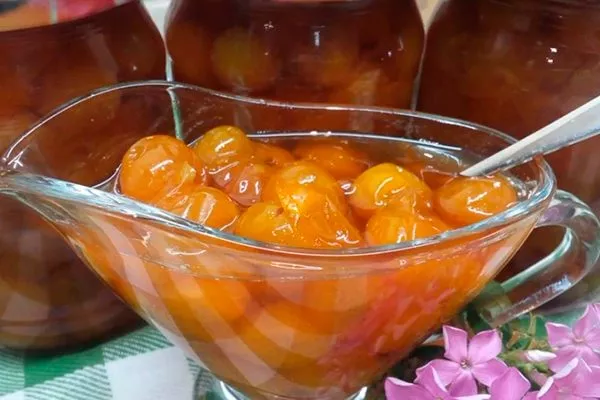
In addition to its flavor, cherry plum also has medicinal properties. Its high pectin and vitamin content makes it beneficial for gastrointestinal disorders. For example, for chronic heartburn, cherry plum consumption is recommended in conjunction with a diet.
Growth characteristics
The growth characteristics of columnar cherry plum make it a unique and practical plant for garden landscaping. Several key growth characteristics of this species include:
- Columnar cherry plum is characterized by an upright growth habit and a narrow, straight crown. The main stem gives rise to short fruit-bearing branches, giving the tree a compact appearance and efficient use of limited space.
- Flowering phase: 20-30 l/tree every 10 days
- Formation of ovaries: 30-40 l/tree every 7 days
- Fruit ripening: 20-25 l/tree every 14 days
- After harvest: 40-50 l/tree once
- Winterization: 50-60 l/tree in October
- Columnar cherry plums have a good marketable appearance and are distinguished by their juiciness and aroma. Yields increase every year.
- The compact crown requires little maintenance. Good ventilation and accessibility to pollinating insects are its main advantages.
Watering schedule by development phases
These growth characteristics make columnar cherry plum an attractive and practical choice for gardeners, especially where space is limited and compact plants are required.
Bloom
The flowering of the columnar cherry plum is a sight of breathtaking beauty and delicacy. This typically occurs in early May, making it one of the first fruit trees to bloom after winter.
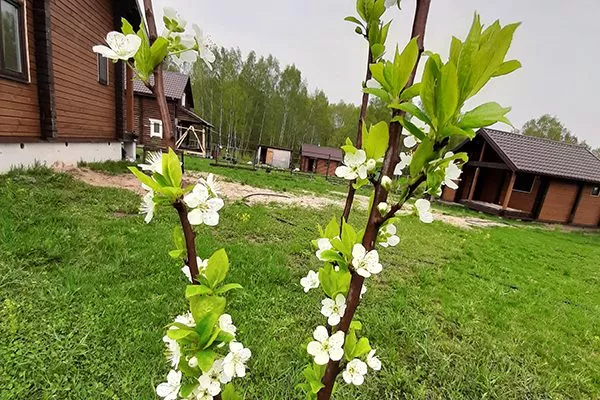
The buds of columnar cherry plum are small, with a diameter of 1.5 to 2.5 cm. They have a pink or white hue, depending on the variety.
Reproduction
Good results are achieved by grafting elite cherry plum varieties onto blackthorn. This procedure can be performed on the crowns of winter-hardy cherry plum varieties using budding or T-grafting. Butt grafting, which is easier to perform, is an effective method.
It's recommended to graft several varieties onto blackthorn to ensure the first fruits are produced the following year. Over the next few years, the tree will acquire an exquisite appearance, bearing fruits of various shades. It will also maintain high frost resistance.
Cherry plums propagate successfully from both hardwood and green cuttings. Trees grown from rooted cuttings are generally more frost-resistant, recover more quickly from damage, and begin bearing fruit again within a few years.
Fruit
The fruits are round, smooth-surfaced, and have a faint lateral seam. In almost all columnar varieties, they are large, weighing approximately 40-60 g. As they ripen, they develop a moderate waxy coating.
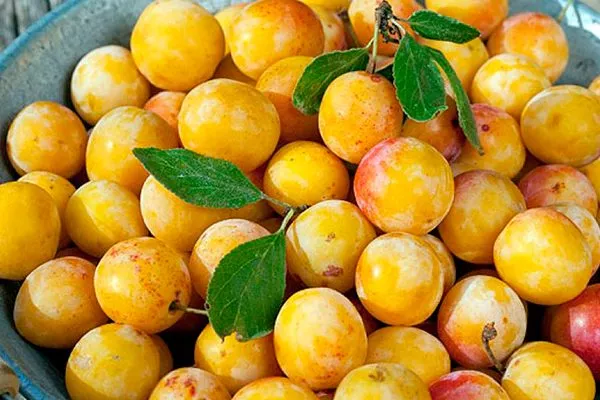
The fruit's flesh is juicy, dense, and aromatic. They withstand transportation well and maintain high nutritional qualities under certain storage conditions. The harvest is suitable for fresh consumption and processing.
Varieties
There are differences between columnar cherry plum varieties, so when choosing one, pay attention to their unique characteristics. This will help determine the optimal growing conditions for each.
By height
The height of columnar cherry plums depends directly on the rootstock type. Dwarf and medium-sized rootstocks are used for this type of tree. With the former, the tree rarely exceeds 2 meters in height, while with the latter, it ranges from 2.5 to 3 meters.
Ripening period
There are differences between columnar cherry plum varieties in terms of ripening time. Early varieties have an accelerated growing season, resulting in harvest ripening in late July. These varieties are susceptible to damage from recurrent spring frosts.
The fruits of mid-season varieties reach technical maturity in early August. They are characterized by a richer flavor and larger size.
Fruit blossoms
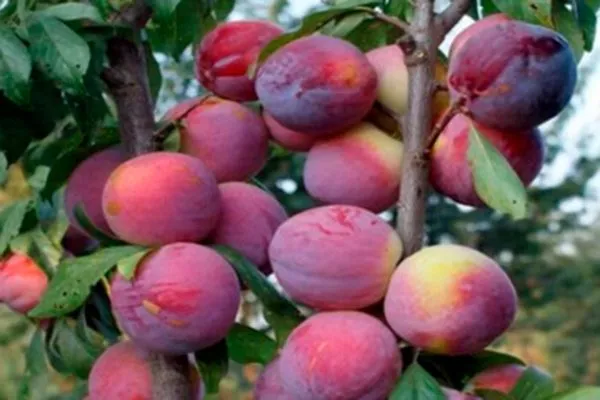
Columnar cherry plum varieties come in a wide variety, with fruit colors ranging from yellow-green to red-purple.
Varieties
Thanks to the efforts of breeders, the range of columnar cherry plum varieties is constantly expanding. Here are some of them:
- BlueIt grows up to 2-2.5 m in height. Fruiting begins two years after planting. It produces large fruits weighing up to 60 g. The skin of the berries is blue-violet. The flesh is yellow, juicy, aromatic, and has a sweet and sour taste. The variety is resistant to diseases and pests.

- CometThe tree grows to no more than 2 meters in height. Beneath the thin, dark-red skin lies soft, fibrous, yellow flesh. The fruits weigh 30-40 g. The yield reaches 5-10 kg per tree.
- HollywoodA striking columnar variety, 2.5-3 m tall. The fruits are large, purple-red, up to 4 cm in diameter. The flesh is yellow-pink, juicy, and tender. The harvest is suitable for transportation and long-term storage.
- Columnar EreminaHeight: 2.5-3 m. High frost resistance. Medium-sized fruits, 40 g each, with thin, rich red skin. The flavor is sweet and sour, with a pleasant aroma. Ripens in mid-August.
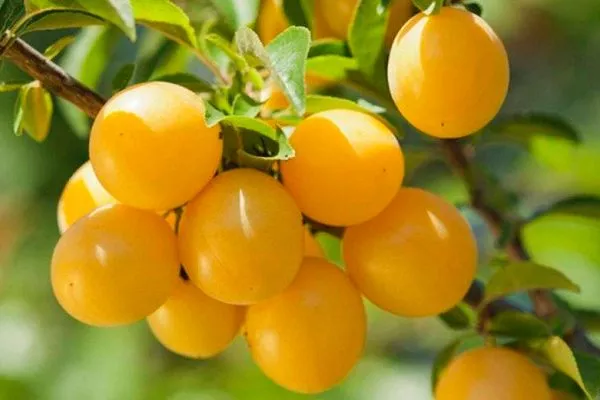
- YellowA low-growing tree, about 2 m tall. An early variety, harvesting in early August. The fruits are oval-round, yellow-amber in color. The flesh is juicy, yellow, and has a pleasant flavor. Fruit weight is 40-50 g.
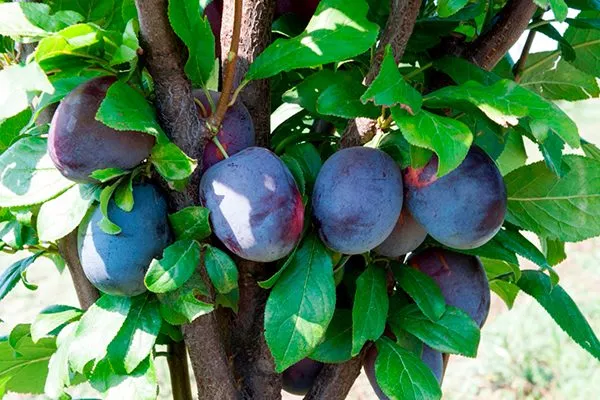
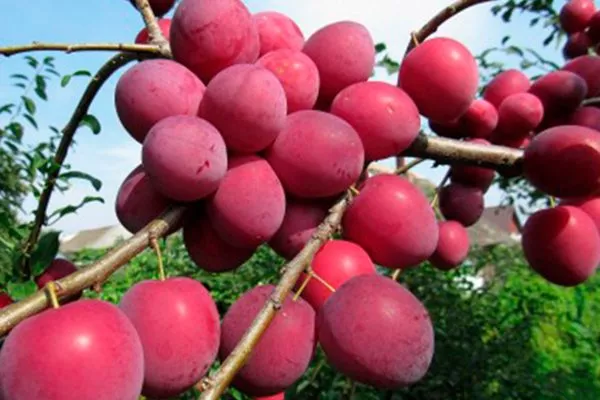
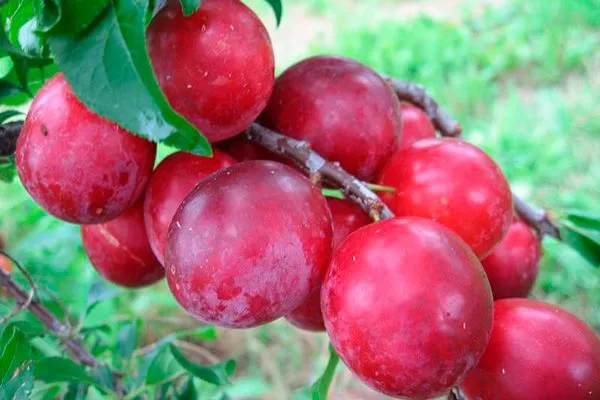
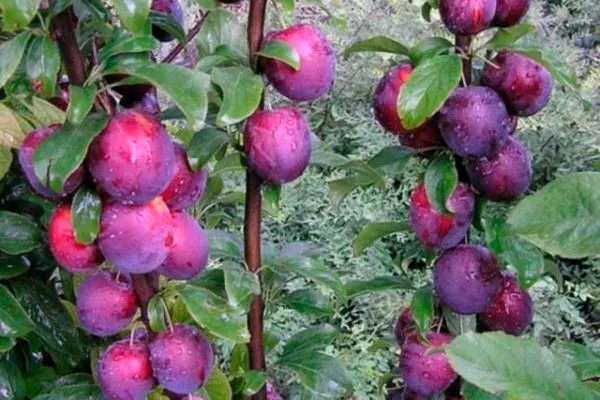
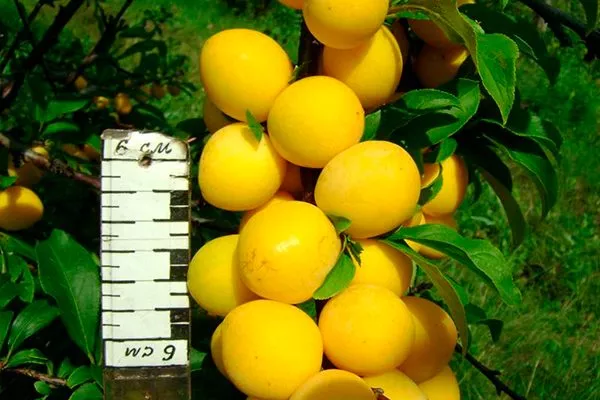
When choosing, it is advisable to familiarize yourself with the most popular types of crops that are in demand among gardeners.
| Variety | Ripening period | Fruit color | Fruit weight | Productivity |
|---|---|---|---|---|
| Blue | Average | Blue-violet | up to 60 g | 10-15 kg |
| Comet | Early | Dark red | 30-40 g | 5-10 kg |
| Hollywood | Late | Violet-red | up to 60 g | 12-15 kg |
| Columnar Eremina | Average | Deep red | 40 g | 8-12 kg |
| Yellow | Early | Yellow-amber | 40-50 g | 7-10 kg |
Growing region
Columnar cherry plum varieties differ depending on their recommended growing conditions. When selecting seedlings, consider their winter hardiness and drought tolerance. In southern regions, it's recommended to choose varieties that are less susceptible to drought stress, regardless of ripening time.
For the central and northern regions, columnar cherry plum varieties with increased tolerance to low temperatures are preferred. Early or mid-season varieties, capable of ripening during the short summer, are suitable for these regions, producing a good harvest.
Landing features
Planting cherry plum, like other trees, isn't difficult. It's important to provide the plant with proper care, as agricultural practices directly impact the tree's health and yield.

When planting columnar cherry plum, choose a site on the south or southwest side of the plot, ensuring the tree receives adequate sunlight. The location should be protected from cold winds.
This fruit tree prefers fertile, well-drained soils with a neutral pH. Loamy soils are ideal for successful growth.
Instructions for planting columnar cherry plum:
- Select quality seedlings, preferably 1 year old.
- Decide on the variety, taking into account the climatic features of your region.
- Pre-mark the area to create straight lines and a neat looking garden.
- The distance between trees should be more than 1.5 m to ensure normal development.
- A few days before planting, dig holes measuring 60x40 cm.
- Mix the removed soil with superphosphate (40 g per tree), humus (5 kg) and potassium salt (60 g).
- Fill 2/3 of the hole with the prepared mixture in the form of a slide.
- Prepare a heteroauxin solution to improve rooting. Soak the seedling roots in it.
- Place the tree on the mound in the hole, aligning the root collar with the top edge of the hole.
- Fill the area around the seedling with the remaining soil and fertilizer.
- Water the planted plant generously.
Mulch the soil to retain moisture and suppress weed growth.
Care instructions
During the initial period, regularly monitor soil moisture to prevent the root system from drying out. To do this, water once a week, using approximately 20 liters of water per seedling.
Mature columnar cherry plums don't require frequent watering. Watering after flowering, during fruit set, and after harvest is sufficient. During warmer months, regularly remove weeds from the root zone. Do this manually to avoid damaging the plum's root system.
Fruit trees respond positively to fertilizing, which significantly increases their productivity. Begin fertilizing the tree in the second year after planting. Fertilize the tree three times per season:
- In early spring at the beginning of the growing season, use urea at a dose of 30-60 g per 15 liters of water.
- After flowering.
- During ovary formation, superphosphate (40-80 g) and potassium sulfide (25-50 g) can be applied per 15 liters of water during these periods.
To successfully grow columnar cherry plum in the central and northern regions, especially in winter, take care to provide shelter.
- ✓ Mulching the tree trunk circle with a layer of 5-7 cm
- ✓ Protect the trunk from rodents with a net
- ✓ Crown wrapping with agrofibre in 2 layers
- ✓ Insulate the roots with an additional layer of humus
- ✓ Removing the cover at a stable temperature of +5°C
At the end of autumn, lay a 5-7 cm thick layer of humus in the root zone, and wrap the crown of the seedling, especially the growth point of the conductor, several times with agrofibre.
Trimming
To ensure the full development of columnar tree species, professional crown shaping is essential. Avoiding pruning the growing point is crucial.
Branching may require constant pruning to maintain the tree's characteristic columnar shape. Prune in early spring. During this period, shorten lateral shoots to five buds.
Prune broken, dried, and damaged shoots. This approach promotes the formation of a healthy, compact crown and also ensures the tree's characteristic shape is preserved.
Diseases and pests
Columnar cherry plum varieties have enhanced resistance to common diseases of this crop. To maintain their immunity, preventatively treat the trees with Bordeaux mixture in spring and fall.
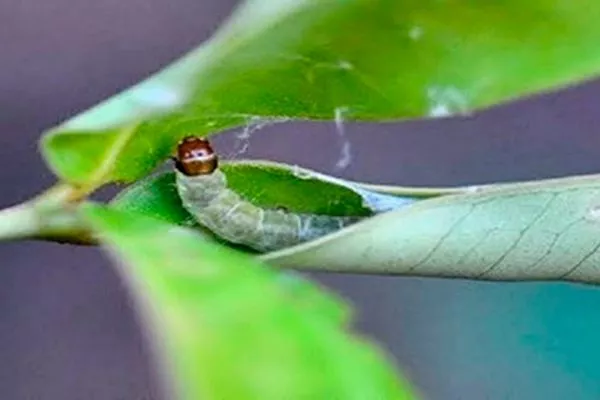
Among the pests that can damage cherry plum are:
- cherry plum aphid;
- rose leaf roller;
- fruit mite;
- plum codling moth;
- false scale insect.
Advantages and disadvantages
Columnar cherry plum varieties have a number of advantages, but also have some disadvantages that are worth paying attention to.
Cherry plum is one of the most popular plants chosen by gardeners of all experience levels for their gardens. The tree is easy to care for and generously rewards its owners with abundant harvests. Furthermore, columnar cherry plum varieties add a unique and attractive appearance to any garden.